

How to Choose Swimming Classes Close to Me
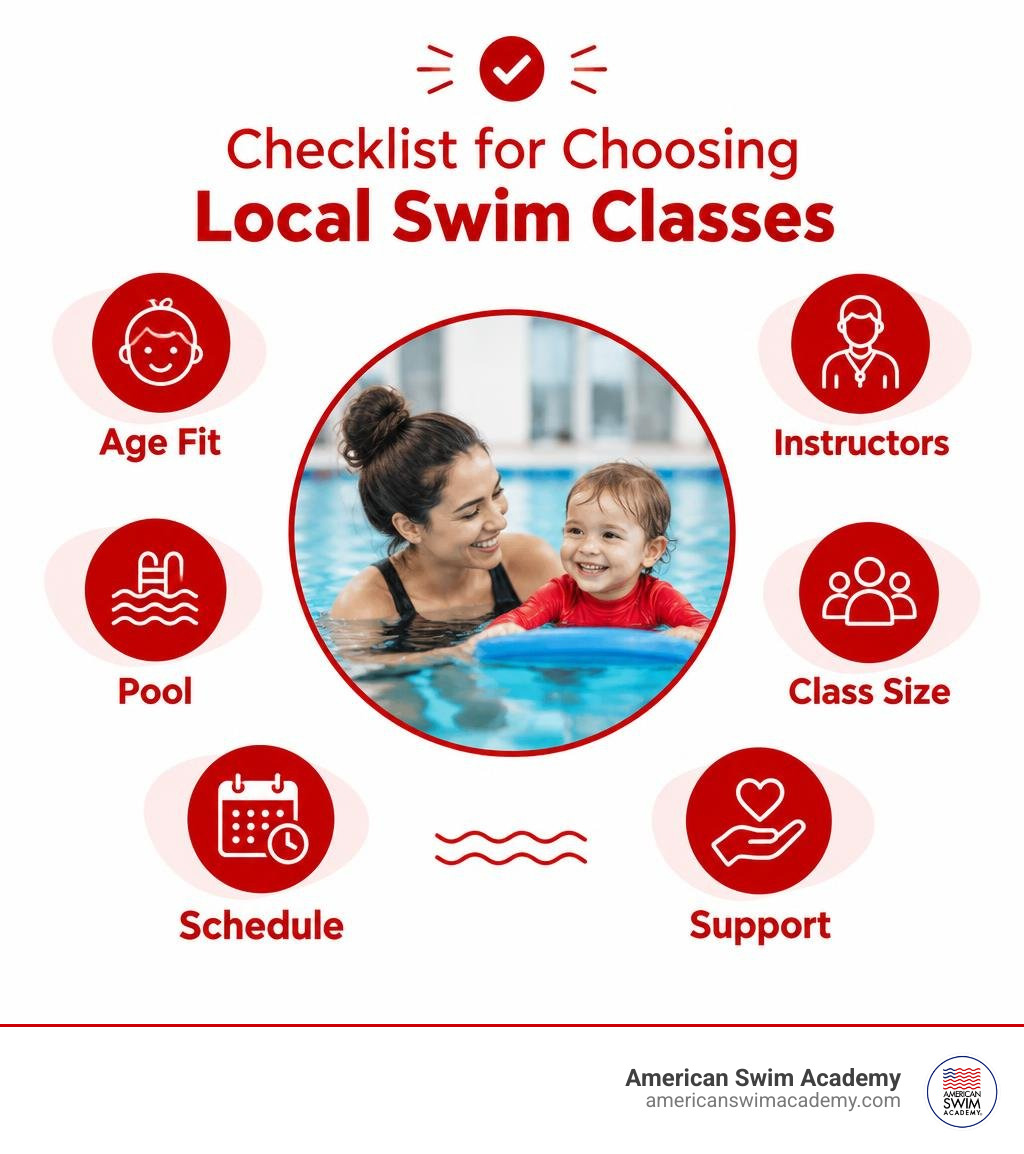
To find swimming classes near you, start with your child’s age and comfort in the water. Then compare nearby schools on instructor training, pool warmth, class size, and times that work for your family. If your child needs extra support, ask how instructors adapt lessons before you enroll.
A visit can help you see whether the pool and teaching style feel like a good fit. At American Swim Academy, this guide will help you know what to look for.
Terms related to swimming classes close to me:
When you begin comparing local programs, a convenient location is only one part of the decision. The right swimming classes close to me should also match your child’s developmental stage, provide warm water for comfortable learning, and maintain small groups so instructors can give each student enough attention. Taking time to evaluate these details before enrolling can make the difference between a frustrating experience and a positive introduction to water safety.
Key Factors to Evaluate When Searching for Swimming Classes Close to Me
Finding the right swimming program involves much more than picking the closest pin on a map. While convenience matters, the quality of instruction, safety culture, and pool environment shape how quickly your child builds water confidence. When evaluating options, look closely at how a facility is designed for learning.

A high-quality program should offer consistent conditions year-round. Learning in an indoor, climate-controlled setting removes weather disruptions like wind, chilly air, or intense sun. Exploring the comfort of indoor heated pools can help you understand how environmental control directly influences a child’s focus and comfort during lessons.
Instructor Qualifications and Safety Certifications
The heart of any exceptional swim program is its teaching team. Great swim teachers do not simply know how to swim; they know how to communicate, encourage, and adapt to different learning styles.
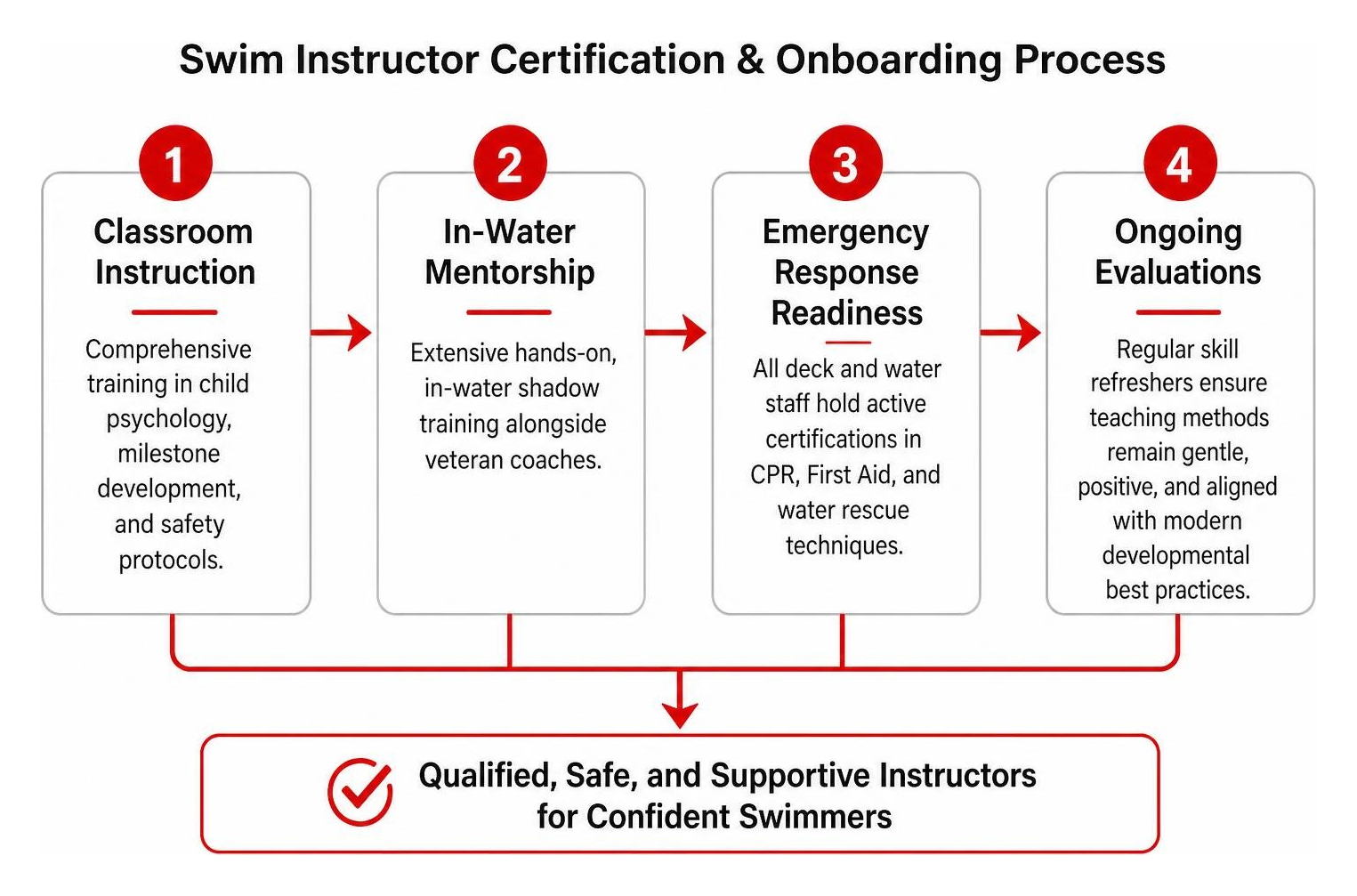
When speaking with local swim schools, inquire about their onboarding standards:
- Classroom Instruction: Top-tier swim academies require comprehensive classroom training covering child psychology, milestone development, and safety protocols before an instructor enters the water.
- In-Water Mentorship: Instructors should complete extensive hands-on, in-water shadow training alongside veteran coaches.
- Emergency Response Readiness: All deck and water staff must hold active certifications in CPR, First Aid, and water rescue techniques.
- Ongoing Evaluations: Regular skill refreshers ensure teaching methods remain gentle, positive, and aligned with modern developmental best practices.
Optimal Pool Environment for Beginners
The physical pool setup can either accelerate learning or create unnecessary hurdles. For young beginners and hesitant swimmers, two physical factors stand out:
- Water Temperature: Standard lap pools are often kept around 78°F to 82°F—ideal for competitive adults working hard, but uncomfortably cold for young children standing and listening. When water is too cool, kids shiver, tense up, and lose concentration. Dedicated learn-to-swim facilities maintain warm water temperatures between 88°F and 92°F to keep muscles relaxed and smiles intact.
- Shallow Water Accessibility: A shallow ledge or starting depth of 3 feet allows young swimmers to stand comfortably, regain their balance, and build trust in their buoyant environment without feeling overwhelmed.
Beyond temperature and depth, pay attention to how the facility manages safety during lessons. Look for clear sightlines from the viewing area, organized entry and exit procedures, and instructors who remain within arm’s reach of beginners. These details reflect a school’s overall commitment to creating a secure learning environment.
Comparing Program Formats for Every Age and Skill Level
Every child enters the pool with unique experiences, comfort levels, and physical coordination. A structured curriculum meets students where they are, offering a smooth path from gentle water acclimation to technical stroke efficiency. Specialized children’s beginner swimming classes provide the structured foundation young learners need to feel safe and empowered.
| Program Level | Age Range | Primary Focus | Key Milestones Achieved |
|---|---|---|---|
| Infant & Toddler | 6 mos – 3 yrs | Water acclimation, comfort, parent bonding | Gentle submersion, back floats, pool boundary awareness |
| Preschool Beginner | 3 yrs – 5 yrs | Independence, foundational mechanics | Breath control, unassisted floating, flutter kicking |
| School-Age Foundations | 5 yrs – 12 yrs | Stroke technique, water stamina | Freestyle, backstroke, rhythmic breathing, deep-water safety |
| Advanced & Stroke Mastery | 6 yrs – Teens | Form refinement, endurance, safety | Breaststroke, butterfly, speed development, fitness |
Infant and Toddler Water Safety Foundations
Starting early fosters natural comfort in the water. Parent-and-tot classes create a nurturing environment where caregivers join their little ones in the pool. Through gentle songs, guided movement, and structured games, babies as young as 6 months learn fundamental survival habits, including:
- Comfortable breath control and bubble blowing
- Relaxed back floating to keep airways clear
- Safe pool entries and holding onto the pool edge
- Building positive associations with water exploration
These early lessons are not about pushing a child to perform. Instead, they introduce water as a familiar, enjoyable space. Consistent exposure during infancy helps children develop balance, coordination, and confidence that carry into later independent lessons.
Skill-Building and Intensive Progression for Kids
As children grow, lessons shift toward personal independence, technical stroke mechanics, and stamina. Small group sizes ensure each swimmer receives individual attention and regular feedback.
For families looking to jump-start progress before summer or boost skills quickly between sports seasons, families can achieve fast-track swim progress with intensive lessons, reinforcing muscle memory through consecutive days of practice.
School-age swimmers benefit from a curriculum that balances skill repetition with engaging activities. Instructors should break each stroke into manageable steps, allowing children to master body position, arm movement, and breathing rhythm before combining them. This approach builds a strong technical foundation while keeping lessons enjoyable and motivating.
Step-by-Step Guide to Finding and Enrolling in Nearby Swim Programs
Navigating your options is straightforward when you take a systematic approach. Comparing schools side-by-side helps identify the best balance of instructional quality, pool conditions, and convenience.
Begin by comparing top-rated swim programs across your area to establish a baseline of available amenities, pricing structures, and schedule availability.
How to Assess Swimming Classes Close to Me for Beginners
Before finalizing your registration, visit the facility during active teaching hours. When researching swimming classes close to me, observing real-time lessons gives you immediate clarity on school culture. Look for:
- Student-to-Teacher Ratios: Smaller groups (typically 3 to 4 students per instructor) ensure active engagement and minimize idle waiting time on the steps.
- Instructor Demeanor: Watch how coaches interact with nervous children. Compassionate instructors use positive reinforcement, patient reassurance, and play-based games to ease worries.
- Facility Cleanliness: Notice air quality, deck cleanliness, and changing room hygiene.
- Parent Feedback: Take time for evaluating swim school reviews and ratings online to see how current families describe their long-term experiences.
A facility visit also gives you a chance to ask questions directly. Inquire about how the school handles a child who is reluctant to enter the water, what progress updates parents receive, and how instructors communicate with families after each lesson. The answers reveal whether a program prioritizes individual growth or simply moves students through a fixed routine.
Scheduling and Location Checklist for Swimming Classes Close to Me
Consistency is key to aquatic progress. Choose a location and schedule that easily integrates into your family routine.
- [ ] Proximity: Is the pool easily reachable from home, daycare, or school during peak traffic hours? If you live in the East Bay, check out local class options in Walnut Creek alongside our facilities in Fremont, Newark, Livermore, and Dublin, CA.
- [ ] Class Times: Does the school offer weekday afternoon, evening, and weekend time slots?
- [ ] Makeup Policies: Life with kids is unpredictable. Does the facility provide flexible makeup options for illness or travel?
- [ ] Year-Round Enrollment: Consistent, continuous enrollment prevents seasonal skill regression compared to short summer-only sessions.
When comparing schedules, think about the full weekly routine rather than a single convenient day. A class that fits easily into your family’s existing commitments is one your child is more likely to attend consistently, and regular attendance is one of the strongest predictors of steady progress in the water.
Frequently Asked Questions About Local Swimming Lessons
At what age should children start formal swim classes?
Children can begin parent-assisted classes as early as 6 months of age. Starting early introduces natural buoyancy, supports motor skill coordination, and builds comfort in the water well before hesitation sets in. By age 3, most children are ready to transition into independent, small-group lessons with a dedicated instructor.
How warm should a beginner swim pool be?
For young learners and beginners, pool water should be maintained between 88°F and 92°F. Warm water prevents shivering, reduces muscle tension, and keeps young children focused on their lessons rather than feeling cold.
How many training hours do certified swim instructors complete?
High-quality swim schools require extensive preparation before instructors teach independently. This typically includes 20 or more hours of classroom instruction, 40 hours of hands-on, in-water shadow training, practical evaluations, and active CPR and First Aid certifications.
What should I look for when visiting a swim school?
During a visit, observe a live class and note the student-to-teacher ratio, instructor communication style, and overall facility cleanliness. Ask about makeup policies, progress reporting, and how the school supports children who are nervous about the water. A quality program will welcome your questions and provide clear, specific answers.
How often should my child attend swim lessons?
Consistency matters more than intensity for most young swimmers. Attending one or two lessons per week throughout the year helps children retain skills and build steadily on their progress. Short, frequent sessions are generally more effective than occasional long practices, especially for beginners.
Conclusion
Building strong water safety skills is one of the most rewarding investments you can make in your child’s physical development and self-confidence. By choosing a program that emphasizes certified instructors, warm indoor pools, small class sizes, and positive teaching methods, you provide an environment where your child can thrive.
At American Swim Academy, we have spent decades helping Bay Area families develop safe, confident, and joyful swimmers across our indoor facilities in Fremont, Newark, Livermore, Dublin, and Walnut Creek. Ready to begin your family’s swimming journey? Explore programs at American Swim Academy and find the perfect class time today.
For additional guidance on water safety and skill development, the American Red Cross offers helpful resources on swim lesson safety for families evaluating local programs.