

Why Choosing the Right Bay Area Infant Swim Class Matters
If you’re a Bay Area parent looking for infant swim classes, here’s a quick summary of what to know:
- Starting age: Babies can begin as early as 6 months old (some programs accept 3 months)
- What to look for: Heated indoor pools (92°F), small class sizes, certified instructors, parent participation
- Top East Bay option: American Swim Academy offers the AQUAbabies program for ages 6–33 months, with indoor 92°F pools at five East Bay locations — Fremont, Newark (CA), Livermore, Dublin, and Walnut Creek
- Cost tip: Look for schools offering a free trial class before committing
- Key amenity: Private family changing rooms make a big difference with infants
Finding the right swim program for your baby isn’t just about convenience. It’s about comfort, safety, and building a foundation your child will carry for life. The Bay Area has no shortage of swim schools — but not all of them are set up for the unique needs of infants and their parents.
Warm water matters. So does class size. So does having an instructor who actually understands how babies learn.
We’re the Alberti family, and at American Swim Academy, we’ve been helping East Bay families find their footing in the water since 1973 — so we know exactly what parents should look for when evaluating their options.
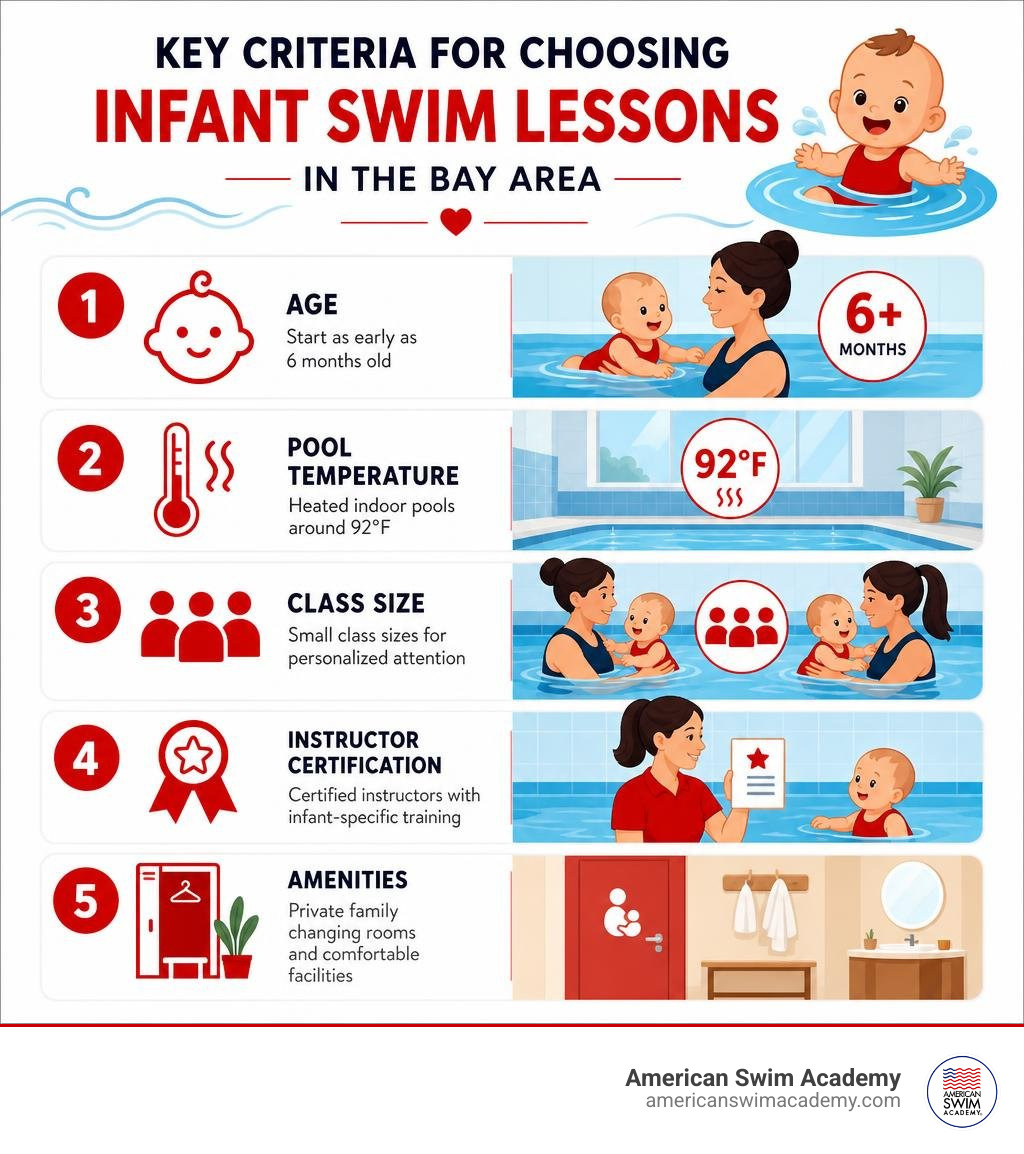
Quick bay area infant swim definitions:
Benefits of Early Bay Area Infant Swim Lessons
Starting water adaptation early opens up a world of physical, neurological, and emotional benefits for your little one. While infants aren’t expected to swim lap laps across a pool, early exposure to structured aquatic environments fosters early development in ways that land-based play simply cannot match.
The weightlessness of water allows infants to move freely before they can even crawl or walk. Floating, kicking, and splashing gently stimulate neurological pathways, supporting visual-motor development and space perception. When you join your baby in the water, the gentle hydrostatic pressure against their body combined with skin-to-skin contact creates a multi-sensory experience that eases tension, reduces fussiness, and enhances sleep patterns.
Parent-child bonding is at the heart of early water play. Guidance from pediatric health experts, such as the American Academy of Pediatrics, supports early water acclimation for building baseline safety and confidence. Understanding when and how to start swimming lessons for infants helps families take this joyful leap at just the right developmental milestone. Many structured programs accept infants starting between 3 and 6 months old, giving parents a fun, meaningful weekly activity that strengthens family bonds while boosting early brain growth.
Above all, these early aquatic experiences establish positive feelings toward water that last a lifetime. Discovering that baby swim lessons are fun for baby and parents transforms weekly classes into a highlight of your family’s routine rather than a chore.
Physical and Emotional Advantages for Infants
The physical benefits of infant aquatic classes go far beyond simple splashing. Swimming activates muscle groups across the entire body, helping infants build core strength, head control, and coordination.
- Muscle Strength and Tone: Buoyancy enables babies to kick and use their arms against light water resistance without joint stress.
- Balance and Vestibular Development: Navigating gentle waves and changing head positions in water stimulates the inner ear balance systems, encouraging earlier balance control on land.
- Confidence Building: Mastering simple water activities—such as blowing bubbles or reaching for a floating toy—builds self-efficacy and resilience early in life.
- Social Interaction: Being in a warm pool surrounded by other parents and babies encourages early social observation, smiling, and laughter.
Building familiarity and comfort in the water from an early age is also a foundational step toward overall water safety awareness. Learning how essential safety principles work helps parents realize the importance of swimming lessons to kids from infancy onward.
Essential Features to Look For in an Infant Swim Program
When searching for the ideal bay area infant swim class, parents quickly realize that not all facilities are designed with babies in mind. An infant-friendly swim program requires specialized design, ultra-clean facilities, and highly trained instructors who know how to engage infants through gentle, age-appropriate play.
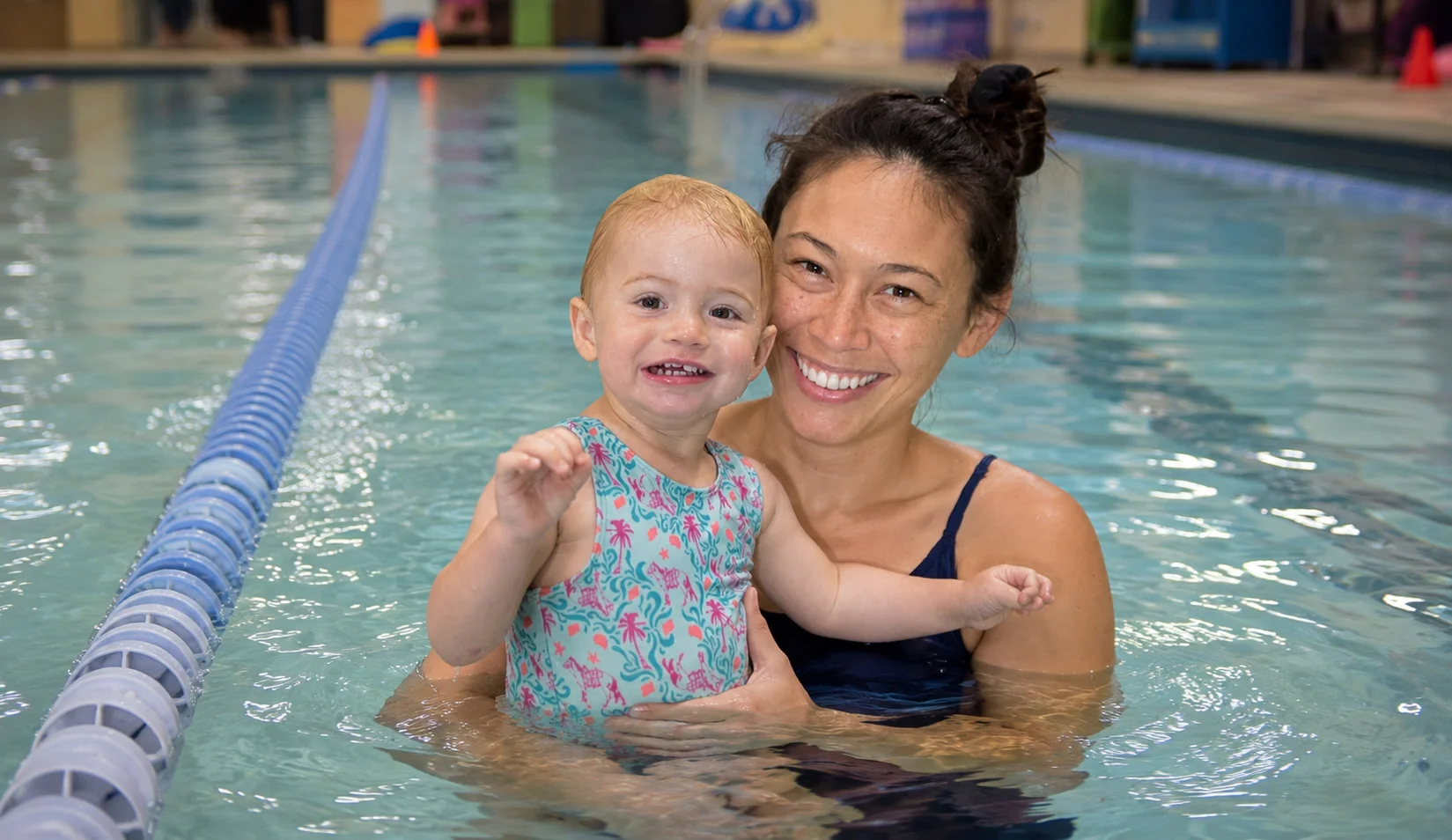
High standards of facility hygiene and safety protocols are non-negotiable. Look for facilities with dedicated water purification systems, comprehensive pool filtration, and continuous water quality monitoring. Infant swim classes should emphasize gentle adaptation rather than stress-inducing techniques. Knowing how to choose the best swimming classes for infants means prioritizing programs with certified instructors who understand infant cues and respect each child’s comfort level.
Finding Warm Indoor Pools for Year-Round Bay Area Infant Swim Classes
The weather in the Bay Area can vary significantly from city to city. Coastal breezes, morning fog, and seasonal chilly spells mean outdoor pools or cooler municipal waters simply aren’t suitable for young infants. Babies lose body heat up to four times faster than adults, so pool temperature is the single most important physical comfort factor for an infant swim class.
Look for indoor facilities that maintain a constant pool temperature of 92° Fahrenheit.
At 92°F, water feels warm and welcoming to an infant’s skin, preventing shivering, blue lips, or crying due to cold distress. A warm pool ensures that babies remain relaxed, calm, and receptive to learning throughout the class session. Year-round climate-controlled indoor environments protect your child from wind, direct sun exposure, and rain, guaranteeing that your weekly aquatic routine remains consistent regardless of the weather outside.
Additionally, private family changing rooms located right on the deck make class preparation and post-swim dressing seamless, warm, and stress-free for parents managing diaper changes and cozy towels. You can consult the ultimate parent directory for year-round infant swim lessons to ensure your chosen school checks all these key facility boxes.
Parent-Participation and Small Class Ratios
For infants ages 6 to 33 months, active parent participation is essential. Babies feel safest when held by a trusted parent or caregiver. In a parent-participation class (such as our AQUAbabies program), you join your baby in the water, acting as their primary anchor while a certified instructor guides you step-by-step through movements, songs, and gentle water adaptation techniques.
Small class sizes ensure personalized attention. When class ratios are kept small, instructors can monitor each baby’s responses, provide tailored feedback to parents, and answer questions without making anyone feel rushed. This intimate setting allows for gentle water acclimation, letting hesitant babies progress at their own comfortable rhythm.
Preparing Your Baby for Their First Swimming Lesson
A little preparation at home can make your baby’s transition into their first bay area infant swim class smooth, joyful, and completely stress-free.
Start in the comfort of your home bathtub:
- Adjust Bathtub Warmth: Gradually transition your baby’s bath temperature to match warm pool conditions so the feeling of floating in warm water feels familiar.
- Introduce Splash Play: Gently cup bathwater in your hands and trickle it over your baby’s shoulders, chest, and back while singing bright, cheerful songs.
- Practice Gentle Face Washing: Dampen a washcloth and wipe your baby’s forehead and cheeks, encouraging them to close their eyes softly when water touches their face.
- Offer Positive Reinforcement: Use a soothing, enthusiastic tone of voice. Smiling and giving quiet praise connects water with joy and safety.
- Establish a Consistent Pre-Swim Routine: Feed your baby about 30 to 45 minutes prior to class time so they are content and energetic, but not overly full.
Taking time to explore everything you need to know about infant swim lessons ensures you enter the facility confident and well-prepared for your first session.
What to Pack and Expect During a Bay Area Infant Swim Session
Arriving organized allows you to enjoy every minute of your baby’s aquatic milestone. Pack a swim bag dedicated solely to pool days so you never forget essential gear.
Here is a quick checklist of what to bring and expect:
- Reusable Swim Diaper: Most swim facilities require a reusable swim diaper (or a snug-fitting double-diaper system with a disposable swim diaper underneath) to protect water cleanliness.
- Comfortable Swimsuits: A comfortable, fitted swimsuit for your baby and standard swimwear for the participating adult.
- Warm Towels and Hooded Wraps: Bring two soft towels—one to wrap your baby immediately upon exiting the pool and another for yourself.
- Post-Swim Lotion and Diapers: Gentle baby lotion helps restore skin moisture after changing into dry clothing.
- Warm Clothes for After Class: Easy-to-snap onesies or footed pajamas keep your baby cozy after changing.
Expect your first class to focus heavily on water comfort, simple wall holds, floating balance, and rhythmic splashing. Instructors encourage singing and interactive games to keep energy upbeat and reassuring.
Understanding Costs, Schedules, and Location Options
Planning your family budget and weekly routine requires transparent pricing and flexible class availability. Most quality Bay Area swim schools operate on a monthly subscription model, offering weekly classes that run year-round.
When assessing value, consider what is included in your tuition:
- Heated indoor pool access (92°F)
- Certified, background-checked instructors
- Small instructor-to-student ratios
- Private family changing amenities
- Trial class availability
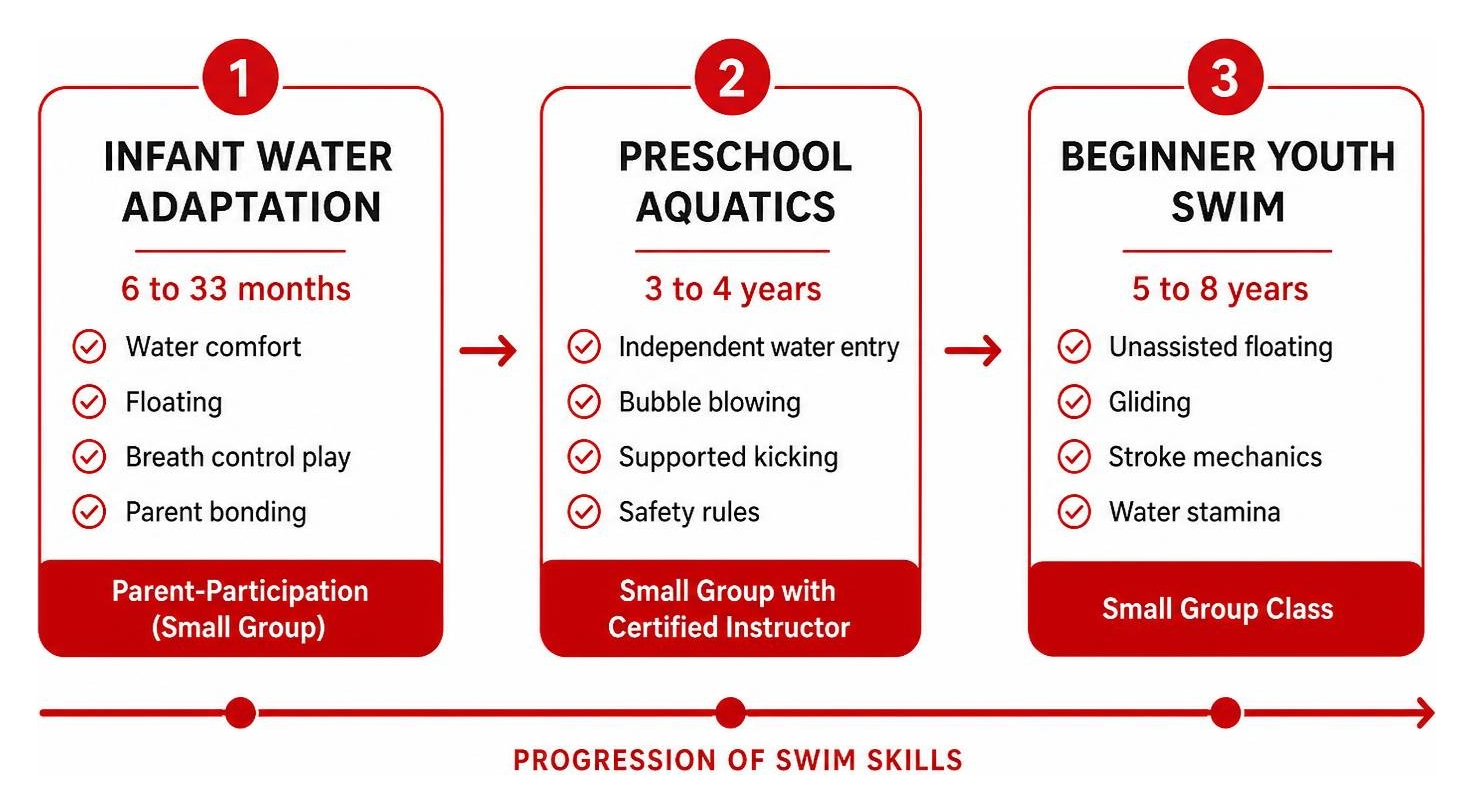
Below is a breakdown of typical swim program levels, target ages, and primary developmental outcomes to help you choose the right fit for your family:
| Program Level | Age Range | Key Developmental Focus | Class Format |
|---|---|---|---|
| AQUAbabies / Infant Adaptation | 6 to 33 months | Water comfort, floating, breath control play, parent bonding | Parent-Participation (Small Group) |
| Preschool Aquatics | 3 to 4 years | Independent water entry, bubble blowing, supported kicking, safety rules | Small Group with Certified Instructor |
| Beginner Youth Swim | 5 to 8 years | Unassisted floating, gliding, stroke mechanics, water stamina | Small Group Class |
Choosing Convenient Bay Area Locations
Commuting with an infant across the Bay Area during peak traffic hours can turn a fun activity into a stressful ordeal. Selecting a facility close to home with accessible parking and regular weekly scheduling options makes maintaining attendance easy.
If you live in the East Bay, having local facilities in your community makes all the difference:
- Fremont: Convenient access for South East Bay families. Learn more about local opportunities by exploring where to find the best baby swimming classes in Fremont.
- Newark (CA): Located ideally for families near Newark and surrounding Tri-City communities.
- Livermore: Serving East County families with warm, year-round indoor pools.
- Dublin: Perfect for busy parents looking for flexible weekend and weekday schedules across the Tri-Valley.
- Walnut Creek: Offering prime access to warm-water instruction for families throughout Contra Costa County.
Frequently Asked Questions About Infant Swim Classes
What age can babies start swim lessons?
Babies can safely begin parent-participation swim classes as young as 6 months old (and some warm-water adaptation programs accept infants starting around 3 months). At this stage, babies have developed sufficient neck control and sensory awareness to enjoy gentle water movement alongside a parent.
Why is pool temperature so important for infants?
Infants have thin skin and a high surface-area-to-body-mass ratio, making them susceptible to rapid chill. Water heated to 92° Fahrenheit matches closely with body comfort, keeping muscles relaxed and infants content. Cooler water temperatures (such as standard adult lap pool settings at 78°–82°F) can quickly cause infant shivering, muscle tension, and tearfulness, hindering their learning experience.
How long does it take for a baby to get comfortable in water?
Every baby progresses on their own unique timeline. Many infants adapt quickly within two to three sessions, while others require several weeks of consistent attendance to feel entirely at ease. Regular weekly attendance, calm parent encouragement, and warm 92° water are the three most effective factors in helping young babies build rapid, natural water comfort.
Conclusion
Choosing the right bay area infant swim class sets the stage for a lifetime of aquatic joy, safety, and physical confidence. By prioritizing warm 92° indoor pools, small class sizes, certified instructors, and convenient parent amenities, you give your baby the best possible introduction to the water.
At American Swim Academy, we have welcomed generations of East Bay families into our warm-water facilities since 1973. With locations in Fremont, Newark, Livermore, Dublin, and Walnut Creek, our parent-participation AQUAbabies program provides a comfortable, loving atmosphere designed specifically for infants ages 6 to 33 months.
Ready to introduce your little one to the magic of water play? Visit American Swim Academy to explore class schedules, learn more about our 92° indoor pools, and claim your free trial class today!