

Build Infant Water Confidence One Gentle Step at a Time
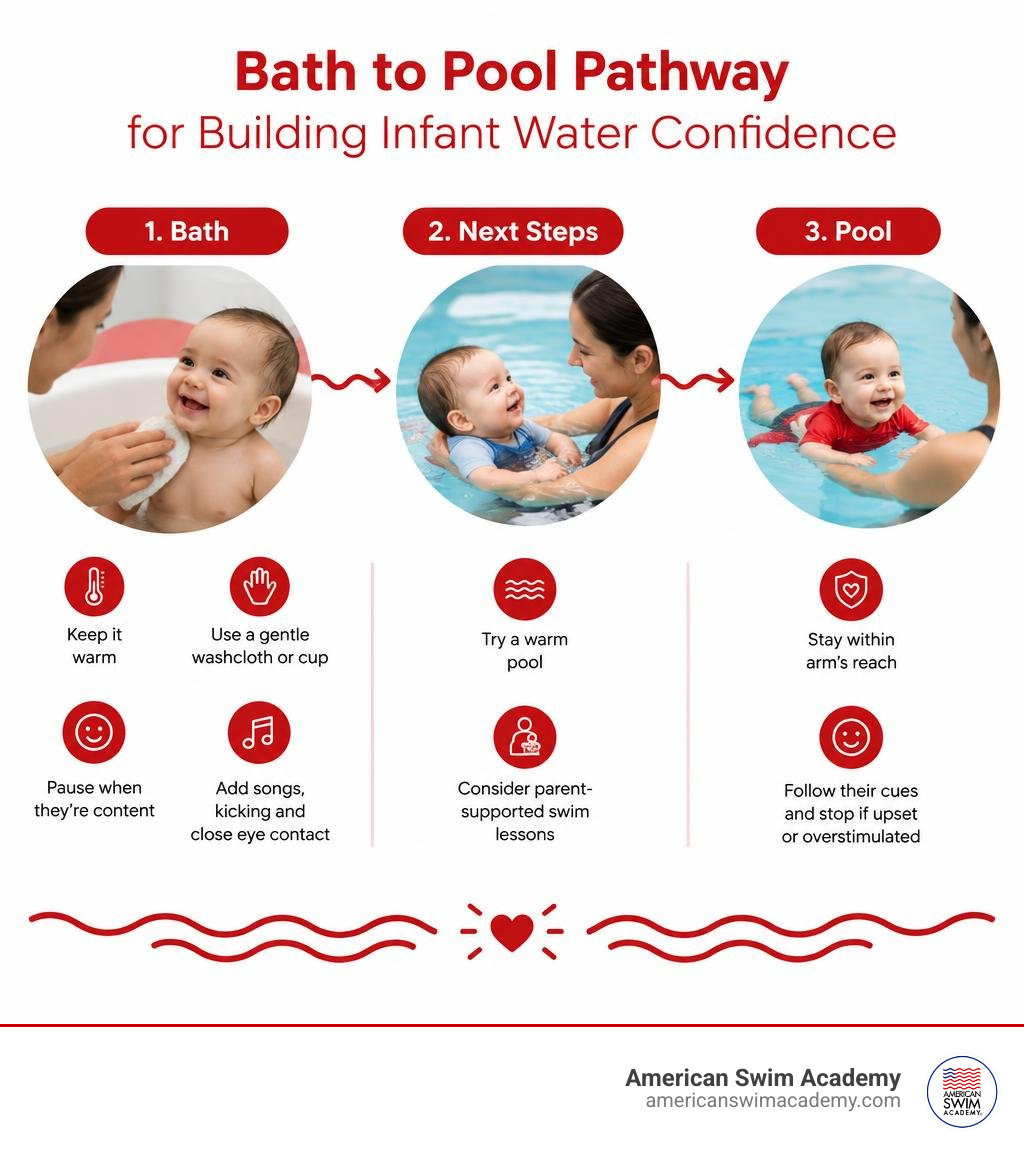
Build infant water confidence by making water feel calm, warm, and predictable. Start in the bath: hold your baby securely, use a warm wet washcloth or small cup to wet their hands and shoulders, and pause when they seem content. Add gentle kicking, songs, and close eye contact. When bath time feels easy, a warm pool and parent-supported swim lessons can be the next step.
Water play may also support early movement. Small studies suggest structured aquatic activities can help infants practice balance, kicking, reaching, and body control. But comfort comes first: stay within arm’s reach, follow your baby’s cues, and stop if they seem upset or overstimulated.
At American Swim Academy, we help families turn these small, positive moments into a comfortable foundation for future swim lessons.
Why Building Infant Water Confidence Matters for Early Development
Fostering early comfort in the water offers benefits that extend far beyond smooth bath times. When babies feel secure in an aquatic setting, they unlock unique physical and neurological opportunities that complement their everyday terrestrial milestones.
Water provides a multidirectional resistance and a supportive, buoyant environment where little arms and legs can move freely without the full pull of gravity. This freedom of movement allows infants to experiment with motor control, build balanced muscle tone, and stimulate their sensory and vestibular systems in ways traditional floor play cannot match alone.
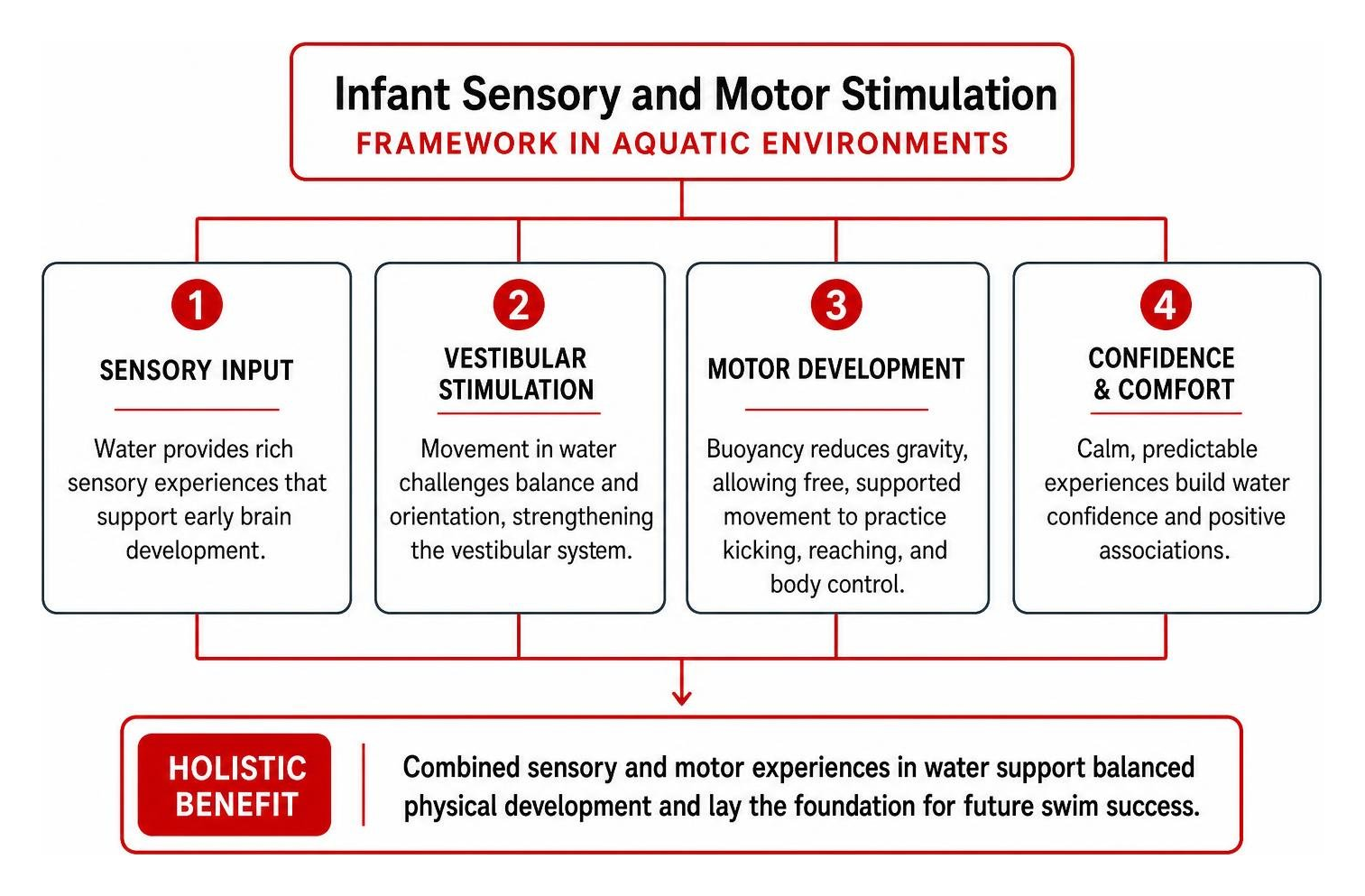
Scientific investigations consistently highlight how aquatic activities enhance early childhood physical milestones. For instance, scientific research on infant motor development through water activities shows that infants who participate in structured aquatic sessions demonstrate meaningful gains in gross motor coordination (Jakobowicz & Ogonowska-Slodownik, 2024). In this controlled case-control study, researchers tracked infants across nine weeks using the Alberta Infant Motor Scale (AIMS) and the Early Motor Questionnaire (EMQ). The infants participating in water activities showed statistically significant improvements in their AIMS percentile rankings (moving up an average of 12.42 raw points) compared to non-participating peers, with particularly pronounced progress observed in infants between 7 and 12 months of age.
| Developmental Dimension | Standard Floor-Based Tummy Time | Aquatic Water Play & Buoyancy |
|---|---|---|
| Primary Muscle Engagement | Neck extensors, shoulders, upper back against gravity | Symmetrical full-body engagement, core stabilizers, kicking reflexes |
| Vestibular Stimulation | Static head lifting, lateral rolling | Fluid 3D motion, multi-axis tilting, gentle rocking |
| Joint & Gravitational Stress | Concentrated pressure on forearms, chest, and knees | Low-impact, uniform buoyant support |
| Tactile & Sensory Processing | Firm textures, floor mats, room temperature air | Continuous hydrostatic pressure, warm water enveloping skin |
| Caregiver Bonding Dynamic | Face-to-face floor interaction, verbal encouragement | Close chest-to-chest skin contact, synchronized breathing and movement |
Beyond gross motor progression, the warm aquatic environment fosters deep emotional security. Being held close by a parent in soothing water releases tension, strengthens attachment bonds, and helps regulate an infant’s nervous system.
Step-by-Step Bathtub Exercises to Overcome Water Hesitation
The family bathtub is the ideal initial classroom for your little one. It is a familiar, controlled setting where you can establish sensory safety and positive associations with warm water. Rushing this stage can lead to water apprehension, so we always emphasize following gentle infant swim tips that prioritize your baby’s emotional readiness.
Begin by ensuring the bathroom environment is draft-free and warm. The bath water itself should be comfortably warm, ideally between 90°F and 95°F for newborns and young babies. Keep water depth shallow at first—just enough to cover their legs and lower torso while they rest securely in your hands or against your chest.
Facial water acclimation should always be gradual:
- Start by wiping baby’s cheeks and forehead using a warm, soft washcloth.
- Transition to trickling a few drops of water from your fingertips onto their head and hairline.
- Use rhythmic verbal cues such as, “Ready, set, splash!” before trickling water, allowing your baby to anticipate the sensation without surprise.
Bathtub Exercises to Develop Early Infant Water Confidence
To build foundational skills right at home, practice these structured, low-stress exercises during your regular bath routine:
- Chest-to-Chest Floating: Recline comfortably in the tub with your baby resting tummy-down on your chest. As the warm water surrounds their back and legs, maintain gentle hand support across their hips. This creates deep emotional reassurance while letting them feel the sensation of floating.
- The Cup Trickle: Fill a small, colorful cup with warm water. Sing a favorite song, establish eye contact, and pour water slowly over their shoulders and down their chest. Gradually move closer to the back of the neck as they become comfortable.
- Gentle Supported Kicking: Place baby on their back, cradling their head in the crook of your arm while supporting their lower spine. Gently swish their legs back and forth through the water, encouraging them to kick at floating bubbles or light ripples.
- Mirror Play: Hold an unbreakable bath mirror in front of your baby while you splash water gently. Seeing their own happy reflections normalizes the environment and transforms splashing into an engaging visual game.
Using Buoyancy and Play in the Tub
Play is the primary language through which infants process sensory information. Introducing simple, age-appropriate floating toys encourages reaching, grasping, and spatial awareness:
- Place floating rubber ducks, stacking cups, or foam letters just within arm’s reach to encourage forward arm extension and active balance.
- Use rhythmic songs like “Row, Row, Row Your Boat” or “The Wheels on the Bus” while gently swaying your baby side to side. Rhythm helps soothe the nervous system and creates positive emotional memory loops around water.
- Maintain active touch supervision at all times. Touch supervision means keeping your hands on or within inches of your baby every single second they are near water—ensuring total safety while reinforcing their sense of physical support.
While gear like an Original Konfidence™ Jacket | Fledglings can offer structured buoyancy support for toddlers during recreational outings, your hands-on touch remains the absolute best tool for building early bathtub security.
Transitioning from Bath to the Pool: Gentle Exercises for Beginners
Once your baby is relaxed and smiling during bath time routines, you can smoothly transition those skills to an indoor pool. A large pool introduces a whole new realm of sensory input—echoing acoustics, wide-open visual spaces, and vast expanses of moving water.
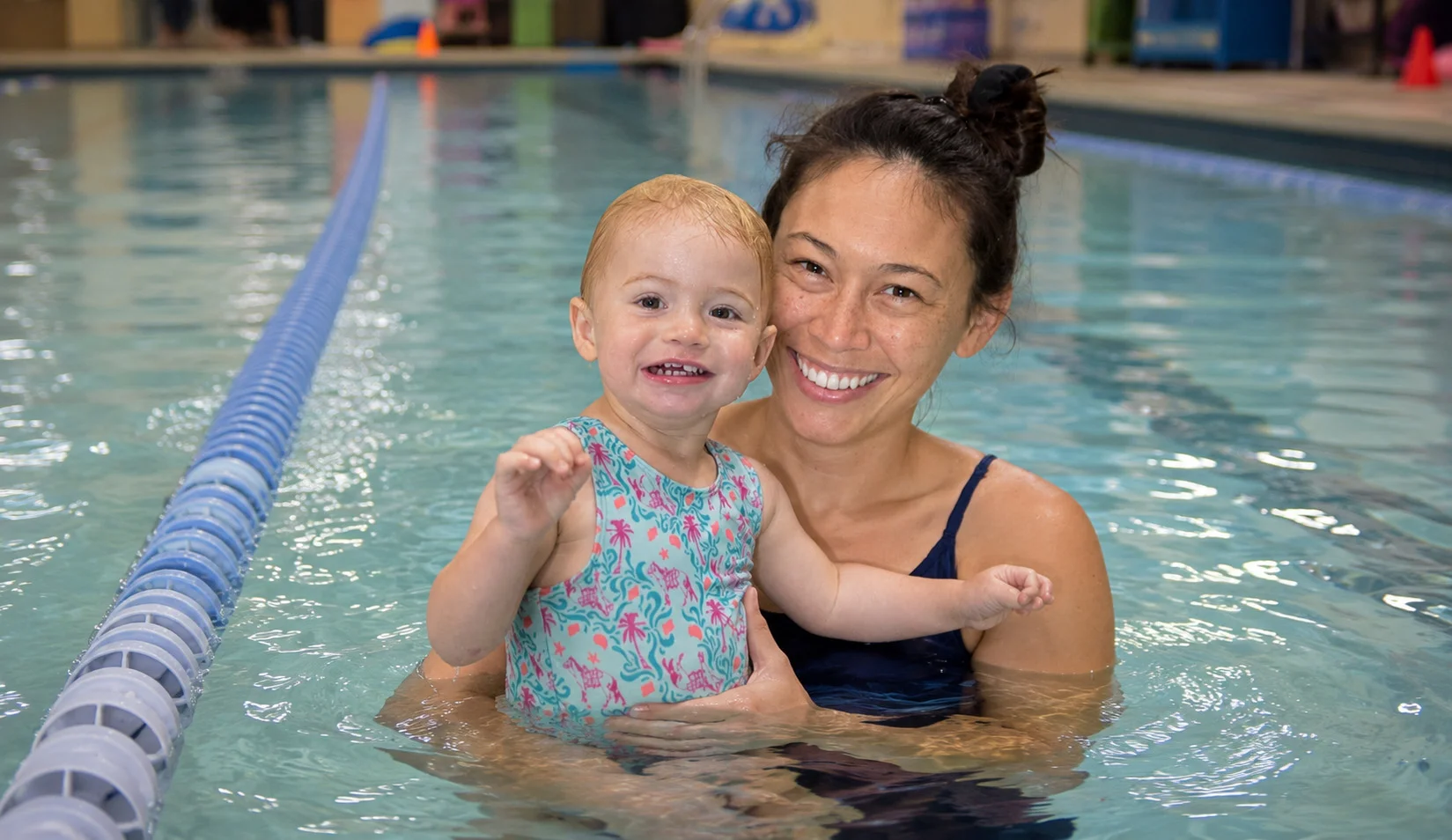
The secret to a stress-free transition is temperature and comfort. Standard recreational pools (often kept at 78°F to 82°F) are too cold for an infant’s developing thermoregulation system, which can cause muscle shivering and immediate distress. Prioritize warm pool baby lessons where water temperatures are maintained between 90°F and 92°F. Warm water allows an infant’s muscles to relax, encouraging natural kicking and easy breathing.
When entering the pool:
- Hold your baby securely against your shoulder or chest-to-chest.
- Walk down the steps slowly, letting the warm water touch their toes, knees, and tummy gradually.
- Keep your shoulders submerged so you remain at baby’s eye level, offering warm smiles, calm vocal reassurance, and steady eye contact.
Pool Exercises for Advancing Infant Water Confidence
In a warm pool, you have ample space to practice developmental movements that support early infant swimming lessons:
- The Supported Back Float: Rest your baby’s head against your shoulder and neck, placing one hand under their lower back and hips. Walk backwards slowly through the water. As you move, water gently lifts their hips and chest, giving them a calm sensation of horizontal buoyancy.
- Horizontal Front Glides: Support your infant under their armpits with your thumbs resting gently on their upper chest. Walk backward, guiding them forward in a gentle gliding motion through the water. This encourages them to kick their feet and engage their core muscles.
- Side-to-Side Swishing: With your baby facing you, hold them securely under the arms and gently sway them in a wide figure-eight motion. This movement stimulates the vestibular system within the inner ear, strengthening their natural sense of balance and body orientation.
- Splash and Catch: Encourage your baby to slap the water’s surface with open palms to make small splashes. Catching small floating balls reinforces hand-eye coordination and motor planning.
Creating a Safe and Supportive Pool Environment
Building lasting comfort requires a calm, structured atmosphere. Following a gentle approach to baby water adaptation ensures you navigate pool time with realistic expectations:
- Watch for Fatigue Cues: Infant swim sessions should typically last 20 to 30 minutes. Little bodies work hard in the water, and ending on a happy note prevents sensory overload.
- Maintain Predictable Structure: Babies thrive on routine. Structure each pool visit with a welcoming greeting, gentle warm-up holds, playful activity, and a calm, soothing song before exiting.
- Rely on Expert Instruction: Participating in parent-and-child classes led by patient, certified instructors gives you expert guidance on safe holds, cueing techniques, and developmental progressions.
Frequently Asked Questions About Baby Water Comfort
At what age can you start building infant water confidence?
You can begin building comfort on day one at home through gentle sponge baths and relaxed tub routines. Formal, structured parent-and-tot pool lessons typically welcome infants starting around 3 to 6 months of age, once their neck control is steady and their pediatric immunizations are underway.
How do I know if my baby is anxious or overstimulated in the pool?
Infants communicate distress through clear physical cues:
- Arching the back away from you
- Clenching fists tightly or bringing hands to the mouth frantically
- Quivering lips, wide-eyed staring, or sudden fussiness and crying
If you notice these cues, bring your baby to your chest in an upright embrace, lift their torso slightly out of the water, and offer calm, rhythmic soothing. If they remain unsettled, it is completely fine to step out of the pool and try again next time.
What pool temperature is best for infant swim activities?
The ideal water temperature for baby swimming lessons is 90°F to 92°F (32°C to 33.3°C). Infants have high surface-area-to-body-mass ratios and lose body heat much faster than older children or adults. Dedicated, warm-water pools ensure babies remain physically relaxed and eager to explore.
Conclusion
Building infant water comfort is a gradual, joyful journey that supports early motor milestones, strengthens sensory integration, and deepens parent-child bonds. Every gentle cup pour in the tub and every supported float in a warm pool lays the groundwork for natural aquatic ease.
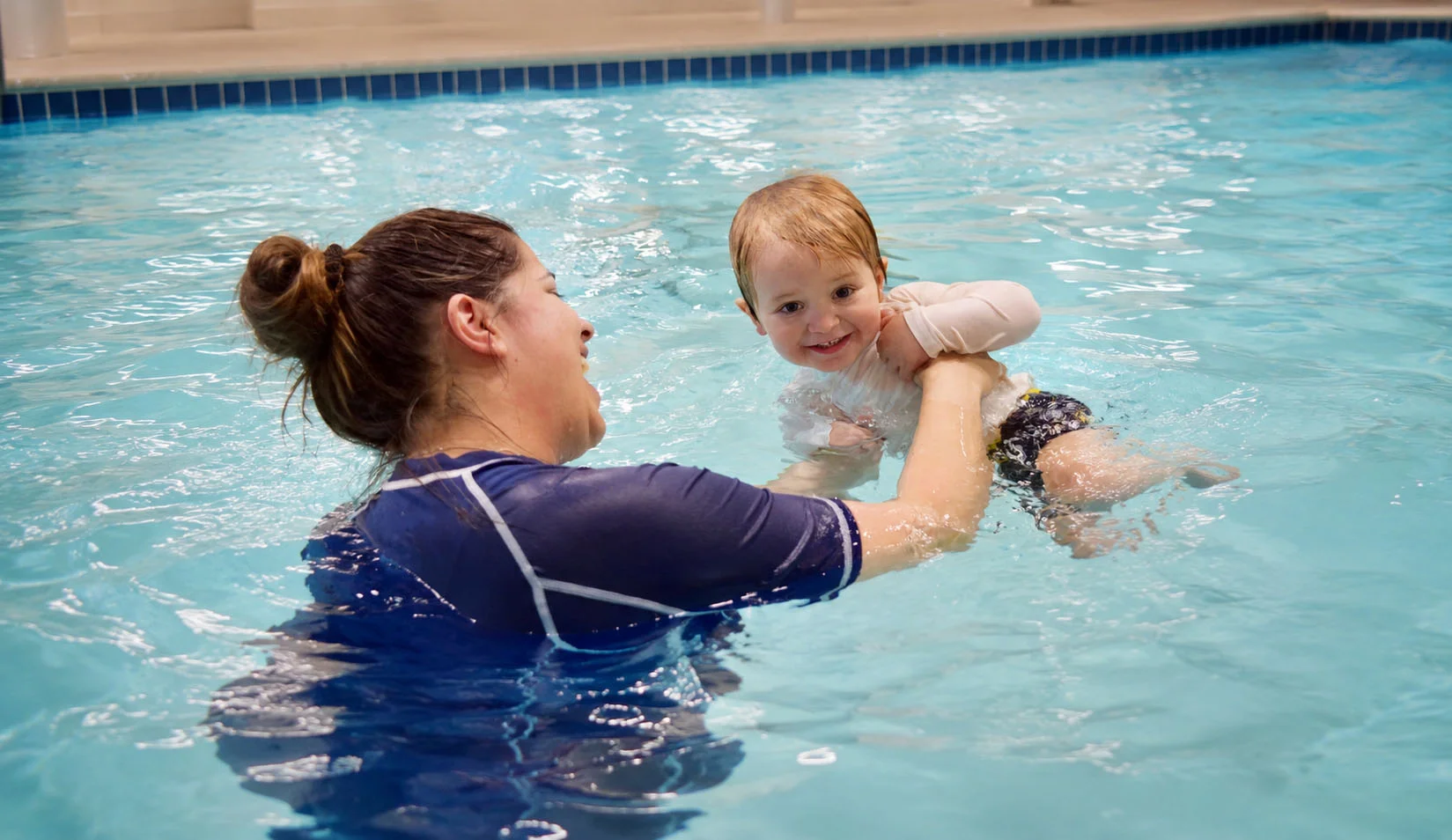
At American Swim Academy, our warm 92° indoor pools and caring, experienced instructors provide the ideal environment for Bay Area families in Fremont, Newark, Livermore, Dublin, and Walnut Creek. Check out our complete guide to infant swim lessons to discover how gentle, small-group classes can help your little one thrive in the water.
References
Jakobowicz O, Ogonowska-Slodownik A. “Supporting Infants’ Motor Development through Water Activities: A Preliminary Case-Control Study..” Healthcare (Basel, Switzerland), 2024. PMCID PMC11353617.