

How to Choose Water Safety Classes for Children
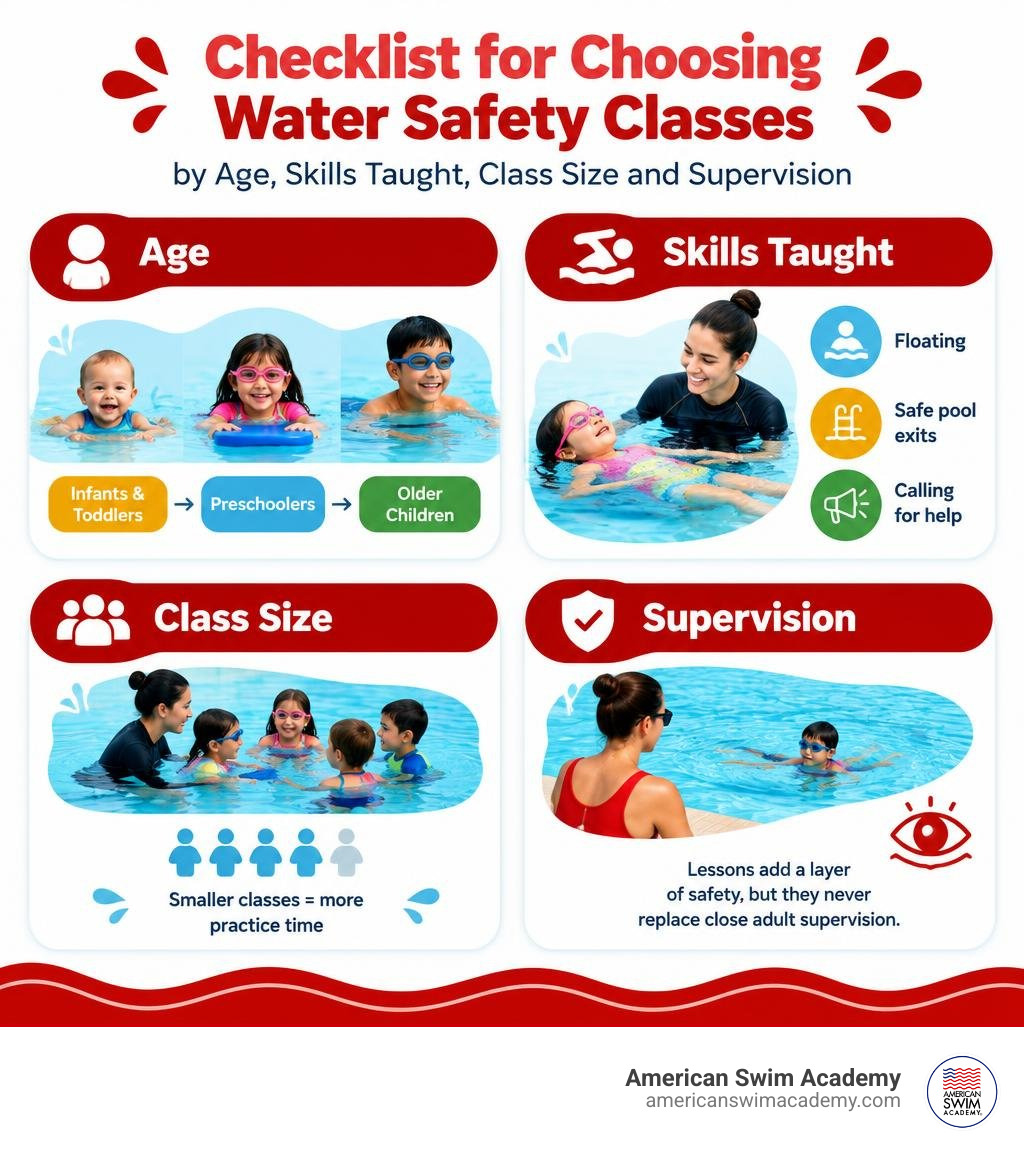
Choose water safety classes for children by age and skill: look for parent-and-child classes for infants and toddlers, beginner lessons for preschoolers, and skill-building lessons for older children. Ask how instructors teach floating, safe pool exits, and calling for help. Small classes can give each child more time to practice. Lessons add a layer of safety, but they never replace close adult supervision.
Enrolling in structured aquatic instruction gives young swimmers practical tools to build comfort, motor control, and situational awareness near water. For families near Fremont, Newark, Livermore, Dublin, and Walnut Creek in the East Bay area, American Swim Academy offers year-round indoor lessons in comfortable 92° pools with small student-to-teacher ratios. We will help you know what key elements to look for as your child learns lifelong swimming habits.
Understanding Water Dangers: Hidden Hazards and Essential Safety Rules
Water safety education begins with understanding where potential hazards exist. Many parents focus entirely on backyard pools, but water hazards can be found in everyday household items. Water as shallow as 2 inches poses a real risk to young toddlers because their upper bodies are top-heavy and their motor reflexes are still developing.
Establishing confidence early helps young learners respect water environments without feeling intimidated. Simple infant water confidence exercises during bath time lay the groundwork for comfortable, structured learning later on. By turning everyday water routines into low-stress practice sessions, parents help young children become accustomed to water splashes, balance adjustments, and gentle floating postures.
Recognizing Household Water Hazards
Household water safety requires constant vigilance and reliable physical barriers throughout your living space:
- Unattended Bathtubs: Never step away from an active bath, even for a few seconds to grab a towel or answer a phone. Always drain bathtubs immediately after use.
- 5-Gallon Buckets and Cleaning Pails: Heavy cleaning containers can tip or trap a curious toddler head-first. Empty all mop buckets and outdoor collection containers immediately after finishing chores.
- Toilets: Install simple toilet seat locks in bathrooms accessible to crawlers and toddlers to prevent curious explorations.
- Landscape Ponds and Fountains: Ensure garden water features have secure fencing or sturdy mesh grates over open surfaces.
- Pool Fencing: Residential pools should be enclosed by a 4-foot perimeter fence featuring self-closing, self-latching gates that open outward away from the pool area.
The Foundational Rules of Water Safety
Teaching your children foundational safety rules empowers them to make smart choices around water:
- Always Use the Buddy System: No one swims alone, regardless of their skill level or experience.
- First Look Around: Children should check if a responsible adult or certified lifeguard is present before approaching the pool deck.
- Feet-First Entry: Jump or step into unfamiliar water feet-first to prevent head or neck injuries from shallow depths.
- Walk on the Deck: Wet pool decks are slippery; walking prevents accidental falls and sudden slips into the water.
- Recognize Distress: Teach children that someone in trouble in the water often cannot splash or shout loudly, so alerting an adult immediately is essential.
Age-by-Age Guide to Water Safety Classes for Children
Enrolling your child in the right program depends on their physical coordination, cognitive understanding, and comfort in aquatic environments.
| Age Group | Target Safety Skills | Recommended Setting | Class Dynamic |
|---|---|---|---|
| 6–36 Months | Water comfort, gentle submersions, back float introduction, breath control | Warm indoor water (90°F+) | Parent-and-child interactive |
| 3–5 Years | Independent back floating, wall grip, roll-to-breathe, jump-turn-grab | Shallow safety ledges | Small group (3:1 or 4:1 ratio) |
| 6+ Years | Treading water, survival float, basic strokes, deep water stamina | Multi-depth pools | Small group or private lessons |
Parent-and-Child Acclimation for Infants and Toddlers (Ages 6 Months–3 Years)
Early water classes focus on sensory acclimation, comfort, and safety foundations. Guided by trained instructors, parents learn proper support holds that allow babies to experience buoyancy safely. Infants practice gentle breath control, relaxing on their backs, and turning toward a caregiver in the pool. This positive interaction builds water trust without creating sensory overload.
Preschool Water Survival and Beginner Lessons (Ages 3–5)
Preschoolers have the coordination to master essential self-rescue skills. Engaging swimming lesson plans for 3 to 5 year olds use structured play to teach independent back floating, wall-crawling (“monkey walking”), and rolling from front to back to breathe. Children also practice jumping into the pool, turning around underwater, and swimming back to the safety of the wall to hold on securely.
School-Aged Water Safety and Stroke Development (Ages 6+)
School-aged children develop stamina, stroke coordination, and deeper water independence. Classes for this age group focus on sustained treading water, survival floating for extended periods, rhythmic side breathing, and coordinated freestyle and backstroke movements. Instructors reinforce safety awareness so kids feel capable navigating various aquatic depths with steady confidence.
Critical Survival and Emergency Response Skills Taught in Safety Programs
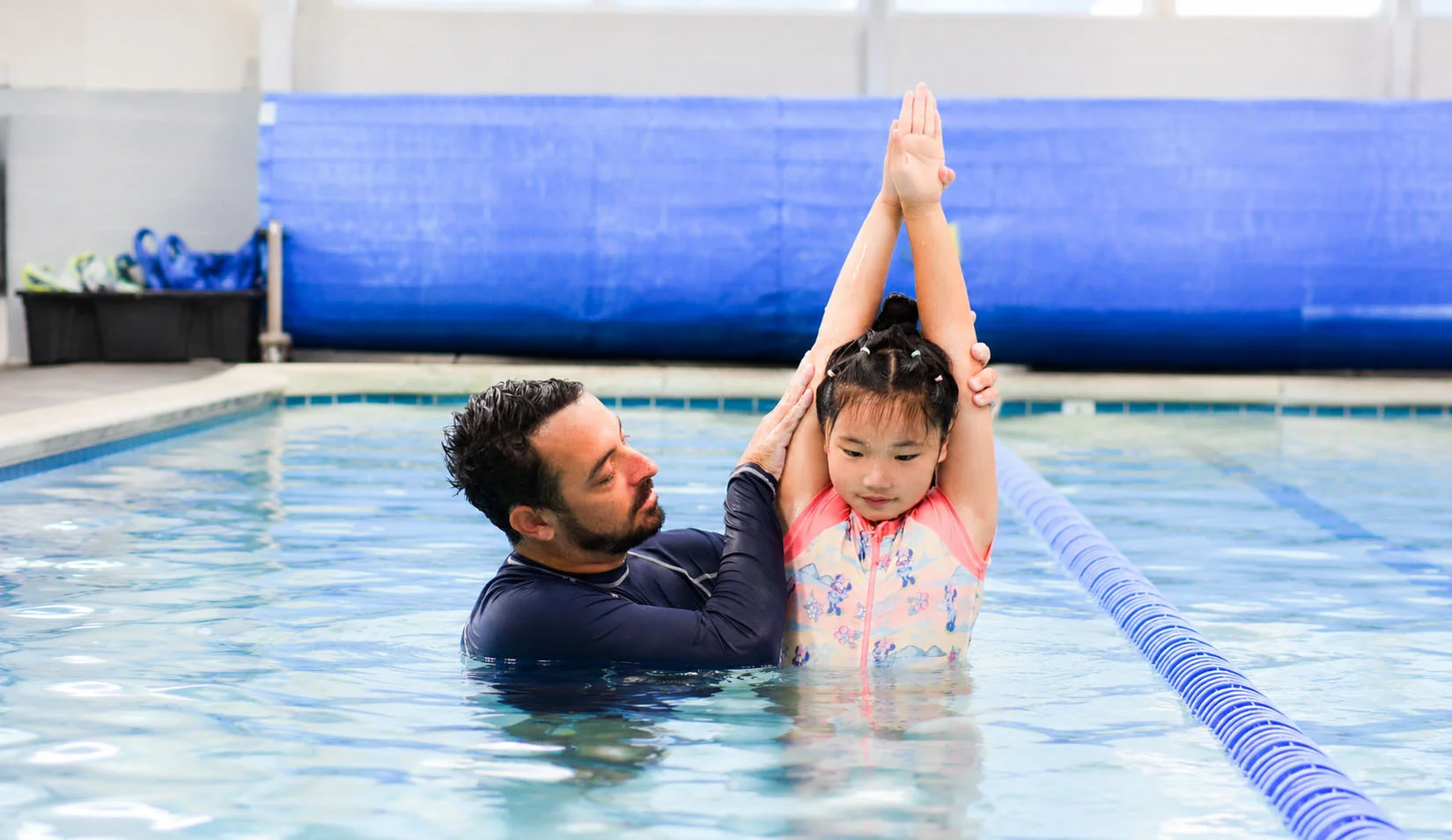
Water safety education teaches children not only how to swim, but also how to respond calmly in unexpected situations. Programs emphasize core self-rescue competencies:
- Floating comfortably on the back to rest and breathe.
- Changing body orientation in the water without panic.
- Locating and moving toward an exit point like steps or a ladder.
- Calling clearly for an adult’s help when someone else is struggling.
The “Reach or Throw, Don’t Go” Technique
One of the most important rules for young children is understanding that they should never jump in to save a friend or pet in distress. Entering the water puts the rescuer at risk. Instead, children learn the “Reach or Throw, Don’t Go” rule:
- Reach: Lie flat on the deck and extend an object—such as a pool noodle, towel, or shepherd’s crook—to pull the swimmer toward the edge.
- Throw: Toss a buoyant safety device, such as a life ring, kickboard, or rescue tube, so the swimmer can stay afloat.
- Call for Help: Shout loudly for a lifeguard or parent, and call 911 immediately if an adult is not present.
Life Jacket Safety and Flotation Equipment
A properly fitted life jacket is essential when spending time near lakes, rivers, or open ocean water. Ensure any life jacket chosen is U.S. Coast Guard-approved and matches your child’s current weight and chest dimensions.
It is important to distinguish certified safety devices from inflatable pool toys. Inflatable arm floaties and water wings create a false sense of security and can easily slip off or deflate. Rely on certified life jackets for open water settings, and focus on developing independent buoyancy skills during structured swim lessons.
Evaluating Local Programs and Choosing the Right Swim School
Selecting high-quality water safety classes children need requires looking closely at class structure and facility standards. Look for swim schools that prioritize safety-first progressions, certified instructors, and small class sizes.
Opting for small group swim lessons for kids ensures that your child receives individualized attention while still benefiting from peer encouragement. Instructors should hold credentials in CPR, First Aid, and water rescue techniques, alongside extensive training in child development and positive reinforcement.
Key Features to Look for in Water Safety Classes for Children
- Warm Water Environments: Children learn best when relaxed. Practicing in a year-round heated indoor pool kept at 92° prevents shivering, distraction, and muscle fatigue.
- Step-by-Step Curriculum: Look for clear skill levels that build upon foundational survival techniques before moving to advanced strokes.
- Positive, Caring Instructors: Gentle encouragement helps hesitant swimmers overcome water hesitation.
- Pristine Facility Sanitation: Advanced water filtration systems keep pool environments clean, safe, and comfortable for regular weekly attendance.
Frequently Asked Questions About Water Safety for Kids
How early should we enroll in water safety classes for children?
Children can begin gentle parent-and-child classes as early as 6 months of age. Starting around 12 months provides significant benefits for motor development, comfort, and early safety habits that stick with them as they grow.
What is the difference between traditional swim lessons and water safety classes?
Traditional swim classes often focus on stroke mechanics, speed, and athletic technique. Water safety classes prioritize survival competencies first—such as rolling onto the back to breathe, treading water, finding pool walls, and staying calm in unexpected situations.
Do swimming lessons fully protect a child around water?
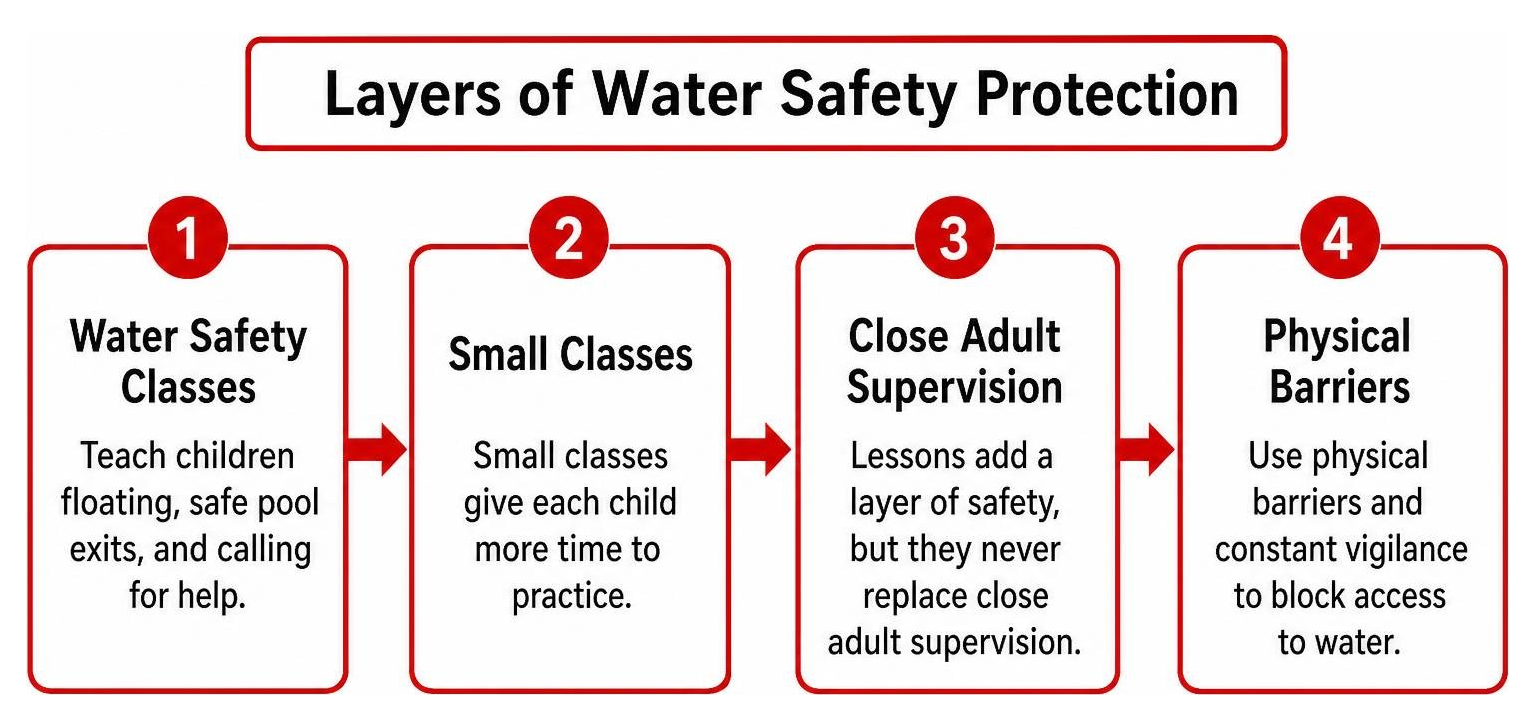
No single safety measure is foolproof. Swim lessons are one important layer of protection within a multi-layered safety plan. They must always be paired with active, uninterrupted adult supervision, secure physical barriers around pools, and certified life jackets in open water environments.
What should my child bring to their first water safety lesson?
Bring a well-fitting swimsuit, a towel, and approved swim diapers if your child is not yet potty-trained. Many facilities provide all required teaching tools.
Conclusion
Water safety is a year-round journey that builds confidence, physical fitness, and vital life skills. By combining dedicated adult supervision, physical home barriers, and structured swim lessons, you create a comprehensive safety net for your family.
At American Swim Academy, our warm 92° indoor pools and small class sizes provide the ideal environment for Bay Area children in Fremont, Newark, Livermore, Dublin, and Walnut Creek to become safe, confident swimmers. Explore our swim programs today to find the perfect fit for your child’s aquatic journey and help them enjoy water safely for life.