

A Safe, Gentle Start to Swim for Infants
Swim for infants is less about teaching strokes and more about building comfort, movement, and safe habits in warm water. Many babies can begin parent-supported water acclimation around 3 to 6 months, when they are comfortable, healthy, and able to participate with close adult support. Every session should be calm, short, and supervised within arm’s reach.
Early lessons can help babies become familiar with floating, kicking, reaching for the pool wall, and responding to a parent’s guidance. Swim aids may support play, but they do not replace hands-on supervision or guided instruction.
At American Swim Academy, we help Bay Area families build these skills through warm-water, small-group lessons designed around each child’s pace and needs.
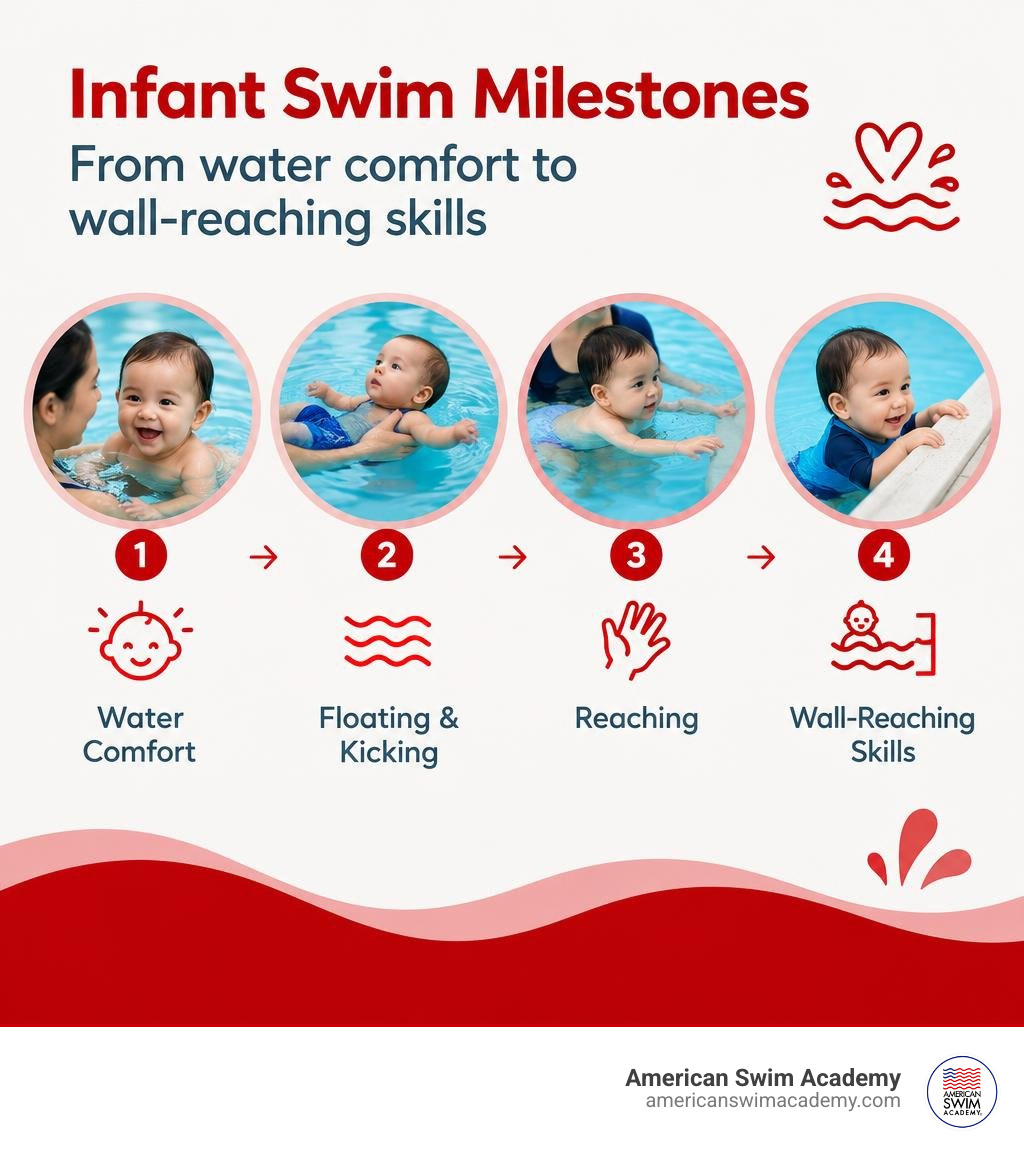
Essential Developmental Stages in Swim for Infants
Watching your little one experience the buoyant wonder of the pool is one of the most rewarding adventures of early parenthood. When structuring early aquatic experiences, understanding your child’s physical and cognitive development is essential. Introducing water skills at the right pace creates a foundation of genuine comfort rather than stress.
During the first several months, infants transition through distinct phases of motor control, sensory processing, and strength. Following gentle infant swim tips helps ensure that every splash encourages curiosity while keeping your baby calm and secure.
- 3 to 6 Months (Sensory Introduction & Buoyancy): At this stage, sessions center entirely on gentle touch, warm-water acclimation, and sensory exploration. Babies enjoy floating on their backs while cradled securely in a parent’s arms, feeling the gentle resistance of the water.
- 6 to 12 Months (Active Kicking & Core Stability): As babies gain trunk stability and sit independently, they begin splashing, engaging in purposeful kicking, and exploring balance. They start reaching for floating toys and holding onto the pool edge with parent support.
- 12 to 24 Months (Toddler Exploration & Basic Self-Rescue Foundations): Toddlers build coordination rapidly. They practice kicking toward a parent, rolling from front to back, and grasping the wall to pull themselves up to safety.
Because little bodies lose heat much faster than adults, pool temperature plays an immense role in how enjoyable these developmental milestones feel. Learning how to find the best warm pool baby lessons near you ensures your child practices in an environment heated to a cozy 92 degrees, preventing shivers and keeping focus on playful learning.
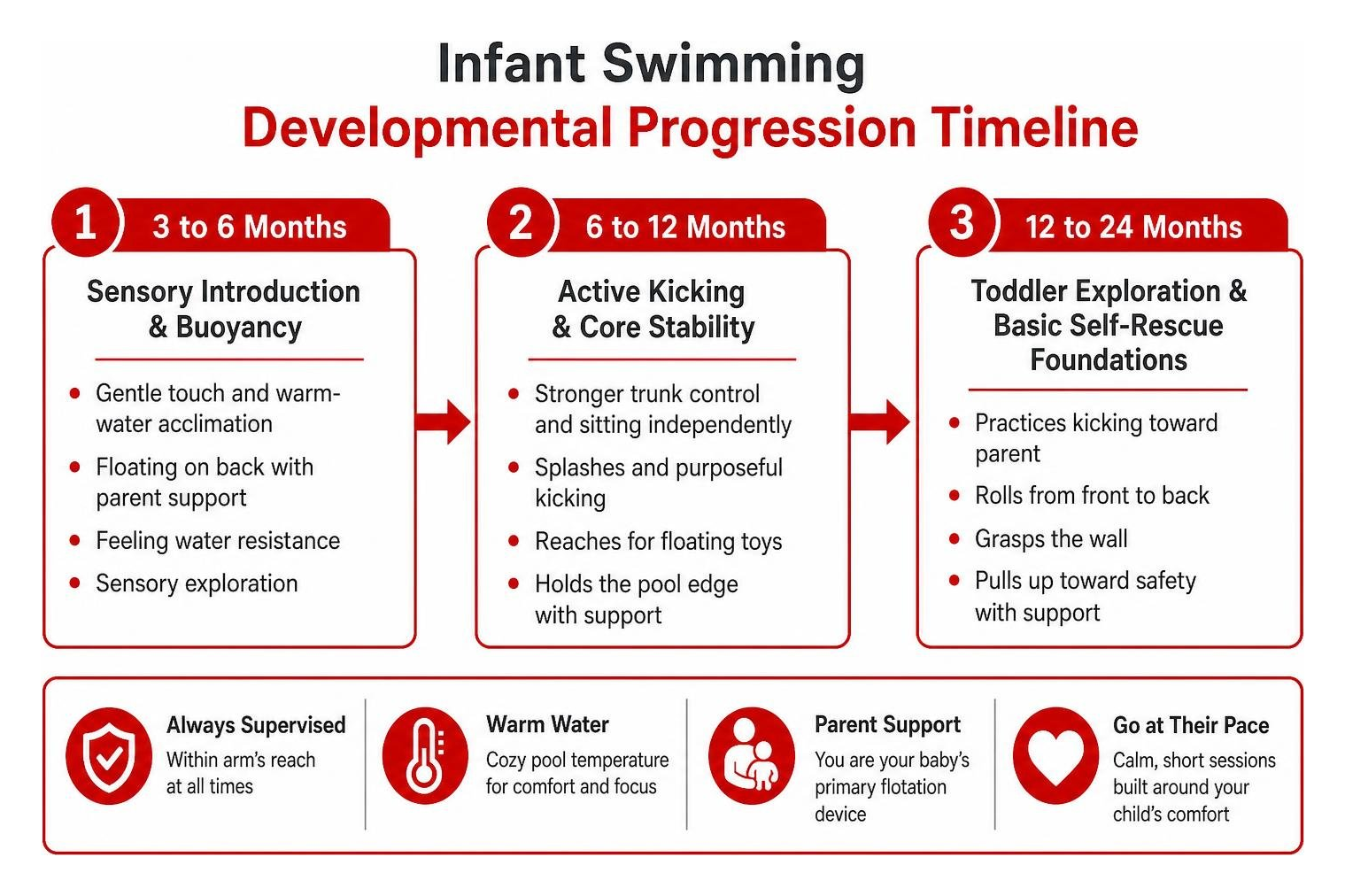
Developmental Readiness for Early Water Acclimation
Babies are born with natural reflexes, such as primitive stepping and brief breath-holding responses when submerged gently, but true water competency requires cognitive maturity and muscle development. Before starting formal sessions, parents should evaluate basic readiness markers.
Good head and neck control is the primary milestone to look for before introducing more dynamic water movements. When deciding when and how to start swimming lessons for infants, focus on parent-assisted comfort. During these early stages, you are your baby’s primary flotation device. The physical contact of skin-to-skin or chest-to-chest holding releases oxytocin, reassuring your infant that the water is an inviting, joyful space to explore.
Key Safety Certifications for Baby Water Equipment
If you choose to use recreational water equipment during family pool outings, verifying safety certifications is essential. Not all pool items on retail shelves meet the same standards.
- EN 13138-1:2021: This European safety standard is among the strictest in the world for swimming aids. It governs buoyancy characteristics, seam strength, and harness security to ensure devices maintain support during active movement.
- ASTM F963-23: The benchmark American standard for toy and recreational safety, ensuring materials are rigorously tested for mechanical durability, stability, and child-safe construction.
- Non-Toxic & Skin-Safe Materials: Look for equipment crafted from BPA-free, phthalate-free, and OEKO-TEX certified fabrics. An infant’s delicate skin can quickly develop friction burns or allergic reactions from low-grade PVC plastics.
- Multi-Point Safety Harnesses: Secure swim equipment should feature 5-point harness systems or sophisticated three-point safety closures that cannot be unclipped by curious toddler fingers.
Evaluating Float Devices and Flotation Equipment for Babies
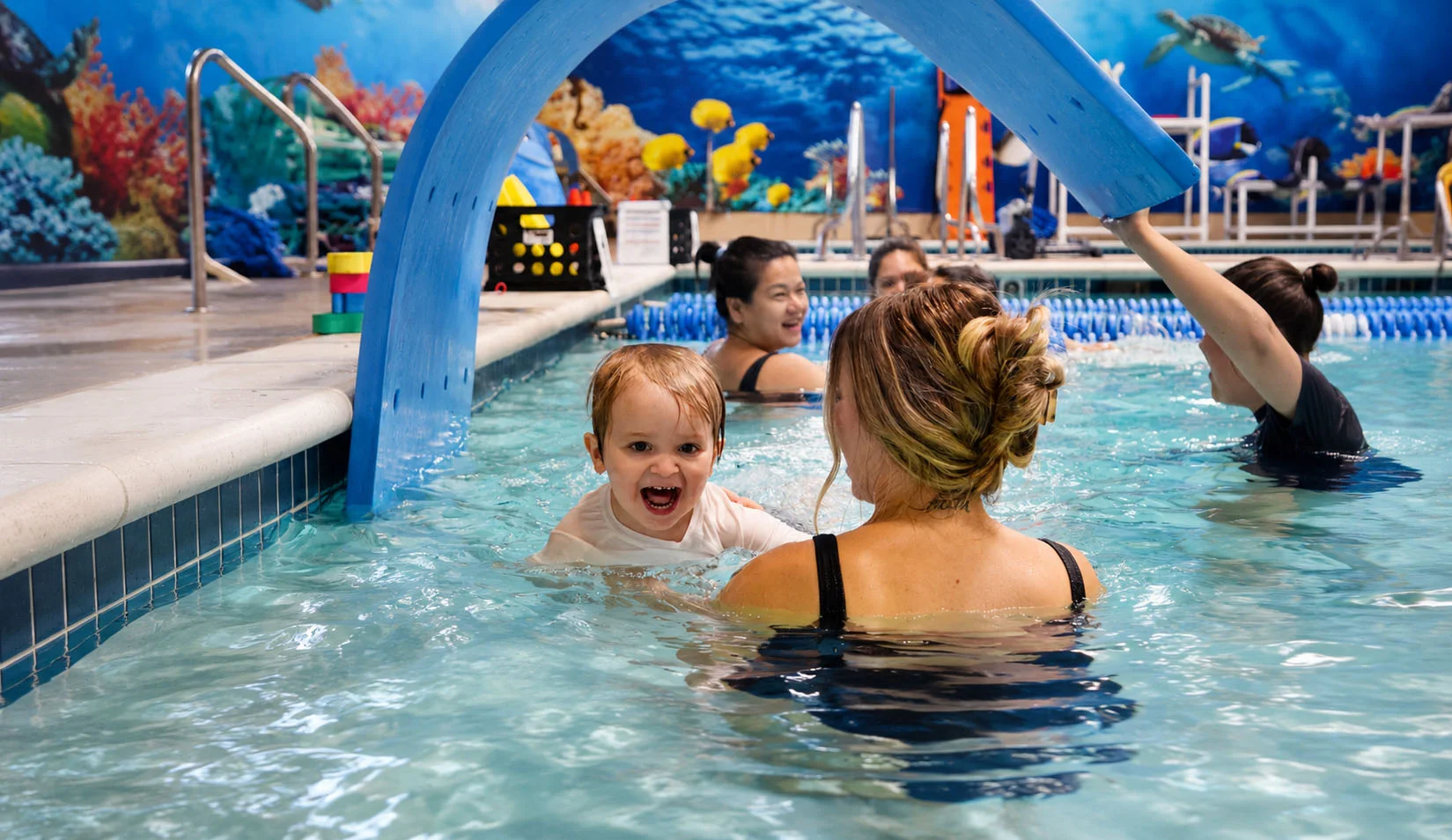
When selecting recreational gear for pool time, ergonomics matter just as much as buoyancy. Traditional pool rings often hold babies in an awkward, vertical posture. This upright orientation can accidentally teach a “bicycle-pedal” kick, which works against the streamlined, horizontal body alignment needed for efficient swimming.
Modern swim trainers focus on supporting a natural horizontal swimming posture. Keeping the chest slightly angled forward with the legs free behind encourages natural frog kicks and flutter kicks while engaging the core muscles. Exploring infant swim lessons highlights how proper body positioning early on translates directly into natural stroke mechanics later.
Comparing Solid Foam, Inflatable Aids, and Vests in Swim for Infants
Parents are often faced with an overwhelming array of flotation options, ranging from air-filled rings to high-tech foam trainers. Understanding how these tools function helps you make the safest choice for family pool days.
| Feature / Metric | Traditional Inflatable Floats | Solid Foam Trainers (e.g., Mambobaby) | Multi-Chamber Aids (e.g., SWIMTRAINER) | Hybrid Swim Vests (e.g., Fibby) |
|---|---|---|---|---|
| Buoyancy Type | Single/dual air bladders | Solid PearlFoam™ core | 5 independent air chambers | Lightweight EPP buoyancy block |
| Puncture Risk | High (can deflate rapidly) | Zero (completely air-free) | Low (multi-chamber backup) | Zero (solid-core foam) |
| Target Age / Weight | Varies widely | 3–24 months (up to 40 lbs) | 3 months–4 years (13–40 lbs) | 2–6 years (15–30 kg) |
| Safety Certifications | Basic toy standards | ASTM F963, EN 13138 | ASTM F963-23 tested | EN 13138-1:2021 certified |
| Body Posture | Vertical / seated | Horizontal or back float | Natural horizontal swim angle | Dynamic forward swim posture |
| Harness Security | None or simple strap | 5-point anti-slip harness | Inflatable chest pad & belt | 3-point childproof closure |
| Interactive Learning | None | Visual cues / canopy shade | Structured color-coded progression | Dedicated learning app integration |
Solid foam devices remove the worry of unexpected leaks or punctures, providing steady, permanent buoyancy. Meanwhile, multi-chamber designs offer targeted support developed from decades of swim school experience. Newer innovations like Fibby act like a “balance bike” for the pool, combining a lightweight expanded polypropylene (EPP) buoyancy unit with a neoprene harness and a companion mobile app that turns water safety exercises into interactive games for parents and toddlers. For more context on how buoyancy aids fit into a broader safety picture, the World Health Organization’s overview of water safety explains why supervision and skill-building remain the foundation of water comfort and aquatic security worldwide.
Self-Rescue Skills Versus Reliance on Flotation Devices
While swim aids can provide fun during family recreation, they come with an important note: they are learning aids, not safety devices. Over-reliance on float suits, puddle jumpers, or armbands can limit skill-building for both the child and parent.
When children spend all their pool time in upright flotation devices, they may assume the water will always hold them up automatically. This can lead to impulsive jumps into the water without understanding their natural buoyancy.
In contrast, structured lessons prioritize fundamental self-rescue mechanics:
- Breath Control: Learning to close the mouth and hold breath automatically upon water contact.
- Rolling to the Back: Transitioning from a face-down position into an independent, relaxed back float to rest and breathe.
- Pool Wall Grabs & Elbow Climbs: Turning back toward the edge after entering the water and holding on with two hands.
No flotation device can ever replace constant, active touch supervision. An adult should always remain within arm’s reach of an infant in or around water, regardless of what equipment is being used.
How Guided Lessons and Parent-Tot Programs Build Lifelong Confidence
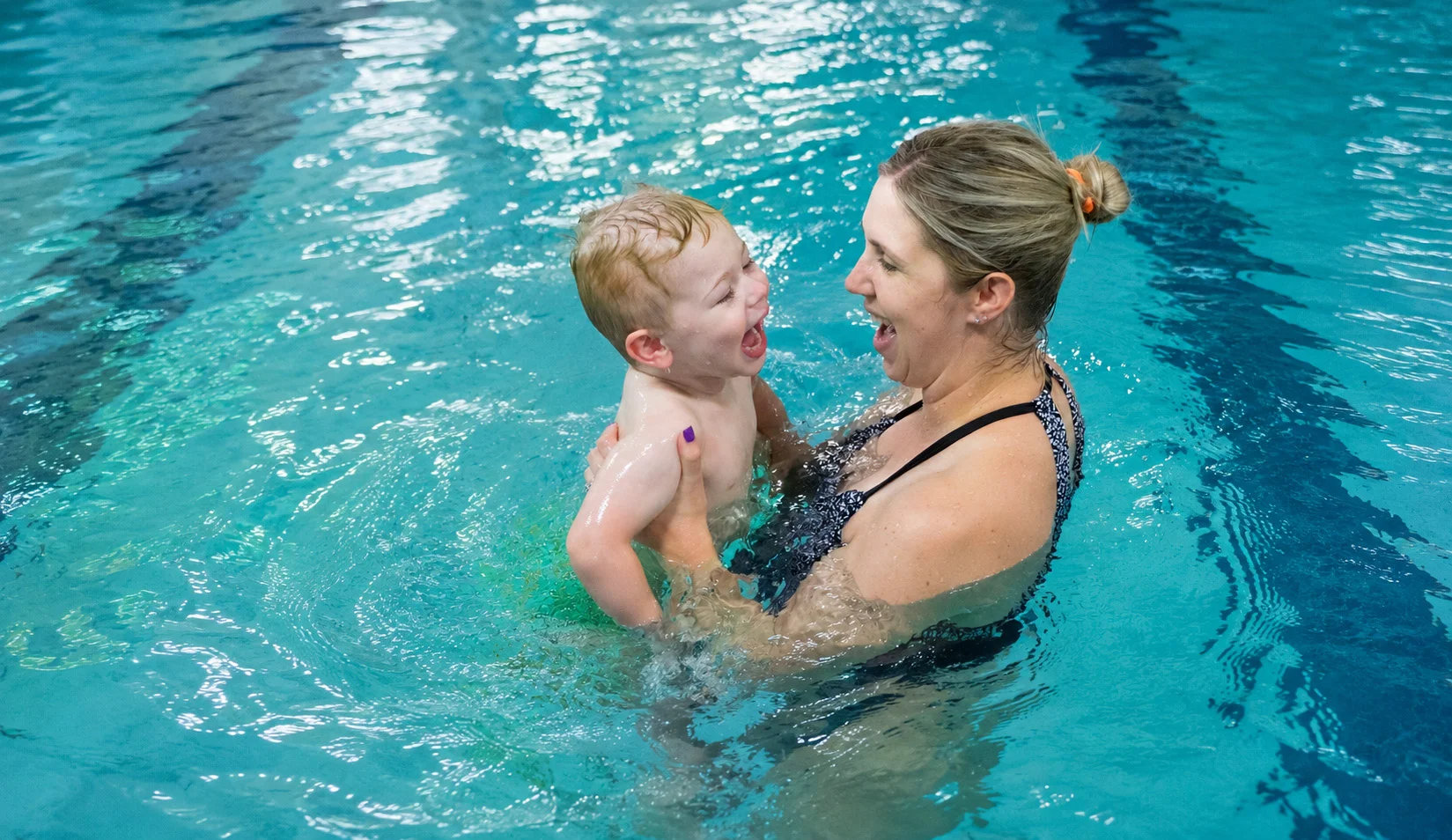
While backyard pool toys are fun, structured parent-and-tot classes offer an enriching environment that supports your child’s physical, emotional, and cognitive growth. Sharing water acclimation alongside an experienced instructor transforms swimming into a positive bonding ritual.
Reviewing our guide to finding mom and tot swim classes shows how shared water time strengthens attachment. When babies look into their parent’s calm, smiling face while floating or gliding, they associate the aquatic environment with love, safety, and security.
Under professional guidance, babies learn gentle breath control through songs, cues, and interactive games. Instructors show parents how to hold and support their little ones correctly, ensuring that motor skills develop smoothly. Taking time to understand how to choose the best swimming classes for infants helps you find a program that emphasizes patience, developmental milestones, and positive reinforcement over rigid drills.
Community and Warm-Water Class Options Across the Bay Area
Consistency is the secret to building strong water habits. Enrolling in year-round lessons ensures that your baby retains muscle memory and comfort across every season.
For families in Northern California, American Swim Academy offers dedicated, indoor warm-water facilities designed specifically for young learners:
- If you live in Contra Costa County, our infant swim lessons in Walnut Creek provide a soothing, temperature-regulated pool where babies can explore without getting chilly.
- In the East Bay, parents can easily sign up for baby swimming classes in Livermore or visit our welcoming facilities in Fremont, Newark, and Dublin.
Our warm 92-degree pools and intimate class sizes ensure that every infant receives focused attention from caring, highly trained instructors.
Frequently Asked Questions About Infant Swimming
What is the ideal age to introduce swim for infants?
Most pediatricians and aquatic experts recommend beginning parent-assisted water acclimation between 3 and 6 months of age. At this stage, babies have developed steady neck control, their immune systems are stronger, and they can comfortably enjoy the sensory experience of a heated pool. Always consult your pediatrician before your baby’s first pool session.
Are solid foam swim aids safer than inflatable floats?
Solid foam swim aids (such as those using solid PearlFoam™ or EPP cores) provide permanent buoyancy because they cannot puncture, leak, or suddenly deflate like single-chamber inflatables. However, no float device is completely fail-safe. Both foam and inflatable devices require active, hands-on adult supervision at all times and must never be treated as life jackets.
Can swim aids replace structured infant swim classes?
No. Flotation aids are recreational tools meant for play and temporary support during family pool outings. They do not teach independent breath control, genuine water balance, or self-rescue skills like rolling onto the back or swimming to the pool wall. Structured lessons build true muscle memory and aquatic comfort through guided instruction.
Conclusion
Introducing your baby to the water is an unforgettable journey that sparks physical coordination, builds cognitive confidence, and creates joyful family memories. While modern, certified swim aids can add fun to recreational pool days, nothing replaces the lifelong value of guided, parent-supported lessons.
At American Swim Academy, we are proud to welcome little swimmers across the Bay Area into our comfortable, 92-degree indoor pools. With small class sizes, caring instructors, and a gentle, child-centered approach, we make every splash a safe and happy step forward.
Ready to start your baby’s aquatic journey? Explore our beginner swim programs and find a class near you in Fremont, Newark, Livermore, Dublin, or Walnut Creek today!