

Finding the Best Fremont Indoor Swim School for Your Family
If you’re looking for a Fremont indoor swim school, finding the right fit for your family is all about matching your child’s needs with the right environment.
Fremont families are lucky — this city has a strong lineup of year-round indoor swim programs for every age and skill level.
But not all swim schools are the same. Pool temperature, class size, instructor experience, and how well a school works with kids who have special needs like autism — these things matter a lot when you’re choosing where to enroll your child.
Water safety is serious. Swim lessons can reduce the risk of water incidents by up to 88%, and learning early builds confidence that lasts a lifetime. The right school makes that process feel safe, warm, and even fun.
This guide breaks down everything you need to know — programs, pricing, facilities, and what to look for — so you can make the best choice for your family.
Why Choose a Fremont Indoor Swim School for Your Family?
When looking for the perfect place for your child to learn to swim, the environment plays a massive role in their success. While outdoor pools are wonderful for summer recreation, an indoor facility offers distinct advantages that make the learning process smoother, safer, and much more enjoyable.
In Fremont, where winter breezes can be chilly and summer afternoons can get incredibly hot, indoor pools provide a controlled oasis. You never have to worry about sunburns, wind chill, or unexpected rain cancellations. This climate-controlled setting allows children to focus entirely on their instructors rather than shivering or squinting against the sun.
Beyond physical comfort, choosing a dedicated indoor facility is a key step in protecting your family. Learning to swim early is a wonderful way to build confidence and safety around the water. Early and consistent education helps children feel secure and prepared. Families can also review the CDC’s healthy swimming resources for additional guidance on safer, cleaner water habits. By enrolling your child in regular lessons, you are giving them the tools they need to stay secure around backyard pools, lakes, and beaches. For more details on this, you can read about How Swimming Lessons Keep Your Child Safe.
Optimal Pool Conditions and Warm Water Temperatures
Have you ever tried to relax your shoulders while stepping into a cold pool? It is nearly impossible! For a young child who might already feel a bit anxious about the water, a cold pool can trigger a physical stress response. Their muscles tense up, their teeth chatter, and their focus shifts from learning to simply wanting to get out.
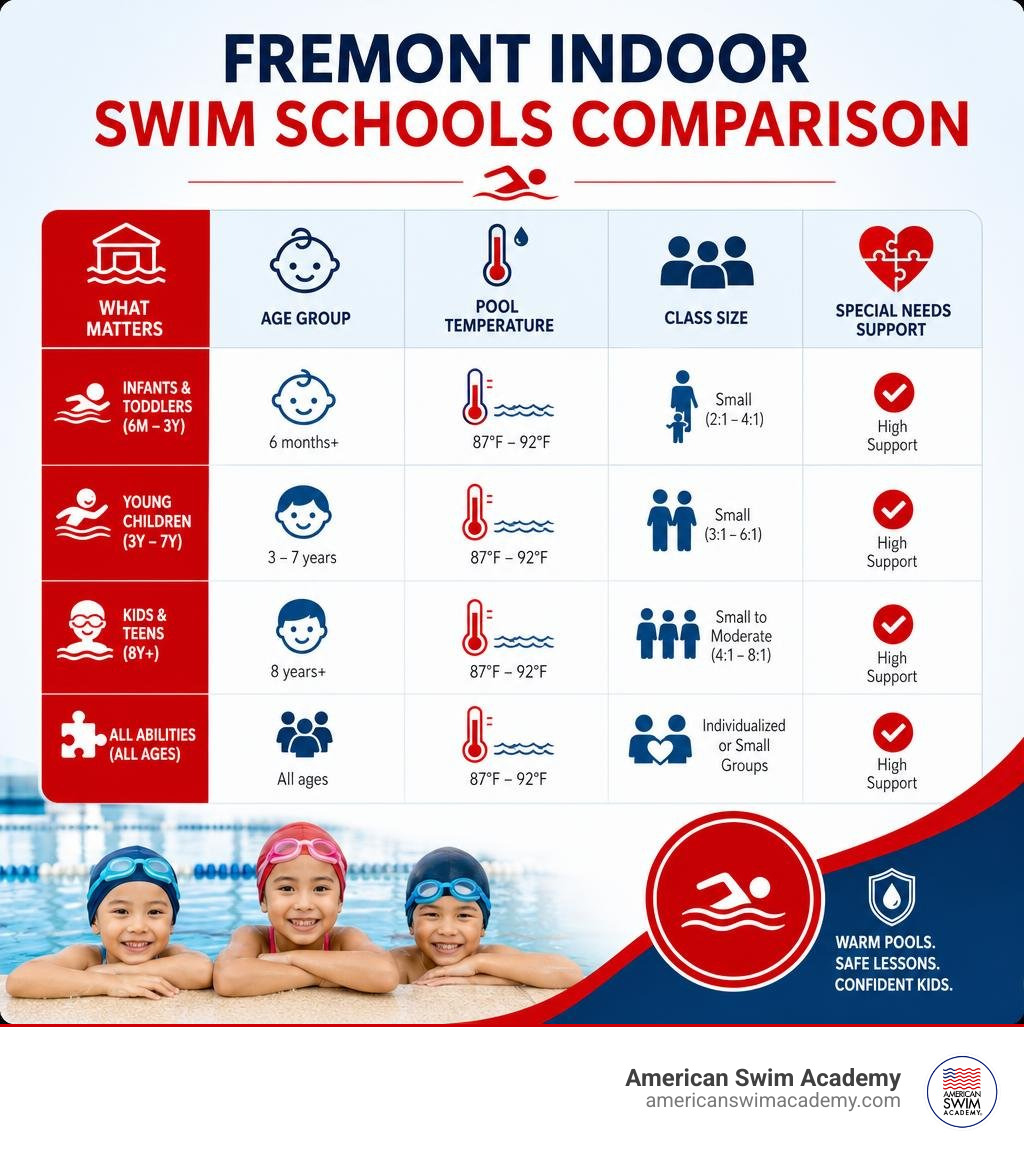
That is why we keep our indoor pools heated to a warm, tropical 92°F. At this temperature, the water feels like a cozy bath. Warm water instantly reduces anxiety, relaxes tight muscles, and allows children to comfortable submerge, float, and kick. When the water feels welcoming, children look forward to their lessons, and their progress accelerates dramatically.
Year-Round Consistency vs. Seasonal Programs
Many parents view swimming as a seasonal summer activity. However, learning to swim is very much like learning a new language or playing an instrument. It requires consistent, repetitive practice to build muscle memory and true confidence.
Seasonal programs that only run for a few weeks in July often result in a “two steps forward, one step back” pattern. A child might learn to float in August, but if they do not touch the water again until the following June, those skills are frequently lost.
Year-round indoor lessons provide the weekly consistency kids need to retain what they have learned and steadily build upon their skills. Weekly schedules allow parents to easily integrate swim practice into their school-year routines, making progress tracking a seamless part of their development.
Essential Programs and Age Groups Served
A high-quality swim school should accommodate your family at every stage of growth. Whether you are introducing a six-month-old infant to the water for the first time or helping an older child refine their competitive strokes, having a clear, structured pathway is essential. You can explore the full range of options on our page detailing Our Programs.
Parent-Tot and Infant Classes
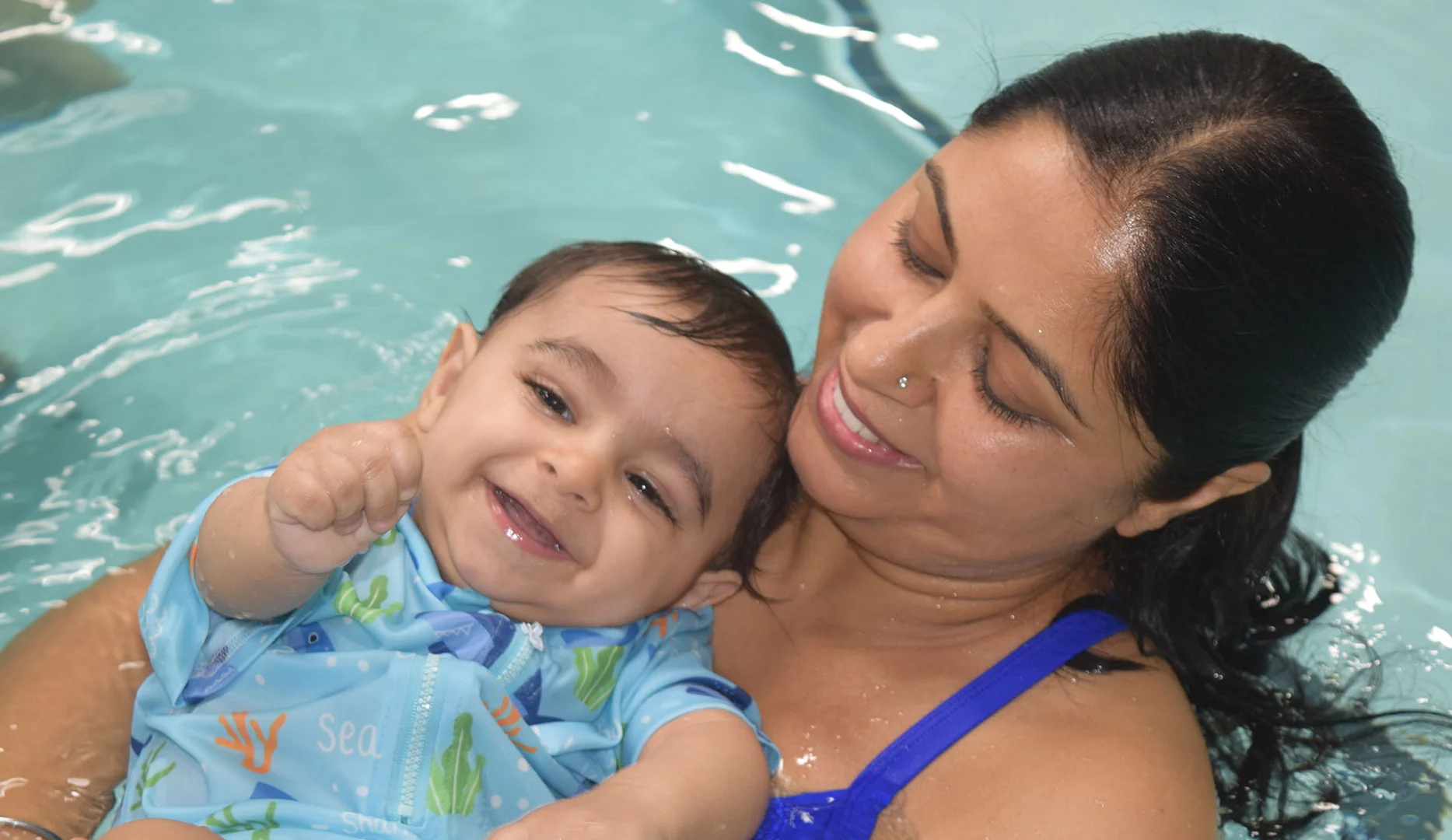
The journey to becoming water-safe starts much earlier than many parents realize. Our infant swim classes, designed for babies aged 6 to 33 months, focus heavily on water comfort, gentle exploration, and basic safety skills.
These classes require parent participation, which serves two wonderful purposes. First, it provides a beautiful bonding experience in a warm, relaxing environment. Second, it teaches parents how to safely handle their children in the water, giving them the confidence to support their little ones’ learning. Through songs, games, and gentle splashes, babies learn to love the water, blow bubbles, and practice basic back floats.
Preschool and Youth Progression in a Fremont Indoor Swim School
As children grow into the 3-to-4-year-old preschool age group and the 5-to-8-year-old youth group, their lessons transition to building independence. A structured progression is key to keeping kids motivated without overwhelming them.
In these levels, we focus on establishing core fundamentals first: breath control, independent front and back floating, and building a strong, efficient kick. Only after a child is completely comfortable and balanced in the water do we introduce advanced stroke mechanics like Freestyle and Backstroke. This step-by-step approach ensures that safety is always the foundation of every physical skill. To understand why this progression is so vital to your child’s development, take a look at our guide on Water Safety – The Importance of Swimming Lessons to Kids.
Adult Swim Lessons and Stroke Refinement
It is a common misconception that swim schools are only for children. In reality, over half of all U.S. adults have never taken a formal swim lesson. Whether you are an adult who wants to overcome a lifelong fear of the water, a fitness enthusiast looking for a low-impact workout, or a swimmer wanting to refine your stroke technique for a triathlon, specialized adult lessons are available.
Adult classes are typically longer — often 45 minutes — to allow for ample practice time. Instructors use logical, adult-focused teaching progressions that respect your pace and goals, helping you build lasting confidence and efficiency in the water.
Key Features to Look For in a Quality Swim Program
As you research options for a Fremont indoor swim school, it is helpful to look past the marketing and focus on the structural elements that directly impact your child’s experience. To learn more about our specific facility standards, visit our page on About Us – Locations – Fremont.
Small Class Sizes and Low Instructor-to-Student Ratios
The ratio of students to teachers is one of the most critical factors in how quickly a child learns. In large group classes, children spend a significant amount of time waiting on the steps for their turn, which can lead to them getting cold, distracted, or anxious.
Small class sizes ensure that your child receives personalized coaching and maximum active swim time. For our youngest preschool and beginner levels, we maintain an intimate 2:1 student-to-teacher ratio. This ultra-low ratio means the instructor is always within arm’s reach, providing constant physical support and immediate technique corrections. For older children working on advanced stroke training, a 4:1 ratio keeps the class dynamic while still allowing for individualized attention.
Inclusive Instruction and Special Needs Accommodations in a Fremont Indoor Swim School
Every child deserves the chance to learn how to swim in a space where they feel understood and supported. Children with special needs, including autism, often benefit immensely from the sensory-friendly nature of warm-water pools, but they require instructors who are trained in adaptive teaching methods.
A high-quality program provides specialized swim lessons in a calm, patient, and highly structured environment. Instructors use visual aids, clear and simple commands, and predictable routines to reduce anxiety and build trust. By focusing on the unique learning style of each individual child, we can help every swimmer find safety and joy in the water.
Frequently Asked Questions About Fremont Swim Lessons
What is the best age for a child to start swim lessons?
While formal, independent swim lessons typically yield the best results starting around age three or four, early water exposure is highly recommended. Enrolling your infant in a parent-tot class as early as six months helps prevent water anxiety from developing in the first place. Starting early ensures that by the time they are developmentally ready for independent instruction, the pool is already a familiar, happy place.
How long does it take for a child to become water safe?
Because every child learns at their own unique pace, there is no single timeline. However, consistency is the magic ingredient. On average, a child over the age of three who attends weekly, year-round private or small-group lessons can develop strong, functional safety skills in about six months (or roughly 20 to 30 hours of in-water instruction). Younger toddlers may take closer to a year of consistent practice to achieve the same level of comfort and independence.
What qualifications should indoor swim instructors have?
You should always look for a program that prioritizes rigorous staff training. Instructors should hold active certifications in CPR, First Aid, and Lifeguarding. Beyond safety certifications, the best schools put their teaching staff through extensive in-house training programs that focus on child development, positive reinforcement techniques, and adaptive teaching methods for special needs.
Conclusion
Finding the right Fremont indoor swim school is an investment in your child’s safety, physical health, and lifelong confidence. By choosing a facility that offers warm 92°F pools, small class ratios, and a supportive, year-round learning environment, you set your family up for success.
At American Swim Academy, we have been proudly teaching the Bay Area to swim since 1973. Our dedicated Fremont team is ready to welcome your family into our warm waters and help your child build skills that will protect and serve them for a lifetime.
Are you ready to take the first step? Get Started with us today, or visit our About Us – Locations – Fremont page to learn more about our schedules and find a class time that fits your life.