

Your First Step to Water Safety: Mom and Tot Swim Classes Near You
If you’re looking for mom and tot swim classes near me, here’s a quick overview of what to expect and how to find the right fit:
- Who they’re for: Babies and toddlers ages 4 months to 3 years, with a parent or caregiver in the water
- Class length: Typically 25–30 minutes per session
- Class size: Small groups, usually 4–6 children per instructor
- What happens: Songs, guided movement, water play, and foundational safety skills like floating and breath control
- What to bring: Swimwear and towels for both you and your child, plus swim diapers for babies
- Where to look: Private swim schools, community recreation centers, and dedicated swim academies
Your baby’s first splash in a pool is a big moment. It can be exciting — and a little nerve-wracking.
The good news? Parent-child swim classes are designed for exactly this. You get in the water with your child. You hold them, guide them, and help them feel safe. And while it looks like simple play, a lot is happening beneath the surface.
Early water exposure — as young as 4 months old — helps babies develop breath control, body awareness, and water confidence. These aren’t just fun skills. They’re foundational safety habits that can last a lifetime.
For Bay Area families with busy schedules — or children with sensory or special needs — finding the right class close to home matters. A warm indoor pool, small class sizes, and a patient instructor can make all the difference between a child who dreads the water and one who thrives in it.
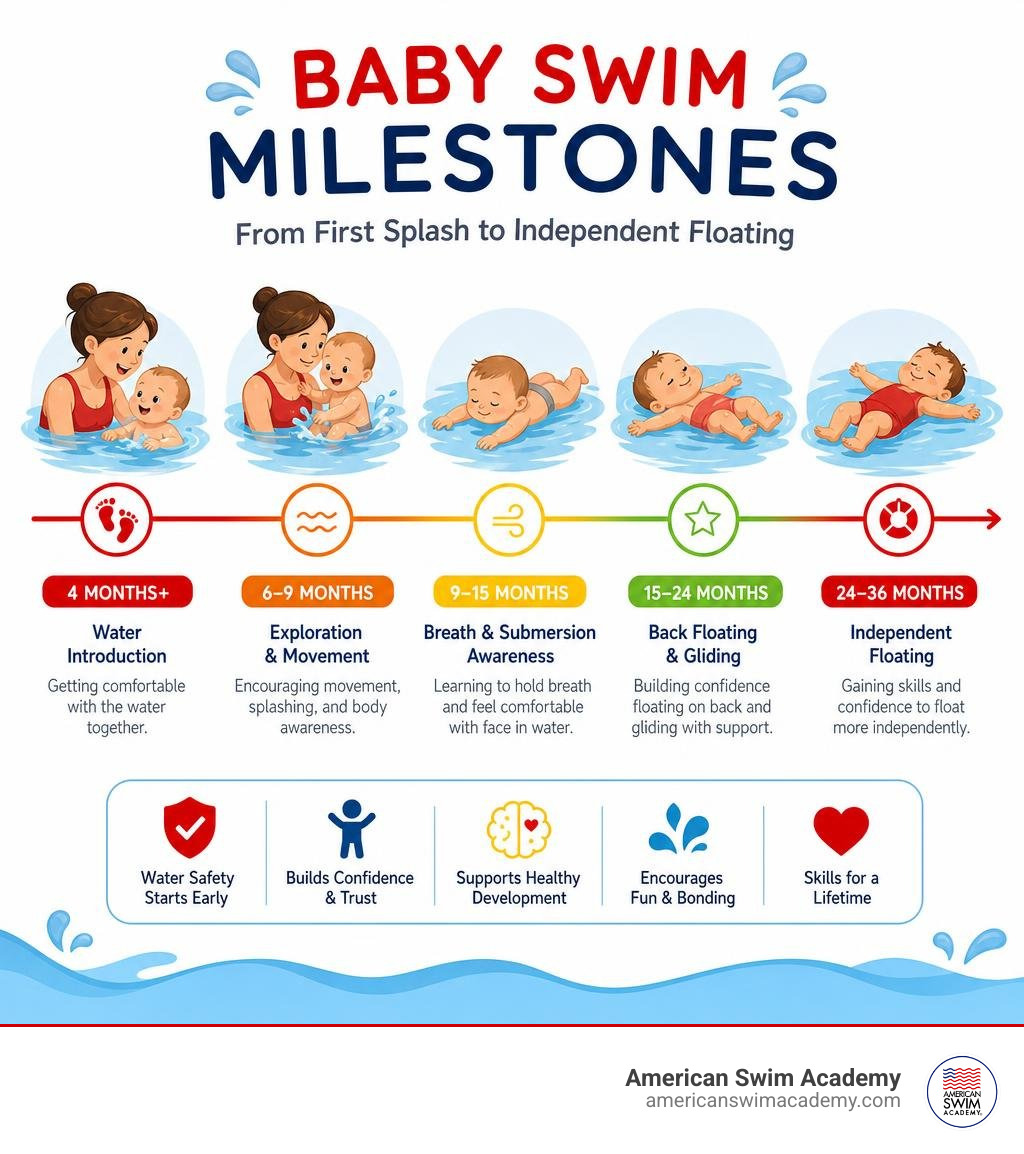
What Are Parent-Child Swim Lessons?
Parent-child swim lessons—often affectionately called “mom and tot” or “parent-tot” classes—are structured aquatic sessions where an adult caregiver accompanies an infant or toddler in the water. Unlike traditional swim lessons where an instructor teaches a child independently, these classes rely on you to be your child’s primary support system.
In our water adaptation programs, the goal isn’t to teach a six-month-old the butterfly stroke. Instead, the focus is on building comfort, trust, and basic water safety. Under the guidance of a certified instructor, you will learn how to hold your baby safely, encourage them to splash, and help them experience the unique sensation of buoyancy.
These classes typically run for 25 to 30 minutes. Why so short? Because young babies lose body heat faster than adults, and their cognitive bandwidth for processing new sensory environments is limited. A half-hour session is the “sweet spot” where infants can stay engaged, happy, and warm without becoming overtired or fussy. Attendance is usually recommended once or twice a week to build a consistent, predictable routine that reinforces memory and comfort.
Why Search for Mom and Tot Swim Classes Near Me?
When parents actively type mom and tot swim classes near me into their search bars, they are usually looking for convenience, safety, and community. Traveling long distances with a diaper-bag-toting toddler is a recipe for pre-class meltdowns. Having a high-quality facility close to home in the Bay Area—whether in Fremont, Newark, Livermore, Dublin, or Walnut Creek—makes it vastly easier to stick to a weekly routine.
Moreover, searching locally connects you with your immediate community. You will meet other neighborhood parents navigating the same sleep schedules and teething milestones. Most importantly, local indoor facilities allow for year-round swimming. In California, we are fortunate to have beautiful weather, but outdoor pools can still get chilly or become subject to seasonal closures. Indoor, temperature-controlled environments ensure that your baby’s swim education doesn’t have to pause when winter rolls around.
Age Requirements and Class Structure
Most developmental experts and pediatricians agree that babies can safely begin parent-child swim lessons around four months of age. At this stage, infants have developed sufficient neck control to hold their heads up and are beginning to actively engage with their surroundings.
In a typical class structure, you can expect:
- Small Group Formats: Classes are kept intentionally small—typically a 4:1 or 6:1 student-to-instructor ratio—to ensure that the instructor can give personalized attention and feedback to every parent-child duo.
- Age-Appropriate Grouping: Classes are usually divided into developmental brackets, such as infants (4 to 12 months) and toddlers (16 to 35 months). This ensures that a crawling baby isn’t in the same group as an active, walking toddler who is ready for more independent movement.
- Structured Play: Every activity is masked as a game, song, or rhyme, which helps lower any potential anxiety and keeps the atmosphere light and joyful.
Key Benefits of Early Water Adaptation
Starting swim lessons early does wonders for a child’s overall development. Water provides a unique physical environment where gravity is minimized, allowing babies to move their limbs in ways they cannot yet manage on land.
Beyond physical progression, the emotional benefits are profound. As highlighted in our guide on why baby swim lessons are fun for baby and parents, this dedicated pool time offers a rare space free from screens, chores, and daily distractions. It is 30 minutes of pure, uninterrupted bonding where your baby looks directly into your eyes, feels your supportive touch, and associates the water with safety and love.
Building Water Confidence and Safety Skills
Water confidence is the ultimate shield against panic. When a child is comfortable in the water from an early age, they are much less likely to panic if they experience an unexpected splash or accidental submersion.
In a parent-child class, you will practice fundamental safety skills together:
- Breath Control: Teaching babies to hold their breath on cue using gentle verbal prompts (like “Ready, set, go!” followed by a gentle blow on their face or a light sprinkle of water).
- Safe Submersion: Helping babies experience brief, controlled underwater submersions when they are developmentally ready, ensuring they learn to close their airways naturally.
- The Back Float: Helping your baby relax on their back while you support their head and torso. This is a critical survival skill that allows a swimmer to rest and breathe.
- The Rollover Technique: Teaching toddlers how to roll from a face-down position to a back float to find air.
_compressed.webp?alt=media&token=923f1f0d-e4f8-4264-a33a-3055a4136a6c "A young baby practicing a relaxed back float with the gentle support of their parent's hands")
Physical and Cognitive Development
The resistance of water requires babies to use their entire bodies to move, which builds muscle strength and cardiovascular endurance much more rapidly than land-based play alone.
- Motor Skills and Balance: The constant shifts in water buoyancy force a baby’s vestibular system to adapt, improving their balance and coordination.
- Bilateral Coordination: Activities like kicking and reaching across the midline of the body stimulate bilateral brain development, helping build connections between the left and right hemispheres.
- Sensory Processing: The tactile sensation of water on the skin, the sounds of splashing, and the visual tracking of colorful pool toys provide rich sensory stimulation that supports cognitive growth.
Finding the Best Mom and Tot Swim Classes Near Me
Finding the right program requires looking past a simple map search. You want to evaluate the facility’s design, safety standards, and overall philosophy. If you are looking for local resources, you can read up on the swimming lessons for East Bay kids – 510 Families guide to see what makes our local aquatic community so vibrant. Additionally, checking local community guidelines and standards can give you a sense of regional recreation expectations.
What to Look for in Mom and Tot Swim Classes Near Me
When touring or researching local swim facilities, keep these critical factors in mind:
- Pool Temperature: This is non-negotiable for infants. A standard lap pool is usually kept between 78°F and 82°F—which is far too cold for a baby and will lead to shivering, blue lips, and crying. Look for facilities like ours that maintain a warm 92°F pool temperature. Warm water relaxes muscles, keeps babies comfortable, and makes the experience highly positive.
- Small Class Sizes: To ensure a safe, calm environment, look for low student-to-teacher ratios.
- Certified and Caring Instructors: Instructors should be specifically trained in infant development, water safety, and positive reinforcement techniques.
- Cleanliness and Sanitation: High-quality UV filtration and state-of-the-art water purification systems are vital for protecting sensitive infant skin and eyes.
If you are ready to transition your child to independent swimming as they grow, check out our programs designed for beginners to see how we build upon these early parent-child foundations.
Comparing Private Swim Schools and Municipal Programs
While both private swim academies and local city recreation departments offer parent-child classes, there are distinct differences in scheduling, environment, and facilities.
| Feature | Private Swim Academies (e.g., American Swim Academy) | Municipal Recreation Programs |
|---|---|---|
| Water Temperature | Warm (typically 90°F – 92°F year-round) | Cooler (typically 80°F – 84°F) |
| Scheduling | High flexibility, year-round indoor classes | Seasonal sessions, limited times |
| Make-Up Classes | Often generous and easy to schedule | Rarely offered for missed sessions |
| Facility Focus | Custom-built for teaching young children | Multi-use public pools (lap swim, play) |
| Class Consistency | Same instructor and cohort options | High instructor turnover between seasons |
While municipal options are wonderful civic resources, many families find that the warm water and scheduling convenience of a dedicated year-round private swim academy better fit their lifestyle and busy schedules.
Frequently Asked Questions About Baby Swim Lessons
What should we bring to our first swim class?
Preparation is the key to a stress-free first day. We recommend packing a dedicated swim bag with:
- A comfortable swimsuit for your baby and appropriate swimwear for you (as you will be in the pool, too!).
- Two towels (one for baby, one for you).
- A change of dry, warm clothes for after the lesson.
- A plastic bag to store wet swimsuits.
- Any post-swim snacks or a bottle, as swimming works up a big appetite!
As your child grows and gains confidence, they will eventually transition to our pre school classes where they swim independently with their instructor.
What happens during a typical parent-tot swim session?
A standard class is structured to keep babies engaged and secure:
- The Warm-Up (5 mins): We start with welcoming songs, splashing hands, and gentle bouncing to get acclimated to the water temperature.
- Skill Practice (15 mins): We move through guided exercises such as practicing back floats, kicking with kickboards, blowing bubbles, and safe wall-holding.
- Structured Play (5 mins): Using colorful toys, cups, and mirrors, we practice reaching, grasping, and sensory exploration.
- The Cool-Down & Exit (5 mins): We finish with a soothing closing song and practice a safe pool exit technique, ensuring your child understands how to climb out of the water safely.
Are swim diapers required for babies and toddlers?
Yes, absolutely. To maintain pool hygiene and comply with health department regulations, all children who are not fully potty-trained must wear a swim diaper.
Most high-quality facilities enforce a double-diaper policy. This means your child must wear:
- A disposable swim diaper (which does not swell up in the water like a regular diaper).
- A snug-fitting, reusable fabric swim diaper over the top of the disposable one.
This double-barrier system is highly effective at preventing pool contamination, keeping the water safe and clean for everyone.
Conclusion
Finding the right mom and tot swim classes near me is an investment in your child’s safety, development, and happiness. At American Swim Academy, we make this journey warm, safe, and incredibly fun. Our custom-built, indoor facilities feature pristine 92° heated pools designed specifically to keep your little ones comfortable and smiling.
With small class sizes and highly trained, caring instructors who understand the nuances of infant development, we provide the perfect environment for your baby’s first splashes. We invite you to visit one of our convenient Bay Area locations in Fremont, Newark, Livermore, Dublin, or Walnut Creek.
Ready to make a splash? Get started today and explore our year-round indoor swim programs to find the perfect class for your growing water baby!