

Why Infant Swim Lessons in Walnut Creek, CA Could Be One of the Best Decisions You Make
If you’re looking for infant swim lessons in Walnut Creek, CA, finding the right program is one of the most important decisions you can make for your child’s safety and development.
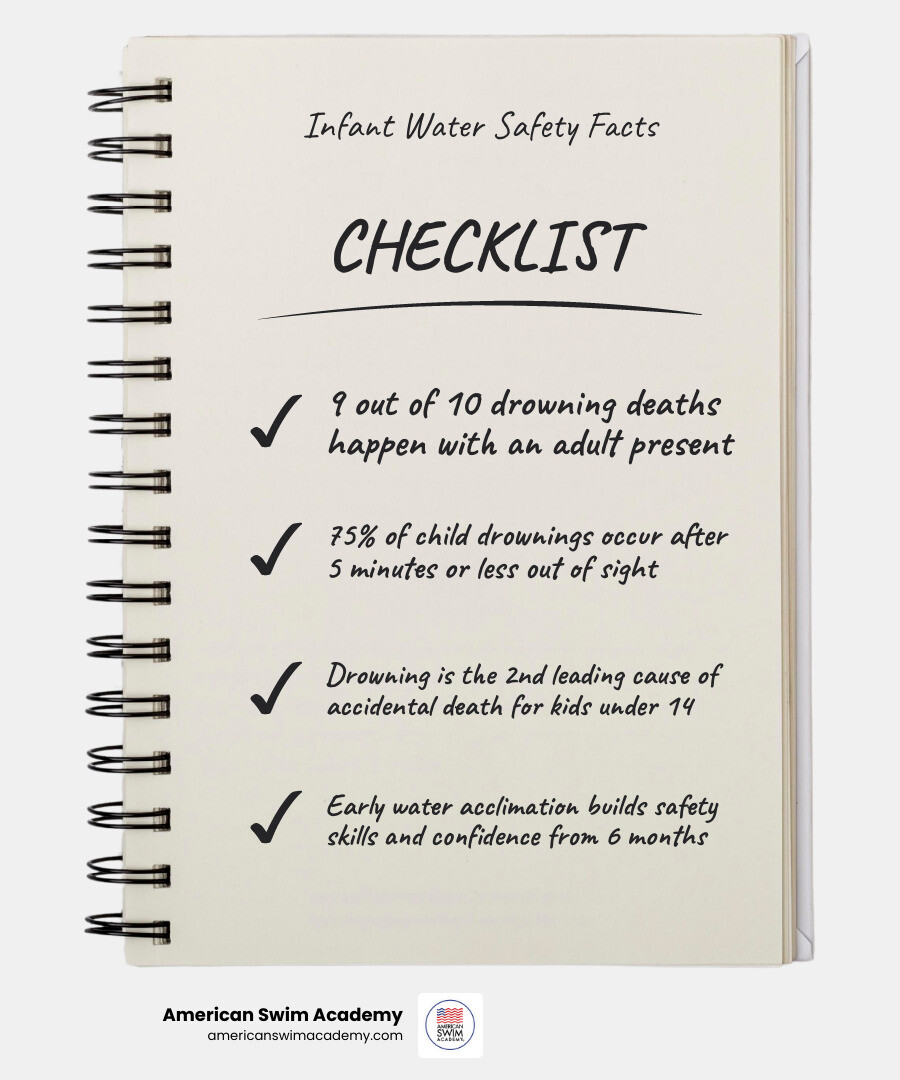
Drowning is the second leading cause of accidental death for children under 14 in the United States. What makes that number even harder to sit with: 9 out of 10 drowning deaths happen while an adult is present, and 75% occur after a child has been out of sight for five minutes or less.
That’s not meant to scare you. It’s meant to show why getting your baby comfortable and safe in the water early genuinely matters.
The good news? Walnut Creek and the surrounding East Bay have excellent options for infant swim lessons — from warm-water specialty schools designed with the youngest swimmers in mind to structured parent-and-me classes.
Whether your family needs a calm, sensory-friendly environment, a small class size that fits a packed schedule, or a parent-and-me class where you get in the pool too, there’s a program here that fits.
Why Start Infant Swim Lessons in Walnut Creek CA Early?
When parents think of swim lessons, they often picture five-year-olds practicing their freestyle stroke or learning how to breathe to the side. However, introducing your child to the water during infancy—specifically between 6 and 33 months—lays an invaluable foundation for safety, physical coordination, and emotional confidence.
At this early stage of development, babies have a natural predisposition to water. They spent nine months in a fluid environment before birth, and when introduced to a warm pool early on, they tend to adapt with remarkable ease. Waiting until a child is three or four years old can sometimes mean working through deeply ingrained water anxieties. Starting early helps bypass that fear phase entirely, replacing it with a healthy respect and love for the water.
Beyond water comfort, starting early is a proactive step in water safety. While no child is “drown-proof,” early exposure helps reduce the panic response if a child ever falls into water unexpectedly. Formal swim lessons can also be an important layer of protection for young children.
To learn more about how parent-and-child classes build this vital foundation, check out our Water Babies – Guide to Mom and Tot Swim Classes.
Essential Water Safety Skills for Babies
In an infant swim class, we aren’t teaching your baby the butterfly stroke. Instead, we focus on fundamental survival and adaptation skills. These building blocks are designed to help a baby navigate the water safely under close supervision:
- Breath Control: Through gentle, structured cues, babies learn how to hold their breath when their faces are splashed or briefly submerged. This prevents water inhalation and builds confidence.
- Back Floating: One of the most critical lifesaving skills is learning to roll onto the back and float. This allows a child to rest, breathe, and keep their airway clear of the water.
- Wall Grabbing and Holding: Babies learn to reach out, grab the edge of the pool, and hold on unassisted. This teaches them what to do if they ever accidentally fall in near a pool edge.
- Water Exit: Instructors guide babies to pull themselves up and out of the water (elbow, elbow, tummy, knee) to understand where safety lies.
These essential layers of protection are the core focus of our early curriculum. You can read more about how we introduce these concepts on our Our Programs – Water Adaptation page.
Developmental Benefits of Early Water Play
While safety is always the primary goal, the developmental side effects of infant swimming are incredibly exciting. The pool acts as a giant sensory playground that supports your baby’s growing brain and body:
- Motor Skills and Muscle Strength: Moving through water provides gentle resistance, which helps babies build core strength, coordination, and muscle tone much faster than they can on dry land.
- Vestibular Stimulation: The balance centers in a baby’s inner ear are highly stimulated when floating, tilting, and moving through water, which directly benefits their overall balance and coordination.
- Cognitive Development: Studies suggest that early swim lessons can support cognitive development, as bilateral movements (using both sides of the body to kick and paddle) help build neural pathways across the brain.
- Parent-Child Bonding: In our busy, screen-filled world, spending 30 uninterrupted minutes skin-to-skin in a warm pool with your baby creates deep emotional security and trust.
What to Look for in a Quality Infant Swim Program
Not all swim schools are created equal, especially when it comes to the unique physical and emotional needs of infants. Babies cannot regulate their body temperature the way adults do, and their immune systems are still developing.
When searching for the right program, you want to look beyond just the schedule and pricing. Safety protocols, instructor qualifications, and pool conditions should be at the top of your checklist.
To help you evaluate what matters most, you can explore our comprehensive Our Programs – FAQ for answers to common safety and facility questions.
Ideal Pool Temperature and Hygiene
For an infant, pool temperature is not a matter of luxury—it is a matter of safety and comfort. If a pool is too cold (such as standard recreational pools heated to 78°F–82°F), a baby’s muscles will tense up, their lips may turn blue, and they will likely cry, associating the water with physical discomfort.
- The Warmth Factor: Infant swim lessons should ideally take place in water heated to 92°F. This warm-bath temperature keeps babies relaxed, happy, and physically loose, allowing them to focus on learning and enjoying the water.
- Indoor Environment: An indoor pool shielding your baby from the wind, direct sun, and changing East Bay weather is highly preferable for year-round consistency.
- Strict Hygiene Standards: Because diaper accidents can happen, a quality facility must enforce a strict “double-diaper” policy (a reusable swim diaper over a disposable swim diaper) and utilize advanced filtration systems to keep the water pristine.
Small Class Ratios and Instructor Qualifications
The magic of a great swim lesson lies in the hands of the instructor. For infants, you want a warm, patient, and highly trained educator who understands child development, not just swim strokes.
- Small Class Sizes: For infant parent-participation classes, a small ratio (such as 4:1) ensures that the instructor can give personalized feedback to every parent-child duo.
- Certified Coaches: Instructors should be background-checked, CPR/First Aid certified, and trained in positive reinforcement techniques.
- Gentle, Layered Teaching: The curriculum should focus on repetition, fun, and progressive layers rather than forcing a baby into situations that cause distress.
Choosing the Right Format for Your Baby’s Swim Journey
As you explore your options for infant swim lessons in Walnut Creek, ca, you will generally choose between two primary formats: group parent-and-me classes and private lessons.
To help you decide which path fits your family’s goals, let’s look at how they compare:
| Feature | Group Parent-and-Me Classes | Private Swim Lessons |
|---|---|---|
| Parent Participation | Required (Parent is in the water) | Optional / Minimal (Instructor-led) |
| Socialization | High (Interaction with other babies/parents) | Low (One-on-one focus) |
| Pacing | Structured, game-and-song-based | Highly customized to the individual child |
| Cost | More economical | Higher price point |
| Best For | Building water comfort, bonding, fun | Rapid skill progression, specific anxieties |
For a deeper dive into how we structure our early-stage classes for beginners, take a look at Our Programs – Beginners.
Group Parent-and-Me Classes
For the vast majority of infants, group parent-and-me classes are the gold standard. These classes are designed to be a joyful, low-pressure introduction to the water.
By using songs, games, and structured play, instructors teach babies essential water skills without the babies even realizing they are learning. Seeing other babies splash, kick, and smile also provides powerful peer socialization, which often encourages hesitant babies to try new things.
Furthermore, these classes teach you, the parent, how to safely hold, support, and play with your baby in any body of water, giving you confidence for future family pool days.
Private and Adaptive Infant Swim Lessons in Walnut Creek CA
While group classes are wonderful, some children benefit from a more tailored approach. If your baby has sensory sensitivities, developmental delays, or physical differences, a private or adaptive lesson might be the perfect fit.
Adaptive swim lessons focus on meeting your child exactly where they are, using a customized pace and gentle techniques to build water confidence. With a higher instructor-to-swimmer ratio or one-on-one attention, these specialized programs ensure that every child—regardless of ability—can discover the joy and safety of swimming in a calm, supportive environment.
Preparing for Your Baby’s First Swim Lesson
If you are getting ready for your baby’s very first swim lesson, a little preparation goes a long way in ensuring a smooth, tear-free experience.

Here are our top tips for a successful first day:
- Pack the Right Gear: You will need a swimsuit for yourself, a swimsuit for your baby, two towels, and a change of dry clothes.
- The Double-Diaper Rule: Most indoor pools require a double-diaper system for children who are not potty trained. This means a disposable swim diaper underneath a snug-fitting, reusable fabric swim diaper. Regular diapers will expand in the water and burst, so stick to swim-specific diapers!
- Timing the Feedings: Try to avoid feeding your baby a heavy meal or a full bottle within 30 minutes of their lesson. A little water movement on a completely full stomach can occasionally lead to spit-ups.
- Bring a Positive Attitude: Babies are incredibly perceptive. If you are nervous or tense, your baby will pick up on that energy. Keep your voice cheerful, smile, and treat the pool like the most exciting playground on earth!
If you’re ready to take the plunge and want to see what steps to take next, head over to our Get Started page.
How to Enroll in Infant Swim Lessons in Walnut Creek CA
Getting started with us is simple. Because we offer year-round swim lessons in our comfortably heated indoor pools, you don’t have to wait for summer to begin your baby’s swim journey.
To find a schedule that fits your family’s routine and secure your spot, you can fill out our quick Get Started Form.
We have been teaching Bay Area families to swim since 1973, and we would love to welcome you to our community. If you want to learn more about our physical locations and find the school nearest to you, visit our About Us – Locations page.
Frequently Asked Questions About Baby Swimming
As parents, it is completely natural to have questions about how infant swim lessons work. Here are some of the most common questions we hear from families in Walnut Creek:
At what age can babies start swim lessons?
Most pediatricians and swim schools recommend starting formal parent-and-me swim classes around 6 months of age. By this point, babies have better neck and head control, and their immune systems are more robust. However, you can start building water familiarity at home from day one by making bath time a fun, splashy experience!
What should my baby wear to swim class?
Your baby should wear a snug-fitting swim diaper system. We highly recommend the double-diaper method: a disposable swim diaper on the bottom and a reusable, approved swim diaper cover on top. On top of that, they can wear a standard baby swimsuit or a rash guard for extra warmth.
How long do infant swim classes usually last?
Standard infant swim classes last 30 minutes. This is the absolute “sweet spot” for young children. Because being in the water is physically demanding and highly stimulating for a baby’s sensory system, 30 minutes is just long enough for them to learn and play without becoming overly tired, cold, or cranky.
Conclusion
Introducing your baby to the water is one of the greatest gifts you can give them. It builds a lifetime foundation of water safety, physical strength, and joyful memories. By choosing a high-quality program with warm water, small class sizes, and expert instruction, you ensure that your baby’s first experiences with swimming are safe, gentle, and fun.
If you are ready to explore our local programs, learn more about our warm-water facilities, and meet our incredible coaching team, we invite you to visit our Walnut Creek Location page. We can’t wait to see you and your little one in the pool!