

What Are Water Adaptation Classes — and Does Your Child Need One?
Water adaptation classes are specialized swim programs designed to help individuals — especially children with special needs, sensory sensitivities, or developmental differences — build comfort, safety skills, and confidence in the water at their own pace.
Quick answer: Here’s what you need to know
| Question | Answer |
|---|---|
| Who are they for? | Children (and adults) with autism, developmental disabilities, physical differences, or water anxiety |
| Starting age | As young as 3 years old |
| Class size | Typically 3 or fewer students per instructor |
| Core goals | Water comfort, basic safety skills, breath control, and confidence |
| How they differ from regular lessons | Individualized pacing, specialized tools, smaller groups, and trained adaptive instructors |
These aren’t just swimming lessons. They’re a carefully structured path that meets each child exactly where they are.
For Bay Area families navigating busy schedules and a child’s unique needs, finding the right program is incredibly important. One parent, whose child went through a dedicated adaptive swim program, shared: “Your dedication completely transformed my child’s confidence in the water.”
That’s what’s possible when instruction is truly tailored to the individual.
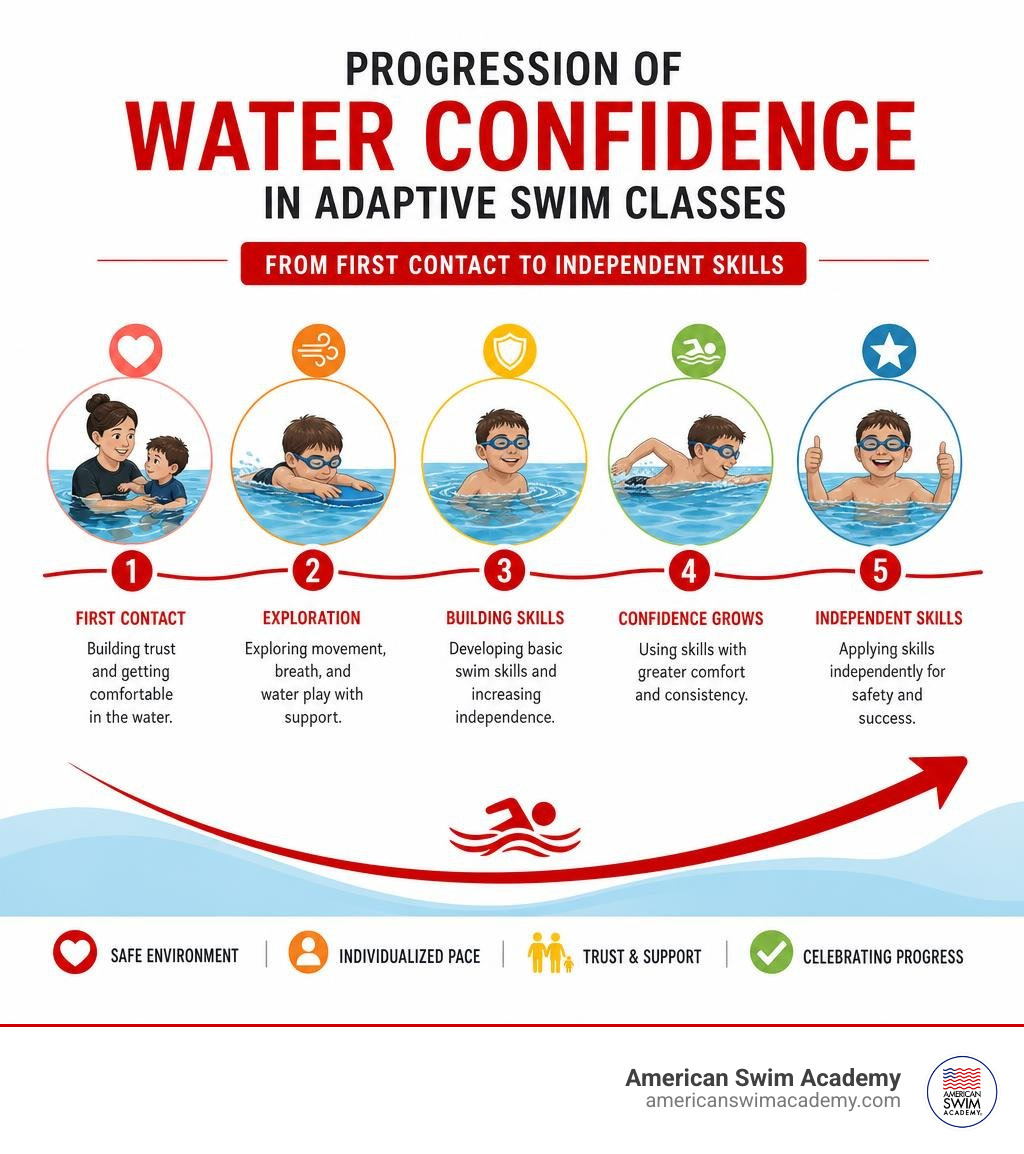
Understanding Adaptive Aquatics and Water Adaptation
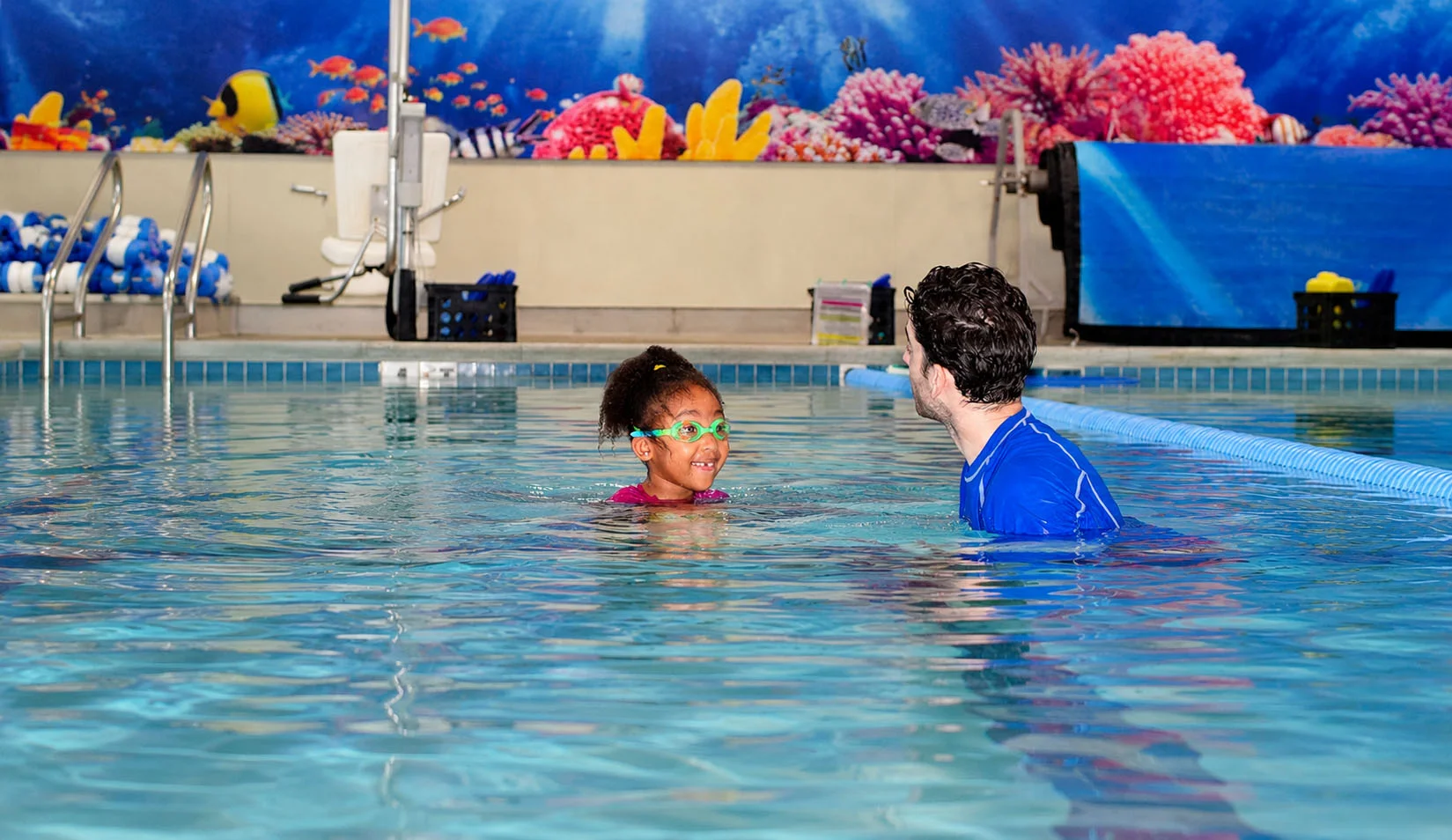
At its core, adaptive aquatics is about modifying traditional swim instruction to accommodate unique physical, cognitive, and sensory needs. While traditional swim lessons often follow a rigid curriculum with strict timelines, our Water Adaptation Program focuses on the individual swimmer’s comfort and developmental goals.
For children with special abilities, the water offers a unique therapeutic environment. Water provides natural buoyancy that reduces physical strain on joints and muscles, allowing children with physical differences to experience a range of motion they might find difficult on land. Simultaneously, the gentle, uniform pressure of water provides deep-pressure sensory input, which can be incredibly soothing for children on the autism spectrum or those with sensory processing sensitivities.
By focusing on physical adaptation and cognitive development side-by-side, water adaptation classes help swimmers transition from feeling overwhelmed by the aquatic environment to feeling completely at home in it. To learn more about how we structure our specialized classes, you can explore our programs.
How Adaptive Programs Differ from General Aquatics
Traditional aquatics programs are wonderful for many children, but they are not always designed to accommodate diverse learning styles or physical needs. General youth classes often have larger student-to-instructor ratios, which can make it difficult for an instructor to give personalized attention to a child who is struggling with sensory overload or motor planning challenges.
Adaptive programs, on the other hand, prioritize individualized instruction in a highly supportive environment. The table below highlights the key differences between these two approaches:
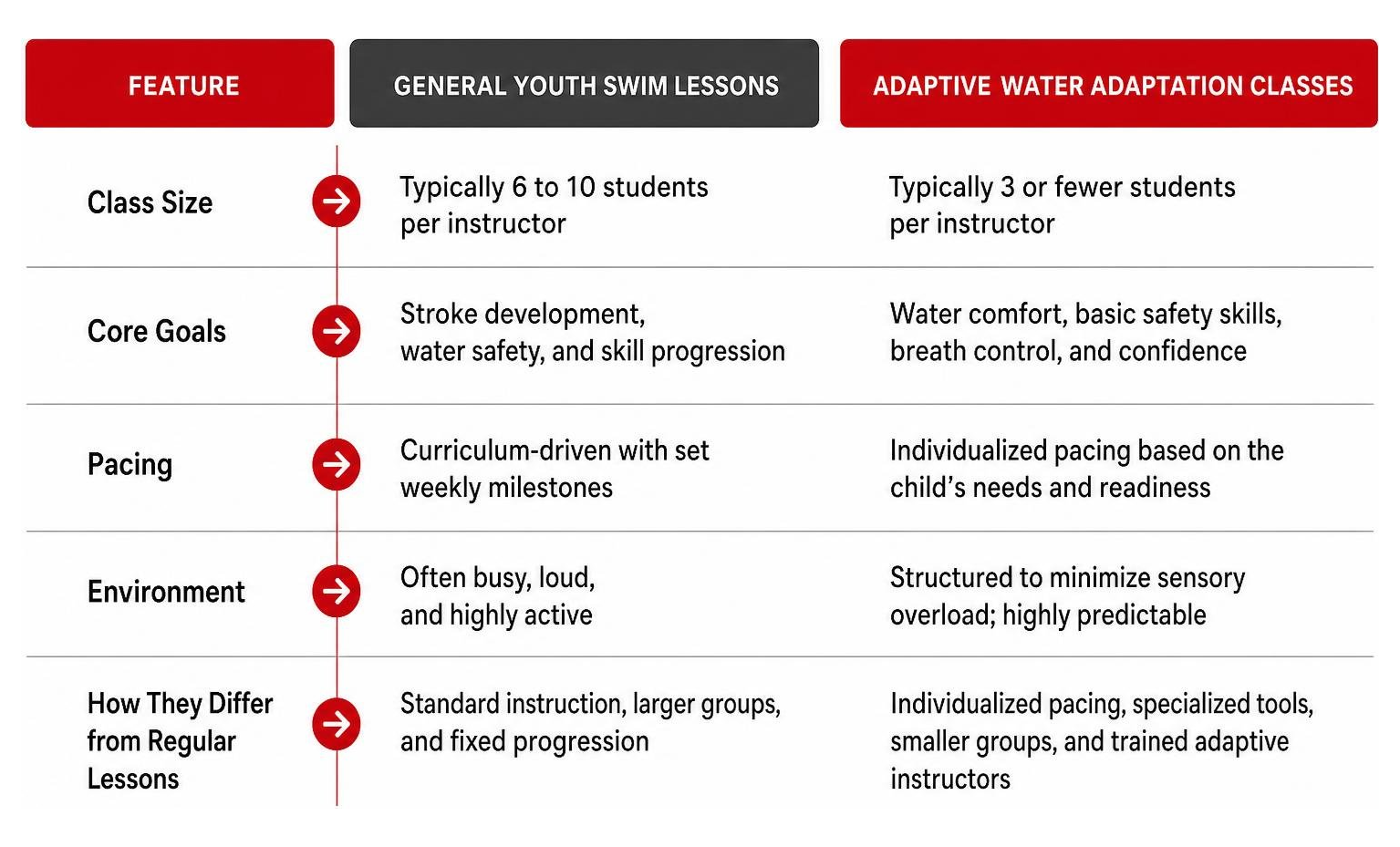
| Feature | General Youth Swim Lessons | Adaptive Water Adaptation Classes |
|---|---|---|
| Class Size | Typically 6 to 10 students per instructor | Small groups (often 3 or fewer) or 1-on-1 instruction |
| Pacing | Curriculum-driven with set weekly milestones | Swimmer-driven; progress is made at the child’s own pace |
| Environment | Often busy, loud, and highly active | Structured to minimize sensory overload; highly predictable |
| Teaching Tools | Standard kickboards, noodles, and group games | Specialized tools, visual schedules, and sensory-friendly aids |
| Instructor Training | Standard water safety and stroke instruction | Specialized training in sensory processing, behavior, and physical adaptations |
By focusing on small class sizes and a supportive environment, adaptive classes ensure that no child is left behind or rushed through critical safety milestones.
Key Components of Successful Water Adaptation Classes
A successful water adaptation program is built on a foundation of trust, safety, and structured progression. Because every swimmer has unique physical and cognitive profiles, a one-size-fits-all approach simply does not work.
To ensure every child feels successful, we utilize specialized tools and tracking systems. For example, our program includes individualized Swim Passports and Achievement Ribbons to celebrate every victory, no matter how small. For a child with sensory sensitivities, putting their face in the water for three seconds is a massive achievement—and our program makes sure they are celebrated for it.
Beyond tracking progress, the safety of our swimmers is our absolute highest priority. Every instructor in our adaptive program undergoes rigorous training in positive reinforcement techniques, behavior management, and physical transfer safety. This specialized training ensures that we can maintain strict safety protocols while keeping classes fun and engaging. To read more about our commitment to aquatic education, visit our guide on water safety.
Building Confidence and Lifelong Skills in Water Adaptation Classes
The ultimate goal of any water adaptation class is to foster a lifelong love of the water while building essential safety skills. We break down complex movements into manageable, bite-sized components, focusing on three primary pillars of water comfort:
- Breath Control: Learning how to blow bubbles, hold one’s breath, and control respiration is the first step to building comfort and ease in the water.
- Buoyancy and Body Awareness: Helping children understand how their bodies float and move in a liquid environment builds physical confidence and spatial awareness.
- Water Comfort: Overcoming the initial sensory shock of water on the face, ears, and hair is crucial for building a relaxed, positive relationship with the pool.
As these foundational skills become second nature, swimmers naturally begin to develop a sense of independence and self-reliance. This gentle progression is especially important for beginners who may have had previous negative experiences with water. For tips on helping your child take those first steps, explore our advice on beginner swim lessons.
Creating the Ideal Environment for Water Adaptation Classes
The physical environment of a swim school plays a massive role in how quickly a child adapts to the water. Cold water, echoing pool decks, and bright, glaring lights can easily trigger sensory overload or anxiety in a child with special needs.
That is why we design our facilities to be as welcoming and sensory-friendly as possible. One of the most critical elements of our program is our 92-degree heated pools. Warm water is not just a luxury—it is a therapeutic necessity. It helps relax tight muscles, reduces shivering, and keeps children comfortable so they can focus entirely on their instructor.
Operating year-round indoor facilities also allows us to provide a highly predictable, consistent routine. Whether it is July or January, our swimmers know exactly what to expect when they walk through our doors. This consistency is incredibly reassuring for children who thrive on routine.
Addressing Sensory and Physical Challenges Through Tailored Instruction
In our classes, we utilize supportive teaching techniques that address both sensory and physical challenges. Every lesson is customized to the swimmer’s current comfort level, ensuring they never feel pressured or rushed.
- Gentle Water Acclimation: We introduce water gradually, starting with splashes on the hands and feet before moving to the shoulders and face.
- Customized Pacing: If a child needs to spend three weeks simply sitting on the pool steps getting comfortable with the environment, we support that choice.
- Positive Reinforcement: We use high-fives, verbal praise, and achievement ribbons to build self-esteem and encourage active participation.
- Visual Aids and Predictable Schedules: Using visual cards or structured routines helps children with cognitive or communication differences understand what activity is coming next, reducing transition-related anxiety.
Accessibility and Community Support for Adaptive Swim Lessons
We believe that every child deserves the opportunity to learn essential water safety skills, regardless of their family’s financial situation or the child’s developmental challenges. Fortunately, there are excellent community resources and state programs available to help families access these life-changing classes.
In California, the Self-Determination Program (SDP) is a fantastic initiative that allows individuals with developmental disabilities to choose the services and supports that best meet their personal goals. We are proud to be an approved vendor for California’s Self-Determination Program, meaning state funding can often be used to cover the cost of our specialized swim lessons.
To make the process as seamless as possible for families, we partner with 18 approved Financial Management Service (FMS) partners, including:
- AAA FMS
- Accura FMS
- ACE FMS
- …and many other trusted providers.
By coordinating directly with these partners, we help families navigate the administrative side of funding so they can focus on what truly matters: their child’s progress and happiness in the pool.
Finding the Right Support for Your Child’s Swim Journey
Every child’s swim journey is unique, which is why we encourage a highly collaborative, family-centered approach. We work closely with parents and caregivers to establish personalized goals for each swimmer. Whether the goal is to learn basic safety skills, improve physical coordination, or simply build the confidence to splash with siblings, we tailor our instruction to match your family’s vision.
We maintain open communication with parents, providing regular updates and progress tracking through our Swim Passports. This ensures that the skills learned in the pool can be celebrated and reinforced at home. If you are ready to take the first step toward building your child’s water confidence, you can learn more about getting started with our team.
Frequently Asked Questions about Water Adaptation
How do water adaptation classes help children with special needs?
These classes provide a safe, structured space where children can build sensory integration, physical coordination, and emotional confidence. By working in a warm, low-stress environment with highly trained instructors, children learn to process the physical sensations of water while mastering essential safety skills at their own pace. If you have more questions about our class structures or policies, read through our comprehensive FAQ page.
What age groups can participate in water adaptation classes?
Our specialized Water Adaptation Program is designed for individuals ages 3 and up. For younger children or infants who are just starting their aquatic journey, we also offer gentle, parent-assisted classes designed to introduce water comfort during early childhood. You can read more about our options for the youngest swimmers in our guide to infant swim lessons.
What safety protocols are standard in adaptive swim programs?
Our adaptive programs maintain the highest standards of safety. This includes maintaining a low student-to-instructor ratio (often 1-on-1 or a maximum of 3 students per class) to ensure constant, undivided supervision. Our pools are kept at a therapeutic 92 degrees to keep muscles relaxed and ensure a warm, comfortable experience, and our instructors are fully certified in aquatic safety, first aid, and specialized adaptive teaching methods. For a detailed look at our facility safety standards, please visit our health and safety page.
Conclusion
Learning to swim is more than just a recreational milestone—it is an essential life skill that builds physical confidence, sensory resilience, and peace of mind for the entire family. At American Swim Academy, we are dedicated to ensuring that every child, regardless of their physical or cognitive abilities, has a safe, warm, and joyful environment to learn in.
With our warm 92-degree indoor pools, caring instructors, and individualized progression plans, we are proud to serve families across the Bay Area. Whether you are looking for classes in Fremont, Newark, Livermore, Dublin, or Walnut Creek, CA, we are here to support your child’s aquatic journey every step of the way.
Are you ready to help your child build a lifelong love of the water? Enroll in our Swim Programs today, or visit our dedicated Water Adaptation Program page to fill out our contact form and learn how we can help you integrate specialized swim lessons into your California Self-Determination Program (SDP) plan!_