

Why Swim Classes for Infants Are Worth Starting Early
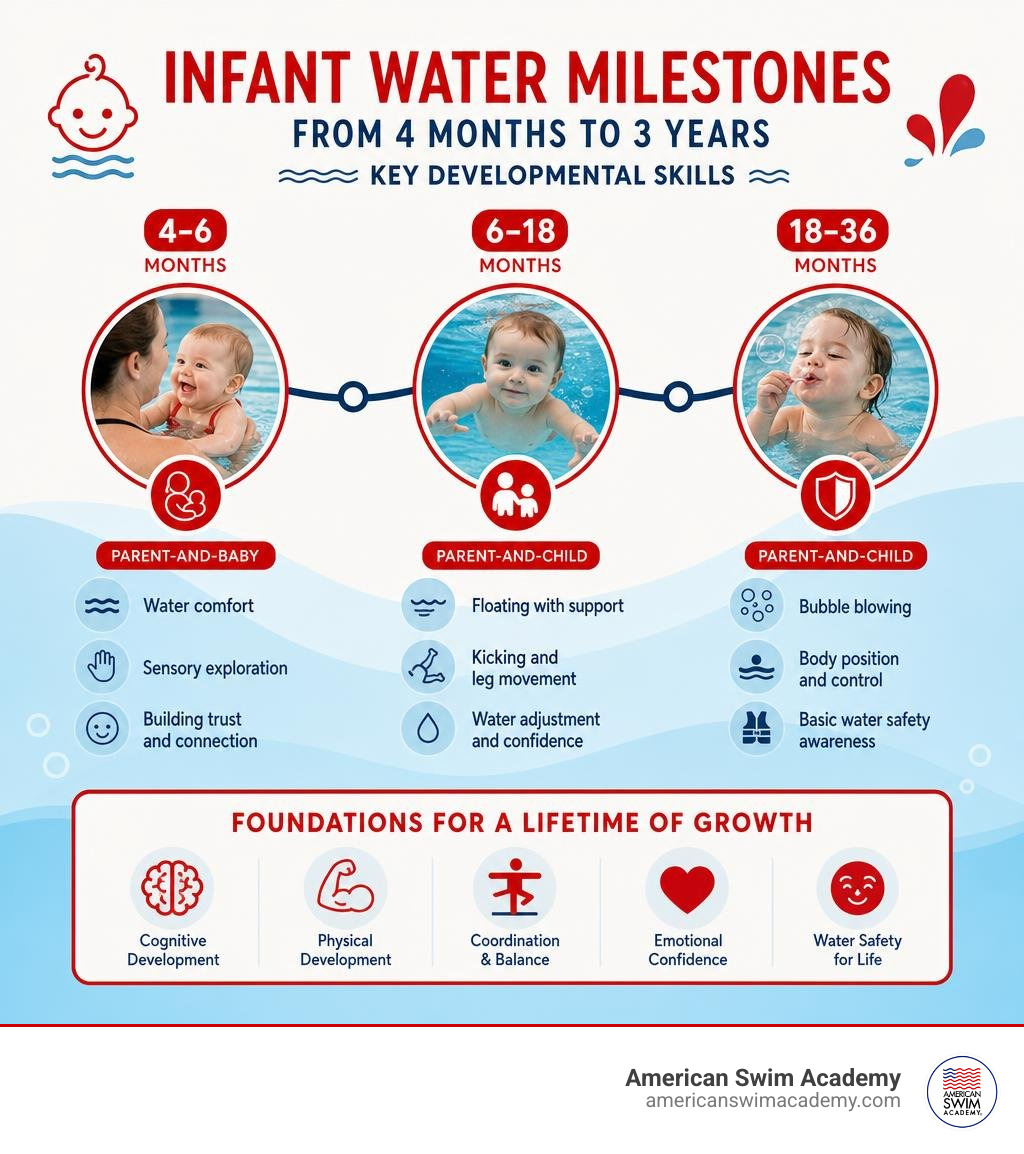
Swim classes for infants can begin as early as 4 months old. Here’s a quick look at what most programs offer:
| Age Range | Program Type | Key Focus |
|---|---|---|
| 4-6 months | Parent-and-baby | Water comfort, sensory exploration |
| 6-18 months | Parent-and-child | Floating, kicking, water adjustment |
| 18-36 months | Parent-and-child | Bubble blowing, body position, basic safety |
Most infant swim classes run 30 minutes, require a parent in the water, and are held in heated pools (typically 90-94 degrees F). Small class sizes – often 4:1 or 6:1 – keep lessons personal and safe.
Your baby spends months surrounded by fluid before they’re even born. Water isn’t foreign to them – it’s familiar.
That’s one reason so many pediatric swim experts agree: early water exposure can be one of the best things you do for your child’s development and safety.
Research backs this up. A case-control study indexed by the National Institutes of Health found that children ages 1-4 who had taken formal swimming lessons showed an 88% lower risk in the water-safety outcome studied compared with those who had not. And the benefits go well beyond safety – early lessons support muscle development, coordination, cognitive growth, and even emotional confidence.
But as a parent, you’re busy. You want something that fits your schedule, works in a warm and welcoming pool, and gives your baby real attention – not just a spot in a crowded class.
This guide covers everything you need to know: when to start, what to expect, how different programs compare, and how to find the right fit for your family.
Swim classes for infants word list:
The Developmental Benefits of Swim Classes for Infants
Many parents look at infant swim sessions as a fun weekend activity, but the science behind early water exposure is incredibly rich. When babies splash, kick, and glide through the water, they are engaging in a full-body sensory experience that stimulates their growing brains and bodies in ways that dry-land activities simply cannot match.
First, let’s talk about cognitive development. When an infant is in the pool, they perform bilateral cross-patterning movements, such as kicking their legs while reaching out with their arms. These alternating, rhythmic movements stimulate neuron growth specifically in the corpus callosum—the bridge of nerve fibers that connects the left and right hemispheres of the brain. Strengthening this pathway facilitates better communication between both sides of the brain, which can support early reading ability, spatial awareness, and language acquisition as they grow.
Physically, the natural resistance of water makes it a gentle, low-impact gym for your baby. Moving against the gentle pressure of water helps build muscle control, strengthening their tiny arms, legs, core, and neck. It also strengthens their joints and cardiovascular system without putting unnecessary strain on their developing bones. The buoyancy of the water allows babies to experience balance and coordination before they can even sit up or crawl on land. Research has shown that infants who participate in early swim programs often demonstrate superior static balance and prehension skills years down the road.
Beyond the physical and mental milestones, starting early helps cultivate emotional confidence. When your baby learns to navigate a completely different physical environment, they develop a sense of self-assurance that carries over into other areas of their life. Overcoming the initial unfamiliarity of the pool teaches them resilience. To explore these early growth milestones further, check out our article on 4 Benefits of Teaching Your Kid How to Swim at an Early Age.
What to Expect in Parent-and-Child Swim Lessons
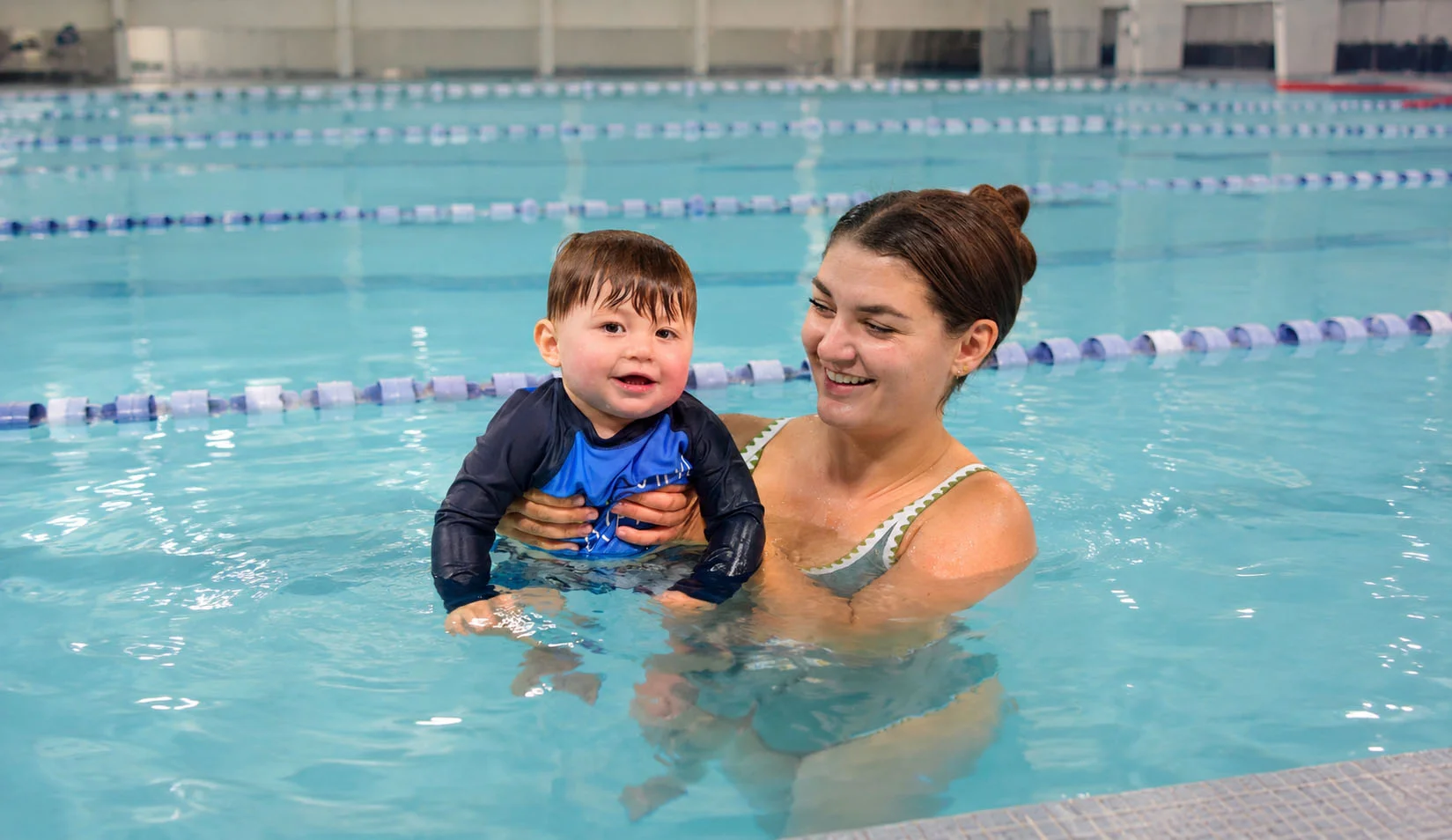
If you are stepping into the pool with your baby for the first time, you might feel a mix of excitement and curiosity. Knowing what to expect can help you feel completely at ease. Most high-quality swim classes for infants are structured as parent-and-child classes, meaning you will be right there in the pool, holding your little one and sharing every milestone.
A typical infant lesson lasts exactly 30 minutes. This duration is chosen carefully: it is long enough to provide meaningful skill practice, yet short enough to prevent your baby from getting chilled or mentally fatigued.
Because babies cannot regulate their body temperature as efficiently as adults, the pool environment is critical. We believe a warm pool is non-negotiable. Our indoor pools are heated to a cozy 92 degrees year-round to ensure your baby remains relaxed, comfortable, and ready to learn. In cooler months, having a fully indoor, climate-controlled facility keeps the transition from the pool to the changing room warm and draft-free.
During the class, the instructor will guide you through a series of gentle holds, interactive songs, and structured games. These elements are not just for entertainment; they are highly effective teaching tools. Repetition is the secret to early learning. By singing the same songs and practicing the same gentle movements each week, your baby learns to anticipate what comes next. This predictability builds deep water comfort and trust between you, your baby, and the instructor.
Beyond skill-building, these classes offer an incredible opportunity to unplug and focus entirely on your little one. Holding your baby chest-to-chest in warm water, making constant eye contact, and encouraging them through every splash creates an irreplaceable bond. For more on this special connection, read about Why Weekly Swim Lessons Are the Ultimate Bonding Experience for Parents and Kids.
Core Skills Taught in Swim Classes for Infants
While your baby won’t be doing the butterfly stroke anytime soon, they will learn fundamental building blocks that form the basis of lifelong water safety and proficiency. The primary focus of early classes is water adaptation-helping your baby feel completely natural in an aquatic environment.
Some of the core skills introduced in our introductory levels include:
- Water Adaptation: Getting comfortable with water splashed gently over the head and face, which helps them remain calm and relaxed when water gets on their face.
- Breath Control: Learning to hold their breath on cue, often initiated by simple verbal cues like “Ready, set, go!” followed by a gentle pour of water or a brief, supportive submersion.
- Bubble Blowing: Teaching infants to blow bubbles through their mouth and nose, which is a key step in learning proper breath control and avoiding water inhalation.
- Kicking and Paddling: Encouraging natural, instinctive leg and arm movements to help them understand how to propel themselves through the water.
- Floating: Helping babies relax on their backs, supported by your hands, to experience the natural buoyancy of their bodies.
To see how these fundamental skills are structured into progressive milestones, explore our guide on Our Programs – Water Adaptation.
The Benefits of Play-Based Swim Classes for Infants
When it comes to teaching infants, there are two primary schools of thought: survival-focused programs and play-based programs. Survival-focused programs often use highly intense, one-on-one sessions where the instructor teaches self-rescue techniques (like rolling onto the back to float) through rapid, repetitive physical manipulation.
In contrast, play-based programs focus on positive reinforcement, gentle water introduction, and building trust. By using toys, colorful equipment, and playful activities, babies learn the exact same safety skills-such as breath control, floating, and reaching for the pool wall-in a relaxed, supportive environment. The goal is to make the water a place of joy and comfort. When a baby associates the pool with fun, they are much more likely to develop a lifelong love for swimming.
| Milestone Phase | Typical Skill Focus | Play-Based Activity Used |
|---|---|---|
| Phase 1: Familiarization | Gentle cheek-to-cheek holding, water pouring | Singing familiar nursery rhymes while swaying |
| Phase 2: Breath Control | Conditioned responses, blowing bubbles | Blowing bubbles to pop them on the surface |
| Phase 3: Buoyancy | Assisted back floats, head-on-shoulder rests | Resting head on parent’s shoulder while looking at ceiling toys |
| Phase 4: Independence | Reaching for the wall, kicking with support | Chasing floating toys across a short distance |
How Early Water Exposure Supports Water Safety
While splashy playtime is wonderful, water safety is the core reason most parents enroll their children in swim lessons. Introducing your baby to the water early builds a foundation of safety that can protect them for a lifetime.
When babies are exposed to the pool consistently from a young age, they develop strong muscle memory. They learn instinctively how to react when their face gets wet, how to hold their breath, and how to find the edge of the pool. With early swim experience, a child learns to remain calm and confidently use their learned skills, such as turning around to grab the wall or rolling onto their back to breathe.
Consistent, year-round classes prevent the “skill fade” that often happens when children only swim during the summer months. By keeping water safety skills fresh all year, your child builds automatic, reliable habits. To understand more about how these structured sessions translate directly to safety, read How Swimming Lessons Keep Your Child Safe and explore our comprehensive article on Water Safety: The Importance of Swimming Lessons to Kids.
Choosing the Right Program for Your Baby
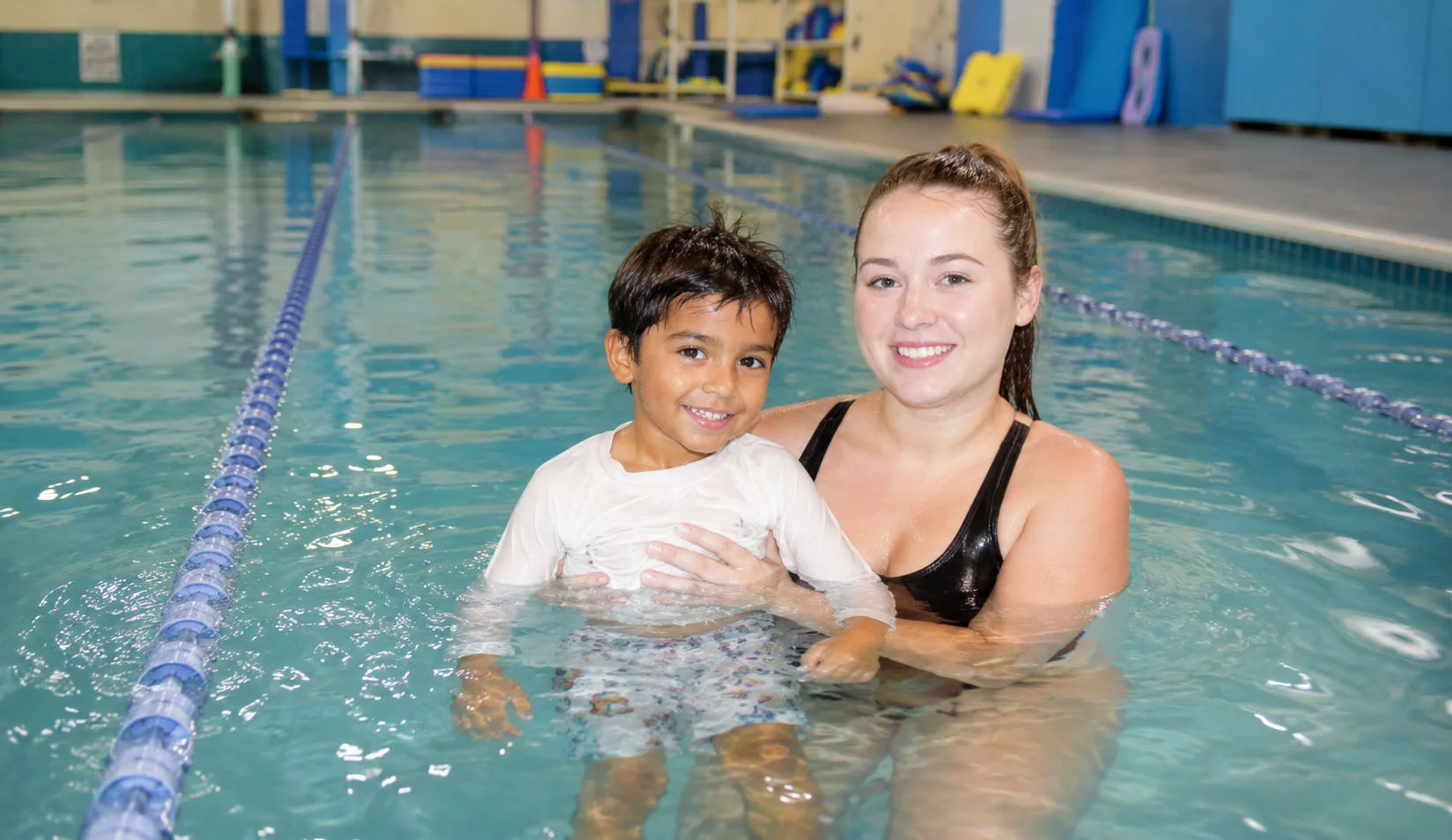
With several swim programs available in the Bay Area, finding the right fit for your family is essential. Here are the key factors to consider when evaluating your options:
- Class Size and Student-to-Teacher Ratio: For infant classes, small class sizes are vital. A lower ratio ensures that the instructor can watch every pair closely, provide personalized feedback, and keep the environment calm and organized.
- Water Temperature: As mentioned, a warm pool is absolutely critical for infants. Look for facilities with pools heated to at least 90-92 degrees. If the water is too cold, your baby’s muscles will tense up, they will shiver, and they won’t be able to focus on learning.
- Instructor Qualifications: Choose a program where instructors are specifically trained in infant development and positive reinforcement techniques. They should be patient, warm, and highly skilled at reading a baby’s subtle body language.
- Year-Round Indoor Facilities: Seasonal outdoor pools limit your child’s progress. A year-round indoor program allows for consistent weekly lessons, ensuring your baby retains their skills and keeps progressing regardless of the weather outside.
- Scheduling and Location Convenience: For busy parents, finding a school with flexible scheduling, easy makeup class policies, and convenient locations makes all the difference.
At American Swim Academy, we designed our programs with these exact priorities in mind. We offer small class sizes, 92-degree heated pools, and highly trained, caring instructors at our convenient Bay Area locations in Fremont, Newark, Livermore, Dublin, and Walnut Creek. If you are ready to explore your options, read our helpful guide: Water Babies: Your Guide to Finding Mom and Tot Swim Classes.
Frequently Asked Questions about Infant Swim Lessons
What age can my baby start swim lessons?
Most formal swim classes for infants accept babies starting at 4 months of age. At this stage, infants have typically developed sufficient head and neck control to participate safely in water adaptation activities, and their immune systems are more mature. Starting between 4 and 6 months is an ideal window because babies still possess natural reflexes, like automatic breath-holding, which makes the transition to water incredibly smooth. For more insights on starting early, read Baby Swim Lessons Are Fun for Baby and Parents.
What should my baby wear to swim class?
For health and pool hygiene, most swim schools enforce a strict diaper policy. Babies who are not yet potty trained are typically required to wear a double-diaper system. This usually consists of:
- A disposable swim diaper (designed not to swell up in the water) or a reusable swim diaper.
- A snug-fitting, reusable neoprene swim cover or washable swim pants worn over the first diaper to prevent leaks.
Regular diapers are not allowed because they absorb pool water and quickly break apart. You may also want to bring a soft baby wetsuit or rash guard if you feel your baby needs a little extra warmth, along with a cozy hooded towel for after the lesson.
What if my baby cries during the lesson?
It is completely normal for babies to cry during their first few swim lessons! The pool is a brand-new sensory environment with different sounds, temperatures, and physical sensations. If your baby gets upset, don’t worry or feel embarrassed.
The best approach is to remain calm, hold your baby close chest-to-chest, and offer gentle reassurance. Your baby feeds off your energy, so if you are relaxed and smiling, they will gradually learn that the water is a safe, fun place. Our instructors are highly experienced in helping families navigate this transition with patience and care. To see how we support children through various learning stages, read about Our Programs – Pre-School.
Conclusion
Enrolling your child in swim classes for infants is one of the most rewarding decisions you can make. From boosting cognitive and motor development to building essential water safety habits, the benefits of early swim lessons last a lifetime. Plus, the joy of splashing and bonding with your baby in a warm pool is an experience you will both cherish.
At American Swim Academy, we make it easy and comfortable for your family to start this exciting journey. We offer year-round, indoor swim lessons in our beautifully maintained 92-degree heated pools. With small class sizes and a team of dedicated, experienced instructors, we ensure that your baby receives the personalized, gentle care they deserve.
We proudly serve families across the Bay Area with convenient locations in:
- Fremont, CA
- Newark, CA
- Livermore, CA
- Dublin, CA
- Walnut Creek, CA
Ready to take the first splash with your little one? Explore Our Programs today and find the perfect class for your water baby!