
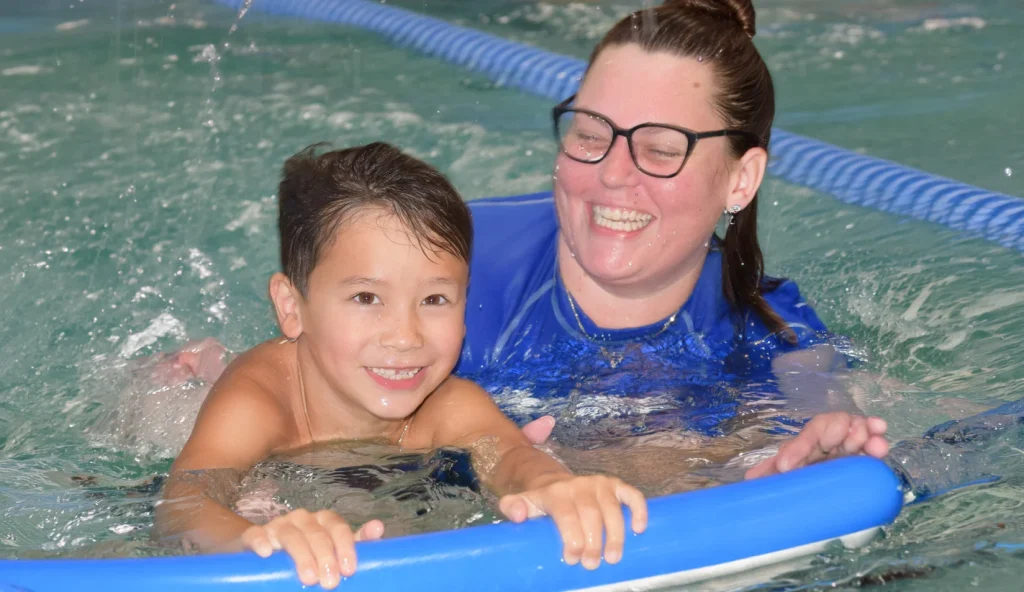
Why Pre K Swimming Lessons Are Worth Starting Early
Pre k swimming lessons teach children ages 3 to 5 foundational water safety skills, build confidence in the water, and set the stage for a lifetime of healthy, active play.
Here’s a quick look at what parents need to know:
- Who they’re for: Children ages 3–5, typically without a parent in the water
- What kids learn: Blowing bubbles, floating, kicking, safe water entry and exit, and basic breath control
- Class size: Small groups — often 3 to 5 children per instructor for preschool-age swimmers
- How long: Most classes run 30 minutes, in sessions of 4–8 weeks
- When to start: Research suggests ages 1–4 is the ideal window to begin building water skills
- Special needs: Many programs offer adaptive lessons for children who need extra support
Whether your child has never touched a pool or has splashed around a bit, structured lessons at this age make a real difference — in skill, safety, and confidence.
The transition from parent-and-child classes to independent group lessons is a big milestone. Many 3-year-olds are ready for it sooner than parents expect. And once children start building real skills in the water, progress can happen quickly — especially with consistent, weekly practice.
At American Swim Academy, preschool swim lessons are designed to meet kids exactly where they are — with warm water, small groups, and patient, experienced instructors who know how to make learning feel like play.
Key Benefits of Pre K Swimming Lessons
Enrolling your preschooler in structured swim lessons offers a wealth of developmental advantages that go far beyond simply learning how to doggy paddle. At this unique developmental stage, children are rapidly developing motor skills, cognitive patterns, and social behaviors. Introducing them to a structured aquatic environment provides the perfect canvas for growth.
Physical Development and Motor Skills
Swimming is a fantastic full-body workout that helps preschoolers build cardiovascular strength, muscle tone, and coordination. Because water provides natural resistance, every kick, pull, and splash helps strengthen their growing muscles. Swimming also improves bilateral coordination—using both sides of the body together—which is a major developmental milestone for three-to-five-year-olds.
Cognitive Growth and Brain Power
There is a strong connection between early movement and cognitive development. Navigating the water requires spatial awareness, focus, and the ability to process multi-step instructions (such as “kick your feet while holding the kickboard”). This mental engagement stimulates brain development and can even help prepare your child for a structured classroom environment when they enter kindergarten.
Unshakable Water Confidence
Building comfort in the water is a key part of early childhood. By introducing children to the pool in a gentle, play-based manner, we help them build confidence and curiosity. Developing these skills early sets them up for a lifetime of positive water experiences.
Social Skills and Peer Interaction
For many preschoolers, pre k swimming lessons are one of their first opportunities to interact with peers outside of daycare or preschool. In a small group setting, they learn essential social skills such as taking turns, listening to an adult instructor, watching their classmates succeed, and celebrating each other’s progress.
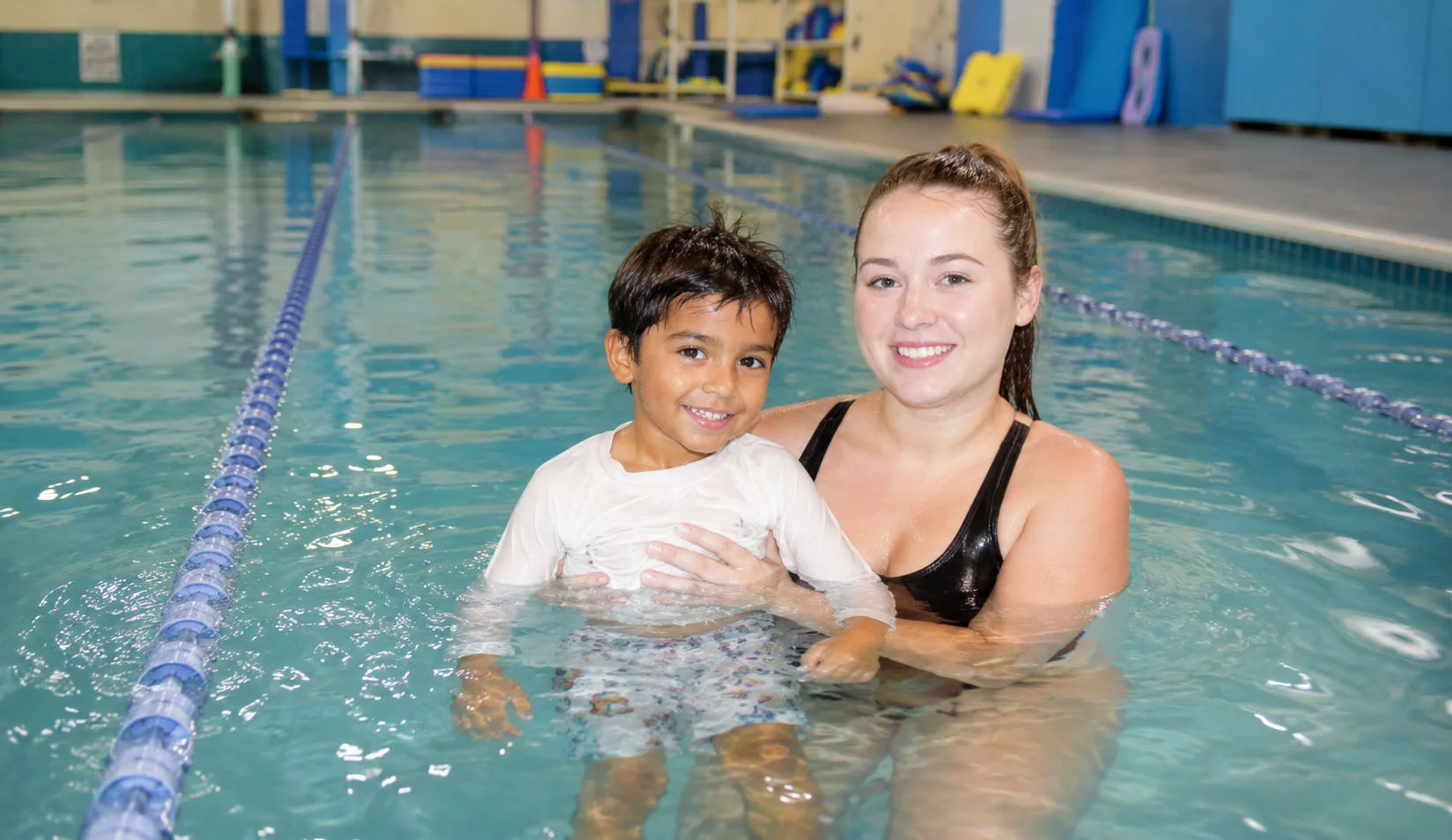
To explore more about how early aquatic education helps your little one thrive, check out our guide on 3 Reasons to Get Your Child in Beginner Swim Lessons.
How Preschool Swim Programs Are Structured
A high-quality preschool swim program is built on a progressive, mastery-based curriculum. Rather than pushing children to perform skills they aren’t developmentally ready for, we focus on building a solid foundation of water comfort and basic mechanics, step by step.
In our classes, we utilize a structured approach that transitions children from supported water play to independent, unassisted swimming. This ensures that every child masters the necessary safety benchmarks before advancing to more complex strokes.
| Preschool Level | Core Focus | Key Skills Taught |
|---|---|---|
| Stage 1: Water Acclimation | Building comfort & trust | Submerging face, blowing bubbles, supported front/back floats, safe entry/exit |
| Stage 2: Water Movement | Introduction to independence | Unassisted front/back glides, kicking with kickboards, rolling front-to-back |
| Stage 3: Water Stamina | Developing endurance | Treading water, swimming unassisted for short distances, rolling over to breathe |
| Stage 4: Stroke Introduction | Basic swim mechanics | Freestyle arm movements, backstroke basics, introductory breathing patterns |
Typical Levels in Pre K Swimming Lessons
Most structured preschool programs—including standard national frameworks and our own specialized curriculum—break lessons down into distinct developmental stages:
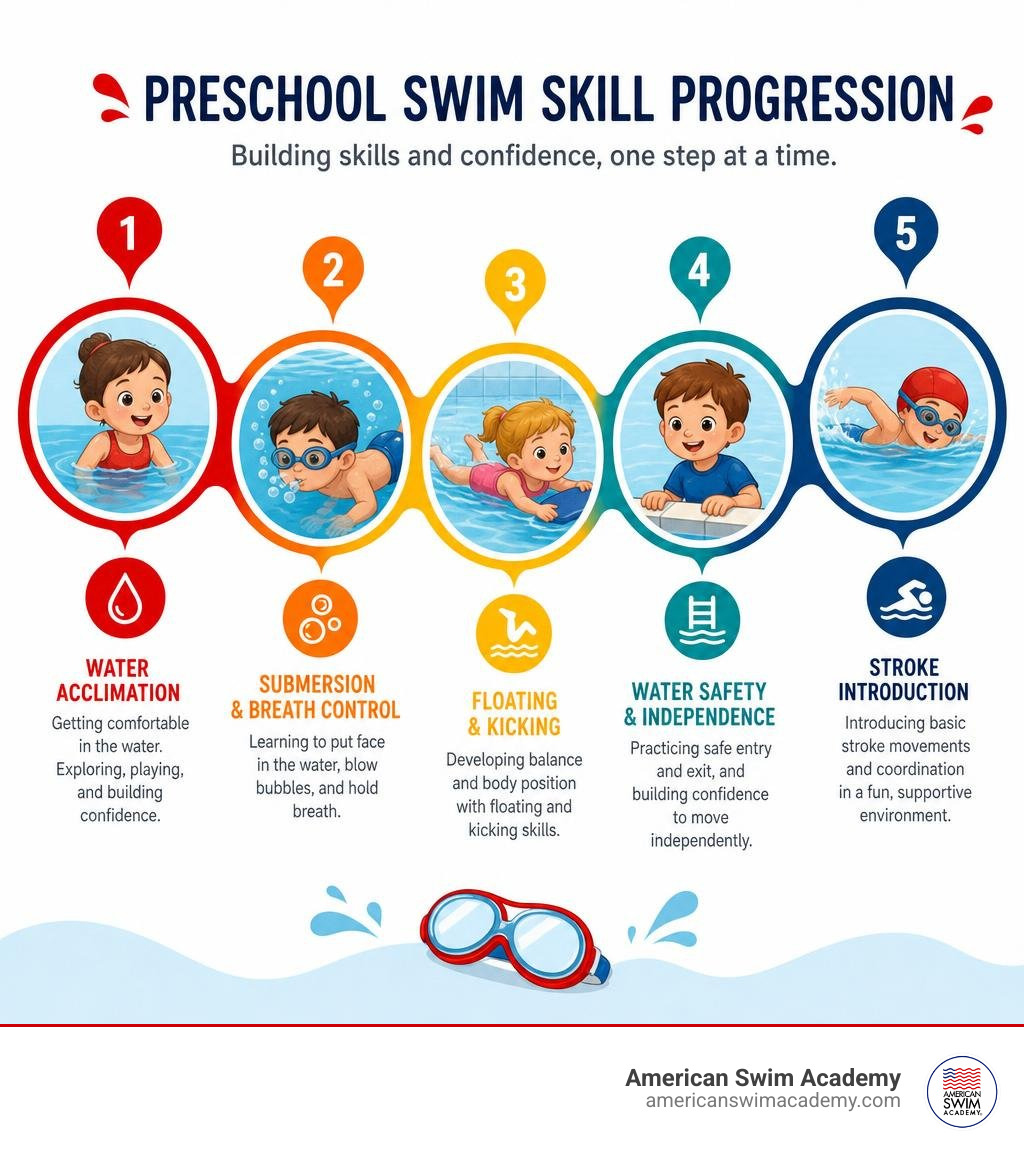
- Water Acclimation: This stage is all about helping children feel safe and relaxed. Instructors use games, songs, and gentle encouragement to help kids get used to having water on their faces, blowing bubbles, and experiencing the sensation of buoyancy.
- Water Movement: Once comfortable, students begin practicing independent movement. They learn to glide through the water with assistance, practice kicking on their front and back, and learn how to change direction in the pool.
- Water Stamina: In this stage, the focus shifts to safety and self-rescue skills. Children practice treading water, rolling from their front to their back to rest and breathe, and swimming short distances without flotation support.
- Stroke Introduction: For older or more advanced preschoolers, this level introduces the fundamentals of formal swimming strokes, focusing on basic freestyle arm reaches, coordinated kicking, and backstroke movements.
Transitioning from Parent-and-Child Classes
Moving from a parent-and-child class to an independent preschool class is a major milestone. In parent-assisted classes, children rely heavily on the physical support and comfort of a parent. In pre k swimming lessons, they must learn to trust their instructor and follow directions independently.
To make this transition smooth, our instructors are highly trained in building quick, trusting relationships with young children. We use familiar songs and highly visual teaching aids to bridge the gap. If you are currently in a parent-and-child class and wondering if your child is ready to make the leap, read our helpful guide, Water Babies: Your Guide to Finding Mom and Tot Swim Classes.
Essential Water Safety and Swimming Skills for Preschoolers
Water safety is the absolute cornerstone of early childhood swim instruction. Every game we play and every skill we teach has a safety purpose behind it. By teaching children how to respect the water and react calmly, we empower them with life-saving habits.
For a deeper look at our safety philosophy, read How Swimming Lessons Keep Your Child Safe.
Beginner Skills in Pre K Swimming Lessons
In our Beginners classes, we focus on several foundational building blocks:
- Bubble Blowing and Breath Control: Learning to blow bubbles through the mouth and nose is essential for preventing water from entering the airway. It also teaches children how to regulate their breathing, which builds confidence and comfort.
- Supported and Independent Floating: Floating on the back is the single most important safety skill a young child can learn. It allows them to rest, breathe, and call for help if they become fatigued in the water.
- Kicking Practice: Strong, steady kicks are the engine of swimming. We teach children to keep their legs long and strong, practicing both on their stomachs and their backs.
Water Safety Rules and Breath Control
Beyond basic swimming mechanics, preschoolers are taught essential water safety rules that they can carry with them to any pool, beach, or water park:
- Safe Entry and Exit: Children learn to sit on the pool edge, turn around, slide in belly-first, and hold onto the wall. This “elbow, elbow, tummy, knee” method ensures they always enter the water safely and maintain a secure grip on the side of the pool.
- Treading Water: Students practice moving their arms and legs in a coordinated pattern to keep their heads above water, a crucial skill if they ever find themselves in water over their heads.
- Eye Opening and No-Goggles Rules: While goggles are great for advanced swimmers, we often encourage preschoolers to practice swimming without goggles. If a child unexpectedly enters the water, they won’t be wearing goggles. They need to know how to open their eyes underwater, locate the safety wall, and swim to it with confidence.
What Parents Should Expect: Class Formats and Logistics
Enrolling your child in swim lessons is an exciting step, but it helps to know exactly what to expect before you arrive at the pool.
Class Duration and Group Size
Preschool swim lessons are typically 30 minutes long. This is the developmental sweet spot for children ages 3 to 5. It is long enough to get plenty of active practice, yet short enough to prevent physical exhaustion and keep their attention spans fully engaged.
Class sizes are kept very small to ensure safety and individual attention. At American Swim Academy, we maintain low student-to-teacher ratios so our instructors can tailor their feedback to each child’s unique needs.
What to Wear and Bring
- Swimwear: A comfortable, well-fitting swimsuit. Avoid baggy clothing or heavy cotton, which can weigh children down in the water.
- Towels: Bring a warm, dry towel for immediately after the lesson.
- Swim Diapers: If your preschooler is still in the process of potty training, a reusable swim diaper is required. Standard diapers will expand in the pool and do not prevent leaks.
- Hair Care: Long hair should be pulled back in a ponytail or tucked into a swim cap to keep it out of the child’s eyes and mouth while they breathe.
Indoor Comfort and Weather Policies
One of the biggest advantages of our program is our indoor, climate-controlled facilities. Our pools are heated to a warm, comfortable 92 degrees. This warm temperature is critical for young children; when kids are warm, their muscles relax, their anxiety levels drop, and they can focus entirely on learning rather than shivering. Because our pools are indoors, you never have to worry about sunburns, windy days, or rain cancellations.
Determining Readiness and Choosing the Right Level
How do you know if your 3, 4, or 5-year-old is ready for independent swim lessons? Every child develops at their own pace, but there are a few key indicators of readiness:
- Can they follow simple instructions? (e.g., “Sit on the wall,” “Hold the kickboard.”)
- Are they comfortable being away from you for 30 minutes?
- Can they communicate their basic needs to an adult?
- Do they show curiosity or excitement about the water?
If your child is hesitant or unsure, don’t worry. Our instructors are experts at helping hesitant swimmers feel safe. We never force a child to submerge or perform a skill before they are ready. Instead, we use positive reinforcement, gentle encouragement, and fun games to build trust.
If you are unsure which level is best for your child, we recommend scheduling a quick skill assessment. Our experienced staff will evaluate your child’s water comfort and physical coordination to place them in the perfect class.
Frequently Asked Questions about Preschool Swim Lessons
What is the best age to start preschool swim lessons?
While children can start water acclimation classes as infants, the ideal window to begin independent pre k swimming lessons is between ages 3 and 4. At this stage, children have developed the physical strength, coordination, and social maturity necessary to participate in a structured group class without a parent in the water.
How long does it take to see progress in swimming skills?
Every child’s swim journey is unique. Progress depends on their prior water experience, developmental readiness, and temperament. However, with consistent, weekly attendance, most parents begin to see noticeable improvements in water confidence and basic safety skills within the first few months. Consistency is the key to retaining these physical skills.
Are there adaptive swim lessons for preschoolers with special needs?
Yes! Swimming is an incredibly inclusive activity. Many children with physical, cognitive, or sensory differences thrive in the water. Adaptive swim lessons utilize specialized teaching methods, gentle sensory integration, and sometimes private one-on-one instruction to ensure that every child can learn to love and respect the water safely.
Conclusion
Enrolling your child in pre k swimming lessons is one of the most rewarding decisions you can make for their physical development, confidence, and safety. By starting early, you give them the gift of water security and a foundation for a healthy, active lifestyle.
At American Swim Academy, we make learning to swim a joyful experience. With our warm 92-degree indoor pools, small class sizes, and highly experienced instructors, your child will receive the personalized care and attention they deserve. We proudly serve families throughout the Bay Area, including Fremont, Newark, Livermore, Dublin, and Walnut Creek, CA.
Ready to get started? Explore our Pre School program options or visit our Get Started page to find a class at a location near you. We can’t wait to welcome your little swimmer to the pool!
Local Resources for Bay Area Families
If you are looking for local aquatic facilities, public swim hours, or community swim programs in our service areas, you may also find these external resources helpful:
- Swim Lessons | City of Fremont, CA Official Website
- Aquatic Center Hours – Newark, CA
- The Wave Swim Lessons | Dublin Aquatic Center, CA
- Learn more about our year-round indoor programs on Our Programs page.