

Why Every Family Needs a Water Safety Class
A water safety class could be one of the most important steps you take for your child this year. Whether your kids are toddlers splashing in a backyard pool or school-age swimmers at a community facility, knowing how to stay safe around water is a skill that lasts a lifetime.
Here is a quick overview of what a water safety class typically covers:
- Who it’s for: Infants, children, teens, adults, and caregivers
- What it teaches: Water competency, safe behaviors around water, and basic emergency response
- Where to take one: In-person swim schools, community pools, or online for caregivers
- How long it takes: From a single 60-minute online session to multi-week in-person programs
- Cost: Roughly $60–$280 depending on the program type and certification level
Water is everywhere — and it is beautiful. But it also demands respect. Across the country, the American Red Cross alone teaches more than 2.3 million people water safety and swimming skills every year, and the numbers keep growing. That kind of reach reflects just how much families want real, practical knowledge about keeping their children safe.
The good news? You do not need to be a swim expert to get started. The right class — for your child’s age, skill level, and schedule — can give your whole family a meaningful foundation of confidence and competence in and around the water.
Water safety class terminology:
What is a Water Safety Class and Why is it Essential?
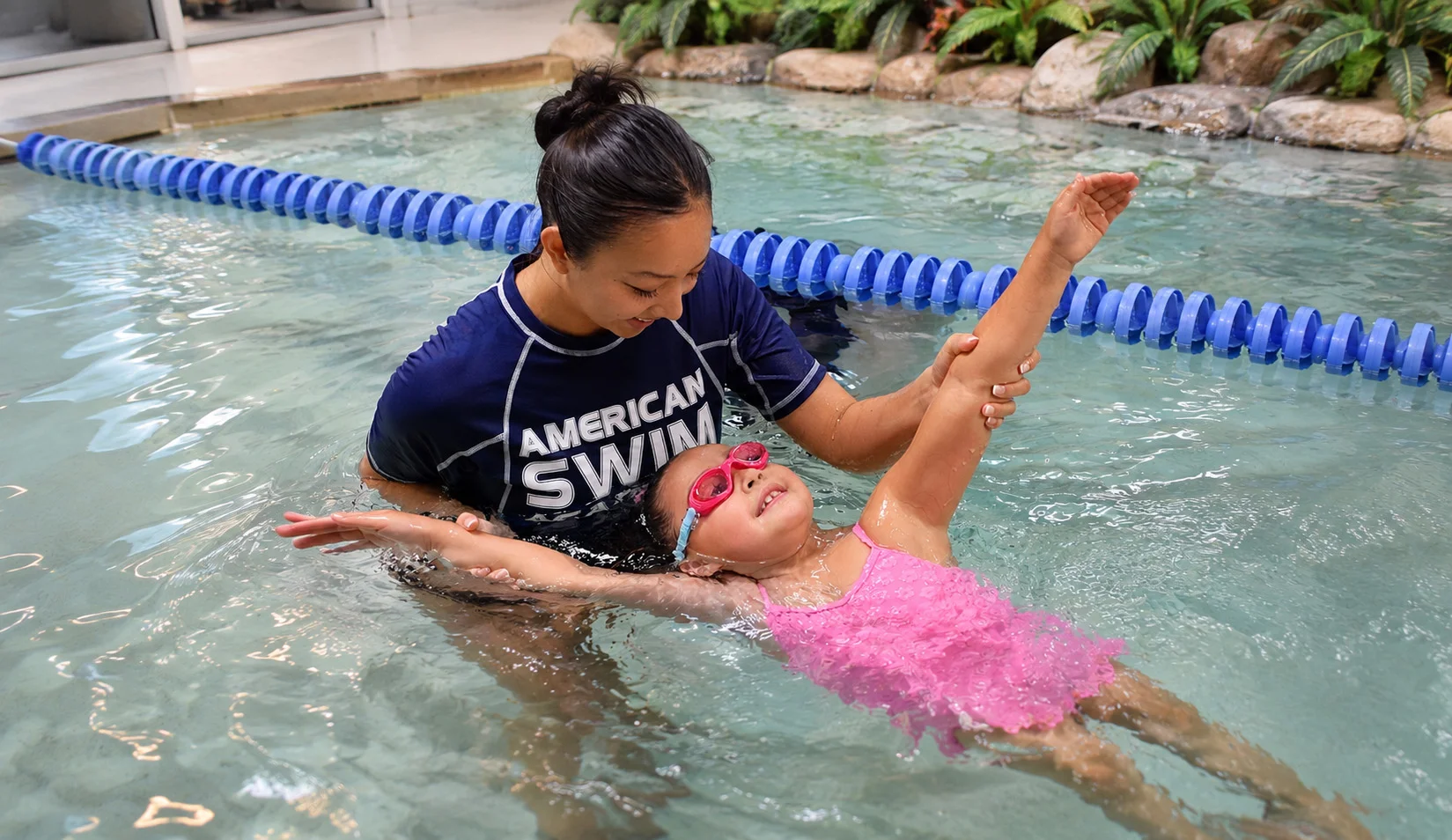
A water safety class is a specialized instructional program designed to teach individuals how to safely navigate aquatic environments, prevent emergencies, and respond effectively if an unexpected situation arises. While traditional swimming lessons focus heavily on stroke mechanics and physical endurance, water safety training emphasizes cognitive awareness, hazard identification, and self-rescue techniques.
For parents, caregivers, and children alike, this training is an essential component of modern life. Aquatic environments are highly dynamic, and accidents can occur in the blink of an eye. Participating in structured safety training shifts our mindset from reactive rescue to proactive prevention. It helps us see potential hazards before they become emergencies, ensuring that our family’s pool time remains joyful and stress-free.
To truly understand why these classes are so vital, we must look at how they build a foundation of lifelong safety. To explore this connection further, read about Water Safety: The Importance of Swimming Lessons to Kids and see how structured education transforms a child’s relationship with the water.
Understanding Water Competency
Water competency is a core concept taught in every high-quality water safety class. It is not just about being able to perform a perfect backstroke; rather, it is a three-pronged approach to aquatic readiness:
- Swimming Skills: Having the physical ability to enter the water, surface, float, tread, turn around, and propel oneself to safety.
- Safety Knowledge: Recognizing environmental hazards, understanding local pool rules, and knowing your own personal physical limits.
- Emergency Response: Knowing how to recognize someone in distress and how to help them safely without putting yourself in danger.
By combining these three elements, swimmers develop a well-rounded safety shield. You can learn more about these core benchmarks through the Water Safety Certification & Tips – Red Cross resources, which outline how families can build a complete ecosystem of aquatic preparedness.
The Importance of Early Swim Education
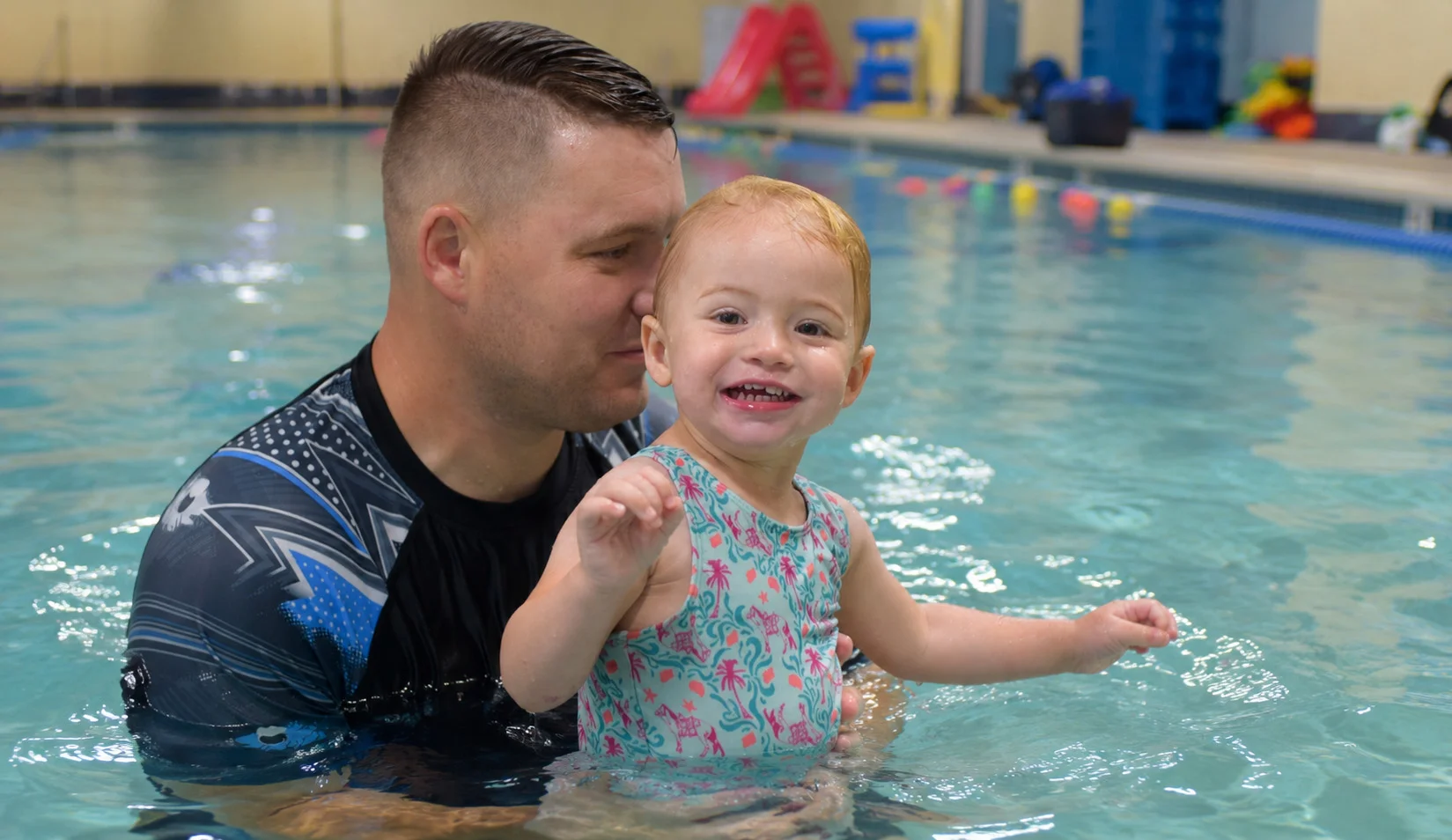
Introducing children to aquatic environments at an early age is one of the greatest gifts a parent can provide. Infant and toddler lessons do not just teach physical movements; they build comfort, reduce anxiety, and establish a healthy respect for the water.
When young children learn how to roll onto their backs to float and breathe, they are mastering basic self-rescue skills that can prevent serious accidents. If you are considering starting lessons for your little one, read these 3 Reasons to Get Your Child in Beginner Swim Lessons to find out how early exposure sets the stage for a lifetime of safe swimming.
Core Concepts of Water Accident Prevention
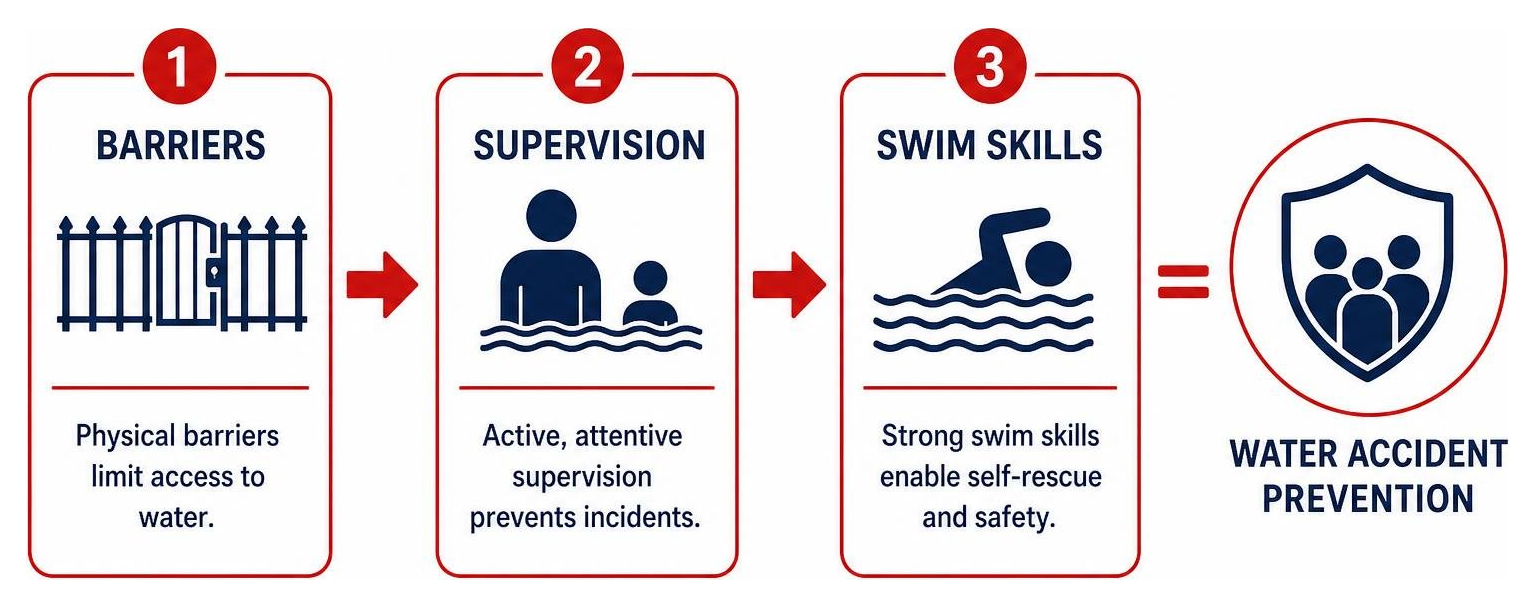
Preventing aquatic accidents requires a structured approach. Experts in water safety utilize specific frameworks to help families build layers of protection. Two of the most critical frameworks taught in a water safety class are the Circle of Prevention and the Chain of Survival.
The Circle of Prevention
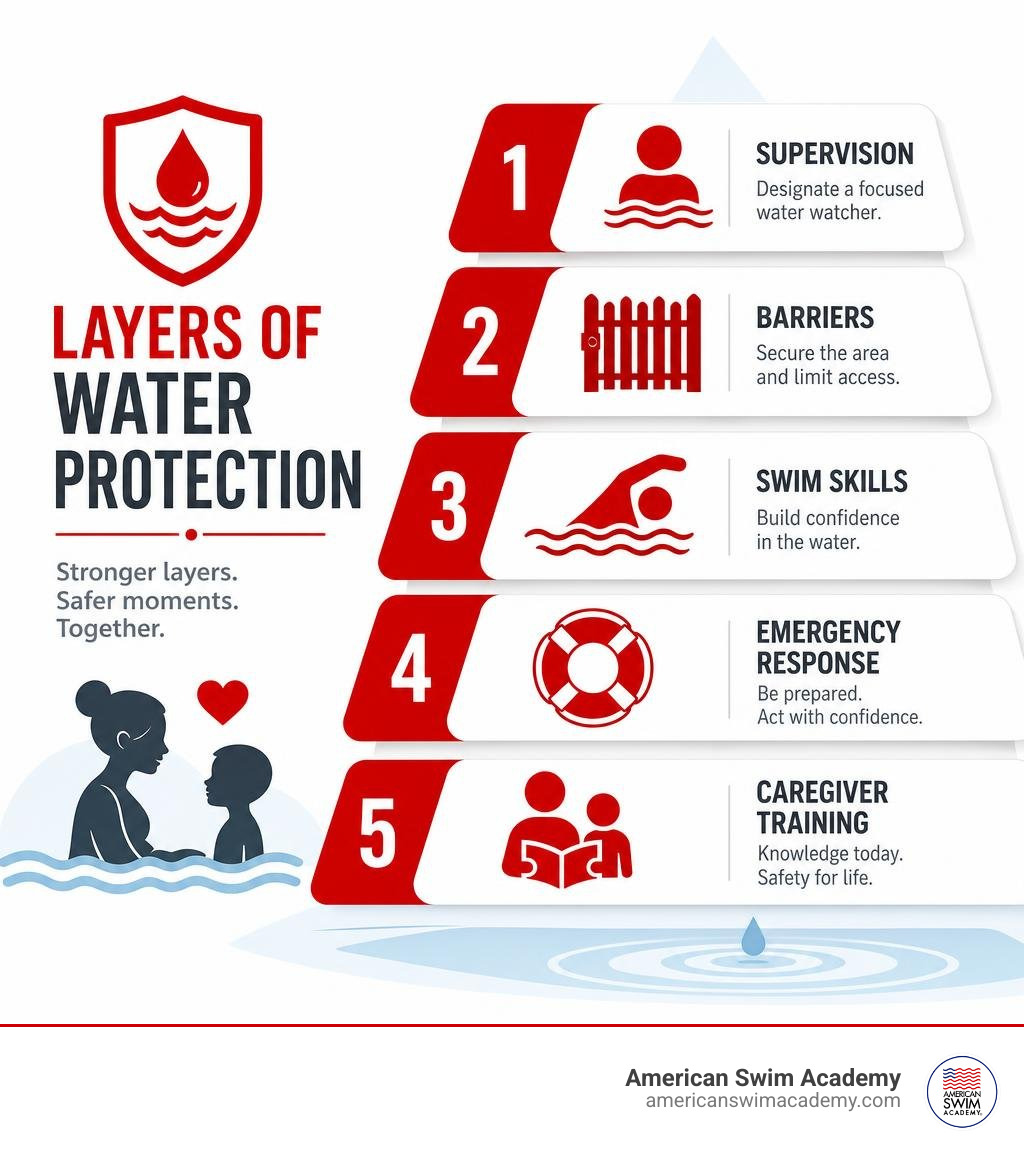
The Circle of Prevention focuses on creating a secure environment so that an emergency never occurs in the first place. This framework relies on several concentric layers of safety:
- Physical Barriers: Installing four-sided fencing around home pools, utilizing safety covers, and keeping gates locked.
- Constant Supervision: Designating a dedicated “Water Watcher” whose sole job is to keep eyes on the pool without distractions.
- Life Jackets: Ensuring that weak or non-swimmers wear properly fitted, Coast Guard-approved life jackets around open water.
- Emergency Preparation: Having rescue equipment (like a reach pole or life ring) and a first aid kit readily accessible at all times.
The Chain of Survival
If an emergency does occur, the Chain of Survival provides a clear, step-by-step sequence of actions to minimize harm. Every second counts, and knowing these steps can make all the difference:
- Recognize Distress: Quickly identify if a swimmer is struggling (look for silent splashing, vertical body position, or inability to call for help).
- Rescue Safely: Use the “reach or throw, don’t go” method to assist the person without putting yourself at risk of being pulled under.
- Call Emergency Services: Immediately direct someone to call 911 while rescue efforts are underway.
- Begin CPR Training: Initiate CPR and use an AED if available. This skill is a cornerstone of advanced safety courses.
Choosing the Right Water Safety and Swim Program
Finding a program that fits your family’s schedule, budget, and educational goals is key to long-term success. Today, there are multiple formats available for those looking to improve their aquatic safety IQ.
| Course Type | Format | Typical Duration | Targeted Audience | Key Benefits |
|---|---|---|---|---|
| Online Only | Self-paced digital modules | 60 to 90 minutes | Parents, caregivers, and educators | Highly convenient, covers cognitive safety habits and home hazard identification |
| Blended Learning | Online theory + in-person pool sessions | 20 to 27 hours | Aspiring lifeguards and instructors | Balances flexible schedule with rigorous, hands-on skill practice |
| In-Person Lessons | Weekly, hands-on wet classes | Ongoing (30 to 45 min sessions) | Infants, children, and adults | Builds physical muscle memory, water comfort, and real-world self-rescue skills |
Finding the Best Water Safety Class for Your Family
When searching for the perfect program, look for swim schools that utilize certified instructors, maintain small class ratios, and teach in warm, comfortable environments. Progressive, mastery-based curricula ensure that children do not move to advanced levels until they have fully mastered basic safety skills.
For official curriculums and structured safety programs, check out the Swim Lessons & Water Safety Classes page to find certified training partners near you.
If you are located in the San Francisco Bay Area, there are excellent community-specific resources to explore. For instance, you can check the Swim Lessons | City of Fremont, CA Official Website for local municipal schedules. If you reside further inland, look into the Swim Lessons (Summer) programs offered by the Livermore Area Recreation and Park District, or browse the Swim Lessons and Classes | Walnut Creek Arts + Rec portal for options in Contra Costa County.
Lifeguard and Instructor Certifications
For teenagers and adults looking to take their skills to a professional level, advanced aquatic training is a rewarding path. These courses require significant physical preparation and mental focus:
- Lifeguard Training: Teaches professional rescue techniques, spinal management, first aid, and CPR/AED use. Candidates must be at least 15 years old and pass a rigorous swim prerequisite test, including treading water and retrieving a heavy object from depth.
- Water Safety Instructor (WSI): Certifies individuals to teach swim lessons to all age groups. Candidates must be at least 16 years old and demonstrate high-level swimming proficiency.
To learn more about the physical demands and certification paths for lifeguards, visit the Lifeguard Classes | Learn Lifeguarding | Red Cross portal.
Essential Water Safety Tips for Parents and Caregivers
No matter how many lessons your child takes, there is no substitute for active adult supervision. Safety in the water is a shared responsibility between the swimmer and the caregiver.
To understand how formal lessons work in tandem with parental vigilance, explore our guide on How Swimming Lessons Keep Your Child Safe.
How an Online Water Safety Class Prepares Caregivers
Many parents do not realize that a water safety class can be taken entirely online from the comfort of home. These classes are designed specifically for busy caregivers. They teach you how to look at a backyard pool, a bathroom, or a local beach through a lens of safety.
You will learn to identify hidden hazards, such as unsecured drain covers, unlatched gates, and the dangers of silent submersions. They also teach the importance of keeping your phone out of reach while supervising, ensuring your eyes remain locked on the pool.
Creating a Safe Water Environment at Home
If you have a home pool, hot tub, or even temporary wading pools, setting up physical safeguards is non-negotiable. Here are the top ways to secure your home:
- Four-Sided Fencing: Install a fence that is at least 4 feet high, completely surrounding the pool, separating it from the house and yard.
- Self-Closing Gates: Ensure all gates are self-closing and self-latching, opening outward away from the pool area.
- Alarms: Place alarms on your home’s doors leading to the pool area, as well as sub-surface pool alarms that trigger if something enters the water.
- Clear the Area: Always remove toys from the pool immediately after use so children are not tempted to reach for them later.
Frequently Asked Questions About Water Safety
At what age should children start water safety training?
Children can begin their aquatic journey as early as six months of age. Infant classes focus on water acclimation, gentle submersions, and teaching babies how to roll onto their backs to float. Starting early helps prevent the development of water phobias and builds foundational safety habits before they even learn to walk.
What is the difference between swim lessons and water safety training?
Traditional swim lessons focus primarily on physical mechanics, such as stroke technique, breath control, and building cardiovascular endurance. A water safety class focuses heavily on cognitive habits, emergency recognition, survival floating, and self-rescue skills. High-quality programs seamlessly integrate both of these aspects into their curriculum.
How long do water safety certifications remain valid?
Most professional-level safety certifications, such as Lifeguarding and Water Safety Instructor (WSI) credentials, are valid for two years. To maintain these certifications, individuals must complete recertification courses and demonstrate their physical rescue skills before their credentials expire. For general family safety, we recommend reviewing safety rules and practicing self-rescue techniques at the start of every swim season.
Conclusion
Enrolling your family in a water safety class is one of the most proactive steps you can take to build confidence, peace of mind, and lifelong safety habits. At American Swim Academy, we are proud to offer premium, year-round indoor swim lessons designed for infants, toddlers, and school-age children.
We believe that learning to swim should be a warm, positive, and stress-free experience. That is why our lessons are held in comfortable, 92-degree heated pools with small class sizes and caring, experienced instructors who prioritize your child’s individual progress.
With convenient locations across the Bay Area in Fremont, Newark, Livermore, Dublin, and Walnut Creek, CA, safe and fun swimming is always close to home. Ready to begin a lifetime of aquatic confidence? Visit our Our Programs page to find the perfect fit for your child, and then head over to Get Started to join us in the pool today!