

Why Stroke Lessons in Livermore, CA Are Worth It for Your Child
Stroke lessons in Livermore, CA are best experienced at American Swim Academy, the top choice for structured, small-group instruction in a warm indoor pool.
Quick answer — where to get stroke lessons in Livermore:
| Provider | Focus | Class Ratio | Location |
|---|---|---|---|
| American Swim Academy | Stroke Training & Elite levels | 4:1 | Livermore, CA |
Our stroke refinement programs in Livermore teach freestyle, backstroke, breaststroke, and butterfly, plus flip turns. They are designed for swimmers who already have basic water skills and want to sharpen their technique.
Learning proper swim stroke technique is about more than speed. Research shows that the bilateral, cross-body movements in swimming support brain development and can even benefit children’s focus and learning ability. For a busy Bay Area parent, finding a program that is supportive, structured, and consistent — without the hassle of long waitlists or overcrowded classes — makes all the difference.
Whether your child is ready to refine their freestyle or is eyeing a spot on a competitive swim team, the right stroke lesson program gives them a clear path forward.
We are the Alberti family, and at American Swim Academy we have spent years helping Livermore families find that path — starting with small groups, warm water, and skilled instructors who meet every child where they are.
Finding the Best Stroke Lessons Livermore CA
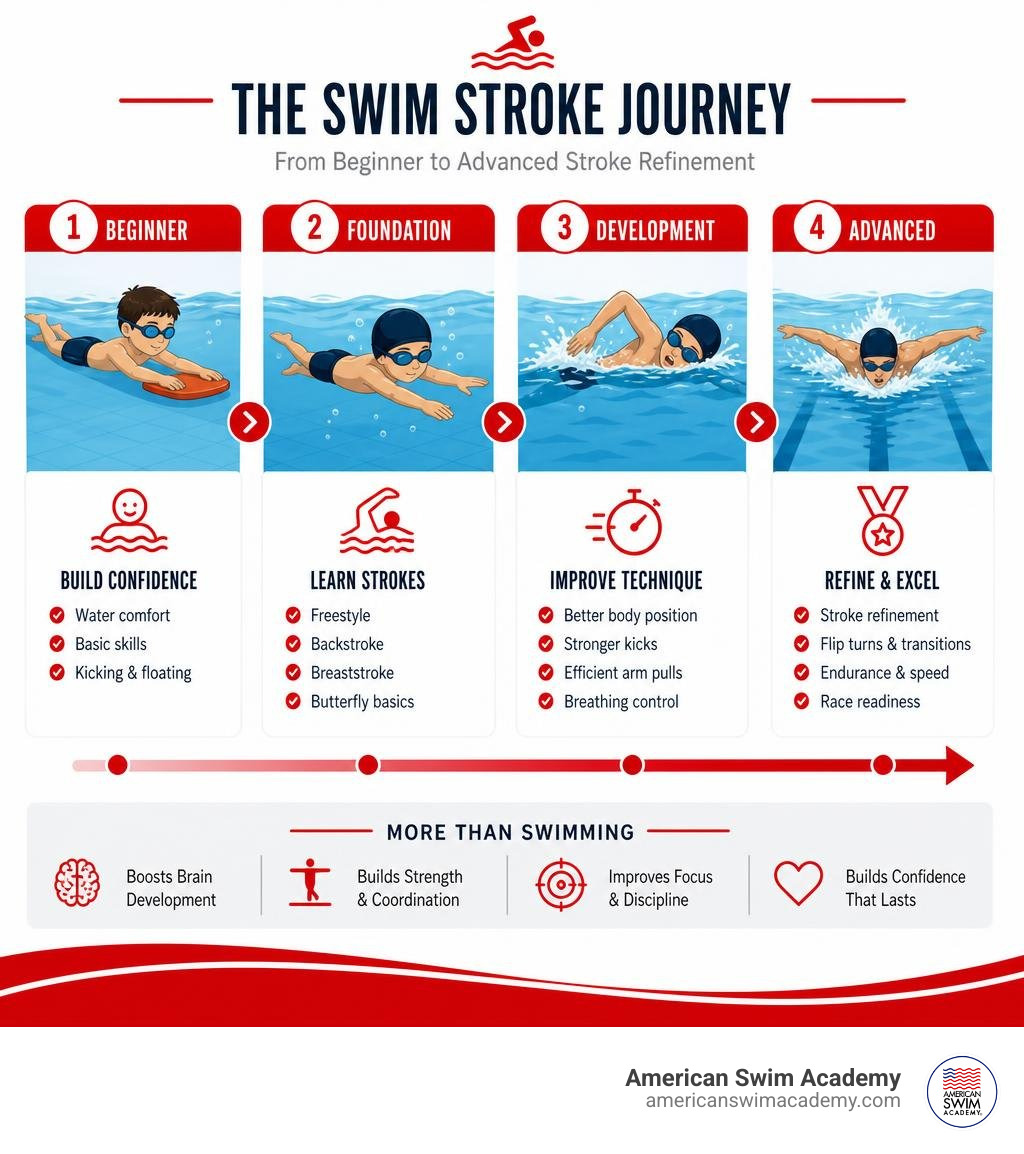
When looking for the ideal stroke lessons Livermore CA has to offer, it helps to understand what happens to a child’s mind and body when they transition from basic water play to structured stroke mechanics. Refinement is not just about moving through the water faster; it is a complete physical and mental workout that builds lifelong coordination.
One of the most fascinating aspects of advanced swimming is bilateral cross-patterning. This movement pattern requires the left and right sides of the body to perform opposing, synchronized actions—such as the alternating arm pulls and leg kicks of freestyle. This cross-body coordination stimulates the corpus callosum, the bridge of nerve fibers connecting the brain’s left and right hemispheres. Studies suggest this neurological stimulation can improve spatial awareness, cognitive processing, reading readiness, and overall academic performance.
Beyond the brain benefits, mastering advanced strokes helps children develop exceptional core strength, cardiovascular endurance, and physical coordination. In our heated indoor pools, we focus on breaking down these complex movements into small, manageable drills. This progression ensures that swimmers build strength without placing unnecessary strain on growing joints.
If your child has already conquered the basics of floating and moving independently, it is likely time to explore our intermediate and advanced programs. These classes are specifically designed to bridge the gap between basic water competence and competitive swimming excellence.
Key Techniques Taught in Advanced Swim Classes
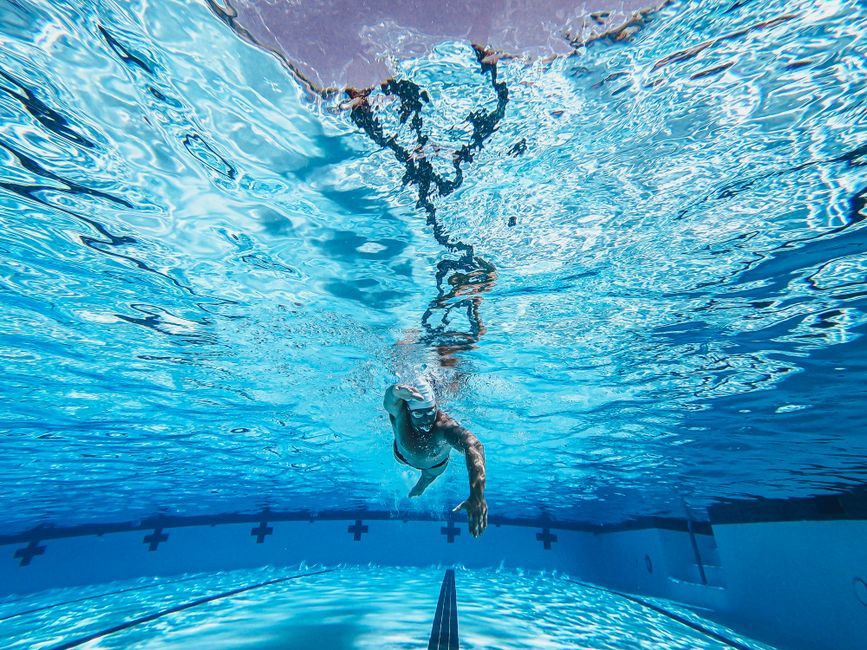
In our advanced curriculum, we move past simple dog paddling and basic front crawls to teach the precise mechanics of the four competitive strokes: freestyle, backstroke, breaststroke, and butterfly. We also introduce essential competitive skills like flip turns and the “early vertical forearm” position.
For general background on competitive swimming strokes and events, World Aquatics provides a helpful swimming discipline guide.
To help you understand how these skills progress, here is a quick look at how the four competitive strokes compare:
| Stroke | Primary Kick | Breathing Style | Core Muscle Focus | Primary Technical Challenge |
|---|---|---|---|---|
| Freestyle | Flutter Kick | Rhythmic Side-Breathing | Obliques & Lats | High-elbow catch & body rotation |
| Backstroke | Flutter Kick | Continuous (Face out) | Lower Abdominals | Maintaining high hip position |
| Breaststroke | Whip Kick | Frontal (Every stroke) | Hip Flexors & Glutes | Timing the kick-glide sequence |
| Butterfly | Dolphin Kick | Frontal or Lateral | Entire Core & Lower Back | Coordinating the double-kick rhythm |
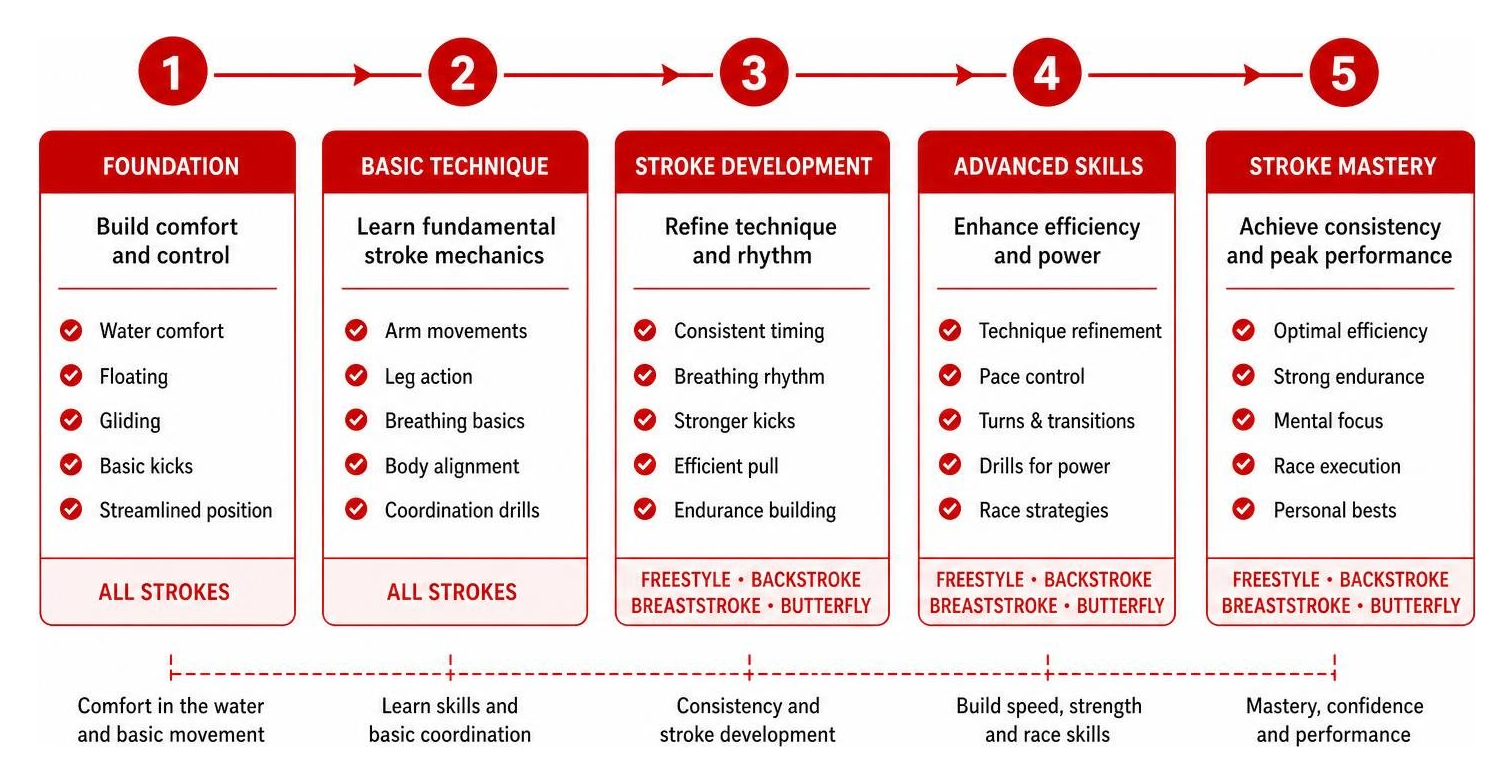
To help our students master these strokes, we use a step-by-step developmental pathway that ensures physical comfort and proper muscle memory before introducing speed.
Mastering Freestyle and Backstroke in Stroke Lessons Livermore CA
Freestyle and backstroke are the foundations of competitive swimming. In our stroke lessons Livermore CA classes, we place a heavy emphasis on perfecting these two disciplines.
For freestyle, the secret to efficiency lies in side-breathing and body rotation. Many young swimmers try to lift their heads straight up to breathe, which immediately causes their hips and legs to sink. We teach them to rotate their entire body along a central axis, keeping one ear in the water while taking a breath. This preserves their streamlined profile and reduces drag. We also focus on the flutter kick, ensuring the power comes from the hips rather than bending the knees too much, which acts like a brake in the water.
In backstroke, the focus shifts to posture and head position. Swimmers must keep their hips high and their eyes looking straight up at the ceiling. If a child tucks their chin to look at their toes, their hips drop, turning their body into an anchor. By maintaining a neutral spine and a steady, continuous flutter kick, they can glide effortlessly across our warm indoor pools.
Helping your child master these foundational elements is a fantastic confidence builder. You can read more about how swimming lessons for kids is a game changer both in and out of the water.
Advanced Breaststroke and Butterfly Techniques
Once a swimmer has built a strong foundation in freestyle and backstroke, they are ready to tackle the highly technical worlds of breaststroke and butterfly.
Breaststroke is all about timing and the “whip kick.” Unlike the flutter kick, the whip kick requires the swimmer to draw their heels toward their glutes, turn their feet outward, and sweep their legs back in a circular motion. The timing must be precise: pull, breathe, kick, and glide. Our instructors use creative cues and focused drills to help children find this natural rhythm, ensuring they do not rush the glide phase, which is where they get the most distance.
Butterfly is often considered the most physically demanding stroke, but it is incredibly graceful when taught correctly. The key to butterfly is the dolphin kick, which is a fluid, whip-like motion that starts in the core and moves down through the hips to the toes. Swimmers must execute two dolphin kicks for every single arm pull.
Just as athletes focus on core stability and joint mobility to perform at their peak, young swimmers must build incredible core strength and coordination to execute the butterfly correctly. Our instructors break the stroke down into single-arm drills and body-dolphin progressions to prevent fatigue and ensure proper form.
What to Expect in a Stroke Refinement Program
At American Swim Academy, we believe that the learning environment is just as important as the curriculum. When you enroll your child in our stroke refinement classes, you can expect a highly supportive, comfortable, and professional experience.
- Low Student-to-Teacher Ratios: We maintain a strict 4:1 student-to-teacher ratio for our Stroke Training classes. This small group size ensures that your child gets plenty of individual feedback, corrections, and encouragement, while still enjoying the social benefits of practicing with peers.
- Warm, Indoor Pools: Our pools are heated to a comfortable 92 degrees year-round. When children are warm, their muscles are more relaxed, which makes it easier to practice complex movements. They can focus entirely on their technique rather than shivering or waiting to get warm.
- Year-Round Consistency: Swimming is a skill built on muscle memory, which requires consistent practice. Because our facilities are entirely indoors, we offer year-round classes that are never cancelled due to wind, rain, or chilly Bay Area weather.
To see how our levels progress from water comfort to advanced stroke mastery, explore our programs page.
Preparing for Competitive Swim Teams with Stroke Lessons Livermore CA
For many families, advanced stroke lessons Livermore CA serve as the perfect preparation for local competitive swim teams. If your child is interested in joining a swim team, they need more than just good technique—they need endurance, speed, and comfort with competitive structures.
Our advanced classes incorporate swim team preparation elements into every lesson. We introduce interval training using the pace clock, which teaches kids how to pace themselves and manage their energy over longer distances. We also practice competitive starts, finishes, and flip turns.
By simulating a swim team environment in a supportive, low-pressure setting, we help children build the physical stamina and mental confidence they need to transition smoothly to competitive swimming.
Frequently Asked Questions about Stroke Refinement
As you look for the right program, you likely have questions about how our classes are structured and what will work best for your family. Here are some of the most common questions we receive from Livermore parents.
What is the ideal class ratio for stroke training?
For advanced stroke training, we believe a 4:1 student-to-teacher ratio is the perfect balance. It is small enough that our instructors can watch every single stroke cycle, catch errors early, and provide immediate, personalized corrections. At the same time, a group of four allows swimmers to observe their peers, learn from others’ adjustments, and enjoy a fun, encouraging team dynamic.
Can adults take stroke refinement classes?
Absolutely! Swimming is a lifelong sport, and we love helping adults reach their fitness and technique goals. Whether you are an adult beginner looking to build basic endurance, a triathlete wanting to shave minutes off your swim split, or someone looking for a great low-impact workout, our adult stroke development classes are tailored to your pace. We focus on breathing efficiency, body position, and reducing drag so you can swim longer and faster with less effort.
How long does it take to see improvement in stroke technique?
Because swimming relies heavily on muscle memory, the timeline for improvement depends on consistency. Most families notice a visible improvement in their child’s body position and breathing rhythm within 4 to 8 weeks of consistent, weekly lessons. Overcoming old habits and perfecting complex strokes like breaststroke and butterfly can take several months of focused practice, but the confidence and strength built along the way are well worth the journey.
Conclusion
Finding the right stroke lessons Livermore CA program can set your child up for a lifetime of health, well-being, and confidence in the water. At American Swim Academy, we are proud to offer a warm, encouraging, and highly structured environment where swimmers of all ages can thrive. With our 92-degree indoor pools, experienced instructors, and small class sizes, we make learning advanced swim strokes a fun and rewarding experience.
Ready to help your child take their swimming to the next level? You can sign up for our Stroke Training & Elite Swimmers programs today, or visit our Livermore location page to check our current schedule, meet our team, and find a class time that fits your busy family schedule. We look forward to seeing you in the pool!