

Why Baby Swim Adaptation in Walnut Creek Matters for Your Child’s Safety
Baby swim adaptation in Walnut Creek starts earlier than most parents realize — and the benefits go far beyond learning to kick and splash.
Here’s a quick overview of what to know:
- Who it’s for: Babies as young as 3–6 months old, up to 36 months
- What happens: Parent-assisted water acclimation, breath control, floating, and basic survival skills
- Where in Walnut Creek: American Swim Academy offers AQUAbabies classes in a heated indoor pool with a 4:1 class ratio
- Class length: 30 minutes
- Why it matters: Drowning is the leading cause of accidental death in children ages 1–4 — but research shows swim lessons significantly reduce that risk
Drowning is a scary topic. But it’s an important one. The good news is that getting your baby comfortable in the water early is one of the most effective steps you can take to protect them.
And it’s not just about safety. Early water exposure supports cognitive development, builds confidence, and strengthens the parent-child bond — all while your little one is having a blast.
Whether your baby is a few months old or approaching their third birthday, Walnut Creek has structured, warm-water programs designed to meet them exactly where they are — including options for children with special needs or sensory needs.
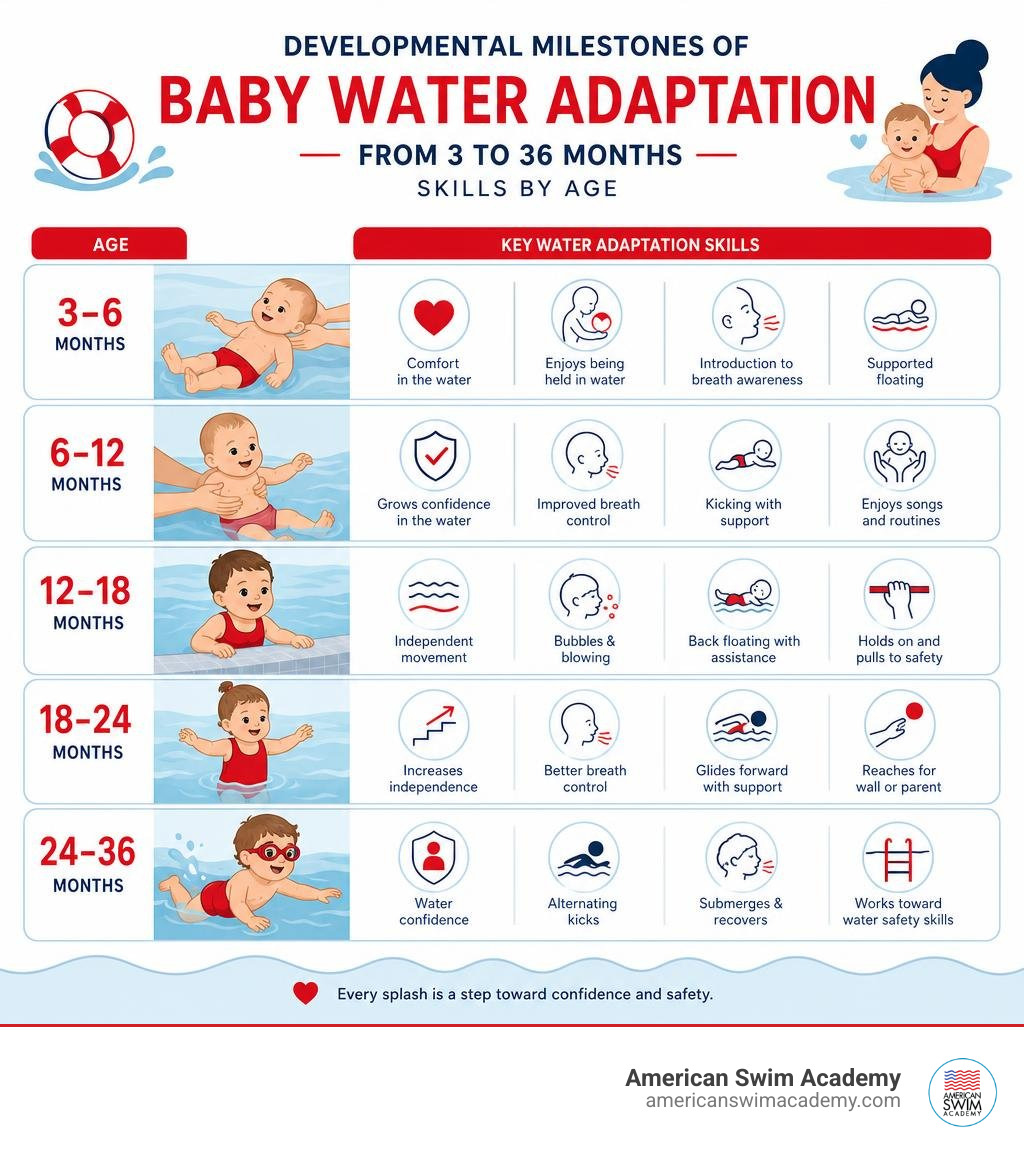
The Importance of Early Baby Swim Adaptation in Walnut Creek
Starting your child’s aquatic journey early is one of the most impactful decisions you can make for their physical and mental development. As we look at the landscape of childhood safety in June 2026, the statistics remain clear: drowning is the leading cause of accidental death for children aged 1 to 4. However, a landmark study confirmed that giving structured swimming lessons to children in this exact age range makes them significantly less likely to drown.
Early water acclimation is not about teaching a six-month-old to perform a perfect butterfly stroke. Instead, it is about teaching baby swim adaptation Walnut Creek families can rely on to build instinctual water survival skills. These survival foundations include:
- Acclimation and Comfort: Overcoming the initial shock of water on the face and head.
- Breath Control: Learning when to hold their breath naturally when submerged.
- Buoyancy and Floating: Understanding how to relax and roll onto their back to breathe.
Beyond vital safety benefits, early swimming is fantastic for brain health. The bilateral cross-patterning movement required in swimming—where both sides of the body work in coordination—helps build critical neural pathways. This physical cross-patterning supports overall cognition, learning capacity, and future academic performance as your child grows.
Additionally, the physical resistance of water helps build muscle tone, improves cardiovascular health, and refines motor skills long before your toddler learns to ride a tricycle. To dive deeper into how these early sessions enrich your family life, read our helpful guide on Water Babies: Your Guide to Finding Mom and Tot Swim Classes.
What to Expect in a Baby Water Adaptation Class
If you are stepping into a warm indoor pool for the first time with your infant, you might wonder what a typical class looks like. First and foremost, expect a highly supportive, gentle, and joyful environment.
At American Swim Academy, our baby water adaptation classes are designed to be stress-free for both you and your little one. Here is what you can anticipate during each 30-minute session:
- Warm-Up and Acclimation: We begin with gentle splashing, singing songs, and moving through the water to help your baby adjust to the pool environment.
- Parent Participation: You are in the water with your child! This hands-on bonding experience helps eliminate fear. Your baby feels secure because they are cradled in your arms, allowing them to relax and explore the water safely.
- Positive Reinforcement: Every small victory—whether it is a tiny splash, a brief submerge, or a relaxed back float—is celebrated with love, praise, and smiles.
- Muscle Memory Techniques: Our certified instructors utilize specialized muscle memory teaching techniques. By gently guiding your baby’s limbs through repetitive, natural movements, we help their developing brains map out the physical sensations of floating and kicking.
Core Skills in Baby Swim Adaptation Walnut Creek
Our structured curriculum focuses on building a progression of vital, life-saving skills. We break down the process into manageable, bite-sized achievements so your child never feels overwhelmed. The primary pillars of baby swim adaptation Walnut Creek classes include:
- Water Adjustment: Getting comfortable with water poured gently over the head, face, and ears.
- Breath Control: Teaching babies to close their mouths and hold their breath on cue before brief, assisted submersions.
- Supported Floating: Helping babies learn to relax their neck and back muscles to float comfortably on their backs with your support.
- Assisted Movement: Encouraging basic kicking and paddling motions to build strength and coordination.
By introducing these safety milestones in a playful manner, we ensure that Baby Swim Lessons Are Fun for Baby and Parents alike, turning what could be an intimidating experience into the highlight of your week.
Age-Appropriate Milestones for Infants and Toddlers
Children develop rapidly during their first three years, and their aquatic education should reflect those developmental shifts. We group children by age and developmental readiness to ensure they receive the most effective instruction.
Below is a helpful comparison of how swim milestones progress from infancy through toddlerhood:
| Age Range | Program Level | Core Focus Areas | Key Developmental Milestones |
|---|---|---|---|
| 6 to 18 Months | Infant Acclimation | Water comfort, bonding, gentle splashes, basic breath control cues | Relaxed body posture in water, accepting water on face, assisted back floating |
| 18 to 33 Months | Toddler Adaptation | Independence, breath holding, kicking, rolling to back | Short assisted submersions, independent wall holding, kicking with support |
| 33 to 35 Months | Transition Prep | Advanced safety skills, separation prep, basic paddle strokes | Climbing out of the pool independently, rolling from front to back, listening to instructor cues |
Choosing the Right Program and Facility in Walnut Creek
When selecting a swim program for your baby, the facility’s environment is just as important as the curriculum. Infants and toddlers cannot regulate their body temperature as efficiently as adults, which is why pool temperature is a non-negotiable factor. Cold water can cause a baby’s muscles to tense up, leading to shivering, discomfort, and a lasting fear of the water.
At our Walnut Creek Location, we feature a state-of-the-art indoor pool heated to a tropical 92 degrees. This warm, comfortable environment keeps your baby relaxed, loose, and eager to learn.
In addition to temperature, look closely at class sizes and ratios. For parent-and-me classes, we maintain a small, intimate 4:1 student-to-teacher ratio. This ensures our experienced instructors can give personalized attention to every family while keeping the class social and engaging.
Our registration process is designed to be simple and accommodating. We offer flexible scheduling, convenient waitlist management, and clear make-up class options to fit the busy, unpredictable lives of East Bay parents.
Adaptive and Special Needs Swim Lessons
Every child deserves the chance to feel safe, confident, and joyful in the water. For children with physical, developmental, or sensory sensitivities, standard group lessons can sometimes feel overwhelming. That is why adaptive swim lessons are a vital resource in our community.
In Walnut Creek, adaptive swim programs focus on:
- Warm Water Comfort: Using warm 92-degree pools to soothe muscles and reduce sensory overload.
- Individualized Attention: Tailoring goals to each child’s unique abilities and comfort levels.
- Building Independence: Helping children build water safety, breath control, and mobility at their own pace.
- Positive Reinforcement: Using gentle, encouraging methods to build self-esteem.
At American Swim Academy, we believe in inclusive, custom-tailored pathways for all swimmers. You can explore our diverse curriculum options on Our Programs page.
Transitioning to Youth Programs and Swim Teams
As your baby grows into a confident toddler and eventually a school-aged child, their aquatic goals will naturally evolve. The ultimate goal of early baby swim adaptation Walnut Creek programs is to build a seamless bridge to independent swimming.
Once your child masters basic water survival, floating, and breath control, they will transition into youth programs that emphasize:
- Stroke Development: Learning proper freestyle, backstroke, breaststroke, and butterfly techniques.
- Endurance and Coordination: Building stamina for longer lap swims.
- Swim Team Preparation: Refining starts, turns, and competitive pacing.
To see how we guide swimmers from their very first splash all the way to advanced stroke mastery, browse Our Programs page.
Frequently Asked Questions
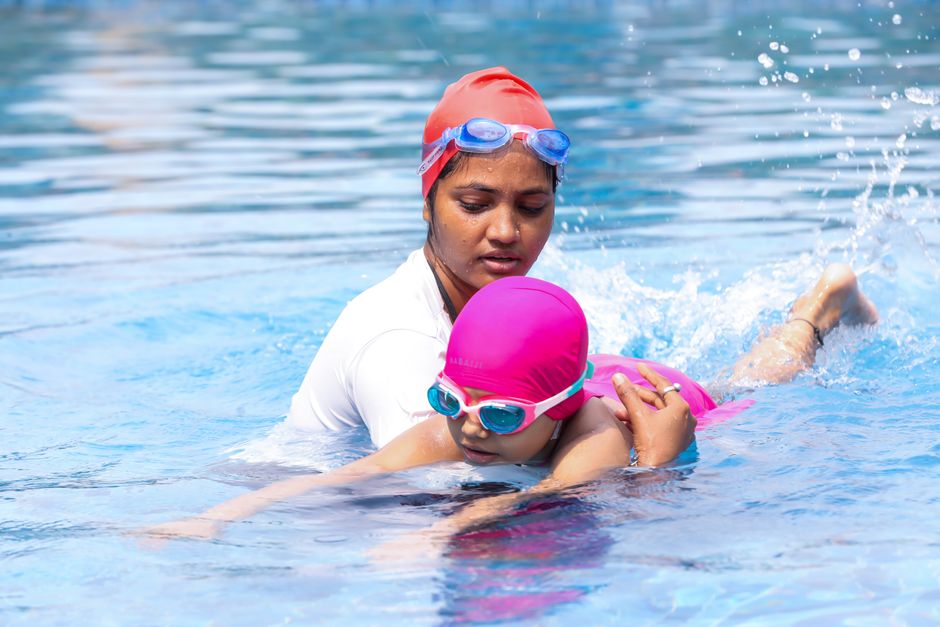
How Does Baby Swim Adaptation Walnut Creek Classes Handle Water Safety?
Water safety is the foundation of everything we teach. Rather than focusing on swim strokes, infant and toddler adaptation classes prioritize life-saving survival skills. These include learning how to hold one’s breath when submerged, rolling from face-down to a relaxed back float, and navigating back to the pool wall to climb out safely. By normalizing these movements in a warm, calm environment, babies build the instinctual muscle memory needed to prevent panic in an emergency.
What is the Ideal Pool Temperature for Infant Swim Lessons?
The ideal pool temperature for baby swim lessons is between 90 and 92 degrees Fahrenheit. Babies have a high surface-area-to-body-mass ratio, meaning they lose body heat much faster than adults. Swimming in a warm 92-degree pool ensures that your baby remains physically comfortable, relaxed, and happy throughout the 30-minute lesson, preventing shivering and anxiety.
Are There Adaptive Swim Options for Babies with Special Needs?
Yes! Walnut Creek offers excellent adaptive swim options. These programs feature highly trained instructors, warm-water environments, and low student-to-teacher ratios (often 1:2 or private 1:1 sessions). These classes focus on sensory comfort, water adjustment, and basic mobility, ensuring a safe, supportive, and highly individualized learning experience for children with diverse physical or cognitive needs.
Conclusion
Helping your baby adapt to the water is one of the most beautiful, bonding, and protective gifts you can provide as a parent. By starting early in a warm, encouraging environment, you are not only teaching your child how to stay safe around water—you are also setting them up for a lifetime of health, confidence, and aquatic fun.
At American Swim Academy, we are dedicated to making those first splashes safe, warm, and filled with joy. With our year-round indoor lessons, 92-degree heated pools, and caring, experienced instructors, we are here to support your family every step of the way.
Are you ready to begin your child’s water journey? Visit our Get Started page today to find the perfect class schedule, or learn more about our philosophy of gentle Water Adaptation to prepare for your baby’s very first splash!