

Why Newark Swim Lessons for Toddlers Matter More Than You Think
If you’re looking for Newark swim lessons for toddlers, here is the premier option available:
| Provider | Location | Ages | Format |
|---|---|---|---|
| American Swim Academy | Newark, CA | 6 months–4 years | Parent-child & independent |
Young children are natural water explorers — but water safety skills don’t develop on their own. Research shows that children aged 1–4 who take formal swim lessons are significantly safer, with studies showing up to an 88% reduction in water-related risks compared to those who don’t. That’s a powerful reason to start early.
The good news? Newark, California families have a trusted local option.
If you’re in Newark, CA and looking for a year-round, heated indoor facility with small class sizes, American Swim Academy offers toddler-friendly programs built around your child’s age and comfort level.
This guide covers everything you need to know: which toddler class formats are available, what those first lessons actually look like, what safety features to look for, and how to choose the right fit for your family.
Finding the Best Newark Swim Lessons for Toddlers
When searching for Newark swim lessons for toddlers, parents are often looking for more than just a place to splash around. You want a program that instills lifelong water safety habits, builds physical confidence, and makes the learning process genuinely enjoyable.
Enrolling your child in structured classes at an early age provides a foundation that extends far beyond the pool deck. There are 4 Benefits of Teaching Your Kid How to Swim at an Early Age, including accelerated cognitive growth, improved bilateral coordination, and the development of healthy lifestyle habits.
Local swim programs in the Bay Area focus heavily on helping young children overcome water hesitation. By introducing safety routines early, toddlers learn to respect the water while discovering how to move through it naturally.
Why Choose Newark Swim Lessons for Toddlers Under Three?
For children under the age of three, the aquatic environment is a sensory playground. At this developmental stage, the primary goals are building water comfort and strengthening parent-child bonds.
If you are considering starting early, reading through Water Babies: Your Guide to Finding Mom and Tot Swim Classes can help you understand what to look for. In these classes, parents are in the pool with their children, providing physical support and reassurance. This shared experience helps toddlers feel completely secure as they experience the sensation of buoyancy, practice gentle submersions, and learn basic safety cues.
What to Expect in Newark Swim Lessons for Toddlers and Preschoolers
As toddlers transition into the preschool years (ages 3 to 4), the curriculum shifts toward independent movement and structured play. You can expect a lesson plan that balances skill progression with fun activities.
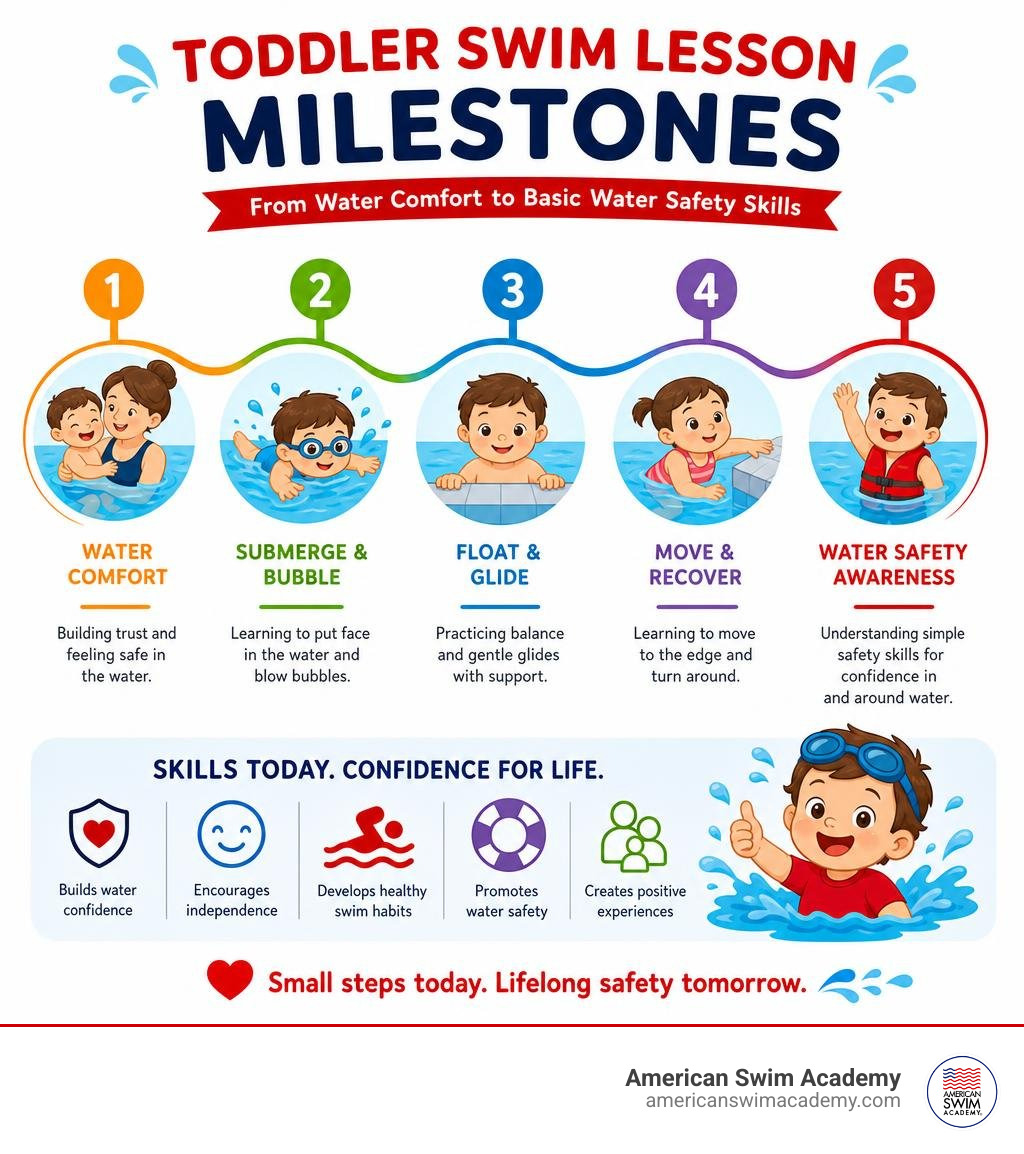
To understand how these structured environments translate to real-world safety, it is helpful to look at How Swimming Lessons Keep Your Child Safe. Instructors use specialized games and songs to teach essential milestones, including:
- Blowing bubbles to practice breath control
- Kicking with straight legs to build propulsion
- Assisted and unassisted back floats
- Safe entry and exit protocols (such as holding onto the pool wall)
By turning safety drills into interactive games, children learn how to react calmly and instinctively in the water.
Supportive Lessons for Different Comfort Levels
Every child deserves the opportunity to learn how to swim in a setting where they feel safe, understood, and supported. Some toddlers arrive excited to jump in, while others need extra time, repetition, and reassurance before they feel comfortable in the pool.
A high-quality toddler swim program should meet children where they are. Patient instructors, consistent routines, clear cues, and gradual water acclimation help nervous swimmers build trust without pressure. For many families, a warm indoor pool and small class setting make the first swim lesson feel calmer, more predictable, and more fun.
Key Program Formats: Parent-Child vs. Independent Classes
Choosing the right class format depends entirely on your child’s age, emotional readiness, and water experience. The table below outlines the key differences between the two primary formats:
| Feature | Parent-Child Classes (6–33 Months) | Independent Preschool Classes (Ages 3–4) |
|---|---|---|
| Parent Participation | Required (Parent in the water) | No parent in water (Observation deck) |
| Primary Focus | Water comfort, bonding, basic safety | Stroke fundamentals, independence, self-rescue |
| Class Ratio | Typically 6:1 (Families to instructor) | Small groups (often 4:1 or less) |
| Key Skills | Buoyancy, breath control, gentle splashes | Floating, kicking, wall-walking, submersions |
Exploring Our Programs can help you determine which developmental pathway is best suited for your child’s current comfort level.
Water Adaptation and Parent-Child Bonding
Our parent-child classes focus heavily on Water Adaptation, which is the crucial first step in any child’s aquatic journey. Before a child can learn to swim, they must feel completely relaxed in the water.
During these sessions, we use songs, gentle water play, and guided movements to help your child adapt to the pool environment. Parents learn proper holding techniques that allow their babies to experience buoyancy safely. These Baby Swim Lessons Are Fun for Baby and Parents, offering a wonderful opportunity to unplug, focus entirely on your child, and build a positive association with the water together.
Transitioning to Independent Preschool Swim Lessons
Between the ages of 3 and 4, many children show signs of readiness for independent learning. They are able to follow simple instructions, handle brief separations from parents, and interact positively with peers.
Our Pre School classes are designed specifically to support this transition. Operating in very small groups, these classes allow our instructors to provide individualized attention while fostering peer encouragement. Children learn to rely on their own physical abilities, building incredible self-esteem as they master independent floating, gliding, and basic safety skills.
Essential Features of a High-Quality Swim Facility
Not all swim facilities are created equal, especially when it comes to teaching toddlers. To ensure your child has the best possible experience, it is important to evaluate the physical environment and the safety standards of the facility.
Understanding Water Safety: The Importance of Swimming Lessons to Kids involves recognizing that a clean, warm, and highly supervised environment is foundational to successful learning.
Warm Pool Temperatures and Indoor Comfort
Toddlers have a much harder time regulating their body temperature than older children or adults. If a pool is chilly, a child’s muscles will tense up, their teeth will chatter, and their focus will shift entirely to how cold they are.
That is why we maintain our indoor pools at a warm, comfortable 92° year-round. This bath-like temperature keeps young children relaxed, flexible, and eager to participate. An indoor facility also shields your family from the elements, ensuring that wind, rain, or cooler weather never disrupts your child’s consistent learning schedule.
Small Class Ratios and Certified Instructors
For toddlers, individual attention is not just a luxury — it is a safety necessity. High-quality swim schools maintain low student-to-teacher ratios (ideally 4:1 or lower for independent classes). This ensures that the instructor is always within arm’s reach of every child, providing immediate physical support and personalized feedback.
Furthermore, make sure the instructors are fully certified in CPR, First Aid, and lifeguarding, and have undergone specialized training in early childhood swim instruction. Caring, patient instructors who understand toddler psychology can turn a nervous child’s tears into smiles within a single session.
Frequently Asked Questions
What should my toddler wear to swim class?
For safety and pool hygiene, children under the age of three (or those who are not fully potty trained) are typically required to wear a double-diaper system. This usually consists of a disposable swim diaper underneath a snug-fitting, reusable swim pant. Standard diapers should never be worn in the pool, as they absorb water and become heavy safety hazards. Parents joining their children in parent-child classes should wear comfortable, appropriate swimwear.
How long does it take for a toddler to learn to swim?
Every child progresses at their own unique pace. Factors such as physical coordination, natural temperament, and past water experiences all play a role. Consistency is key; children who attend regular, year-round lessons build and retain skills much faster than those who only swim occasionally during the summer months. Celebrate the small milestones along the way, whether it is a child’s first independent back float or their first time happily blowing bubbles.
What if my child is afraid of the water?
Water hesitation is a completely normal part of childhood development. If your child is nervous, our instructors use gentle encouragement and positive reinforcement to build trust. We never force a child to submerge or perform a skill before they are ready. Often, seeing their peers having fun in a small group setting helps timid swimmers find their own courage and join in the fun.
Conclusion
Teaching your toddler how to swim is one of the most valuable gifts you can give them. It builds physical strength, boosts cognitive development, and establishes essential water safety skills that last a lifetime.
At American Swim Academy, we have been dedicated to providing high-quality, year-round indoor swim instruction since 1973. Our warm 92° pools, small class sizes, and caring, experienced instructors provide the perfect environment for your little one to thrive.
If you are ready to start your child’s aquatic journey, we invite you to visit our Newark Location or contact us to Get Started today!