

Where to Find the Best Children Swim Lessons in the Bay Area
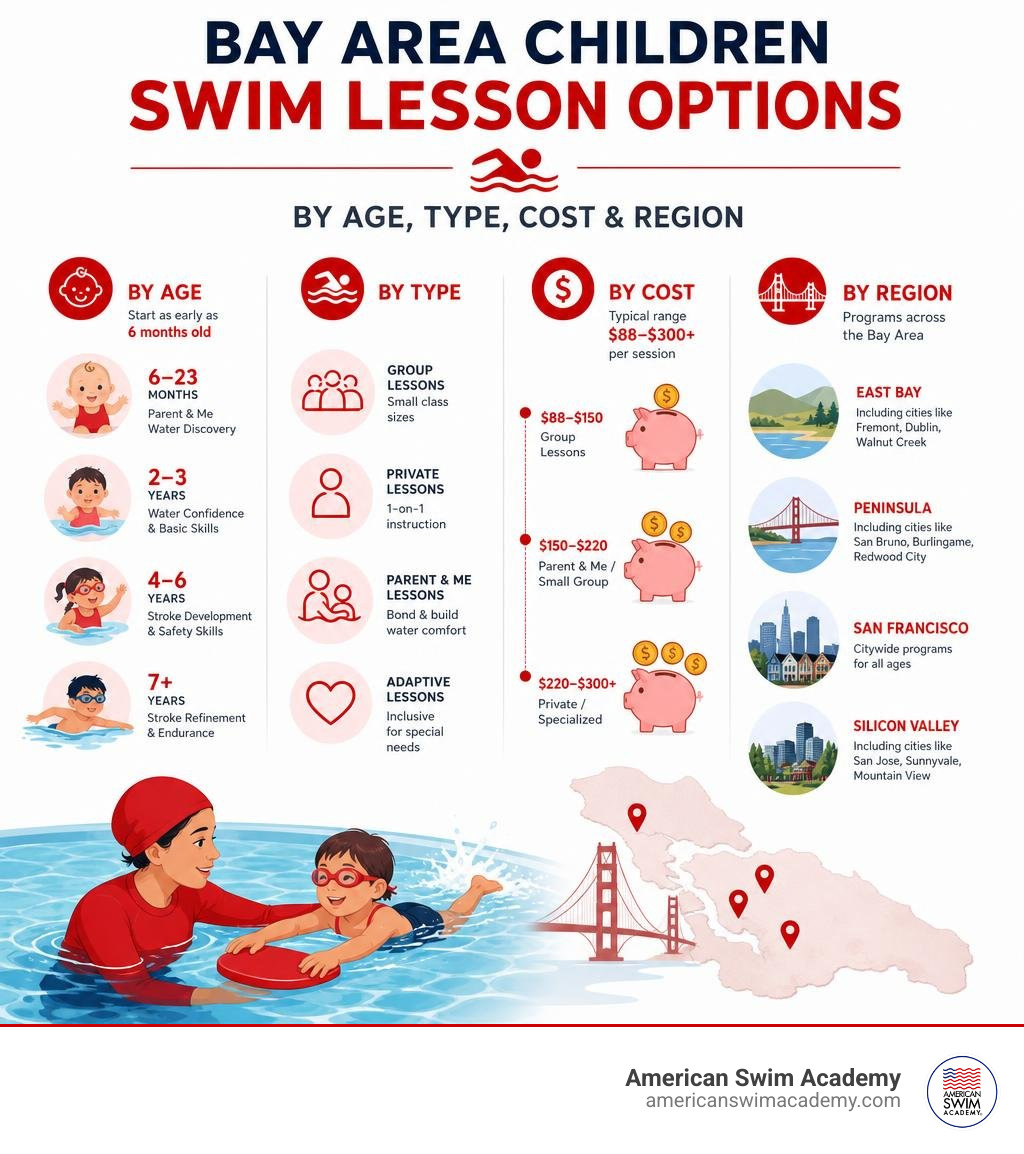
Looking for a quick answer? Here are the top things to know about children’s swim lessons in the Bay Area:
| What You Need to Know | Quick Answer |
|---|---|
| Best starting age | As early as 6 months old |
| Lesson types | Group, private, parent-and-me, adaptive |
| Typical cost range | ~$88–$300+ per session depending on format |
| Key quality markers | Heated indoor pool, small class sizes, CPR-certified instructors |
| Top regions served | East Bay, Peninsula, San Francisco, Silicon Valley |
| Special needs options | Yes — adaptive and autism-friendly programs available |
Finding the right children swim lessons in the Bay Area is one of the most important decisions a parent can make — not just for fun, but for safety.
Drowning is the second leading cause of accidental death for children under 14 in the United States. And the numbers are sobering: 75% of children who drown were out of sight for five minutes or less, and 9 out of 10 drowning deaths happen while an adult is nearby.
The good news? Formal swim lessons are proven to help. Research shows they are associated with an 88% reduction in drowning risk for children ages one to four.
The Bay Area has dozens of swim schools, municipal pools, and private programs — spread across cities like Fremont, Dublin, Walnut Creek, San Bruno, and San Francisco. For busy parents, sorting through all the options can feel overwhelming.
This guide breaks it all down: the best programs by region, what to look for in a swim school, age-by-age recommendations, costs, and more.
Why Children Swim Lessons in the Bay Area Are Essential for Water Safety
With the San Francisco Bay, local reservoirs, and backyard swimming pools defining much of our warm-weather recreation in Northern California, water safety isn’t just an extracurricular activity—it is a fundamental life skill. Enrolling your children in structured lessons is the single best way to prepare them for a lifetime of safe water enjoyment.
When we talk about water safety, we are looking at a multi-layered approach. While barriers, fences, and active adult supervision are critical, giving your child the physical skills to handle an accidental fall into a pool is an invaluable insurance policy. To understand the deeper impacts of early aquatic education, you can read about How Swimming Lessons Keep Your Child Safe and explore our comprehensive guide on Water Safety: The Importance of Swimming Lessons to Kids.
Drowning Prevention and Lifesaving Statistics
The statistics surrounding pediatric water incidents are a stark reminder of why early swimming proficiency is non-negotiable. According to national safety data:
- Drowning is the second leading cause of accidental death in the United States for children under the age of 14.
- 75% of children who drown were out of sight for five minutes or less when the incident occurred.
- 9 out of 10 drowning deaths occur while an adult is present nearby, highlighting how silent and rapid drowning can actually be.
However, the safety benefits of formal lessons are incredibly powerful. Participation in formal swimming lessons is associated with an 88% reduction in the risk of drowning in children ages one to four. Teaching a young child how to control their breath, roll over onto their back to float, and find the edge of the pool can save their life in those critical seconds before an adult can intervene.
Cognitive and Physical Benefits of Early Swim Education
Beyond the vital safety aspects, getting your child in the pool at an early age provides an incredible boost to their overall physical and cognitive development.
Swimming is a complete physical workout that builds cardiovascular health, muscle strength, and motor coordination. Because moving in water requires bilateral cross-patterning movements (using both sides of the body simultaneously), it stimulates brain development. This bilateral movement pattern helps build neural pathways that support future academic performance, spatial awareness, and reading readiness.
Additionally, learning to navigate the water boosts a child’s self-esteem and teaches them resilience. Overcoming the initial fear of putting their face in the water helps them tackle other difficult life challenges with confidence. Discover more about these developmental advantages in our article on the 4 Benefits of Teaching Your Kid How to Swim at an Early Age.
Finding the Right Program for Every Age and Stage
A great swim school does not believe in a “one-size-fits-all” approach. Children have vastly different physical abilities, cognitive development, and emotional readiness depending on their age. To see how we structure our progressive curriculum, check out Our Programs.

Choosing the Best Children Swim Lessons in the Bay Area for Infants and Toddlers
For our youngest swimmers (typically ages 6 months to 3 years), the primary goals are water comfort, parent bonding, and basic safety reflexes.
These parent-and-me classes focus on:
- Water readiness and trust: Helping babies feel secure in a warm aquatic environment.
- Breath control: Teaching natural breath-holding cues through gentle, guided submersions.
- Buoyancy and body position: Practicing assisted back floats, which are the ultimate lifesaving skill.
- Wall grasping (the “monkey crawl”): Teaching toddlers to hold onto the pool edge and shimmy safely to an exit point.
We design these classes to be playful and filled with songs and games, turning essential safety skills into an enjoyable routine. Learn more about our specialized approach for early learners on our Pre School program page.
Beginner and Stroke Development Programs for Older Kids
As children grow into preschool and school-age stages, they are ready to transition to independent learning. Our beginner programs focus on basic water survival skills, such as unassisted front and back gliding, rolling over to breathe, and independent forward movement.
Once these fundamental safety benchmarks are met, students transition into advanced stroke development. Here, they learn the mechanics of:
- Freestyle (Front Crawl) with proper side-breathing.
- Backstroke with steady, streamlined kicking.
- Breaststroke and Butterfly coordination.
- Advanced water competency, including endurance training and flip turns.
If you are wondering whether it is time to sign up, read about the 3 Reasons to Get Your Child in Beginner Swim Lessons to kickstart their aquatic journey. You can also view our full level breakdown on the Beginners page.
How to Choose the Perfect Swim School for Your Family
With so many choices for children swim lessons in the Bay Area, how do you pick the perfect facility? The key lies in looking past the promotional offers and evaluating the actual learning environment.
What to Look For in Children Swim Lessons in the Bay Area
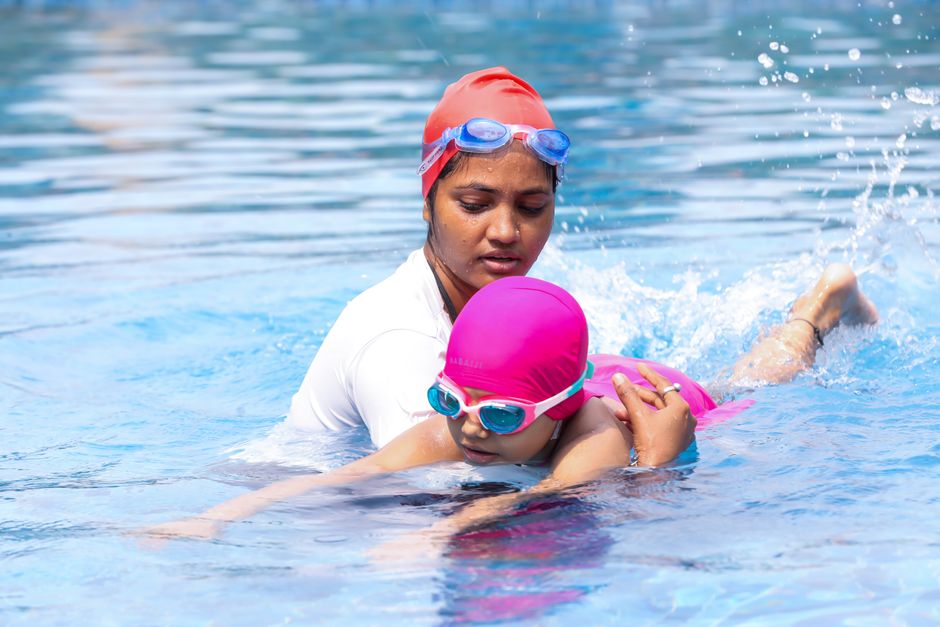
When touring a local swim school or reviewing their website, keep these critical quality markers in mind:
- Pool Temperature: Young children cannot regulate their body temperature as efficiently as adults. A cold pool leads to shivering, crying, and a quick dislike of swim time. Look for indoor facilities that maintain their pools at a warm, comfortable 92 degrees.
- Instructor Qualifications: Ensure all instructors are CPR/First Aid certified and have undergone rigorous, vetted training in child-focused swim instruction.
- Small Class Sizes: Low student-to-teacher ratios ensure your child receives personalized attention and stays actively engaged rather than sitting on the steps waiting for their turn.
- Year-Round Accessibility: Swimming is a perishable skill. A child who learns to swim in July may forget those vital safety habits by the following June if they don’t practice. Year-round indoor facilities help maintain and build upon those skills.
To understand why choosing the right environment is so critical, read why Swimming Lessons for Kids is a Game Changer.
Private vs. Group Swim Lessons: Cost, Flexibility, and Effectiveness
Both private and group lessons offer distinct advantages depending on your child’s personality, your budget, and your scheduling needs.
| Feature | Group Lessons | Private Lessons |
|---|---|---|
| Student-to-Teacher Ratio | Typically 3:1 to 5:1 | 1:1 |
| Social Environment | Encouraging peer learning & observation | Highly focused, personalized attention |
| Best For | Social kids, standard skill progression | Fearful swimmers, rapid progression, special needs |
| Cost | More economical (great value) | Premium pricing tier |
| Flexibility | Set weekly schedules | Often easier to customize or reschedule |
Group lessons are fantastic for most children because they learn by watching their peers, build social skills, and enjoy healthy competition. Private lessons, on the other hand, are highly recommended for children who have a severe fear of water, need to master a specific stroke technique rapidly, or require individual accommodations.
Top Bay Area Swim Facilities and Regional Locations
Finding a convenient, high-quality program close to home is essential for staying consistent with your child’s swim schedule.
East Bay Swim Programs and Municipal Centers
The East Bay offers a variety of swimming options, ranging from municipal recreation centers to premier private indoor academies.
For families looking at municipal options, the Swim Lessons | City of Fremont, CA Official Website offers seasonal aquatic programs. Similarly, the seasonal programs at The Wave Swim Lessons | Dublin Aquatic Center, CA are highly popular during the warm summer months. Parents can also browse local parenting resources like Swimming Lessons for East Bay Kids – 510 Families to see community recommendations and regional roundups.
However, for families seeking high-quality, year-round indoor instruction with warm 92-degree water and small class sizes, we operate several premier facilities across the region. Discover our convenient, dedicated locations:
Each of our locations is fully indoor and features state-of-the-art water purification systems, comfortable parent viewing areas, and warm changing suites designed to make your weekly swim routine as seamless and stress-free as possible.
Year-Round Indoor Pools vs. Seasonal Summer Programs
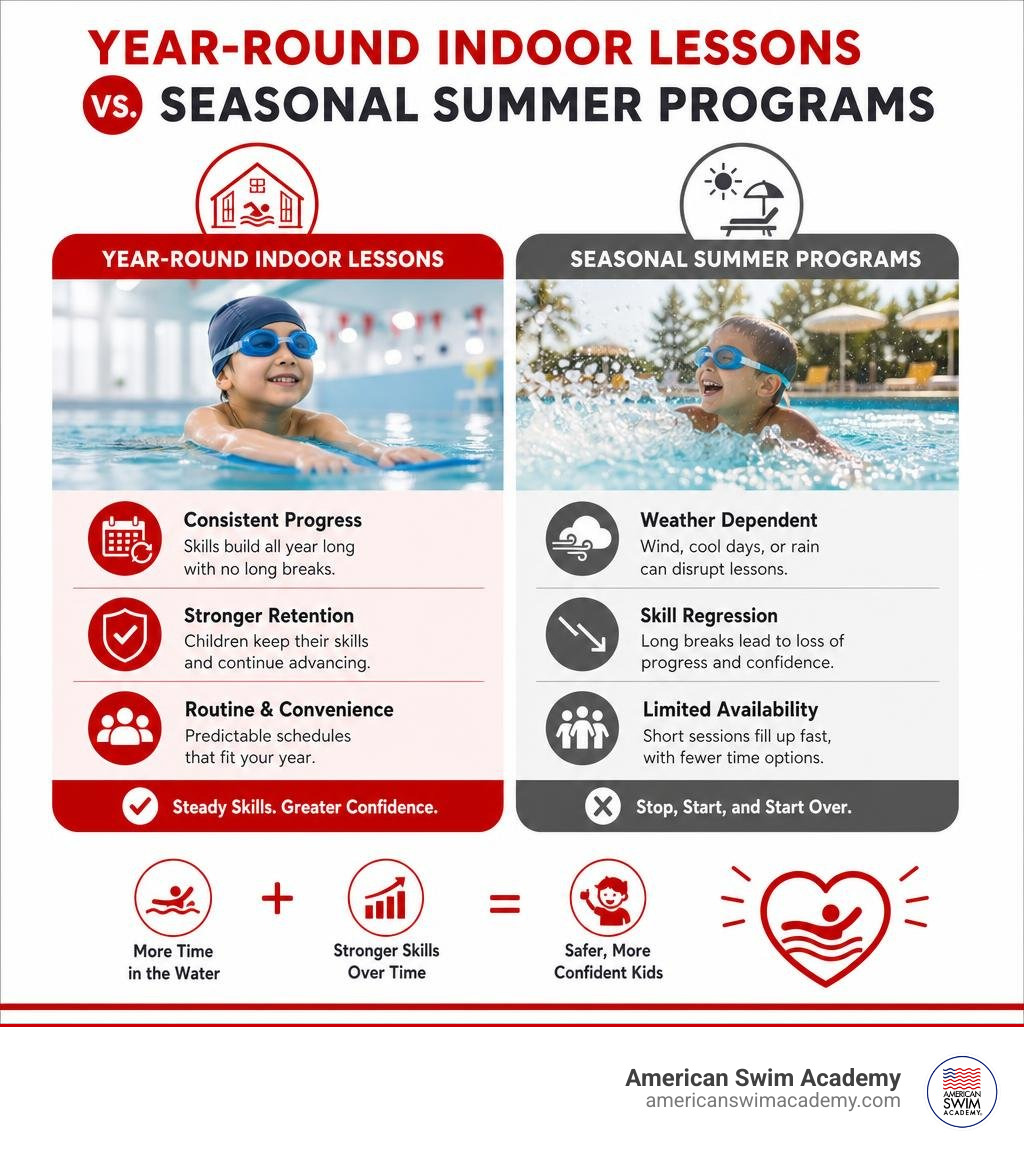
Many parents default to thinking of swim lessons as a summer-only activity. While outdoor summer programs are great for seasonal recreation, they present several challenges for true skill development:
- Weather Dependability: Windy East Bay afternoons or unexpected cool spells can make outdoor lessons chilly and uncomfortable.
- Skill Regression: A child who only swims for two months out of the year will often lose their progress during the ten months they are away from the pool.
- Scheduling Stress: Summer-only sessions fill up incredibly fast, leading to stressful registration dates and limited time-slot options.
In contrast, our year-round indoor programs feature perpetual monthly enrollment. This consistency helps children retain their muscle memory, steadily progress through levels, and stay water-safe all year long.
Frequently Asked Questions about Bay Area Swim Lessons
What is the best age for a child to start swim lessons?
We highly recommend starting swim lessons as early as 6 months old. At this stage, infants still retain natural aquatic reflexes and are highly receptive to water comfort. Starting early prevents the development of water phobias later in toddlerhood.
However, it is never too late to start! Whether your child is 6 months, 6 years, or 16 years old, there is an age-appropriate curriculum designed to build their confidence and water competency. To find out more about the specific skills taught at each developmental stage, explore the Swimming program page.
What policies and gear (like swim diapers) should parents know about?
To keep our pools clean, safe, and open for everyone, there are a few standard industry policies parents should keep in mind:
- Swim Diapers: Any child who is not 100% potty trained must wear a reusable, snug-fitting swim diaper. Standard disposable diapers are not allowed because they absorb pool water and swell up.
- Makeup and Cancellation Policies: Because class spaces are limited, most swim schools require advanced notice (often 24 to 48 hours) to qualify for a makeup token or class credit.
- Active Parent Attendance: For safety and insurance reasons, a parent or guardian must remain on the pool deck or in the viewing lounge for the entire duration of their child’s lesson.
Are there specialized swim programs for children with special needs or anxiety?
Yes! Swimming is an incredibly therapeutic activity for children with physical, cognitive, or sensory challenges. Many children with autism, ADHD, or sensory processing differences thrive in the water because of the soothing, hydrostatic pressure it provides.
When enrolling a child with special needs or severe water anxiety, look for programs that offer:
- Gentle, play-based encouragement to slowly build trust.
- Highly trained instructors who understand sensory sensitivities and can adapt their teaching style.
- Private or semi-private formats to minimize distractions and provide a calm learning environment.
Conclusion
Learning to swim is more than just a fun weekend activity — it is a life-saving skill that opens up a world of confidence, physical health, and summer fun. By choosing a dedicated swim school with warm water, small class sizes, and experienced instructors, you are giving your child a gift that will keep them safe and active for the rest of their life.
If you are ready to help your child build lifelong water confidence, explore Our Programs and take the first step today by visiting our Get Started page to find a class at one of our convenient East Bay locations!