

Why the Right Swim Classes for 6 Year Olds Make All the Difference
Swim classes for 6 year olds are widely available through community programs, local centers, and specialty swim schools — and finding the right fit for your child comes down to a few key factors.
Quick answer: What to look for in swim classes for 6-year-olds
| Factor | What to Look For |
|---|---|
| Skill-based placement | Classes grouped by ability, not just age |
| Class size | Small groups (4–6 students) for personalized attention |
| Pool temperature | Warm water (88–92°F) for comfort and focus |
| Instructor certification | Nationally recognized credentials (such as Red Cross) |
| Lesson duration | 30–45 minutes per session |
| Curriculum | Progressive levels from water comfort to basic strokes |
Age six is a big milestone. Most kids this age are ready to move beyond basic water play and start building real swimming skills — breath control, floating, kicking, and eventually full strokes.
The good news: formal swim instruction at this age is highly effective. Children who complete a structured, progressive swim lesson program are far more likely to swim independently within a year than those without structured instruction.
But not all programs are the same. Pool temperature, class size, instructor quality, and how a program handles a nervous or first-time swimmer all matter — especially if your child has special needs or a packed weekly schedule.
This guide walks you through everything you need to know to choose the right program with confidence.
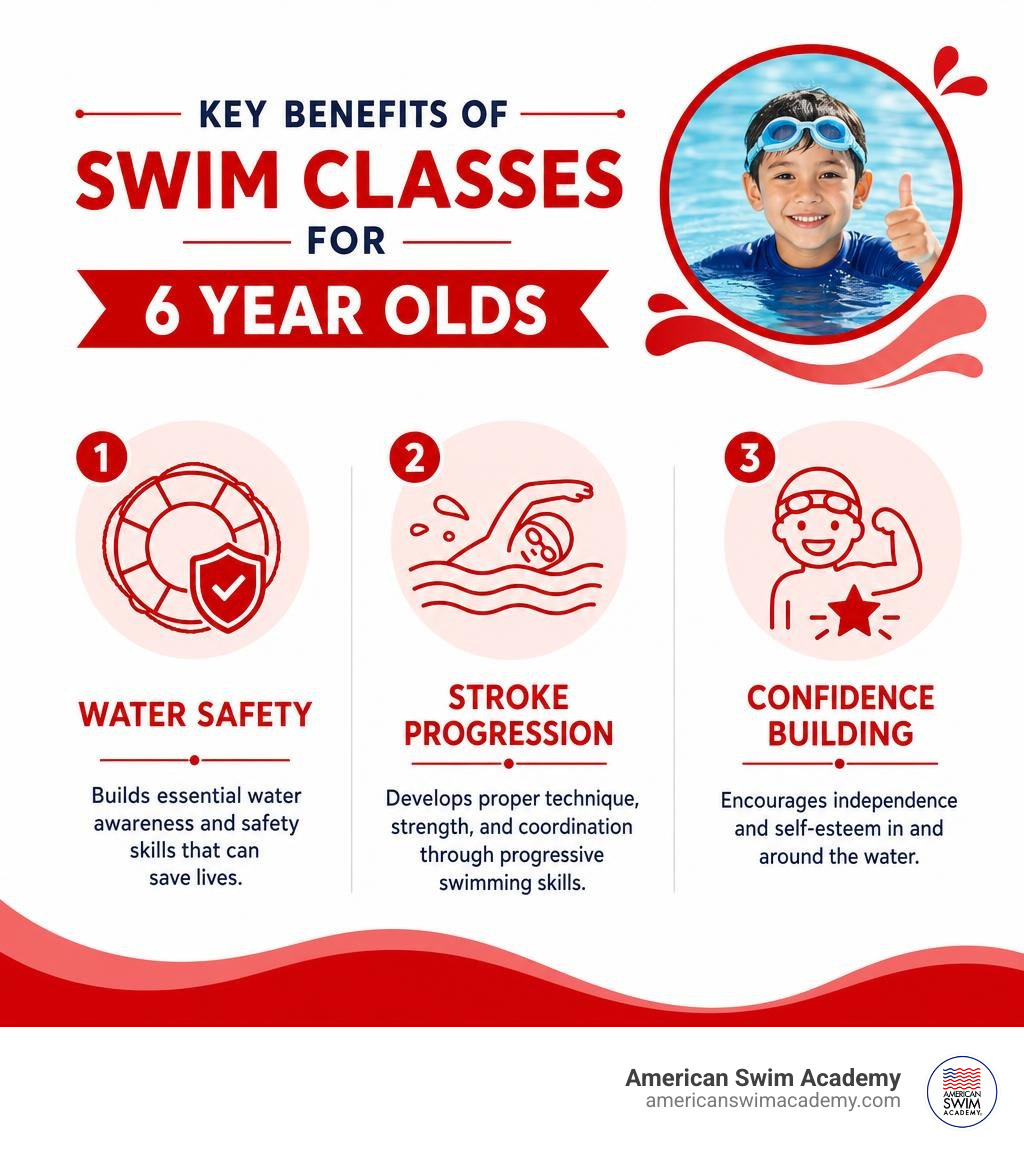
Key swim classes for 6 year olds vocabulary:
Understanding Swim Classes for 6 Year Olds: Levels and Progression
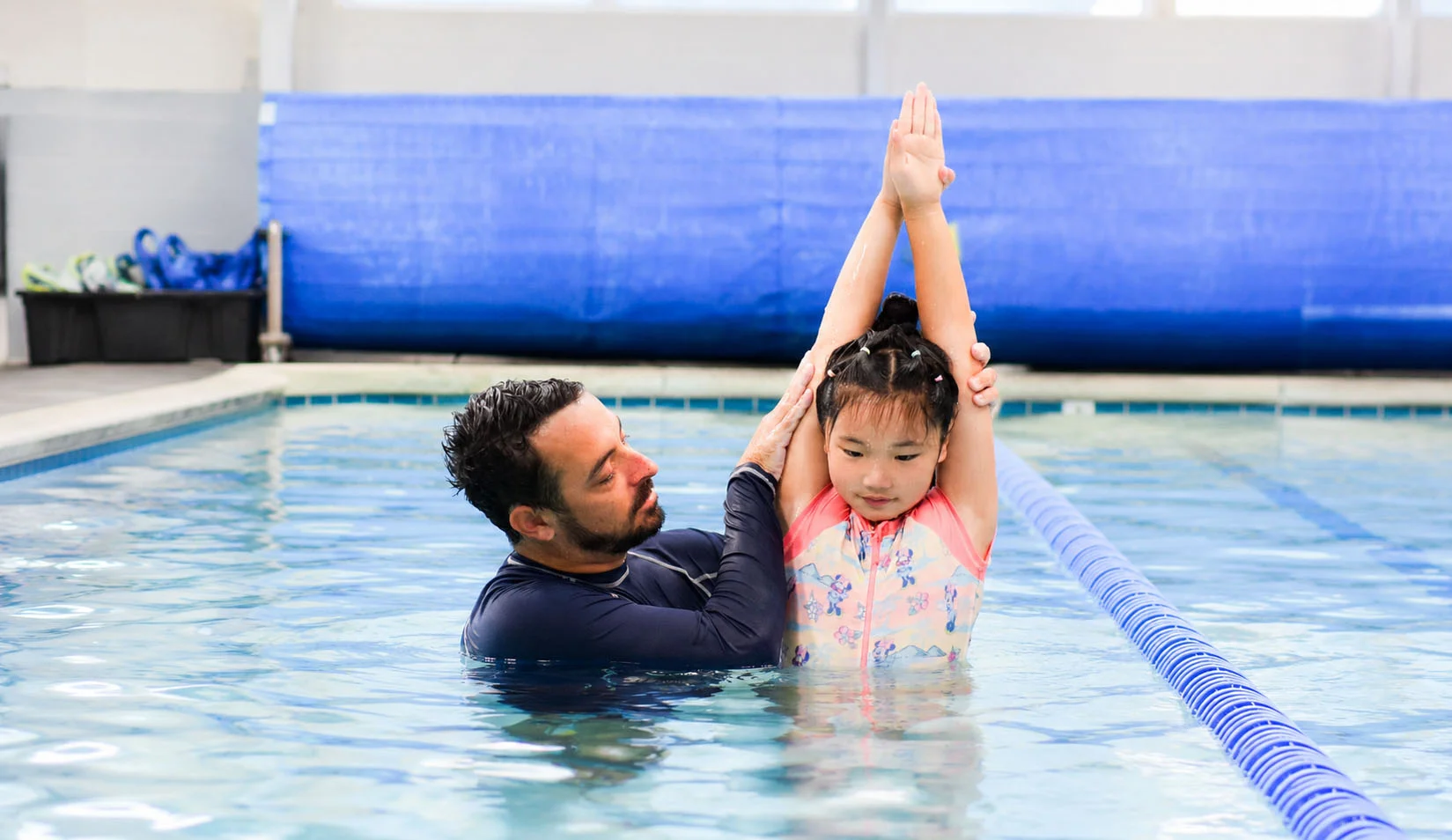
At six years old, children are in a unique developmental window. They have the physical coordination to execute complex movements like the flutter kick and arm rotations, alongside the cognitive ability to follow multi-step instructions from a coach. Enrolling your child in structured classes teaches them to respect the water while building physical stamina. Indeed, Swimming Lessons for Kids is a Game Changer because it transforms their relationship with the water from simple splashing to confident, independent movement.
Most progressive swim programs break down their curriculum into clear, skill-based milestones. Rather than grouping children strictly by age, the best programs assess what a child can actually do in the water. This ensures that a six-year-old who has never taken a lesson isn’t placed in the same lane as a peer who has been swimming since toddlerhood.
Determining the Right Starting Level for Your Child
When looking for the perfect fit, you will find that programs generally use skill assessments or swim level quizzes to find the right starting point. If you are exploring options, you might look at general resources like Swimming Lessons for East Bay Kids – 510 Families to see what local parents recommend.
To find the perfect fit, we look at where your child currently stands across three general phases:
- Water Acclimation (The Beginner Phase): For children who are still hesitant to submerge their faces, blow bubbles, or let go of the pool wall. The goal here is pure comfort, basic breath control, and learning to relax on their backs.
- Water Movement & Stamina (The Intermediate Phase): For kids who willingly submerge but need to learn independent front and back floating, basic kicking, and how to roll over to breathe.
- Stroke Introduction & Mechanics (The Advanced Phase): For children who can already swim independently for short distances and are ready to learn formal strokes like freestyle (front crawl) and backstroke.
At American Swim Academy, we make this process seamless. You can explore Our Programs to see how our levels progress, ensuring your school-aged child begins at a level that is both safe and encouraging.
Core Skills Taught in Beginner Swim Classes for 6 Year Olds
If your child is starting as a beginner, the initial lessons will focus on building a foundation of water safety and fundamental mechanics. There are 3 Reasons to Get Your Child in Beginner Swim Lessons: it builds immediate comfort, instills safety habits, and prevents the development of bad swimming habits that are hard to break later.
In our Beginners classes, we focus heavily on these core benchmarks:
- Breath Control and Bobbing: Learning to submerge the mouth, nose, and eyes comfortably while blowing controlled bubbles.
- Independent Floating: Mastering both front and back floats without assistance, which is the single most important safety skill.
- Flutter Kicking: Developing a strong, straight-leg kick from the hips rather than bending the knees like riding a bicycle.
- Combined Arm and Leg Actions: Introducing basic paddling movements that allow children to move forward independently.
Key Factors to Look For in a Quality Swim Program
Choosing the right school involves evaluating how lessons are structured and the environment in which your child will learn.
| Lesson Type | Typical Ratio | Best Suited For | Key Benefit |
|---|---|---|---|
| Group Lessons | 1:4 to 1:6 | Social learners, kids who enjoy peer modeling | Cost-effective, builds confidence through observation |
| Semi-Private | 1:2 | Siblings or friends of similar skill levels | High individual attention with a social element |
| Private Lessons | 1:1 | Fearful swimmers, rapid progression, or special needs | 100% customized instruction and pace |
Beyond the lesson format, pay close attention to the pool environment. Learning to swim requires intense focus, which is incredibly difficult for a cold, shivering child. Many public outdoor pools or deep multi-purpose fitness pools are kept at lower temperatures (around 78–82°F) to accommodate lap swimmers. For young children, this can lead to blue lips and chattering teeth within fifteen minutes.
At American Swim Academy, our indoor pools are heated to a comfortable 92°F. This warm-water environment keeps muscles relaxed, prevents shivering, and allows children to focus entirely on their instructor. Understanding Water Safety: The Importance of Swimming Lessons to Kids starts with creating an environment where they feel physically safe and physically comfortable.
Ideal Class Sizes and Instructor-to-Student Ratios
For six-year-olds, class size directly impacts both safety and the speed of skill acquisition. In a class that is too large, children spend the majority of their 30-to-45-minute lesson sitting on the pool steps waiting for their turn.
We recommend looking for programs that maintain a small student-to-teacher ratio—ideally 1:4 for beginner levels. This ensures that the instructor is never more than an arm’s reach away, providing continuous supervision and immediate physical corrections. Small classes also mean more active swim time, keeping energetic six-year-olds engaged and moving.
Overcoming Water Anxiety and Fear in Swim Classes for 6 Year Olds
It is completely normal for some six-year-olds to experience anxiety or fear when starting swim lessons, especially if they have had a negative experience in the water previously. A quality program will never force a fearful child underwater. Instead, they use gentle acclimation, trust-building exercises, and positive reinforcement.
Instructors should meet fearful children at their comfort level, using games and structured play to make water adjustment fun. By turning skills like blowing bubbles into a game of “making soup” or floating into “starfish pretending,” children learn to associate the pool with positive experiences. Discovering How Swimming Lessons Keep Your Child Safe involves showing them that the water is a place to be respected, not feared.
Program Policies, Scheduling, and Next Steps
When registering for lessons, practical logistics matter just as much as the curriculum. Families in the East Bay often have to balance busy school schedules, extracurricular activities, and family time. Finding a program that fits seamlessly into your weekly routine is essential for maintaining the consistency your child needs to progress.
Many seasonal outdoor programs face weather cancellations due to wind, cool temperatures, or poor air quality. Because we operate year-round indoor facilities across Fremont, Newark, Livermore, Dublin, and Walnut Creek, we provide a consistent, climate-controlled environment that is never disrupted by the elements.
When choosing a school, always ask about their policies regarding:
- Make-Up Lessons: Look for programs that offer flexible make-up options if your child misses a class due to illness or travel.
- Scheduling Flexibility: Families with school-aged children often have busy schedules. Year-round programs with multiple daily time slots make it easier to maintain consistency.
- Cancellation and Refund Policies: Understand the commitments required, whether lessons are billed monthly or by session, and how much notice is needed to pause enrollment.
Progression Timelines and Advanced Aquatic Programs
How long does it take to see results? Statistics show that over 70% of children ages 6–12 who participate in a progressive swim lesson program advance to independent swimming within one year. Additionally, programs report that 85% of participants can swim 25 yards or more after completing their beginner levels.
There are 4 Benefits of Teaching Your Kid How to Swim at an Early Age: they build cardiovascular health, improve coordination, develop safety awareness, and open the door to advanced aquatic activities. Once your six-year-old masters the basics, they can progress to:
- Stroke Refinement: Perfecting the breaststroke, sidestroke, and butterfly.
- Stamina Training: Learning flip turns, open turns, and building the endurance to swim consecutive laps.
- Pre-Swim Team Prep: Transitioning from lessons to competitive swimming environments, focusing on speed, efficiency, and pace-clock training.
Our community-focused, indoor-heated facilities at American Swim Academy remain the premier choice for Bay Area families looking for a comprehensive, warm-water learn-to-swim experience.
Frequently Asked Questions About Youth Swim Lessons
How long does it take for a 6-year-old to learn to swim independently?
Every child progresses at their own individual pace. Generally, a six-year-old with no prior experience who attends lessons once or twice a week can achieve basic water independence—defined as floating, rolling over to breathe, and paddling back to the wall—within six to twelve months. Consistency is the most important factor in rapid progression.
What should my child wear and bring to their first swim class?
Your child should wear a comfortable, well-fitting swimsuit. Avoid loose-fitting swim trunks or heavy rash guards, as these can waterlog and weigh a young swimmer down. Bring a dry towel, a change of warm clothes for after the lesson, and a pair of snug-fitting swim goggles to help them feel comfortable putting their face in the water. Swim caps are also highly recommended for children with long hair to keep it out of their eyes and mouth.
Are indoor heated pools better for school-aged swim lessons?
Yes, indoor heated pools are highly superior for youth swim instruction. When the water is kept at a warm temperature (like our 92°F pools), children do not have to expend energy trying to stay warm. Their muscles remain relaxed, they are less prone to fatigue, and they can focus entirely on the instructor’s directions rather than shivering on the steps. Year-round indoor pools also ensure that your child’s learning progression is never interrupted by seasonal weather changes.
Conclusion
Choosing the right swim classes for 6 year olds is an investment in your child’s safety, physical health, and lifelong confidence. By focusing on warm-water environments, small class sizes, and a progressive, skill-based curriculum, you can ensure that your child transitions from a cautious splasher to a confident, independent swimmer.
At American Swim Academy, we have spent years perfecting our warm-water, small-group instruction model. With indoor pools heated to 92°F and experienced, caring coaches at our locations in Fremont, Newark, Livermore, Dublin, and Walnut Creek, we provide the ultimate environment for school-aged children to thrive.
Ready to watch your child build skills that last a lifetime? Check out Our Programs and Get Started with us today!