

Essential Qualifications of a Swimming Teacher for Adults
Finding the right instructor is about much more than hiring a fast swimmer. Coaching mature learners requires specialized instructional skills, strong emotional awareness, and recognized aquatic safety credentials.
Core Certifications and In-Water Safety Credentials
When evaluating a swimming teacher for adults, verify their safety credentials first. Every qualified aquatic instructor should hold current, nationally recognized certifications in:
- Cardiopulmonary Resuscitation (CPR) & AED (Adult and Pediatric)
- Standard First Aid
- Water Safety & Lifeguard Training
Beyond baseline safety credentials, look for structured coaching certifications and proven teaching experience. Experienced adult swim instructors often bring extensive competitive or educational backgrounds, allowing them to explain fluid dynamics and hydrodynamics clearly.
Equally important is whether the instructor provides in-water coaching. For beginner adults, having a teacher stand alongside them in the water—rather than shouting tips from the pool deck—creates immediate psychological comfort. In-water instruction allows the teacher to assist with body alignment, demonstrate balance directly, and provide hands-on support as you find your natural buoyancy.
Specialized Experience with Adult Learner Psychology
Adult learners process instruction differently than kids. Many adults carry deep-rooted aquatic anxiety stemming from a negative childhood experience, an uncomfortable holiday incident, or simply decades of avoiding deep water.
A qualified adult instructor understands these psychological barriers and applies trauma-informed, empathetic teaching methods:
- Patience and Respect: Adult learners need a judgment-free zone where fears are validated, never dismissed.
- Guided Breathwork and Mindfulness: Mindful breathing exercises help lower your heart rate and ease tension before your face enters the water.
- Active Listening: Instructors should ask about your prior experiences, fears, and specific goals before designing your lesson path.
When an instructor reframes water from an unpredictable environment into a supportive medium that naturally carries you, anxiety diminishes and genuine progress begins.
Key Differences in How Instructors Teach Adults vs. Children
Teaching adults requires an understanding of andragogy (adult learning theory). Unlike children, who often learn through unstructured play, games, and instinctual imitation, adults learn best through analytical breakdown, biomechanical context, and clear cause-and-effect explanations.
Many adult swimmers begin with basic strokes or unrefined habits, and working with a coach helps guide you from doggy paddle to pro by replacing inefficient movements with smooth, sustainable stroke mechanics.
Overcoming Aquaphobia and Psychological Barriers
Adults tend to hold physical tension in their shoulders, neck, and lower back when stepping into a pool. This muscle tightness directly counteracts natural buoyancy, creating a sensation of sinking that fuels further anxiety.
To break this cycle, an experienced adult instructor avoids rushing you into mechanical lap drills. Instead, they introduce systematic steps to rebuild comfort:
- Shallow-Water Acclimation: Standing comfortably in waist-to-chest deep water while focusing on relaxed, rhythmic breathing.
- Voluntary Submersion: Practicing breath control through gentle nose-and-mouth exhales (blowing bubbles) before gradually submerging the mouth, nose, and eyes.
- Safe Recovery to Standing: Learning how to transition smoothly from a front or back float back onto your feet without stumbling or panicking.
If you are beginning your aquatic journey from scratch, reviewing A Practical Guide to Finding Beginner Swim Lessons can help you select a program that emphasizes these foundational confidence-building steps.
Adult Biomechanics and Focused Effort Technique
Adult bodies are denser and less naturally flexible than children’s bodies, requiring specific adjustments to balance, body angle, and propulsion.
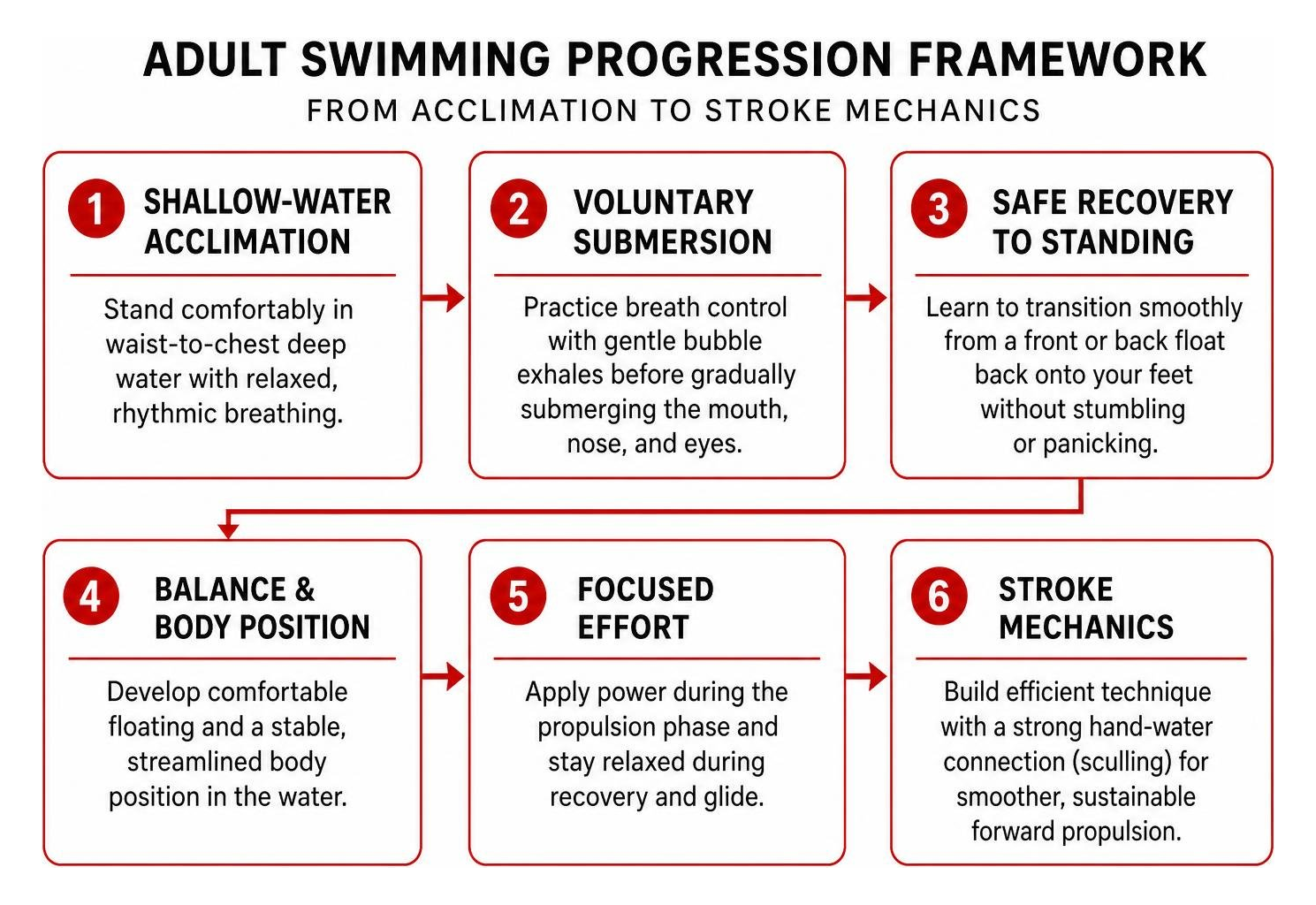
A seasoned instructor teaches the principle of focused effort. Rather than muscling through the water with continuous, exhausting strain, you learn to apply muscular power selectively during the propulsion phase while staying relaxed through the recovery glide.
Key technical elements for adult learners include:
- Developing the Hand-Water Connection: Learning to feel water resistance with your palms and forearms to create efficient forward propulsion (sculling).
- Rotary Breathing: Coordinating body rotation with relaxed side-breathing to maintain a stable, horizontal waterline without lifting your head.
- Head-Up Breaststroke: Mastering head-up swimming as an orienting, energy-conserving resting stroke before transitioning into high-tempo competitive styles.
Evaluating Class Formats and Progressive Skill Curriculums
Every adult learner brings unique physical capabilities, schedules, and personal motivations to the pool. When researching programs, choose a format that matches your comfort level and learning pace.
| Lesson Format | Instructor-to-Student Ratio | Best Suited For | Key Advantages |
|---|---|---|---|
| Private Lessons | 1-on-1 | Severe water anxiety, personalized pacing, triathlon prep | Maximum individual attention; completely customized curriculum |
| Semi-Private Lessons | 1-on-2 | Couples, friends, or family members at similar skill levels | Personalized instruction with shared encouragement and reduced cost |
| Small Group Classes | 1-on-4 to 1-on-6 | Confident beginners, intermediate lap swimmers, fitness seekers | Social camaraderie, structured weekly routines, budget-friendly rates |
To determine the ideal learning environment for your personal schedule and comfort level, explore how to choose the perfect adult swim program for practical advice on class sizing and instructor selection.
Selecting the Right Swimming Teacher for Adults: Private vs. Group Lessons
If you experience noticeable hesitation around water, private 1-on-1 tuition offers the highest level of physical security and emotional safety. An instructor dedicated exclusively to you can adapt drills instantly based on your energy and comfort levels.
For adults who feel relaxed in shallow water and want to build general cardiovascular fitness, small group classes offer helpful peer motivation and consistent practice structure.
Structured Stages from Water Acclimation to Stroke Mastery
A complete adult swimming program follows a clear, milestone-driven curriculum that advances your skills safely and methodically:
- Water Acclimation & Buoyancy: Overcoming water fear, voluntary face submersion, breath control, and independent front/back floating.
- Water Movement & Recovery: Gliding across short distances, learning to recover your feet under your center of gravity, and basic treading water benchmarks (10–30 seconds).
- Water Stamina & Safety Benchmarks: Mastering the “swim-float-swim” sequence, jumping in and recovering safely to the wall, and treading water for 1 to 2 minutes continuously.
- Stroke Introduction: Developing foundational front crawl (freestyle) with side-to-side body rotation, backstroke, and relaxed breaststroke kicks.
- Stroke Development & Mechanics: Refining rhythmic rotary breathing, bilateral arm coordination, open turns, and continuous 50-yard swims.
- Cardio Endurance & Mastery: Swimming 100+ yards without exhaustion, interval sets, and fine-tuning stroke efficiency for fitness or triathlon goals.
If you are looking to fast-track your progress through focused, consecutive sessions, you can stop doggy paddling with intensive lessons to build muscle memory quickly.
What to Expect: Costs, Pool Environment, and First-Lesson Prep
The pool environment plays a massive role in adult learning success. Cold water causes involuntary muscle shivering, shallow breathing, and heightened anxiety.
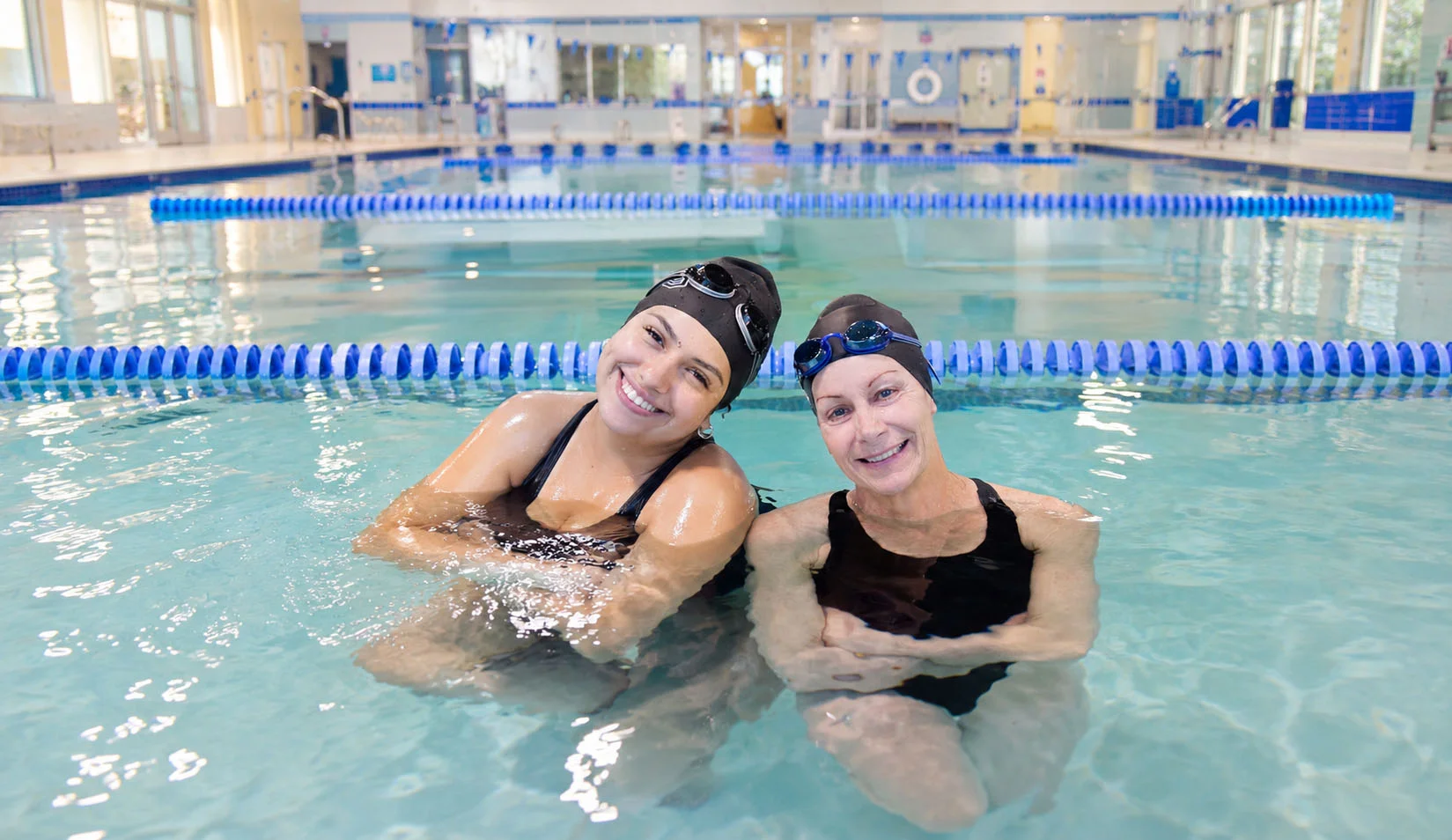
Adult learners thrive in warm water. American Swim Academy facilities feature indoor pools heated to a comfortable 92 degrees across our Northern California locations in Fremont, Newark, Livermore, Dublin, and Walnut Creek. This warm environment relaxes tight muscles, calms the nervous system, and makes extended water time comfortable throughout every season.
If you are coordinating swimming schedules for your entire household alongside your own goals, check out our guide from toddlers to adults swim class options to see how family-friendly scheduling works.
Budgeting Lesson Rates and Session Durations
Adult swim lesson pricing varies based on lesson format, instructor experience, and location:
- Trial Sessions: Single 30-minute evaluation lessons commonly range from $45 to $80.
- Session Blocks: Lessons are frequently booked in multi-week blocks (such as 4 to 8 sessions) to ensure consistent weekly skill progression.
- Group vs. Private Rates: Group sessions average $20 to $40 per class, whereas private 1-on-1 coaching typically ranges from $75 to $120+ per session depending on duration and customized clinic formats.
How to Prepare for Your First Lesson with a Swimming Teacher for Adults
Preparing thoughtfully for your opening session helps reduce first-day jitters:
- Comfortable Swimwear: Choose well-fitting, athletic swimwear that stays secure during movement.
- Properly Fitted Goggles: Invest in clear, anti-fog swimming goggles that seal gently around your eye sockets without leaking, keeping chlorine away from your eyes.
- Swim Cap: A comfortable silicone or fabric cap keeps hair away from your eyes and mouth, simplifying breath control drills.
- Arrive Early: Give yourself 15 minutes before your class to change, rinse off, use the restroom, and acclimate to the pool area.
- Stay Hydrated: Swimming is an active cardiovascular exercise; bring a water bottle to keep poolside.
Frequently Asked Questions About Adult Swim Instruction
Is it ever too late for an adult to learn how to swim?
No. Swimming is a low-impact, life-enhancing skill that can be learned at any age. Many adults take their very first swim lesson in their 30s, 50s, or well into retirement. With a supportive, certified instructor and a warm water environment, adults with zero prior experience can develop genuine water confidence and smooth swimming mechanics.
How many lessons does an adult beginner typically need?
Learning pace depends on baseline comfort levels, physical coordination, and attendance consistency. Most beginner adults achieve comfortable shallow-water balance, floating, and basic water safety within 8 to 12 consistent 30-minute lessons. Achieving continuous lap swimming and refined stroke efficiency typically takes a few months of regular weekly lessons paired with independent practice.
What water safety benchmarks should adult beginners master first?
Beginner adult instruction prioritizes two essential water safety benchmarks before advancing to high-speed stroke mechanics:
- Swim-Float-Swim: The ability to swim a short distance, roll smoothly onto your back to rest and breathe, and roll back over to continue swimming.
- Safe Recovery to Standing: Confidently bringing your knees to your chest and placing your feet flat on the pool floor from either a front or back float without panic.
Conclusion
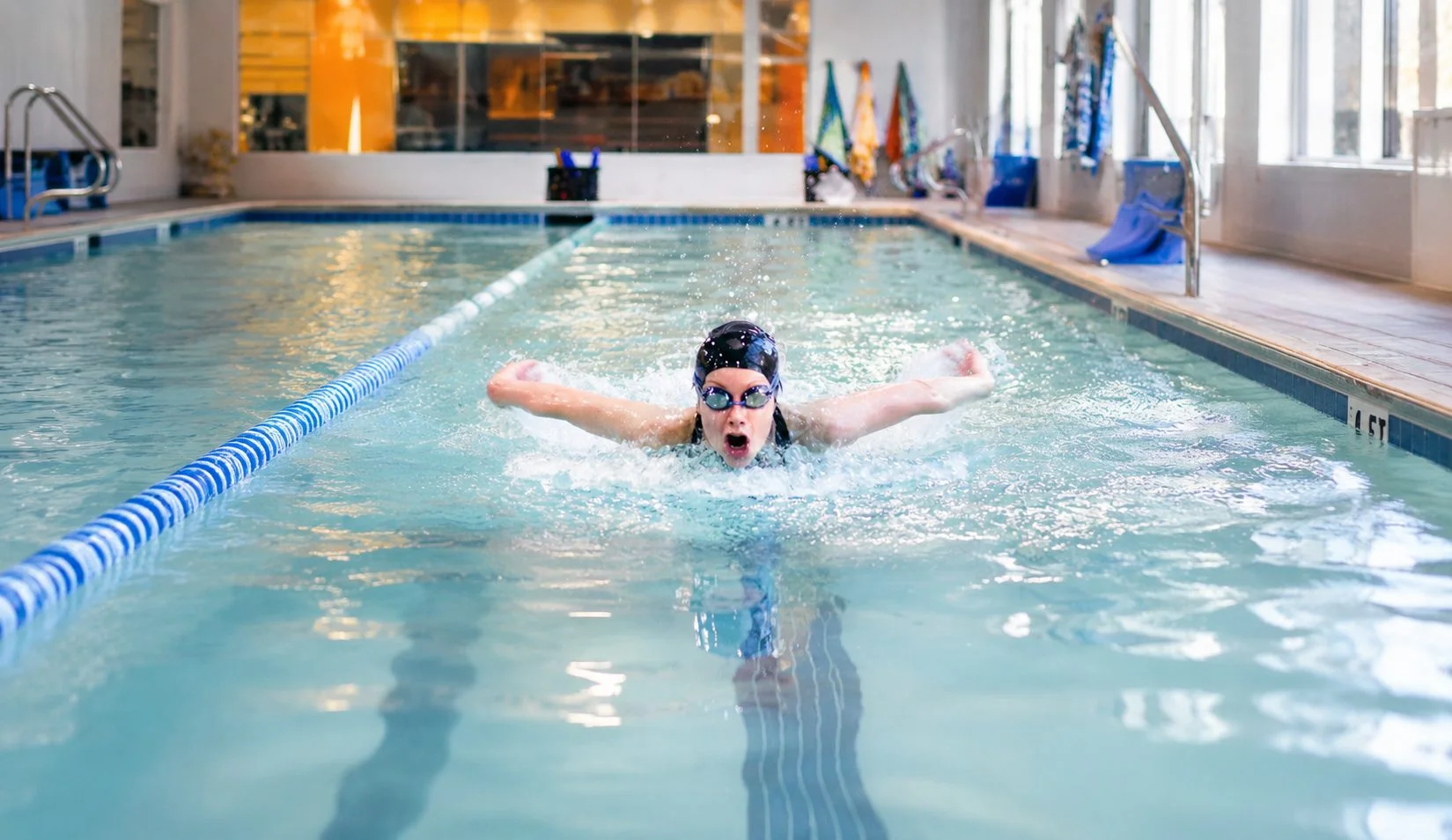
Taking that initial step to find an experienced swimming teacher for adults is an investment in your safety, health, and personal freedom. Whether your goal is to feel completely relaxed during family pool outings, cross-train for low-impact joint health, or master continuous lap swimming, the right coach makes all the difference.
Look for patient, certified professionals who provide in-water guidance, a structured curriculum, and a warm, low-pressure pool environment.
Ready to begin your swimming journey? Our warm 92° indoor pools and experienced adult coaching team across the San Francisco Bay Area are here to guide you every step of the way. Take the first step and explore adult swim programs with American Swim Academy today!