

Safe Swimming Classes for 2 Year Olds Start With Comfort and Confidence
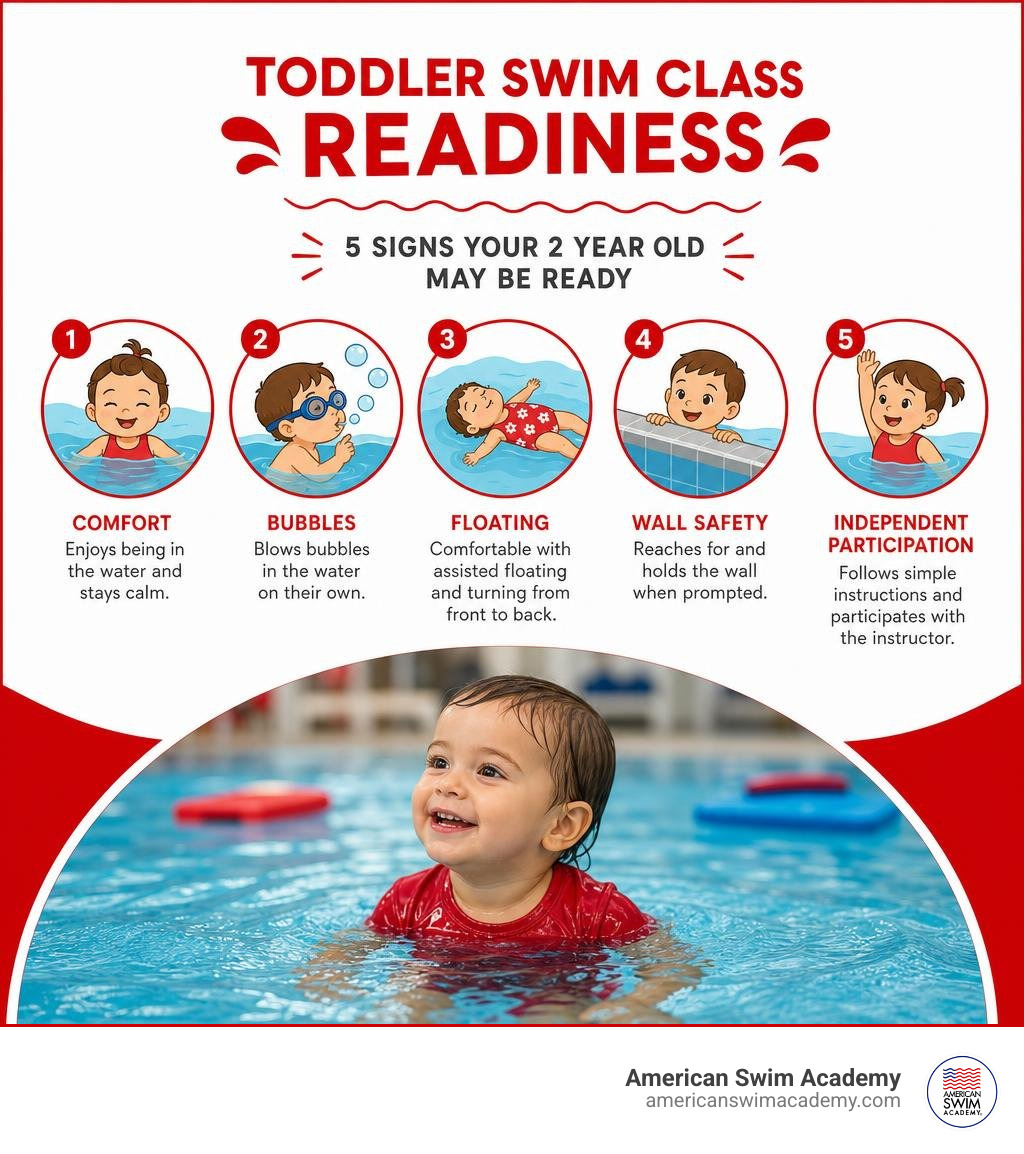
The best swimming classes for 2 year olds build water comfort first, then introduce simple safety habits through short, playful practice. Look for a class that matches your child’s readiness:
- Choose a parent-and-child class if your toddler needs reassurance, is new to the pool, or is not ready to participate without you.
- Consider an independent small-group class when your child can enter the water willingly, separate from you calmly, and follow basic instructor cues.
- Prioritize skills such as safe entry and exit, bubble blowing, assisted floating, turning from front to back, and reaching for the wall.
At age 2, lessons are not about perfect strokes. They are about helping children feel relaxed in water while practicing age-appropriate safety skills through games, songs, toys, and repetition. Every child develops at a different pace, including children with sensory, physical, or cognitive needs.
Our family has spent decades helping Bay Area children take those early water-confidence steps in a warm, supportive setting.
Understanding Formats for Swimming Classes for 2 Year Olds
Navigating aquatic education for toddlers involves understanding the balance between caregiver presence and developing self-reliance. Toddlers experience rapid cognitive and motor growth, yet their attention spans and separation comfort levels vary widely. Choosing the right format ensures that your little one builds a positive, joyful association with the pool.
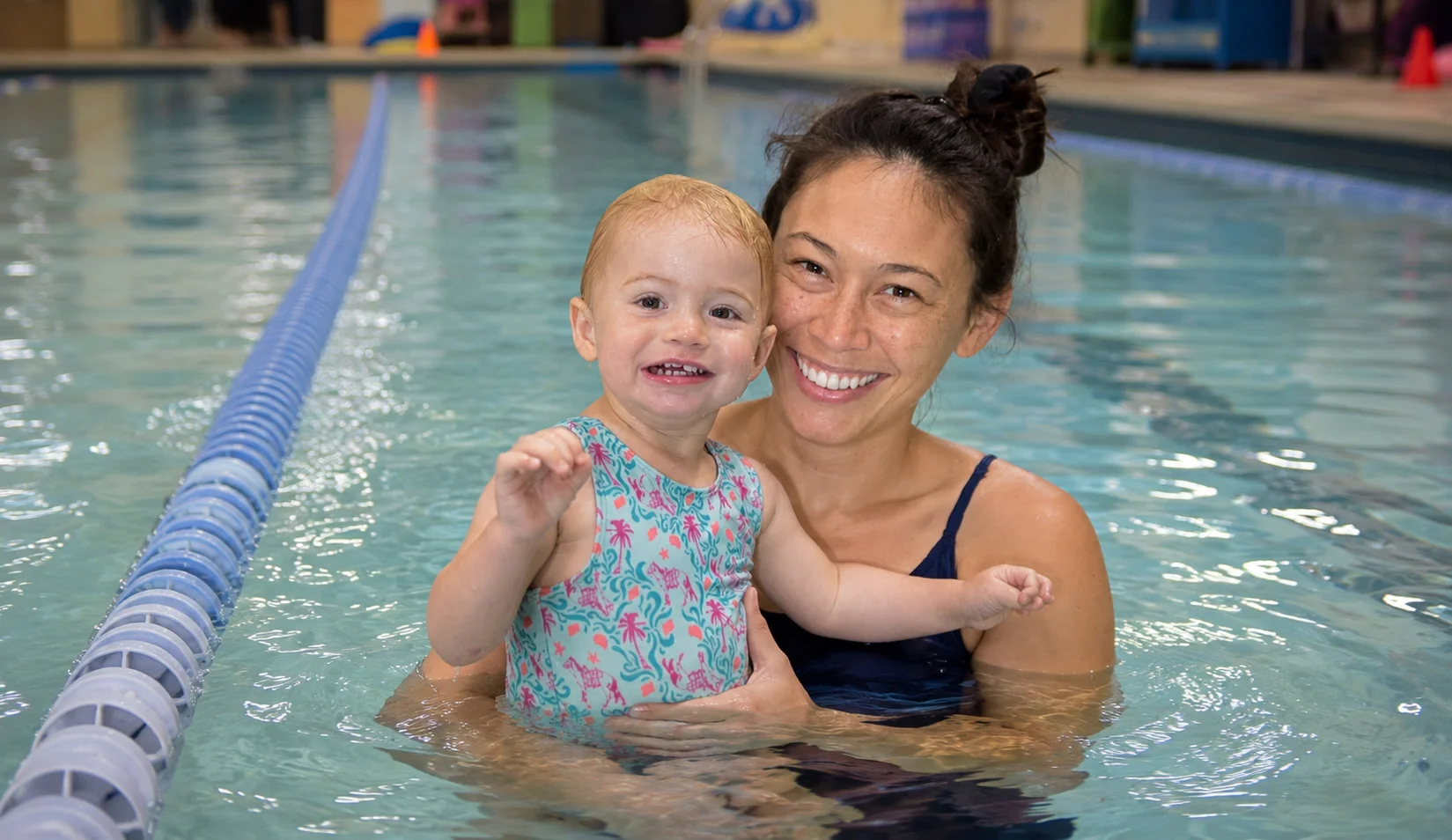
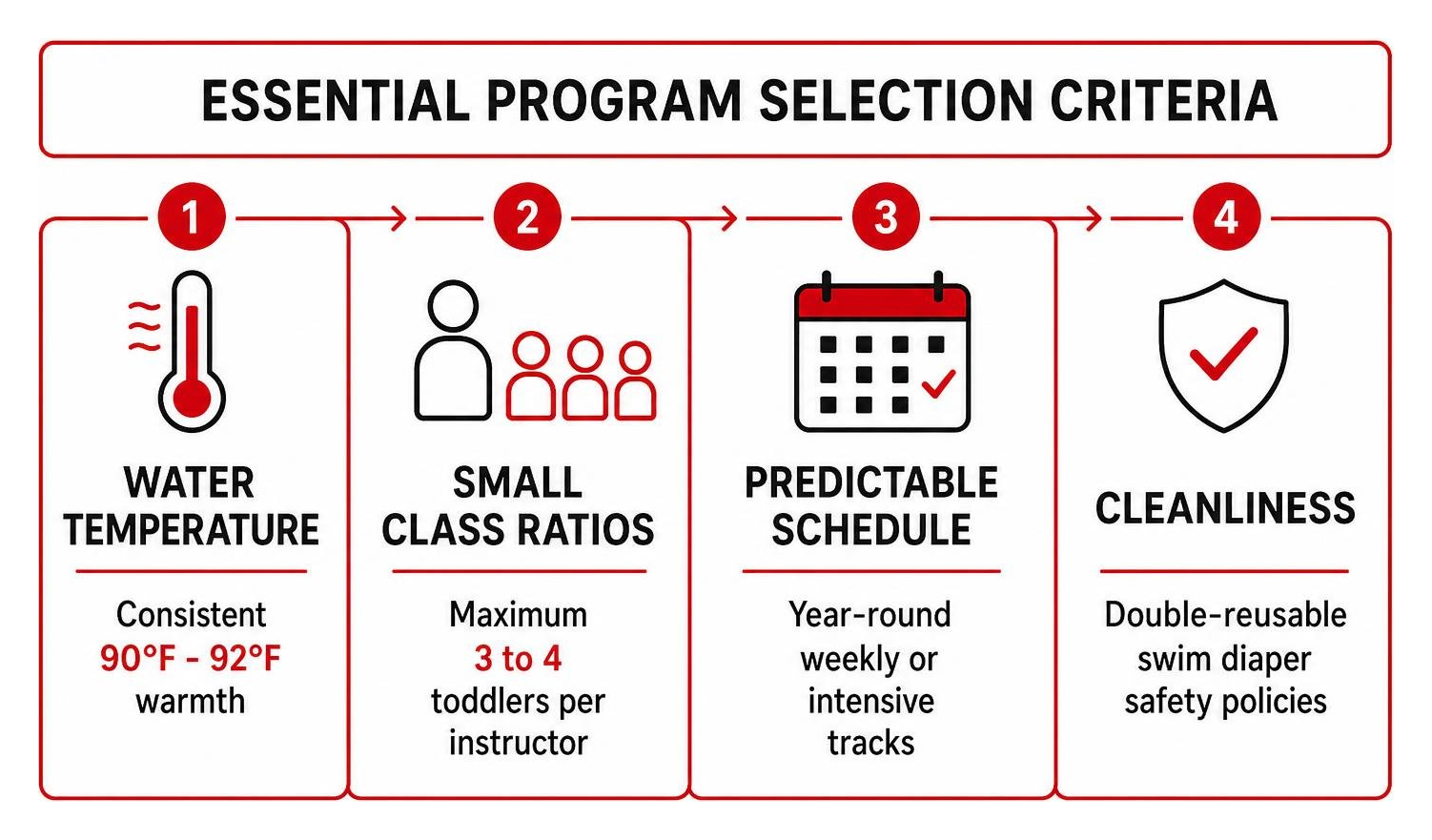
When evaluating swimming classes for 2 year olds, programs generally fall into two categories: caregiver-accompanied sessions and independent small-group lessons. Maintaining low student-to-instructor ratios (such as 3:1 or 4:1) is essential for safety, individual attention, and customized pacing.
| Class Format | Guardian Presence | Primary Developmental Focus | Ideal Readiness Indicators |
|---|---|---|---|
| Parent-and-Child (Level 1 & 2) | In-pool participation required | Water acclimation, bonding, breath control, assisted glides | Toddler is new to pools, needs security, or experiences separation anxiety |
| Independent Toddler (Beginner/Tadpole) | Observes safely from the viewing area | Self-reliance, following directions, basic survival habits, propulsion | Toddler willingly enters pool, follows simple verbal cues, confident without parent |
Parent-and-Child Level 1 and Level 2 Programs
Parent-and-child classes offer a comforting bridge into aquatic environments. In Level 1, the emphasis centers entirely on water discovery, sensory adaptation, and emotional security. Parents hold their toddlers close, gently swaying to rhythm games, practicing supported back floats, and guiding safe pool entries and exits.
As toddlers gain familiarity, Level 2 builds on these basics through structured play. Instructors introduce fun challenges like blowing bubbles for 3 seconds, reaching for colorful sinking rings, and rolling from front to back with assistance. If you are exploring caregiver-led options, checking out Water Babies: Your Guide to Finding Mom and Tot Swim Classes can provide clear insights into what to expect during these early bonding sessions.
Transitioning to Independent Swimming Classes for 2 Year Olds
The transition from a caregiver-accompanied class to an independent small-group lesson marks an exciting milestone. This step requires emotional readiness just as much as physical comfort. Toddlers should be able to sit calmly on the pool steps, listen attentively to an instructor, and feel secure without a parent in arms reach.
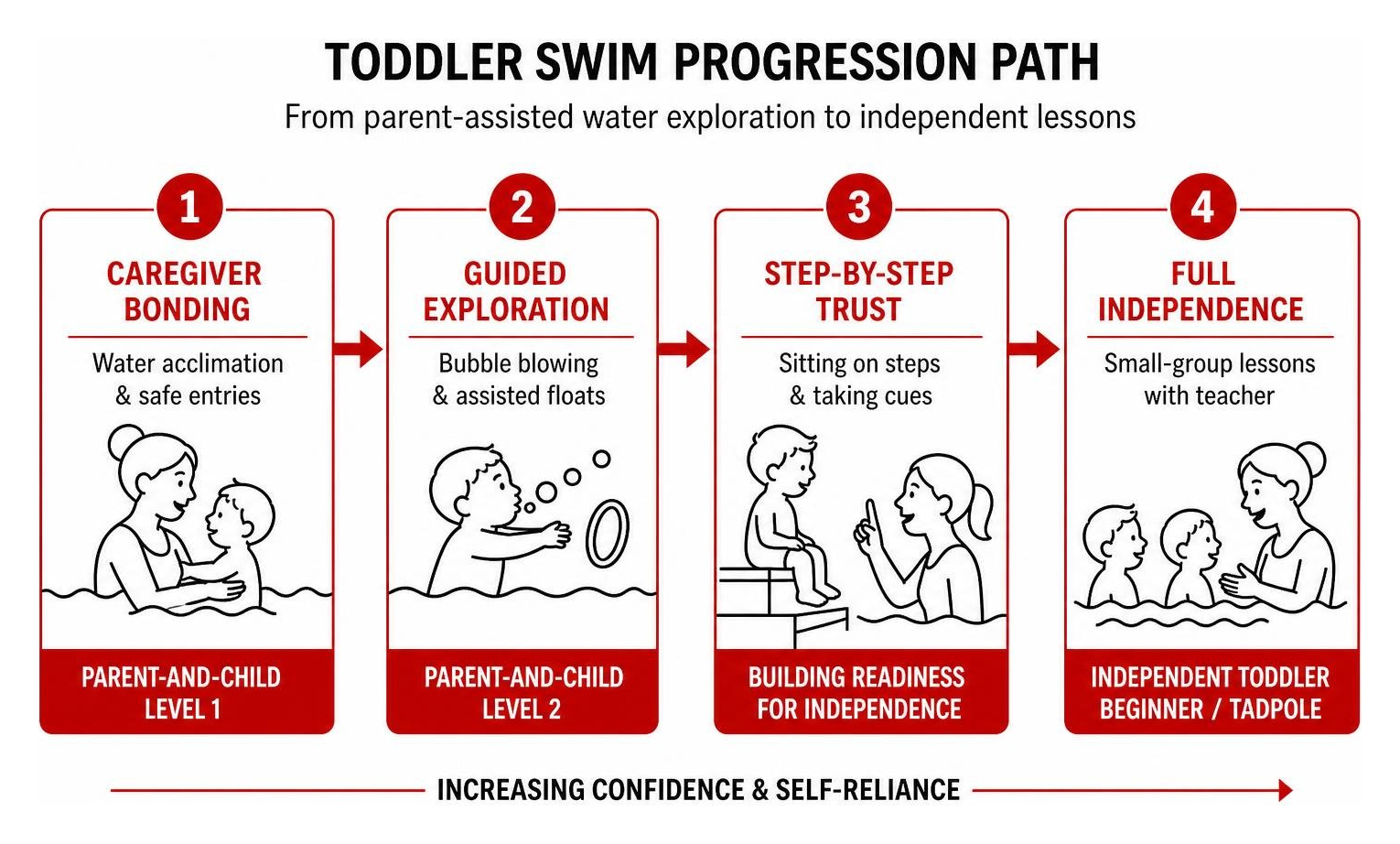
To ease this progression, instructors use consistent routines and positive reinforcement. Parents can prepare toddlers at home by talking excitedly about their swim teacher and practicing pool listening games during bath time. When you are ready to evaluate beginner formats, reading A Practical Guide to Finding Beginner Swim Lessons can help you select the ideal class structure for your child’s emerging confidence.
Core Water Safety and Survival Skills Taught to Toddlers
Toddler swim education focuses on instilling instinctual safety habits rather than formal stroke mechanics. According to guidance from the American Academy of Pediatrics, early water acclimation and swim lessons help young children build foundational safety layers. Through joyful repetition, 2-year-olds learn how their bodies move through water, how to regulate their breathing, and how to return to safety if they accidentally slip into a pool.

Key safety milestones introduced at this stage include:
- Breath Control: Blowing bubbles on the surface and calmly holding breath during brief, gentle submersions.
- Assisted Glides and Floats: Relaxing the neck and spine during front and back floats for 3 to 5 seconds.
- Safe Pool Boundary Habits: Sitting along the edge and waiting for an instructor’s clear cue before entering the pool.
- Wall Returns and “Monkey Walks”: Turning back to grab the wall after entering the water and shuffling hands along the perimeter to an exit step.
Essential Survival Skills and Breath Control
Teaching toddlers how to roll onto their backs is one of the most vital survival concepts in early childhood aquatics. When a child can flip from a face-down position onto a relaxed back float, they can easily rest and breathe. Instructors use songs and colorful floating toys to make this rotation feel natural and fun.
Submerged object retrieval is another foundational drill. By reaching for large rings on a shallow step with their eyes open underwater, toddlers develop spatial orientation and overcome hesitation about wetting their faces. To discover creative ways to blend skill-building with play, explore The Ultimate Guide to Toddler Water Play Classes.
Adaptive Swim Instruction for Diverse Physical and Cognitive Needs
Every child arrives at the pool with unique physical, sensory, and developmental profiles. Adaptive aquatic instruction tailors lessons to support children who benefit from customized pacing, sensory accommodations, or modified physical handling.
Instructors create inclusive, low-stress environments by:
- Offering clear visual schedules and predictable lesson routines.
- Reducing sensory stimulation with gentler verbal cues and gradual water immersion.
- Adapting body holds to accommodate varying muscle tone and physical coordination.
- Celebrating incremental victories to foster enduring self-esteem in the water.
Practical Considerations: Costs, Scheduling, and Facility Environments
Choosing the right swim program involves balancing family routines, budget, and the quality of the learning environment. Consistency is key when toddlers are developing motor skills and water habits.
What to Expect in Swimming Classes for 2 Year Olds Regarding Pricing and Schedules
Standard toddler swim lessons run for 30 minutes. This duration aligns with a 2-year-old’s physical endurance and attention span, keeping learning energetic without causing overtiredness.
Programs generally offer two primary scheduling tracks:
- Year-Round Weekly Lessons: Weekly recurring classes (once or twice per week) that build sustained muscle memory and continuous comfort across all seasons.
- Multi-Day Intensive Tracks: 3 to 4 morning sessions per week over several consecutive weeks, perfect for rapid acclimation before summer trips.
Tuition structures vary across regions and facility types. Community recreation courses may offer short seasonal sessions starting around $30 to $50 per block, while specialized, year-round indoor swim schools typically range from $90 to $160+ monthly, reflecting smaller class sizes, certified instructors, and purpose-built warm water facilities.
Optimal Pool Temperature and Class Environment
For a 2-year-old, pool temperature makes all the difference between a joyful splash and shivering tears. Toddlers lose body heat much faster than older children and adults. If the water is cold, their muscles tense up, making relaxed floating and breath control nearly impossible.
At American Swim Academy, our year-round indoor pools are kept at a soothing 92 degrees, creating an inviting environment where young children feel comfortable from the second their toes touch the water. Our indoor climate-controlled facilities across Fremont, Newark, Livermore, Dublin, and Walnut Creek protect swimmers from outside wind and weather. For Bay Area families looking into early water experiences, our guide on Splish Splash: A Guide to Baby Water Adaptation in Walnut Creek highlights why warm water environments foster rapid comfort.
To maintain water purity and comfort for all swimmers, facilities enforce strict swim diaper policies. Most quality schools require two reusable, snug-fitting swim diapers worn over one another (or a reusable cover over an approved disposable swim diaper).
Frequently Asked Questions About Toddler Swim Lessons
At what age should a 2-year-old move from parent-assisted to independent lessons?
Most children transition between ages 2.5 and 3, but readiness depends entirely on emotional maturity rather than a specific birthday. If your child can comfortably separate from you, follow two-step directions, and sit on a shallow step with an instructor, they are ready to try an independent beginner class.
What prerequisites are required before enrolling a 2-year-old in swimming classes?
For introductory parent-and-child classes, there are no skill prerequisites; all that is needed is a willingness to explore the water alongside a caregiver. For independent toddler classes, children should be comfortable entering the pool without distress, have basic face-wetting familiarity, and be able to participate safely in a small group setting without a parent in the water.
Are toddler swimming classes focused on survival or water familiarity?
Balanced programs focus on both. Water familiarity builds the joy, curiosity, and comfort necessary for learning, while survival skills (such as back floating, breath control, turning to the wall, and safe pool entries) provide essential safety habits. Combining playful games with structured safety routines gives toddlers the healthiest, most enduring foundation.
Conclusion
Introducing your 2-year-old to the water is one of the most rewarding developmental gifts you can offer. By prioritizing warm-water comfort, compassionate instructors, and playful safety routines, you set the stage for a lifetime of water confidence.
Whether your child is taking their first splash in our arms or learning to kick independently across the steps, our dedicated team is here to support every milestone. Explore our warm-water Beginner Swim Lessons at American Swim Academy and help your toddler build essential swimming and safety skills today.