

Why Baby Water Play Classes Are Worth Starting Early
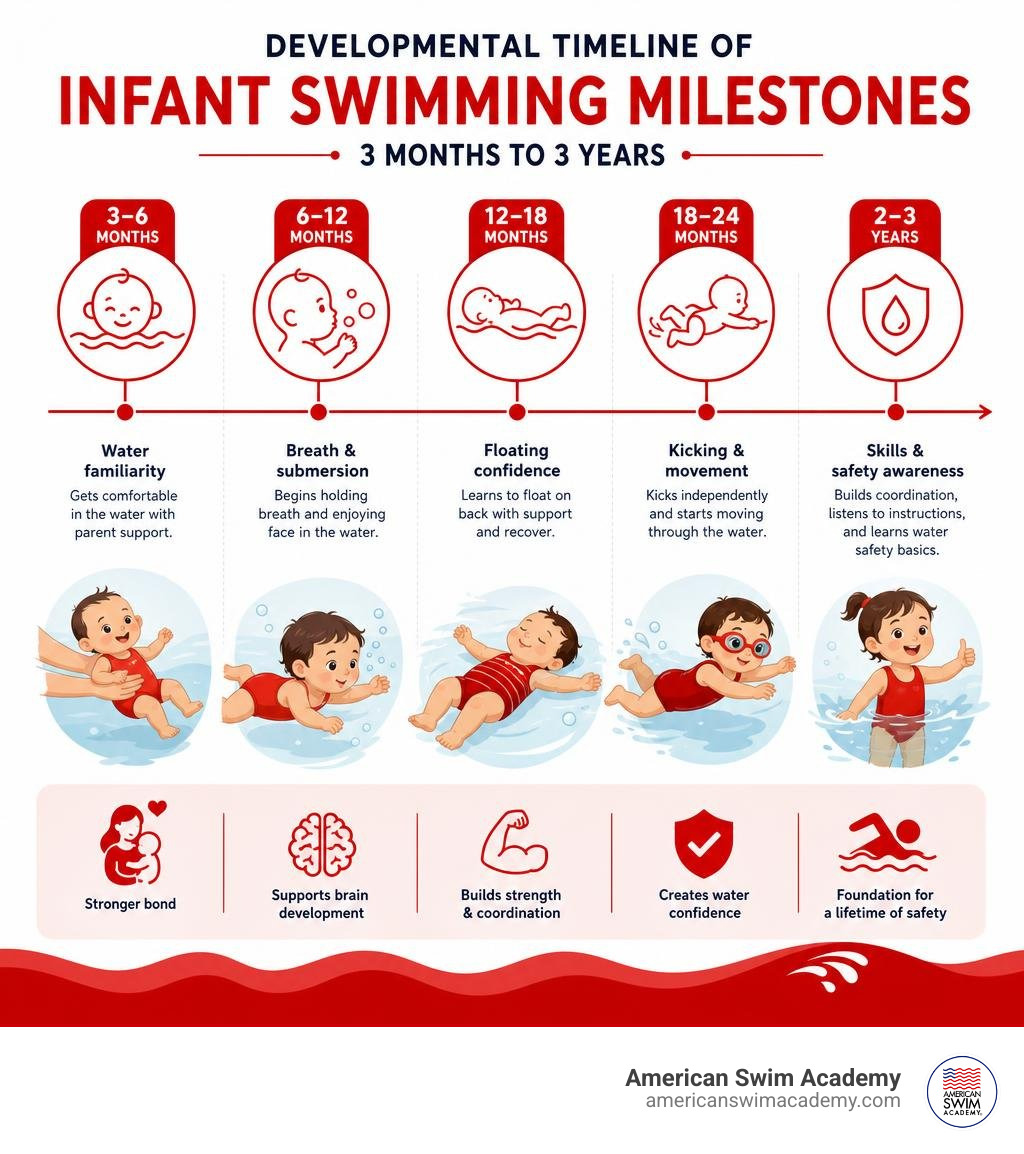
Baby water play classes are structured, parent-accompanied sessions in warm pools that introduce infants and toddlers to the water through songs, games, and guided movement — typically starting as early as 3 to 6 months of age.
Here’s a quick snapshot of what to know before you read on:
- Who they’re for: Babies and toddlers from about 3 months up to 3 years old
- How long: Most sessions run 30 minutes
- Parent involvement: A parent or caregiver gets in the pool for all infant classes
- What babies learn: Water comfort, breath control, floating, kicking, and basic safety awareness
- Class sizes: Quality programs keep ratios around 6:1 (students to instructor)
- Pool temperature: Warm water is essential — look for pools heated to at least 84°F, and 90°F or higher for very young infants
- Key benefit: Builds water confidence, physical strength, and even supports cognitive development
If you’re a parent in the Bay Area trying to figure out where to start — or whether your baby is even ready — you’re in the right place.
Early water exposure does more than most parents expect. Research shows that time spent in the water can put babies months ahead in areas like mathematical reasoning and reading. Beyond brain development, these classes build muscle strength, improve coordination and balance, and create a foundation of water safety that lasts a lifetime. And for many busy families, the weekly class becomes one of the most meaningful bonding rituals of early parenthood.
The key is finding a program that’s warm, small, safe, and taught by people who genuinely understand how babies learn.
Relevant articles related to baby water play classes:
The Developmental Benefits of Baby Water Play Classes
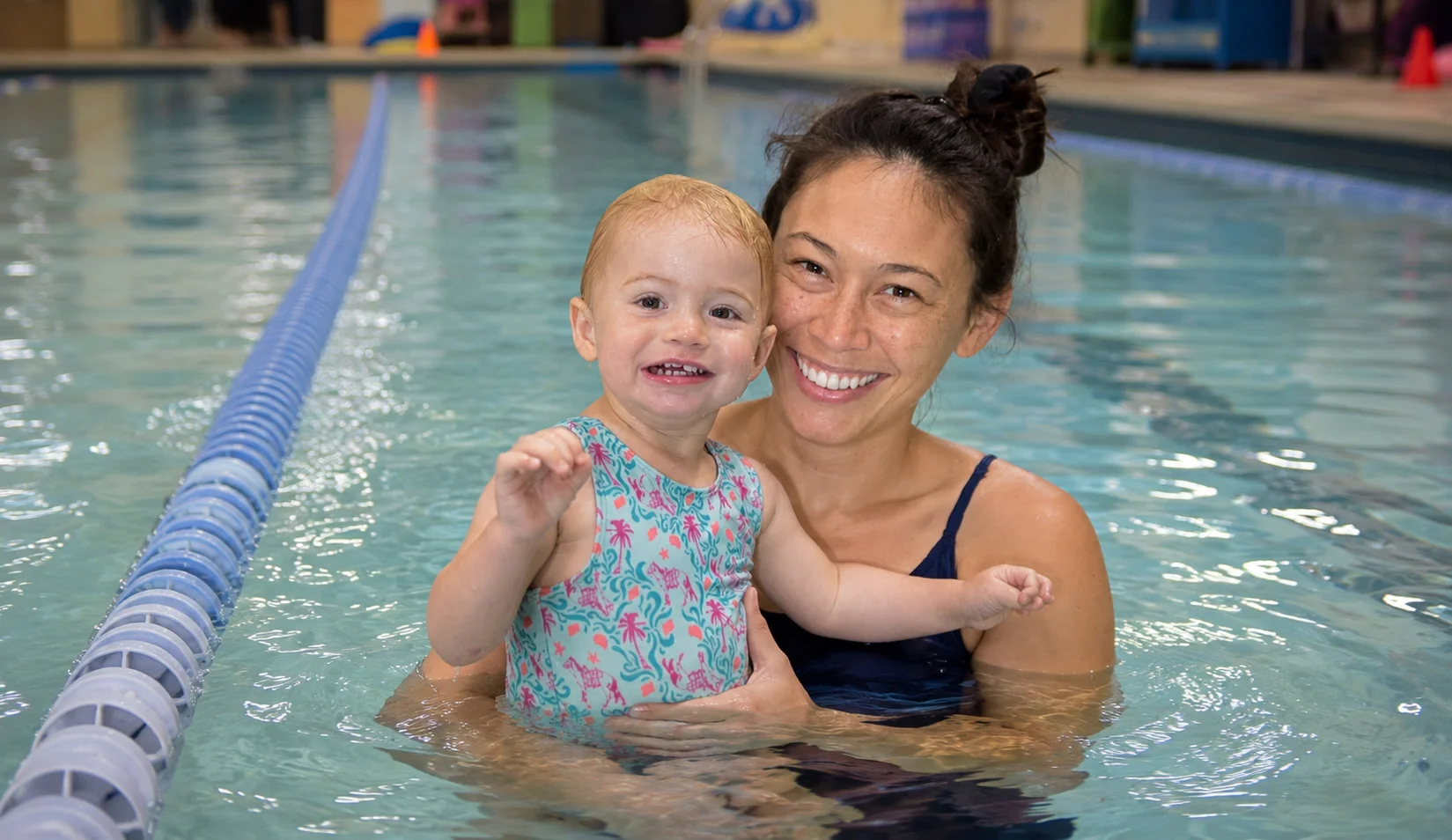
When you think of baby water play classes, you might picture cute splashes, colorful floating toys, and lots of giggles. While all of those elements are certainly present, there is a profound amount of neurological and physical development happening beneath the surface.
Water provides a unique, low-impact environment where infants can move in ways that are physically impossible for them on land. Before they can crawl, sit up, or walk, babies in the pool can experience full-body movement. This early freedom of movement stimulates their vestibular system, helping them understand their body’s position in space and accelerating their overall physical progression.
By enrolling your little one in structured aquatic programs, you are not just getting them used to the pool; you are actively supporting their developmental milestones. Our specialized Water Adaptation classes are designed to gently introduce your baby to these sensory wonders while laying the physical foundation for future coordination, strength, and confidence.
Cognitive and Physical Milestones
Did you know that early aquatic play can actually boost your child’s academic readiness? Research indicates that the physical coordination learned during baby swimming can accelerate a child’s future mathematical reasoning, spatial awareness, and reading abilities. This cognitive jump occurs because moving in the water requires bilateral cross-pattern movements—such as kicking one leg while reaching with the opposite arm. These movements build vital neural pathways across the corpus callosum, the bridge connecting the left and right hemispheres of the brain.
Physically, the benefits are just as impressive. Moving against the gentle resistance of water strengthens your little one’s heart and lungs, as well as their arm, leg, and neck muscles. This resistance training helps with coordination, core stability, and balance long before they take their first steps on dry land.
Furthermore, the sensory experience of the pool is incredibly comforting. WATER and TOUCH are two sensory experiences freshly imprinted from baby’s life in the womb! When we combine these two elements in a warm, supportive pool environment, it creates a powerful sensory integration experience that calms the nervous system while simultaneously stimulating cognitive growth.
Strengthening the Parent-Child Bond
In our digital world, finding uninterrupted, distraction-free time to connect with your baby can be challenging. A water play class offers the perfect solution. For 30 minutes, your phone is tucked away in a locker, and your entire focus is on your child.
The skin-to-skin contact, constant eye contact, and nurturing touch experienced in the pool reassure your baby that they are safe in this new environment. This close physical proximity builds deep trust. As you hold your baby close, guide them through gentle glides, and celebrate their small splashes, you are co-regulating their emotions and reinforcing a secure attachment.
These shared moments of joy and triumph do not just build a confident swimmer; they build a resilient emotional bond. Many parents find that Baby Swim Lessons Are Fun for Baby and Parents precisely because they turn what could be a routine activity into a deeply rewarding, screen-free bonding ritual.
When to Start and What to Expect in Toddler Swim Programs
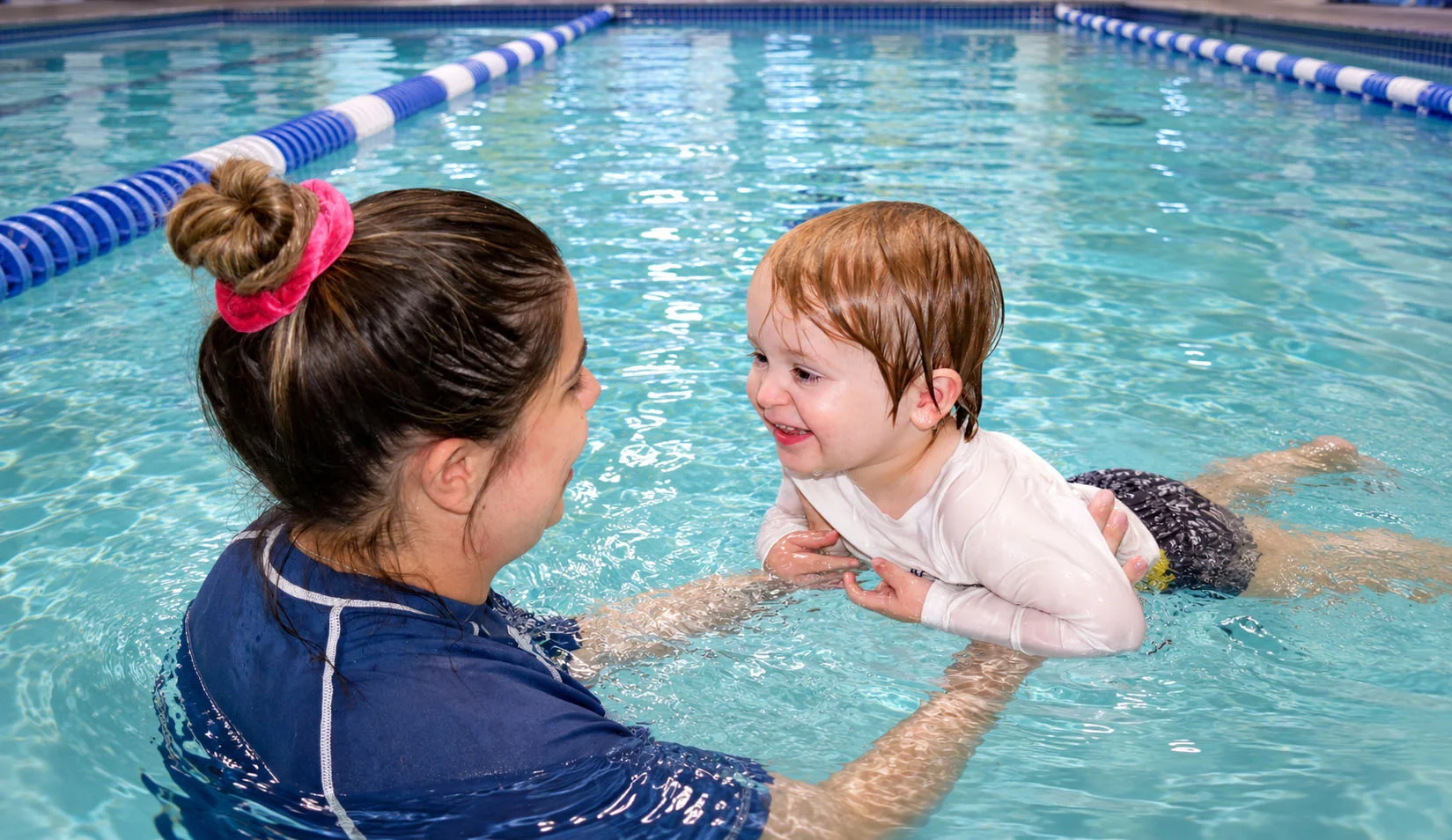
A common question we hear from parents in our Fremont, Newark, Livermore, Dublin, and Walnut Creek communities is: When is my baby actually ready to start?
While some parents wonder if their child is too young, infants are actually remarkably well-suited for early water introduction. The earlier a child starts interacting with water in a positive, structured environment, the more naturally they build comfort and confidence as they grow into toddlers.
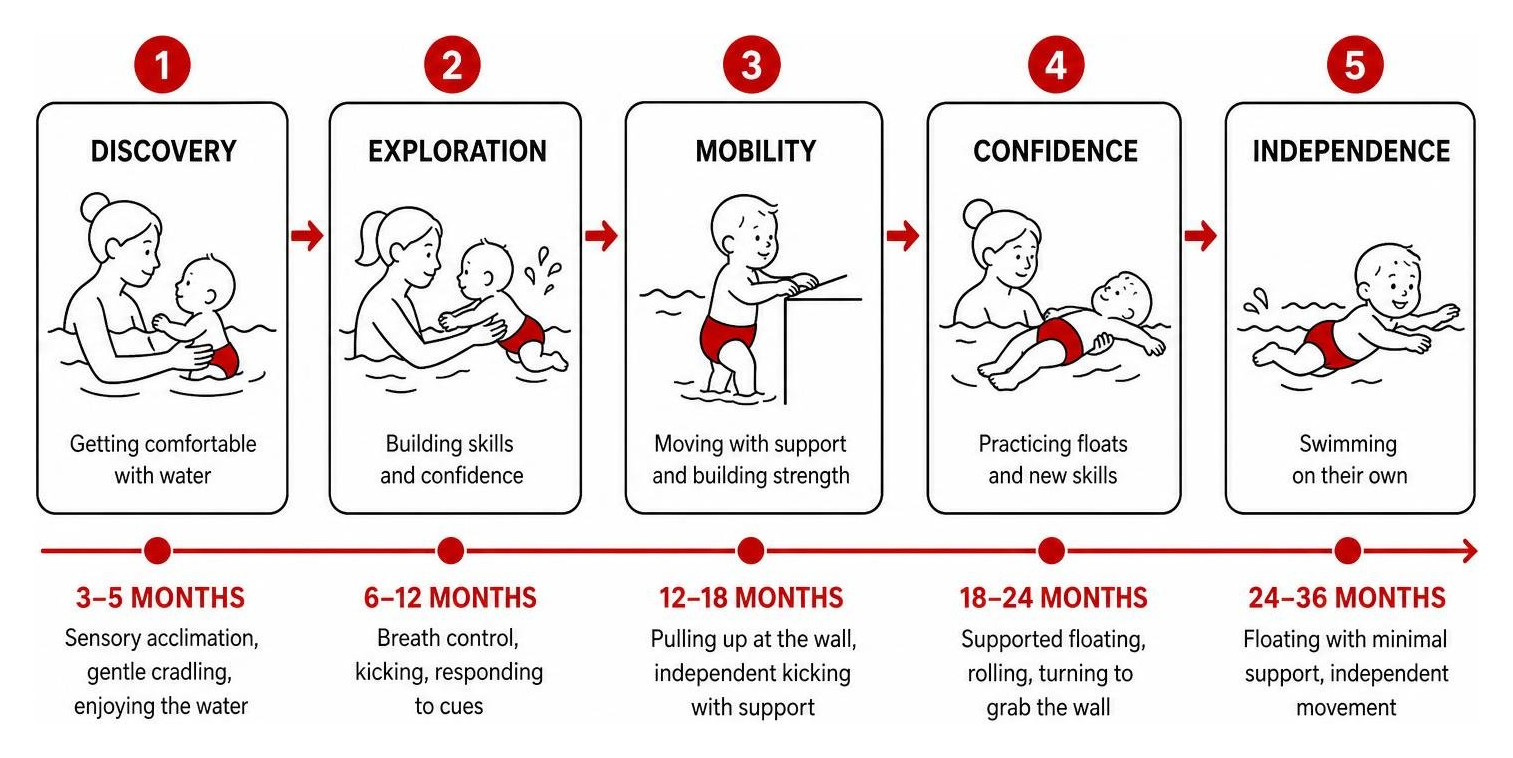
To help you visualize how these programs progress, here is a general breakdown of what to expect at different stages of your child’s early aquatics journey:
| Age Group | Typical Class Focus | Parent in Water? | Key Milestones |
|---|---|---|---|
| 3 to 5 Months | Sensory acclimation, gentle cradling, water touching the cheek, basic comfort. | Yes | Relaxed body posture, enjoying gentle splashes. |
| 6 to 12 Months | Breath control, verbal cues, assisted back floats, kicking legs. | Yes | Responding to verbal cues, blowing bubbles, holding breath. |
| 12 to 18 Months | Active movement, grasping the pool edge, independent kicking with support. | Yes | Pulling up to a standing position at the wall, basic safety exploration. |
| 18 to 36 Months | Rollover breathing, supported floating, transitioning to independent movements. | Yes (until ready to transition) | Turning to grab the wall, floating on back with minimal support. |
Consistency is the secret ingredient to success in any toddler swim program. Attending weekly classes establishes a predictable routine, allowing your child to build on their skills without forgetting what they learned the week before. For a deeper look into this timeline, check out our guide on When and How to Start Swimming Lessons for Infants.
Finding the Right Age for Baby Water Play Classes
While formal swim instruction often starts around 3 to 4 months of age, the foundation for water comfort begins even earlier through gentle, positive exposure during bath time and parent-led water play. The goal at every stage is comfort first: short, happy experiences that help your baby associate water with warmth, safety, and connection.
As babies grow into the 6-to-12-month range, their physical capabilities expand dramatically. At this stage, classes focus on active exploration, water comfort, breath control, verbal swim cues, and basic safety awareness in and around the pool through songs, games, and guided movement.
By starting early, you take advantage of your baby’s natural developmental windows. To learn more about how to assess your baby’s readiness and choose the right starting point, read our comprehensive resource, Water Babies 101: Everything You Need to Know About Infant Swim Lessons.
Typical Class Structure and Duration
You might wonder how a swim school keeps a group of infants engaged and happy in a pool. The secret lies in a highly structured, play-based curriculum.
Standard infant and toddler water play classes are 30 minutes long. This duration is the industry sweet spot: it is long enough to practice key skills and get plenty of physical exercise, but short enough to prevent overexertion, fatigue, and chilling.
A typical class flows like this:
- Welcome Circle: A warm-up song to welcome everyone, establish eye contact, and get babies comfortable in the pool.
- Skill Practice (Sensory Play): Guided activities using floating mats, colorful cups, and toys to practice kicking, splashing, and reaching.
- Safety Focus: Practice holding onto the pool wall, turning around in the water, or practicing assisted back floats.
- Breath Control & Submersion (Optional/Gradual): Using consistent verbal cues to practice pouring water gently over the head or preparing for brief submersions.
- Closing Song: A calming wind-down activity to end the lesson on a positive, happy note.
By using repetitive movements and familiar songs, babies quickly learn what to expect. This predictability builds confidence and makes the learning process feel like a fun game. For more tips on what to look for in these structures, explore Water Babies: Your Guide to Finding Mom and Tot Swim Classes.
Key Features of High-Quality Aquatics Programs
Not all swim programs are created equal, especially when it comes to the unique needs of infants and toddlers. When researching baby water play classes in the Bay Area, parents should look beyond convenient scheduling and focus on the safety, environment, and educational philosophy of the school.
A high-quality program should feel warm, welcoming, and professional. The instructors should be highly trained in early childhood development, showing patience, empathy, and enthusiasm. They should understand how to read a baby’s subtle body language to ensure that no child is pushed beyond their comfort zone.
To make an informed decision for your family, take a look at our guide on How to Choose the Best Swimming Classes for Infants.
Essential Safety Standards for Baby Water Play Classes
The physical environment of the pool is incredibly important for young children. First and foremost is water temperature. Because babies cannot regulate their body temperature as efficiently as adults, cold water will quickly lead to shivering, crying, and a negative association with the pool. High-quality infant programs utilize indoor pools heated to a comfortable 90°F to 92°F. This warm environment keeps babies relaxed, happy, and physically loose.
Another fascinating safety aspect is the “laryngeal reflex” (or gag reflex). Babies are born with this natural reflex, which automatically closes their airway when water touches their face, nose, or throat. In a structured class, experienced instructors use word association and consistent verbal cues (such as “Baby, ready, go!”) to gradually transition this involuntary reflex into a learned, conscious breath-control response.
Teaching these foundational skills in a controlled, warm environment is a key aspect of early water safety. For more on how early lessons build safety awareness, read Water Safety: The Importance of Swimming Lessons to Kids.
Group vs. Private Lessons for Infants
When deciding on a class format, parents often weigh the pros and cons of group classes versus private lessons.
For infants and toddlers under two years old, group classes are almost always the preferred choice. These classes typically maintain a low student-to-teacher ratio (such as 6:1 with parents in the water). Group classes offer fantastic benefits:
- Peer Learning: Babies are natural mimics. Watching a peer happily splash or float inspires other babies to try the same skill.
- Social Interaction: The group dynamic fosters early socialization, helping babies get comfortable around other children and adults.
- Affordability & Fun: Group lessons are highly engaging, incorporating group songs and interactive games that make the class feel like a community event.
Private lessons (1:1 ratio) can be highly effective for older toddlers who need targeted, individual attention to build confidence or to master advanced skills like independent back floating. However, for early water play and sensory exploration, the warmth and joy of a group class are hard to beat.
Families comparing local aquatic programs should look for clear age groupings, warm indoor water, small class sizes, parent participation for infant levels, and instructors who understand early childhood development. American Swim Academy offers year-round indoor programs across Fremont, Newark, Livermore, Dublin, and Walnut Creek, with 92° heated pools designed to help babies and toddlers feel comfortable while they build foundational water skills.
Preparing for Your First Lesson: What to Pack and Do
Your first day at the pool is an exciting milestone, but it can also feel a little overwhelming if you aren’t prepared. Taking a few simple steps to organize your gear and prepare your baby at home will ensure that your first class is a smooth, stress-free, and joyful experience.
Before you head out, make sure to look up your specific location’s parking and facility details. If you are attending classes in the East Bay, our guide on Where to Find the Best Baby Swimming Classes in Fremont offers great local tips to help you arrive relaxed and ready to splash.
The Essential Swim Gear Checklist
To make packing easy, here is a handy checklist of the absolute essentials you should have in your swim bag:
- The Double-Diaper System: This is a strict industry standard to maintain pool hygiene and prevent accidental closures. It consists of:
- A disposable or reusable swim diaper worn underneath.
- An approved, snug-fitting neoprene swim cover worn over the top.
- Comfortable Swimwear: For both baby and the participating parent.
- Two Warm Towels: One for baby and one for you. Look for hooded towels for babies to prevent rapid heat loss from their heads after leaving the warm water.
- A Change of Warm Clothes: Loose, easy-to-put-on clothing for both of you. Getting a wiggly, damp baby into tight leggings is a workout in itself!
- A Roll-Up Changing Mat: Perfect for safely and hygienically changing your baby on the changing room floor or bench.
- A Light Snack or Milk: Swimming works up a big appetite! Have a bottle, breast pump, or healthy snack ready for immediately after the lesson.
At-Home Preparation and Pool Hygiene
You don’t have to wait for the first day of class to start preparing your baby. You can easily acclimate them to the sensations of water play right in your bathtub at home.
During bath time, practice gently trickling water over your baby’s shoulders and the back of their head. Use the same verbal cues you plan to use in class, such as “Baby, ready, splash!” before gently sprinkling water near their face. This simple play helps them build positive associations with water movement.
Additionally, keep these important pool hygiene and health guidelines in mind:
- Feeding Schedule: Try to feed your baby a light meal or milk at least one hour before the class begins to prevent spit-ups in the pool.
- Sickness Policies: To protect all families, keep your child home if they have a fever, ear infection, or have experienced vomiting or diarrhea within the last 72 hours.
- Eczema Protection: If your baby has sensitive skin or eczema, apply a thin layer of a prescribed barrier cream before putting on their swimsuit to protect their skin from the chlorinated water.
For parents living in the Tri-Valley area, you can find more tailored tips on preparing for local classes in our guide, Where to Enroll in Baby Swimming Classes in Livermore.
Frequently Asked Questions About Infant Swim Lessons
Are water play classes safe for babies under six months?
Yes, water play classes are highly safe and beneficial for babies under six months, provided the class is designed specifically for infants and held in a warm pool (ideally 90°F to 92°F). At this tender age, lessons do not focus on technical strokes; instead, they focus on gentle sensory exploration, water comfort, and parent-child bonding.
Always consult your pediatrician before starting any new physical activity, especially if your baby was born prematurely. When choosing a program, look for properly maintained pools, clear health policies, and instructors who are trained to work with infants.
Do parents have to get in the pool with their baby?
Yes, for virtually all infant and toddler classes (typically up to age 2 or 2.5), parent or guardian participation is strictly required. Having a trusted caregiver in the water provides the essential physical support and emotional reassurance your baby needs to feel safe.
It is also a wonderful opportunity for you to learn the proper holds, safety techniques, and verbal cues so you can confidently practice water play together outside of class. Plus, the active supervision ensures a 1:1 safety ratio for every child in the pool.
How do classes transition as my child grows?
As your child builds confidence, strength, and coordination, their swim journey will naturally progress. In the early stages, classes focus entirely on water adaptation and basic safety skills with a parent by their side.
Around age 2 to 2.5, as toddlers develop greater independence and language skills, programs begin transitioning them to small group classes without a parent in the water. These independent classes maintain very small student-to-teacher ratios (such as 3:1) to ensure close supervision and personalized instruction. To explore our full developmental pathway and see how we guide children from infancy to independent swimming, take a look at Our Programs.
Conclusion
Enrolling your little one in baby water play classes is one of the most rewarding decisions you can make for their early physical development, cognitive growth, and safety awareness. From building core muscle strength and bilateral coordination to fostering a deep, trusting bond between you and your baby, the benefits of early aquatic play extend far beyond the pool walls.
At American Swim Academy, we are dedicated to making this early water journey safe, gentle, and incredibly fun. We offer year-round, indoor swim lessons across our convenient Bay Area locations in Fremont, Newark, Livermore, Dublin, and Walnut Creek, CA.
With our beautifully warm 92° heated pools, small class sizes, and caring, experienced instructors, we provide the perfect, nurturing environment for your baby to take their very first splashes.
Are you ready to start building lifelong water confidence with your little one? Explore our specialized Water Adaptation program today and find the perfect class for your family!