

The Best Baby Swimming Classes in Fremont, CA
If you’re looking for baby swimming classes in Fremont, you want a program that prioritizes safety, comfort, and fun. American Swim Academy offers premier year-round indoor lessons in a 92° heated pool, featuring our specialized AQUAbabies program starting at 6 months with a small 4:1 class ratio.
Finding the right swim class for your baby in Fremont is a big decision — and a really important one.
Water safety skills can make a meaningful difference in a young child’s life. The good news? Fremont families have excellent local options, from warm indoor pools with tiny class sizes to parent-participation programs built for babies as young as 6 months old.
Whether your little one is brand new to the water or already splashing with confidence, this guide covers what every Fremont parent needs to know before signing up.
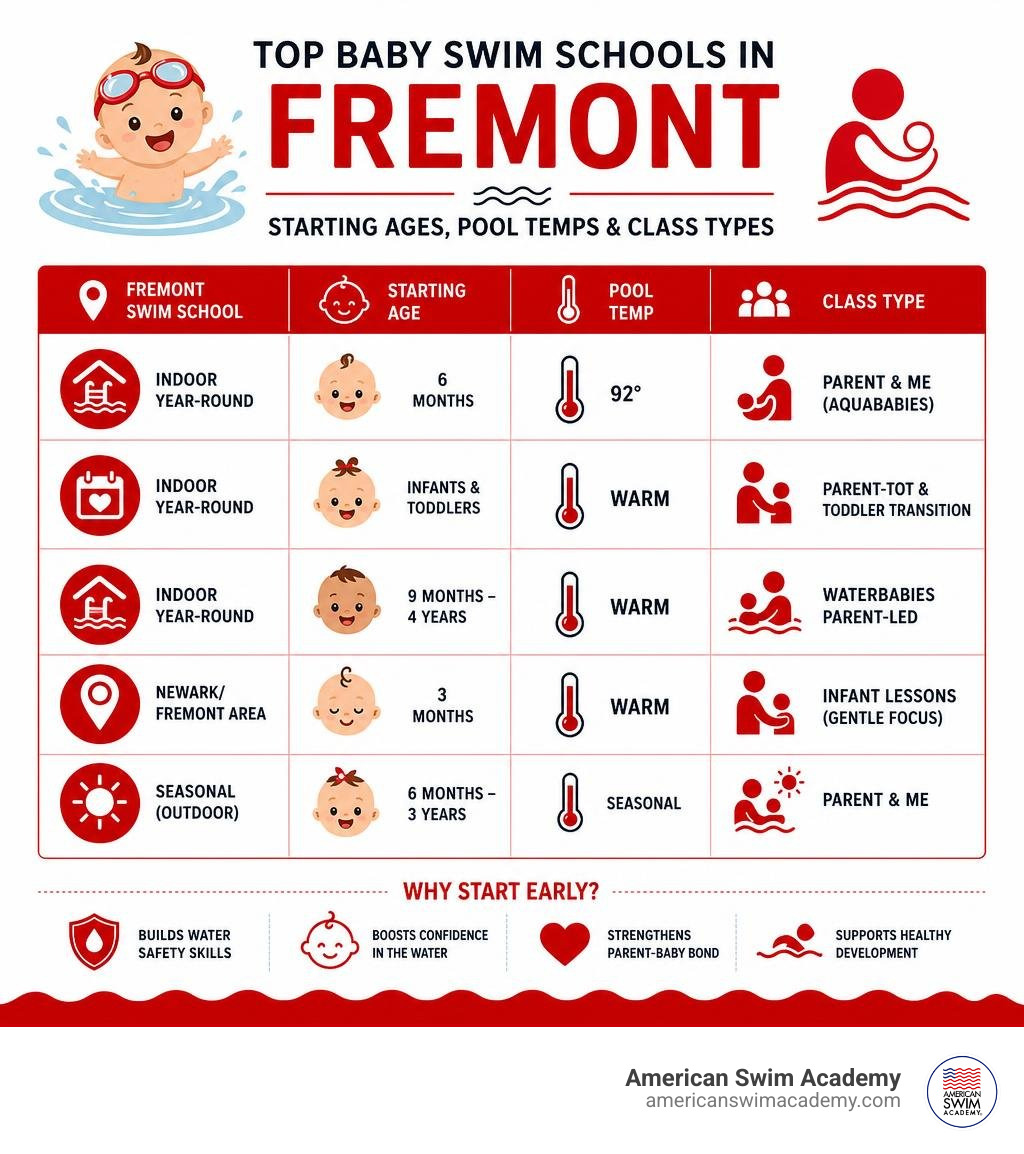
Quick baby swimming classes fremont definitions:
What to Look for in Baby Swimming Classes in Fremont
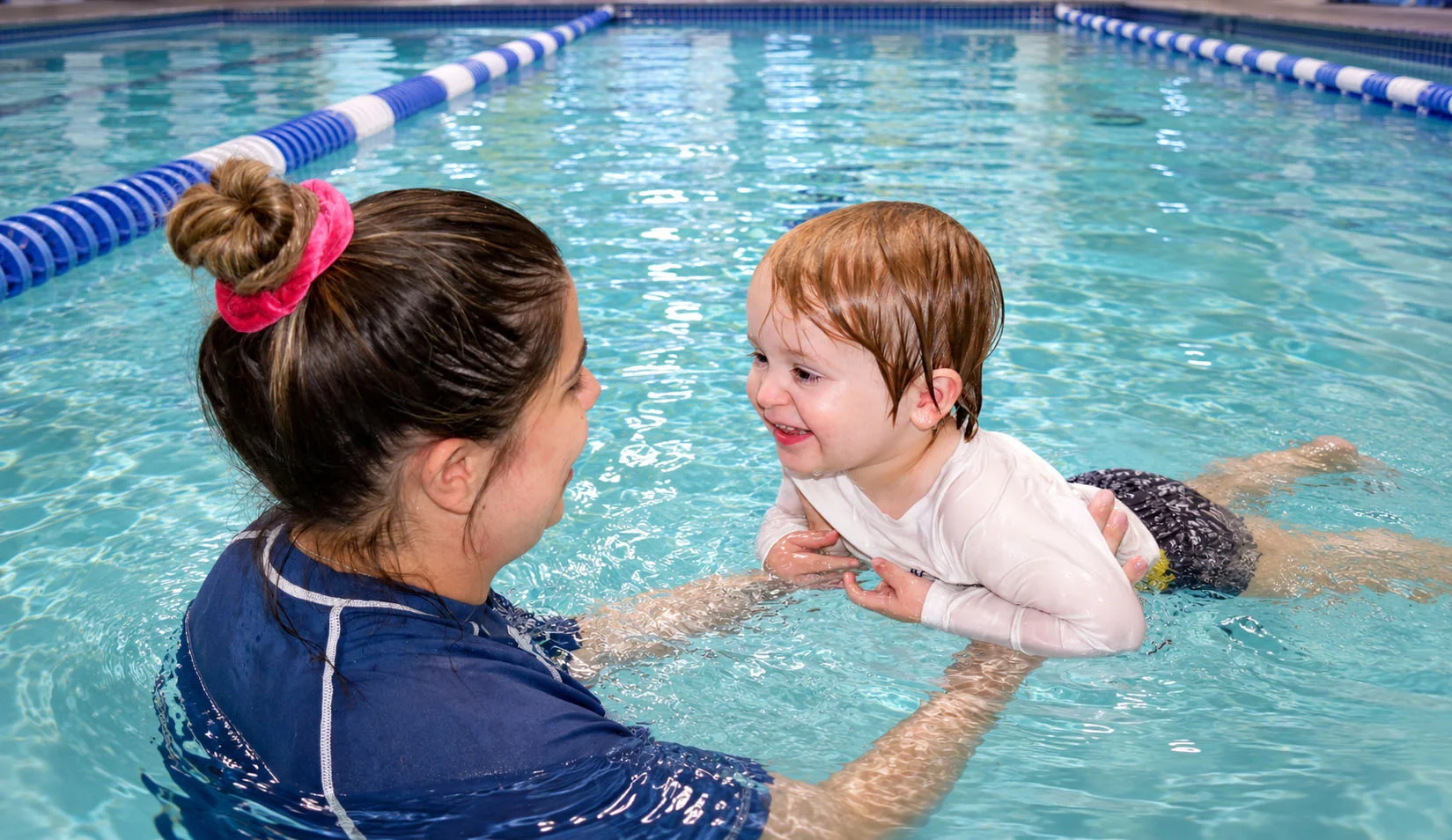
When you begin searching for the perfect swim program, it is easy to get overwhelmed by the options. However, choosing the right environment for your infant or toddler comes down to a few critical factors that ensure their safety, comfort, and long-term success.
As you research schools, you will want to focus on facilities that emphasize comfort and trust. Learning to swim should be a joyful, positive experience rather than a stressful chore. To help you navigate the process, we have compiled a comprehensive guide on How to Choose the Best Swimming Classes for Infants.
First and foremost, look for a program that offers year-round enrollment. Infant water safety is not a seasonal summer activity; it is a continuous learning process. When babies take long breaks from the water, they often lose their hard-earned comfort and regression can occur. A year-round indoor program keeps their skills sharp and builds water confidence that lasts a lifetime.
Additionally, pay close attention to the safety standards of the facility. The pool deck should be clean, highly organized, and supervised by certified staff. The instructors must be specifically trained in early childhood development, understanding that a nine-month-old baby learns very differently than a five-year-old child.
Warm Indoor Pools for Baby Swimming Classes in Fremont
One of the most overlooked aspects of infant swim lessons is the pool temperature. Babies cannot regulate their body temperature the way adults or older children do. If the water is even slightly chilly, your baby will tense up, shiver, and quickly associate the pool with discomfort.
At our Fremont Location, we keep our indoor pools heated to a warm, tropical 92 degrees. This warm water acts like a soothing bath, relaxing your baby’s muscles and allowing them to focus entirely on learning and enjoying the water.
Indoor facilities also protect your little one’s sensitive skin from the harsh California sun and wind. Rain or shine, summer or winter, a heated indoor pool ensures that your weekly swim lesson remains a cozy, comfortable routine that your baby looks forward to every single week.
Class Ratios and Instructor Qualifications
For infants and toddlers, class size is everything. In a crowded pool, babies can easily become overstimulated by the noise and splashing, while instructors may struggle to give each child the individual attention they deserve.
In our AQUAbabies program, we maintain a small 4:1 student-to-teacher ratio. This small class size ensures that our certified coaches can closely monitor each parent-child pair, offering personalized feedback, technique corrections, and gentle encouragement.
Our instructors undergo rigorous training to ensure they understand infant physiology, water safety protocols, and positive reinforcement techniques. They know how to turn essential safety skills into playful games, ensuring your baby feels completely supported and safe every step of the way.
Key Water Safety and Developmental Skills Learned
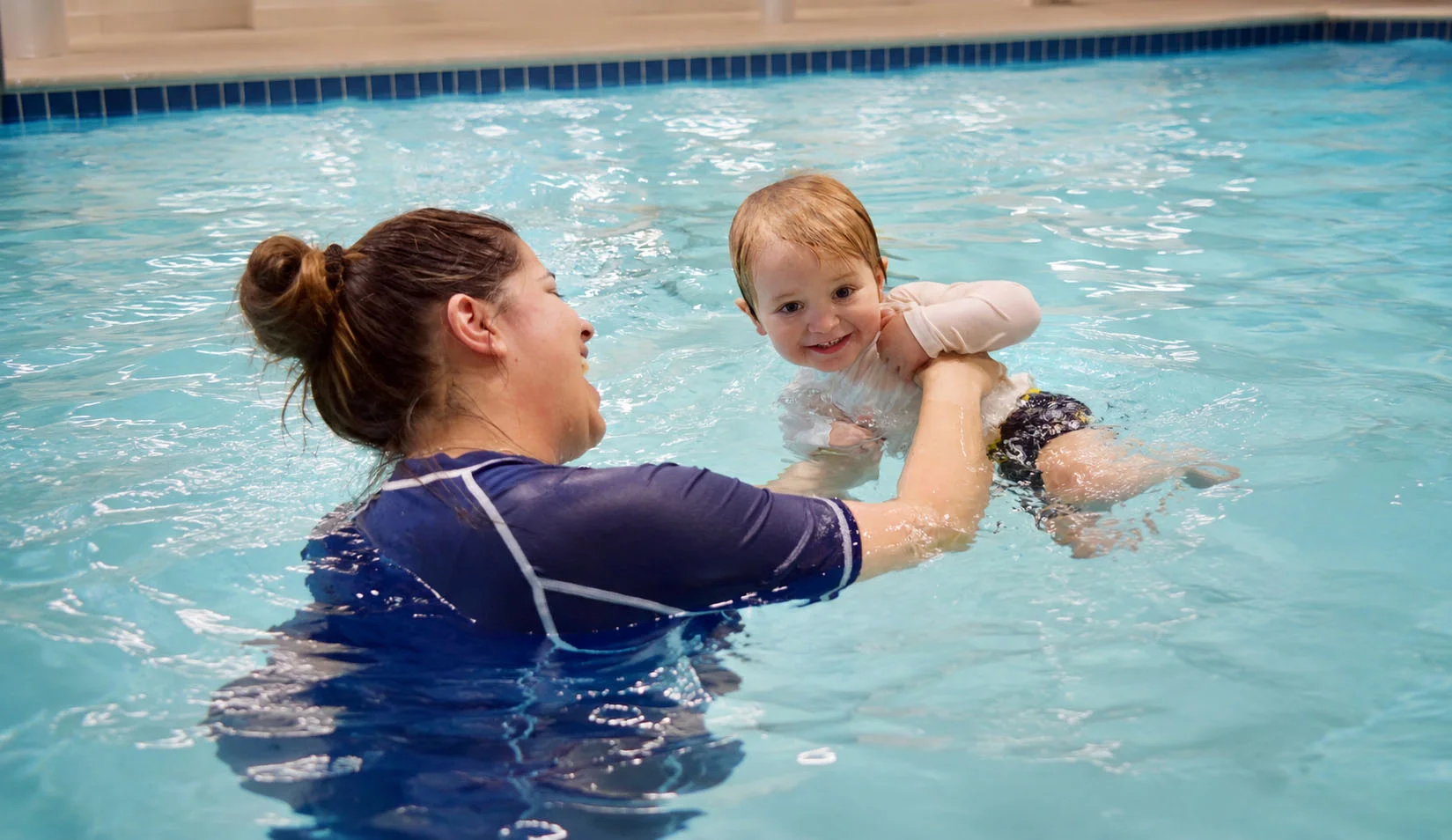
Many parents wonder what a baby can actually learn in a swim class. While they won’t be performing a perfect freestyle stroke just yet, the physical and cognitive milestones they reach in the water are truly remarkable.
Early swim lessons provide a rich sensory experience that boosts brain development, improves bilateral coordination, and strengthens your baby’s muscles. To understand the full scope of what these early lessons offer, check out our guide on Water Babies 101: Everything You Need to Know About Infant Swim Lessons.
Water Acclimation and Comfort
The foundation of all swim instruction is water acclimation. Before a child can learn to float or move through the water, they must feel completely at ease.
Our baby swimming classes focus heavily on building this comfort through:
- Gentle Submersions: Using structured, predictable cues so your baby learns when to hold their breath before their face touches the water.
- Breath Control: Teaching babies to blow bubbles and control their breathing, which prevents water inhalation.
- Splashing Games: Utilizing cups, toys, and songs to make splashing on the face a fun, non-threatening experience.
By keeping the atmosphere light and playful, we help babies develop a positive relationship with the water. As explained in our article on why Baby Swim Lessons Are Fun for Baby and Parents, turning these lessons into a fun bonding activity reduces anxiety for both you and your little one.
Essential Safety Skills
Beyond acclimation, our primary goal is building foundational water safety habits. Even the youngest infants can learn self-rescue techniques that could save their lives in an emergency.
Key safety skills taught in baby swim classes include:
- Back Floating: Teaching babies to roll onto their backs, relax, and breathe. This is the single most important safety skill for an infant.
- Wall Grabbing and Climbing: Instructing toddlers to hold onto the side of the pool and “monkey crawl” along the edge to a step or exit point.
- Safe Entry and Exit: Teaching children to always wait for permission before entering the pool and how to safely climb out using the “elbow, elbow, tummy, knee” method.
These structured programs align with professional recreation guidelines, such as those offered through the Swim Lessons | City of Fremont, CA Official Website, which emphasize safety as the core of all aquatic education.
Parent-Tot vs. Toddler Transition Classes
As your child grows, their needs in the water change. Swim schools typically divide early childhood classes into two distinct stages: Parent-Tot classes and Toddler Transition classes.
To help you understand the differences, we have outlined the key features of each class type below:
| Feature | Parent-Tot Classes (AQUAbabies) | Toddler Transition Classes |
|---|---|---|
| Typical Age Range | 6 months to 33 months | 3 to 4 years |
| Parent Participation | Parent is in the water with the child | Parent watches from the viewing area |
| Class Ratio | 4:1 (four parent-child pairs per teacher) | 2:1 (highly personalized attention) |
| Primary Focus | Water comfort, bonding, basic safety skills | Independence, breath control, basic propulsion |
| Teaching Style | Songs, games, and parent-led movements | Instructor-led skill practice and peer interaction |
For a deeper look into finding the right match for your family, refer to Water Babies: Your Guide to Finding Mom and Tot Swim Classes.
Parent-Tot Classes: Bonding in the Water
Parent-Tot classes, such as our AQUAbabies sessions, are designed for babies starting at 6 months of age. In these classes, you are right there in the water with your child.
This setup provides an incredible bonding experience. Your physical presence gives your baby an immediate sense of security, allowing them to try new things—like laying their head back on the water—without fear. You will learn the proper holds and techniques to support your baby, turning you into their trusted guide in the pool. To explore the structure of these classes, view Our Programs.
Toddler Transition: Building Independence
Around age three, children are developmentally ready to start building independence in the water. Toddler Transition classes bridge the gap between parent-assisted splashing and independent swimming.
In these classes, parents step out of the pool and watch from our comfortable viewing area. Under the guidance of our patient instructors, toddlers learn to trust a new adult, follow directions in a small group setting, and interact with their peers. This transition builds immense self-confidence as your child realizes they can navigate the water all on their own.
Frequently Asked Questions About Baby Swim Lessons
What age can babies start baby swimming classes in Fremont?
Babies can start swim classes in Fremont as early as 6 months old. At this stage, infants are physically ready to benefit from the gentle resistance of the water, and they have developed the head and neck control necessary for basic pool movements. Starting early helps prevent the development of water fears later in childhood. You can read more about infant readiness in our article, When and How to Start Swimming Lessons for Infants.
What should we bring to our baby’s first swim lesson?
To ensure a smooth and fun first day, make sure to pack:
- Double Swim Diapers: Most indoor pools require a reusable swim diaper snuggly fitted over a disposable swim diaper to prevent pool contamination.
- Two Towels: One for your baby and one for you (if you are participating in a Parent-Tot class).
- A Change of Warm Clothes: To wrap your baby in immediately after they dry off.
- A Positive Attitude: Babies are incredibly perceptive. If you are relaxed and excited, your baby will feel safe and ready to explore!
How often should my baby attend swim classes?
For the best results, we recommend attending swim classes at least once a week. Consistency is the secret to success when it comes to infant muscle memory and skill retention. A weekly routine helps your baby remember the safety skills they have learned, builds continuous water comfort, and ensures they look forward to their pool time as a regular part of their weekly schedule.
Conclusion
Enrolling your child in baby swimming classes in Fremont is one of the most rewarding decisions you can make as a parent. By starting early, you are not only giving your baby a head start on physical and cognitive development, but you are also equipping them with invaluable water safety skills that build a foundation for a lifetime of fun in the pool.
At American Swim Academy, we are dedicated to making every splash count. With our warm 92-degree indoor pools, small class ratios, and caring, experienced coaches, we provide the perfect environment for your little one to thrive.
Are you ready to watch your baby splash, grow, and build lifelong water confidence? Get Started with us today, or learn more about our early childhood curriculum by exploring our specialized programs in Water Adaptation. We can’t wait to welcome you and your baby to the pool!