

Why Parents Are Searching for Swimming Lessons for Infants Near Me
Finding swimming lessons for infants near me is one of the smartest moves a Bay Area parent can make — and the earlier, the better. Most programs accept babies starting at 4 to 6 months old, and the benefits go far beyond the pool.
Here’s a quick answer for parents ready to get started:
- Best starting age: 4–6 months (with pediatrician approval)
- Class format: Parent-child, 30-minute sessions in warm, heated pools
- What to look for: Small class sizes (6:1 or lower), certified instructors, year-round indoor facilities
- What your baby will learn: Water comfort, supported floating, breath control, gentle kicking
- What to bring: Reusable swim diaper, snug swimsuit, towel — and a light feeding 1 hour before class
- Where to start: Search for year-round indoor programs with flexible scheduling, like American Swim Academy’s locations across the Bay Area
Formal swim lessons provide a vital foundation for water safety, helping children ages 1–4 build essential skills and confidence in the pool.
But safety isn’t the only reason families sign up. Research shows that infants who join structured water programs between 6 and 12 months show measurable gains in motor development, coordination, and even cognitive skills compared to children who start later. And 70% of children show improved water confidence after just 8–10 lessons.
This guide is built for busy Bay Area parents — especially those navigating special needs, tight schedules, or sensory sensitivities. It covers everything from what to expect in your baby’s first class to how to choose the right program near you.
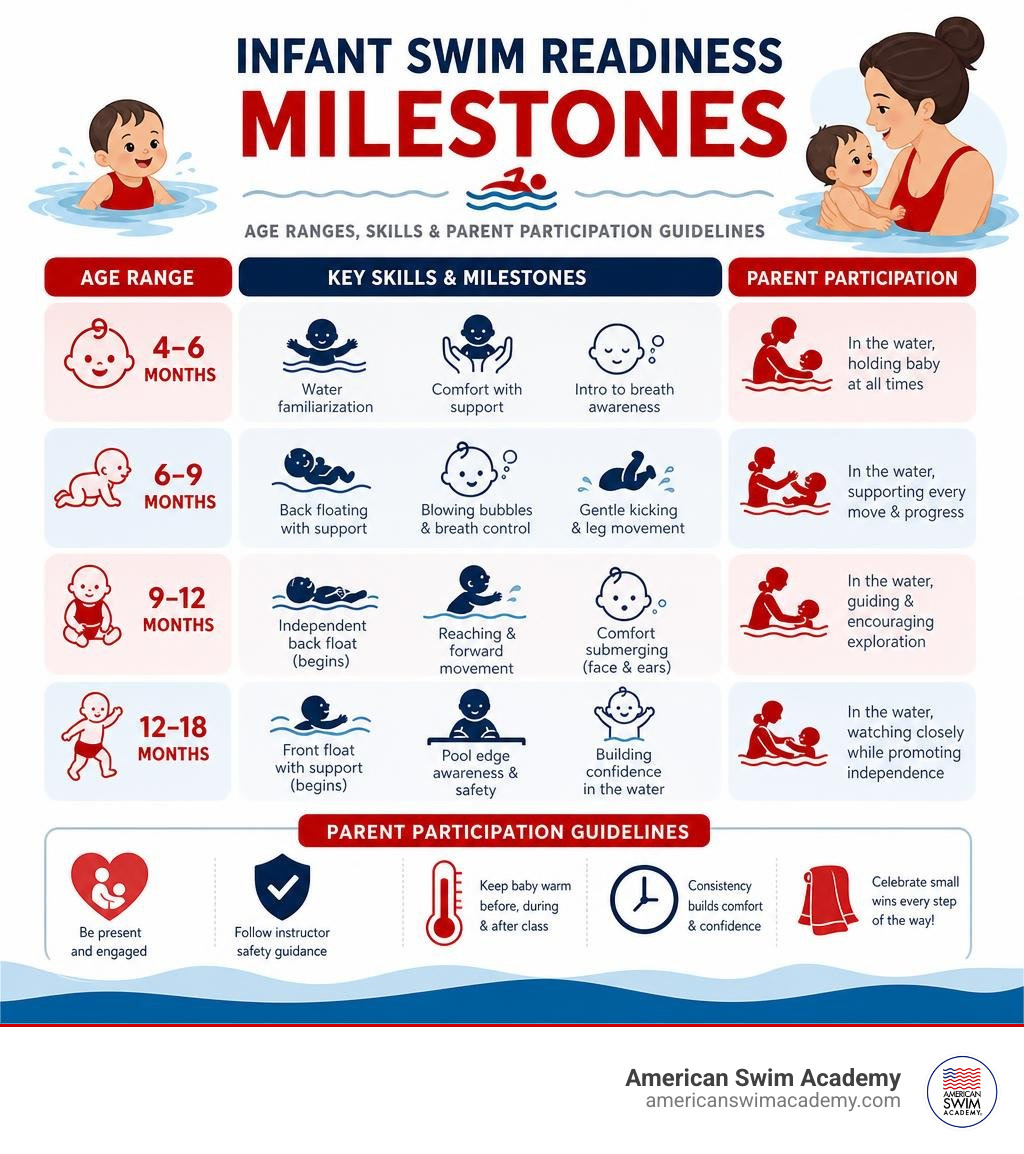
The Developmental and Safety Benefits of Early Water Exposure
When you introduce your baby to the water at an early age, you are not just preparing them for future summers; you are actively supporting their physical and mental growth. The unique properties of water provide an environment where your baby can explore movement in ways that are impossible on land.
Cognitive and Sensory Stimulation
Water offers a rich sensory landscape. The gentle pressure of the water against your baby’s skin, the sound of splashes, and the visual stimulation of a bright pool environment stimulate brain development. Studies have shown that infants participating in early water programs exhibit advanced cognitive growth, including better attention spans, enhanced problem-solving abilities, and improved spatial awareness.
Motor Skills and Physical Strength
Because water supports your baby’s body weight, it allows them to move their limbs freely without the limitations of gravity. This freedom of movement helps build core muscle strength, improves coordination, and refines bilateral movement (using both sides of the body simultaneously). Many parents notice that babies who swim regularly reach milestones like crawling and walking with greater ease and balance.
Building Lifelong Water Confidence
Fear of water is often a learned behavior that develops as children grow older. By introducing your baby to a pool during their first year, you tap into their natural comfort with liquid environments. This early exposure helps prevent water anxiety before it can start, creating a positive association with swimming that lasts a lifetime. For a deeper look at how these early experiences shape your child’s relationship with water, check out our guide on Understanding early water adaptation as well as More info on early swim benefits.
Understanding Class Formats: Parent-Child Dynamics and Skills Learned
If you are enrolling your baby in a program for the first time, you might wonder what actually happens during a 30-minute session. Infant swim classes are designed around parent-child dynamics, meaning you will be in the pool with your little one, guided by a professional instructor.

Why Parent Participation Matters
Your presence in the pool is the ultimate safety net for your infant. Babies look to their parents for cues on how to react to new environments. When your baby sees you smiling, relaxed, and enjoying the water, they immediately understand that the pool is a safe, happy place. This shared experience also strengthens the emotional bond between you and your child, creating a distraction-free space for focused play and connection.
Core Skills Taught in Infant Classes
Infant lessons do not focus on traditional swim strokes. Instead, they build foundational water adaptation skills through play, songs, and structured routines:
- Water Adaptation & Comfort: Getting used to the sensation of water on the face, ears, and head.
- Breath Control: Learning how to hold their breath on cue using gentle verbal and physical prompts.
- Supported Floating: Helping babies learn to relax on their backs, which is a fundamental self-rescue skill.
- Gentle Kicking and Paddling: Encouraging natural leg and arm movements to build coordination.
- Safe Entry and Exit: Teaching older infants how to safely hold onto the pool edge and climb out.
For a complete breakdown of what to expect during these sessions, explore our Guide to parent-child swim classes and discover more about What to expect in infant swim lessons.
What to Expect: Class Sizes, Safety Protocols, and Pool Environments
To make the most of your baby’s aquatic journey, the environment needs to be tailored specifically to their physical needs. Infants cannot regulate their body temperature the way adults do, and their developing immune systems require pristine water quality.
The Importance of a 92-Degree Pool
Cold water is the fastest way to end a swim lesson. If a baby is shivering, their muscles tense up, and they will quickly associate the pool with discomfort. That is why our facilities feature indoor pools heated to a warm, comfortable 92 degrees. This “shiver-free” environment keeps babies relaxed, happy, and ready to learn.
Small Student-to-Teacher Ratios
For parent-child classes, small class sizes are essential to ensure the instructor can provide personalized attention and feedback to every family. A low student-to-teacher ratio allows the instructor to monitor each baby’s comfort level, adjust techniques for individual needs, and maintain a calm, quiet, and organized pool area.
Rigorous Safety and Sanitation Standards
Our state-of-the-art indoor facilities utilize advanced water filtration and sanitation systems to keep the water crystal clear and completely safe for delicate infant skin and eyes. Additionally, all of our instructors are highly trained, caring professionals who hold certifications in CPR, First Aid, and specialized infant water safety instruction. Learn more about Our safety and sanitation standards to see how we prioritize your family’s health, and read our expert advice on How to choose the best infant swim class.
The Benefits of a Gentle, Play-Based Curriculum for Infants
Not all swim instruction methods are created equal. For infants and toddlers, a gentle, play-based approach is vastly superior to high-stress, survival-only methods. Using songs, colorful toys, and repetitive games keeps babies engaged while naturally building their muscle memory and water confidence.
| Feature | Gentle, Play-Based Adaptation | High-Stress Survival Methods |
|---|---|---|
| Primary Goal | Water confidence, safety, and lifelong love of swimming | Rapid self-rescue skills through repetition |
| Emotional Impact | Builds trust, joy, and strong parent-child bonding | Can cause temporary stress, crying, or water anxiety |
| Instruction Style | Play-based, using songs, toys, and positive reinforcement | Highly structured, physical manipulation of the baby |
| Parent Role | Active participant in the water with the baby | Observer from the sidelines |
| Water Association | Safe, fun, and comforting environment | High-pressure environment |
A gentle curriculum values your baby’s emotional well-being just as much as their physical progress. By utilizing positive reinforcement and gradual skill progression, we ensure that your baby looks forward to every single class. For creative ideas on how to make this journey even more enjoyable, check out our Tips for making baby swim lessons fun.
How to Find the Best Swimming Lessons for Infants Near Me
When searching for the perfect local swim program, look for established, year-round indoor facilities that employ certified coaches. While seasonal outdoor programs are common in the summer, they lack the climate control and consistency that infants need to truly thrive.
If you live in the East Bay or South Bay, finding a high-quality program that fits your family’s schedule is key. For year-round, indoor, climate-controlled comfort designed specifically for young families, choosing a dedicated swim school is your best bet. You can start exploring our class schedules and finding the right fit for your schedule by checking out Finding local swim programs.
Key Factors When Searching for Swimming Lessons for Infants Near Me
- Proximity and Convenience: Choose a location that is easy to get to, especially since you will need to coordinate classes around your baby’s nap and feeding schedules.
- Class Size and Environment: Ensure the facility is indoor, heated, and maintains small class ratios.
- Instructor Experience: Ask if the instructors are specifically certified in infant water education and if they use a gentle, nurturing approach.
To help you plan your baby’s introduction to the pool, read our comprehensive Guide to starting infant swim lessons.
Why Year-Round Indoor Facilities Matter for Swimming Lessons for Infants Near Me
Consistency is the secret ingredient to building lasting water safety skills. If a baby only swims for a few weeks during the summer, they are likely to forget what they learned by the following year. Year-round indoor lessons allow your baby to maintain a consistent routine, protect them from harsh weather or UV rays, and ensure they are always swimming in warm, comfortable water. Find your closest indoor pool by browsing our Finding year-round swim locations.
Preparing for the First Splash: Gear, Attire, and Feeding Guidelines
A little preparation goes a long way in making your baby’s first swim lesson a stress-free success. Here is what you need to know to get ready for the pool:
The Double-Diaper System
To keep the pool clean and sanitary for everyone, most professional swim schools require a double-diaper system for all non-potty-trained children. This system consists of:
- An approved disposable swim diaper (which does not swell up in the water like regular diapers).
- A snug-fitting, reusable neoprene swim diaper worn over the disposable diaper to ensure a secure, leak-proof seal.
Families can also review the CDC’s healthy swimming guidance for general tips on keeping pool time clean and comfortable.
What to Wear and Pack
- For Baby: A snug swimsuit, a warm hooded towel for after class, a changing mat, and a warm hat to wear home.
- For Parent: A comfortable swimsuit, a towel, and slip-on shoes for easy changing-room transitions.
- Eczema Care: If your baby has sensitive skin or eczema, apply a doctor-recommended barrier cream over the affected areas before entering the pool, and rinse off thoroughly after class.
Feeding Guidelines
We recommend feeding your baby a light meal or nursing them one hour before class starts. Swimming involves a lot of movement, and a full stomach can easily lead to spit-ups in the pool. Keeping the meal light and timed correctly keeps your baby comfortable and active. For more practical advice on preparing for your first day at the pool, check out our Tips for making baby swim lessons fun.
Frequently Asked Questions About Infant Swim Classes
At what age can my baby safely start swim lessons?
Most babies can safely begin water adaptation classes at four months of age. At this stage, they have developed head control and can participate in gentle, supported water movements. However, we always recommend getting pediatrician approval before your baby’s very first splash.
What should my baby wear to their swim lesson?
Your baby should wear an approved double-diaper system (a disposable swim diaper underneath a snug-fitting, reusable neoprene diaper) along with a comfortable swimsuit. Regular diapers should never be worn in the pool, as they absorb water and become heavy and ineffective.
Is it safe for infants to go underwater during lessons?
Yes, when done gently and under professional guidance. Infants are born with a natural laryngeal reflex (often called the gag reflex) that causes them to hold their breath automatically when water touches their face. Our instructors use clear verbal and physical cues to prepare your baby before any gentle, brief submersion, ensuring they stay comfortable and in control.
Conclusion
Introducing your baby to the water is a beautiful journey filled with splashes, giggles, and incredible developmental milestones. By choosing a program that prioritizes warmth, safety, and a gentle, play-based approach, you can set your child up for a lifetime of water confidence and safety.
At American Swim Academy, we are dedicated to providing the ultimate swim experience for Bay Area families. With our 92-degree heated indoor pools, small class sizes, and exceptionally trained instructors in Fremont, Newark, Livermore, Dublin, and Walnut Creek, we make sure every splash is a happy one.
Ready to start making memories in the pool? Get started with our water adaptation program today!