

Why Baby Swimming Classes in Livermore Are Worth Starting Early
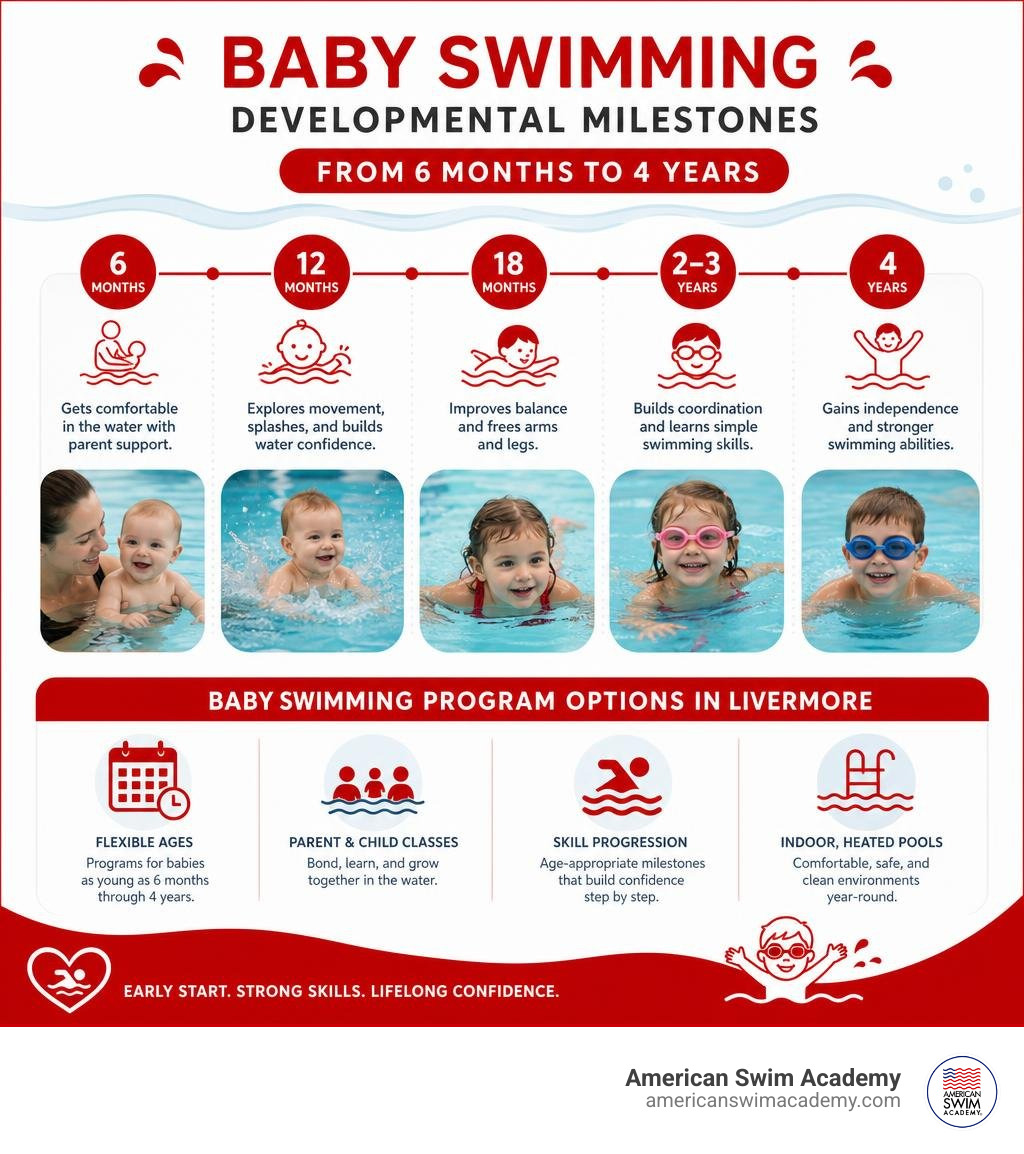
If you’re looking for baby swimming classes in Livermore, here are the top program options available at American Swim Academy:
| Program | Ages | Format | Features |
|---|---|---|---|
| AQUAbabies | 6–33 months | Small group, indoor | 92°F heated pool, parent participation |
| Preschool | 3–4 years | Small group, indoor | 92°F heated pool, independent learning |
There’s a lot going on in a Bay Area parent’s life. Between work, school pickups, and everything in between, finding a swim class that actually fits your schedule — and feels safe for your baby — is no small task.
But here’s what makes it worth the effort: formal swim lessons for babies and toddlers can reduce the risk of water-related incidents by up to 88% among children ages 1–4. And children who start aquatic exposure before age 5 build water confidence and physical coordination that lasts.
The good news is that American Swim Academy offers premier parent-child swim programs in Livermore, featuring a year-round indoor heated pool. Whether you have a 6-month-old just getting used to the water or a toddler ready to splash around more independently, there’s a program designed for your child.
This guide walks you through every major option so you can find the right fit fast.
Important baby swimming classes livermore terms:
Choosing the Best Baby Swimming Classes in Livermore
As parents, we want to give our children the best possible start in life, and that includes establishing a healthy, confident relationship with the water. When searching for the right baby swimming classes in Livermore, it helps to look beyond basic splash sessions. The ideal program should combine rigorous safety standards with a warm, nurturing environment that honors your child’s developmental pace.
Early aquatic play is not just about fun; it is a powerful driver of early childhood development. According to Scientific research on early childhood swim benefits, early water exposure supports physical milestones and builds foundational water competency. By introducing your infant to structured aquatic environments, you are giving them a head start on coordination, spatial awareness, and cognitive development.
Furthermore, we believe that learning should always be a joyful experience. As outlined in our guide on why Baby Swim Lessons Are Fun for Baby and Parents, these early classes provide a beautiful space to unplug from daily distractions and focus entirely on your little one. The shared giggles, gentle splashes, and proud moments of progress strengthen your connection while giving your baby a sense of security in a brand-new environment.
Key Benefits of Baby Swimming Classes in Livermore
The physical and cognitive benefits of early swim lessons are far-reaching. When babies kick, reach, and balance in the water, they engage in bilateral cross-patterning movements. This refers to using both sides of the body simultaneously to perform a task, which stimulates both hemispheres of the brain. This bilateral movement builds crucial neural pathways that support future learning, reading readiness, and spatial reasoning.
In addition to brain development, early lessons offer several immediate physical and emotional benefits:
- Enhanced Physical Coordination: The natural resistance of water allows babies to build muscle tone, core strength, and balance far more easily than they can on dry land.
- Accelerated Water Confidence: Introducing babies to the pool before typical toddler fears set in ensures they view the water as a friendly, welcoming environment rather than a source of anxiety.
- Strengthened Parent-Child Bonding: In a parent-participation class, your baby relies on your touch and reassuring voice. This skin-to-skin contact and physical closeness build deep emotional trust.
- Better Sleep and Appetite: A half-hour of active water play is a gentle, full-body workout for an infant, often leading to better naptimes and hearty appetites afterward.
Understanding When and How to Start Swimming Lessons for Infants helps you time this transition perfectly, ensuring your baby is ready to absorb all these fantastic benefits.
What to Expect in Baby Swimming Classes in Livermore
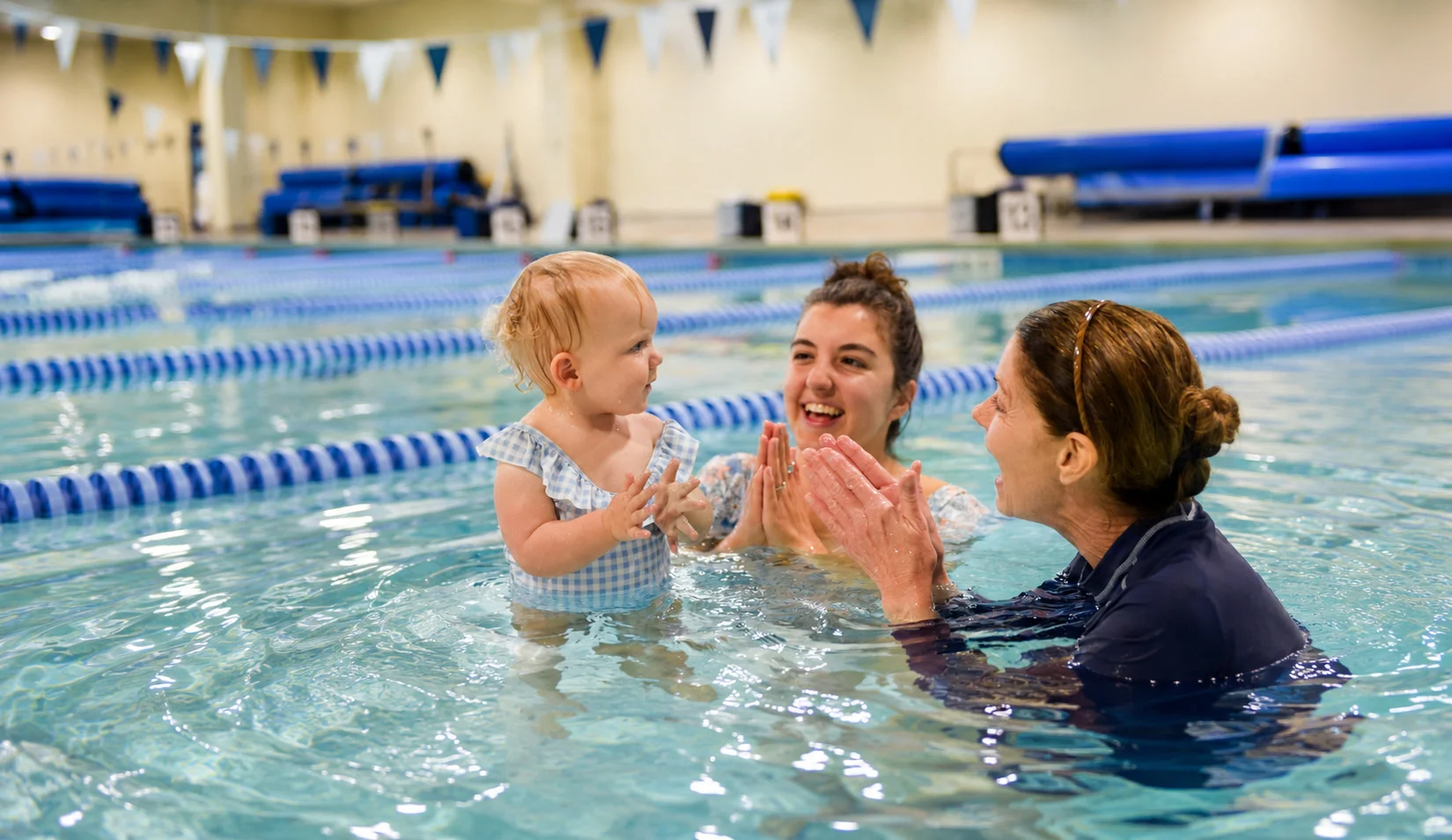
If you are stepping into an infant swim class for the first time, you might wonder what a typical 30-minute session looks like. Infant lessons are highly structured but delivered through gentle play, songs, and repetitive routines. We focus on natural progression rather than forcing skills.
During a standard class, you and your baby will work on:
- Water Acclimation: Gentle pouring of water over your baby’s shoulders and head to get them comfortable with wet faces.
- Breath Control: Teaching babies to hold their breath on cue using simple word associations and gentle submersions when they are ready.
- Back Floating: Helping babies relax on their backs with full head and body support from the parent, which is a fundamental water safety skill.
- Buoyancy and Balance: Exploring how their bodies move in the water through supported front glides and kicking games.
To demystify the entire process, we recommend reading Water Babies 101: Everything You Need to Know About Infant Swim Lessons, which outlines what to wear, how to prepare, and how we celebrate every small milestone in the pool.
What to Look for in an Infant Swim Program
Not all swim schools are created equal, especially when it comes to the unique needs of infants and toddlers. Because babies cannot regulate their body temperature as efficiently as older kids, and because their immune systems are still developing, the facility’s environment is just as important as the curriculum.
When evaluating programs in the Livermore, Dublin, and Fremont areas, keep these key factors in mind:
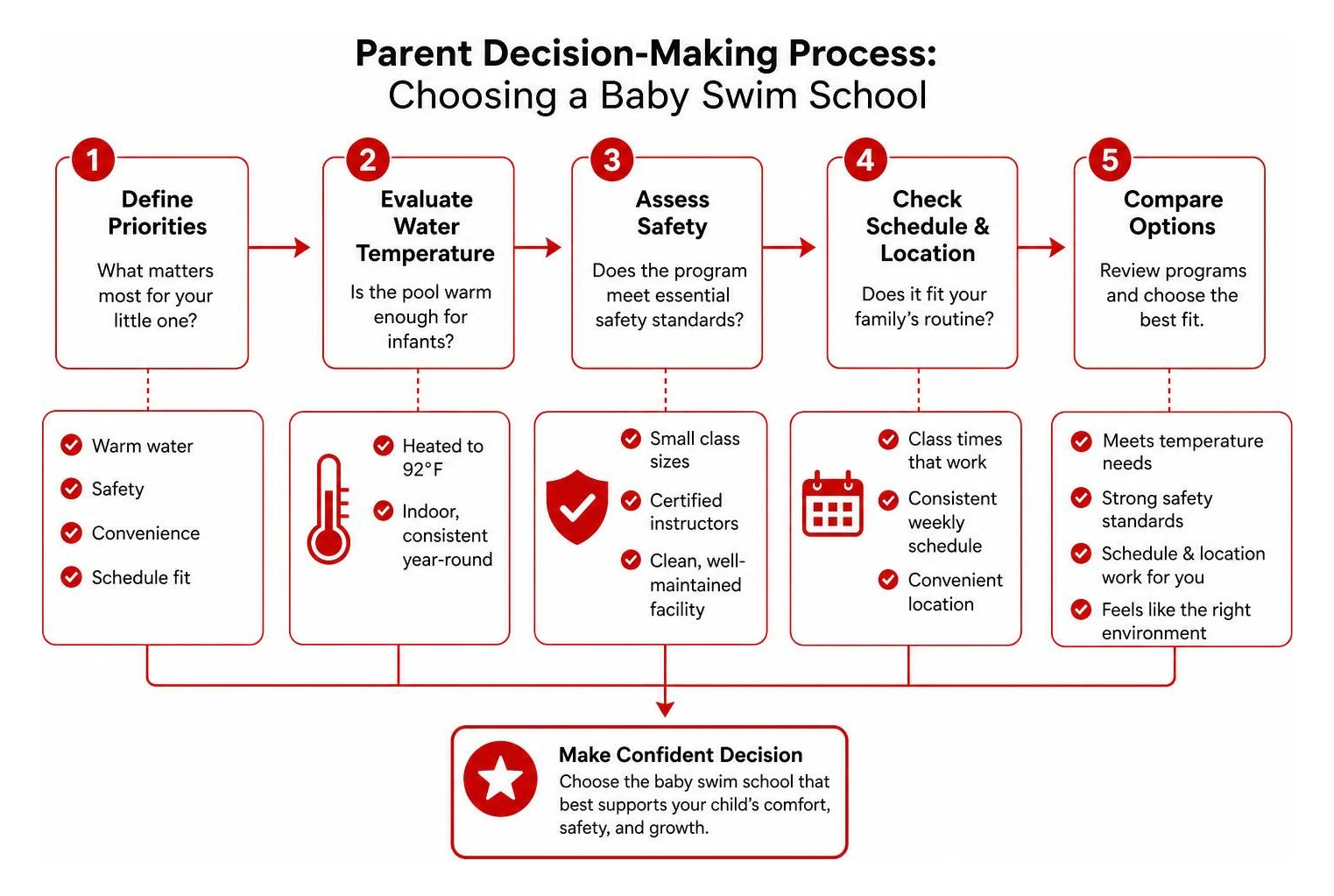
- Water Temperature: This is a non-negotiable for infant classes. A cold baby is a miserable baby who will quickly associate the pool with discomfort. Look for indoor facilities that heat their pools to a warm 92°F. This temperature keeps babies relaxed, comfortable, and ready to learn.
- Class Size and Ratios: To ensure safety and personalized attention, group classes for infants should have small student-to-teacher ratios. This allows the instructor to watch every pair closely and offer tailored feedback.
- Instructor Certifications: Ensure that instructors are fully vetted, background-checked, and hold current CPR/First Aid certifications. They should also have specialized training in infant and toddler developmental psychology and gentle teaching methods.
- Water Quality and Sanitation: Look for advanced filtration systems that keep the water clean and gentle on sensitive baby skin and eyes, in compliance with the CDC guidelines on healthy swimming.
For a deeper look into selecting the right program, check out our comprehensive guide on How to Choose the Best Swimming Classes for Infants.
To help you compare your options in the East Bay, we have put together a quick comparison of year-round indoor facilities versus seasonal outdoor options:
| Feature | Year-Round Indoor Pools (e.g., American Swim Academy) | Seasonal Outdoor Pools |
|---|---|---|
| Water Temperature | Consistently heated to 92°F year-round | Subject to weather; often cooler |
| Weather Protection | Fully protected from wind, rain, and UV rays | Exposed to sun, wind, and unexpected rain |
| Consistency | Weekly lessons continue uninterrupted | Limited to short summer sessions |
| Comfort | Warm air and water prevent shivering | Shivering can lead to fussy babies |
To help you navigate your choices, we have mapped out the typical decision-making process for parents looking to enroll:
Age Groups and Skill Levels for Infant Swim Lessons
Children grow and change rapidly in their first few years, which is why a one-size-fits-all approach to swim lessons simply does not work. Programs should be carefully structured around your child’s developmental stage.
Whether you are looking for a gentle introduction to water play or want to help your toddler transition to independent swimming, understanding these stages ensures your child is placed in the right environment. For a complete overview of how these parent-child classes operate, explore Water Babies: Your Guide to Finding Mom and Tot Swim Classes.
Water Adaptation for Infants (Ages 6 to 33 Months)
Our infant curriculum is centered around our signature AQUAbabies program. Designed for babies aged 6 to 33 months, these classes require a parent or trusted caregiver to be in the water with the child.
In this level, we focus entirely on water adaptation and gentle acclimation. Through joyful songs, sensory play, and guided movements, babies learn to love the feeling of water on their faces and bodies. We practice basic safety skills, such as holding onto the pool wall, kicking, and relaxing into a supported back float. This program builds a solid foundation of trust and comfort that makes future independent swimming much easier to master. Learn more about our specialized Water Adaptation Programs to see how we make the first splash a happy one.
Preschool and Beginner Swim Readiness (Ages 3 to 4 Years)
As children reach age 3, they begin to develop greater physical independence and the ability to follow directions from an instructor without a parent by their side. This is an exciting transition phase where play-based learning evolves into structured skill-building.
In our preschool classes, we help children build on their water confidence by introducing independent front and back glides, breath control, and basic paddle strokes. We keep class sizes exceptionally small so that our caring instructors can provide individual attention, helping each child conquer any separation anxiety or fear of the water at their own pace. Explore our Pre School Programs to find out how we guide toddlers toward independent swimming.
Frequently Asked Questions About Baby Swim Lessons
What should my baby wear to swim class?
For health and safety reasons, all children who are not fully potty trained must wear a snug-fitting swim diaper in the pool. Standard diapers will absorb pool water, swell up, and become heavy and ineffective.
We recommend a double-diaper system: a disposable swim diaper worn underneath a snug-fitting, reusable fabric swim diaper. This combination provides the best protection against leaks, keeping the pool clean and safe for all families. Warm swimwear, such as a baby rash guard, can also help keep your little one comfortable throughout the lesson.
Are there specialized classes for children with special needs?
Yes! We believe that every child deserves the opportunity to learn water safety and experience the joy of swimming. We welcome children of all abilities, including those on the autism spectrum or with sensory processing sensitivities.
Our instructors are trained to provide a patient, calm, and highly encouraging environment. By modifying our teaching techniques to match each child’s unique learning style and sensory needs, we ensure that swim lessons are a positive, stress-free experience for everyone.
How do I prepare my baby for their first swim lesson?
Preparation starts at home! You can make the transition to the pool seamless by practicing in the bathtub. Gently pour water over your baby’s head and shoulders while smiling and using positive reinforcement so they associate wet faces with fun.
On the day of the lesson, try to feed your baby about 30 minutes before class starts so they aren’t hungry or overly full. Pack plenty of towels, a dry change of clothes, and a snug-fitting swim diaper. Arrive at the facility 10 to 15 minutes early so you can change at a relaxed pace, helping your baby stay calm and happy before their big splash. If you are ready to take the first step, check out our simple Get Started Guide to begin your journey.
Conclusion
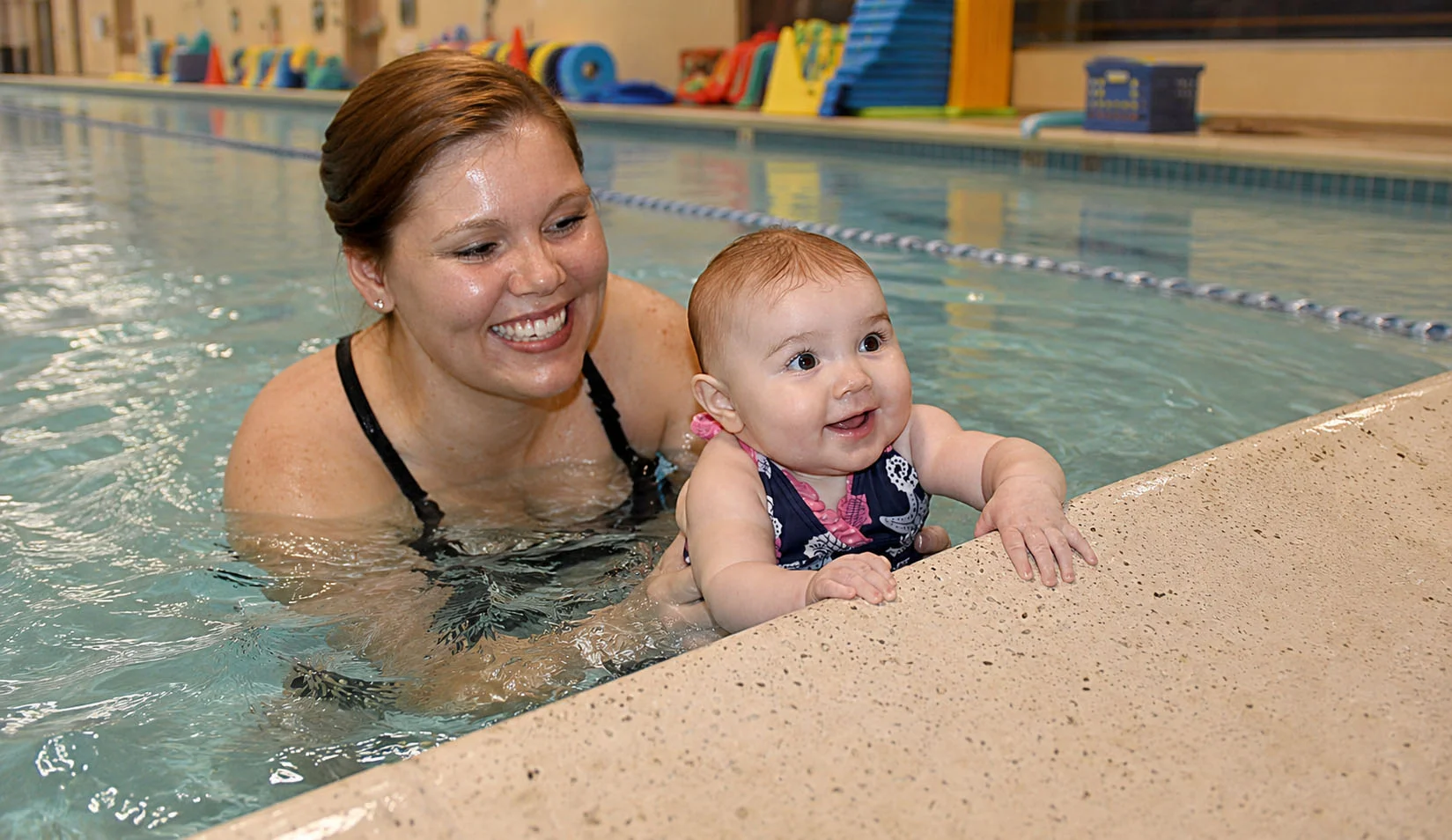
Enrolling your child in baby swimming classes in Livermore is one of the most rewarding decisions you can make for their safety, physical development, and lifelong love of the water. By starting early in a warm, supportive environment, you are giving your baby a foundation of water confidence that will benefit them for years to come.
At American Swim Academy, we have spent decades perfecting our gentle, play-based approach to early swim instruction. Our year-round, indoor facilities feature pools heated to a warm 92°F, ensuring your baby stays cozy, relaxed, and ready to learn in any season. With convenient locations throughout the East Bay — including Fremont, Newark, Dublin, Walnut Creek, and right here in Livermore — we make it easy to fit consistent, high-quality swim lessons into your busy family schedule.
Are you ready to share these special moments in the water with your little one? Start Your Water Adaptation Journey Today and watch your baby’s confidence soar, one happy splash at a time!