
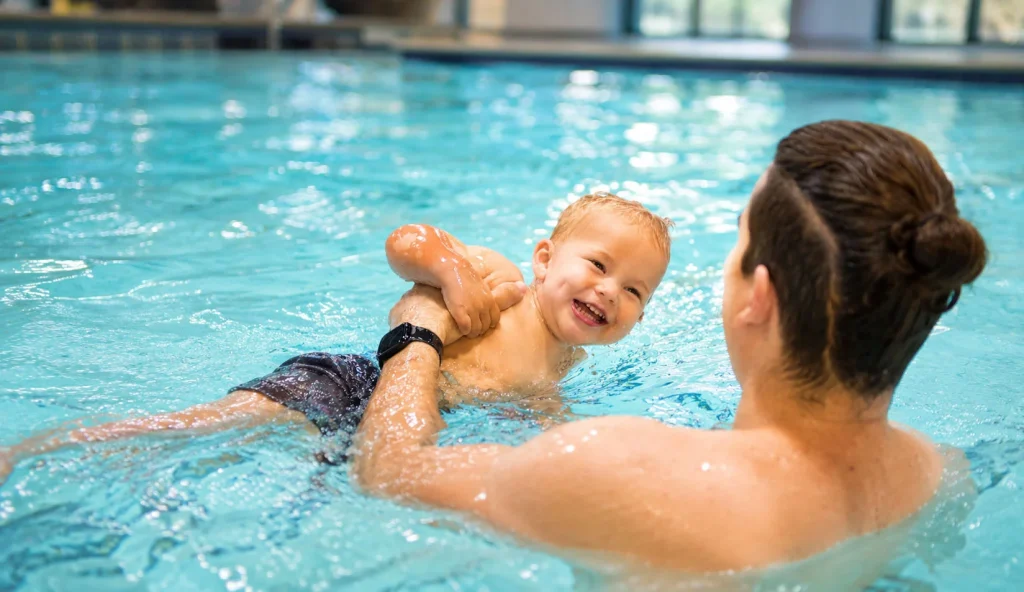
Find the Right Swim Lessons for Your Family
The best swim lessons for families match each child’s age and comfort level, while giving parents a clear role in early learning. Start infants and toddlers in parent-child classes from about 6 months old, then move into small-group or private instruction as they gain confidence and independence.
When comparing programs, look for:
- Warm, indoor pools that support year-round learning.
- Small classes and trained instructors who can adapt to each child’s needs, including autism or other special needs.
- Flexible weekly scheduling that works for busy family routines.
- A curriculum that teaches water comfort, floating, breath control, safe entry and exit, and basic swimming skills.
Family lessons are not only about strokes. They help children build water confidence while parents learn how to support safe habits in and around the pool. At American Swim Academy, we help Bay Area families take that next step together.
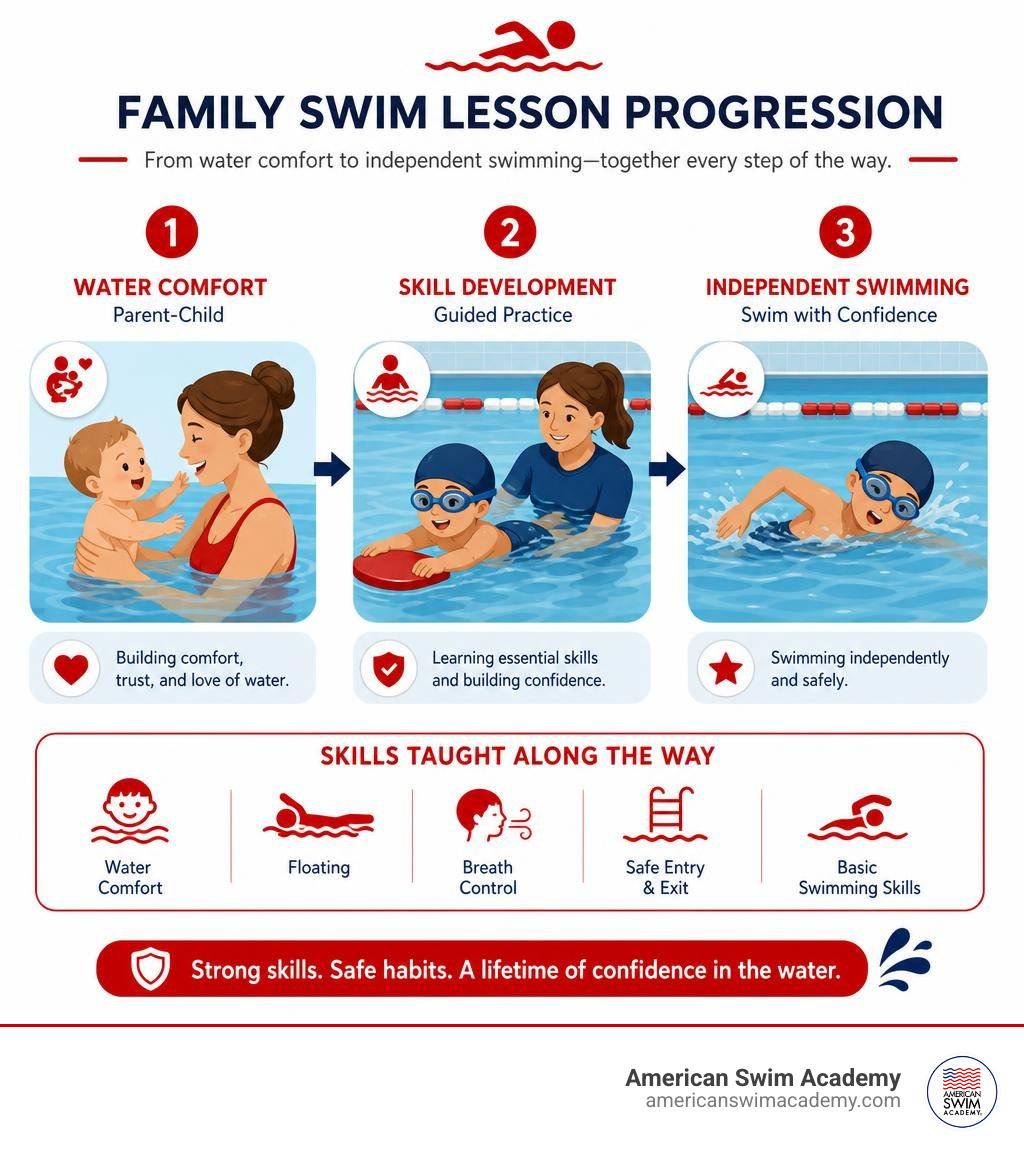
Quick look at swim lessons for families:
Why Swim Lessons for Families Are an Essential Investment
Learning to swim is a fundamental life skill that benefits every member of your household. When families commit to regular aquatic education, they are investing in peace of mind, physical health, and memorable bonding experiences. Discovering how swimming lessons keep your child safe gives parents the reassurance they need whenever their family is near the water.
Beyond basic technique, structured swimming instruction builds true water competence. Water competence combines three essential pillars: understanding water safety rules, developing functional swimming and self-rescue skills, and knowing how to respond calmly in an emergency. The American Academy of Pediatrics also recommends layers of water safety, including attentive supervision, barriers, and age-appropriate swim instruction. In addition, why weekly swim lessons are the ultimate bonding experience for parents and kids becomes obvious the moment you step into the pool together. Sharing smiles, splashes, and shared milestones strengthens emotional connections while building lifelong physical fitness habits.
Life-Saving Water Safety and Skill Development
Water safety is the cornerstone of any quality swim program. Enrolling your children early establishes healthy boundaries around aquatic environments, helping young swimmers understand that the pool is a place to enjoy with respect and supervision.
Understanding water safety: the importance of swimming lessons to kids helps families recognize that formal instruction provides layers of protection. In our classes, children learn essential survival and safety habits, including:
- Active Supervision Habits: Parents learn the importance of dedicated, undistracted observation whenever children are near water.
- Breath Control and Submersion: Mastering rhythmic breathing and bubble blowing prevents panic when water splashes into the face.
- Independent Back Floating: Learning to roll onto the back to rest and breathe is the single most important survival skill for swimmers of all ages.
- Safe Water Entry and Exit: Children practice waiting for permission before entering the pool and learn how to hold onto the pool wall to climb out safely using the “elbow, elbow, tummy, knee” technique.
- Hazard Recognition: Teaching kids to identify deep water, currents, and pool boundaries fosters smart decision-making.
Developmental and Bonding Benefits for Infants and Toddlers
Starting swimming education during the earliest stages of childhood accelerates both physical and cognitive growth. Exploring the 4 benefits of teaching your kid how to swim at an early age shows that gentle aquatic exploration enhances fine and gross motor skills, improves balance, and promotes muscle coordination through buoyant, low-impact movement.
Water provides a unique sensory-rich environment. The gentle pressure of warm water against an infant’s skin stimulates neural pathways, building body awareness and spatial confidence. When parents participate in the water alongside their children, it creates an environment of secure attachment. Holding your baby close while guiding them through gentle glides and back floats establishes deep trust, helping young learners view the water as a joyful, safe place to explore.
Programs and Skill Progressions Across Every Age Group
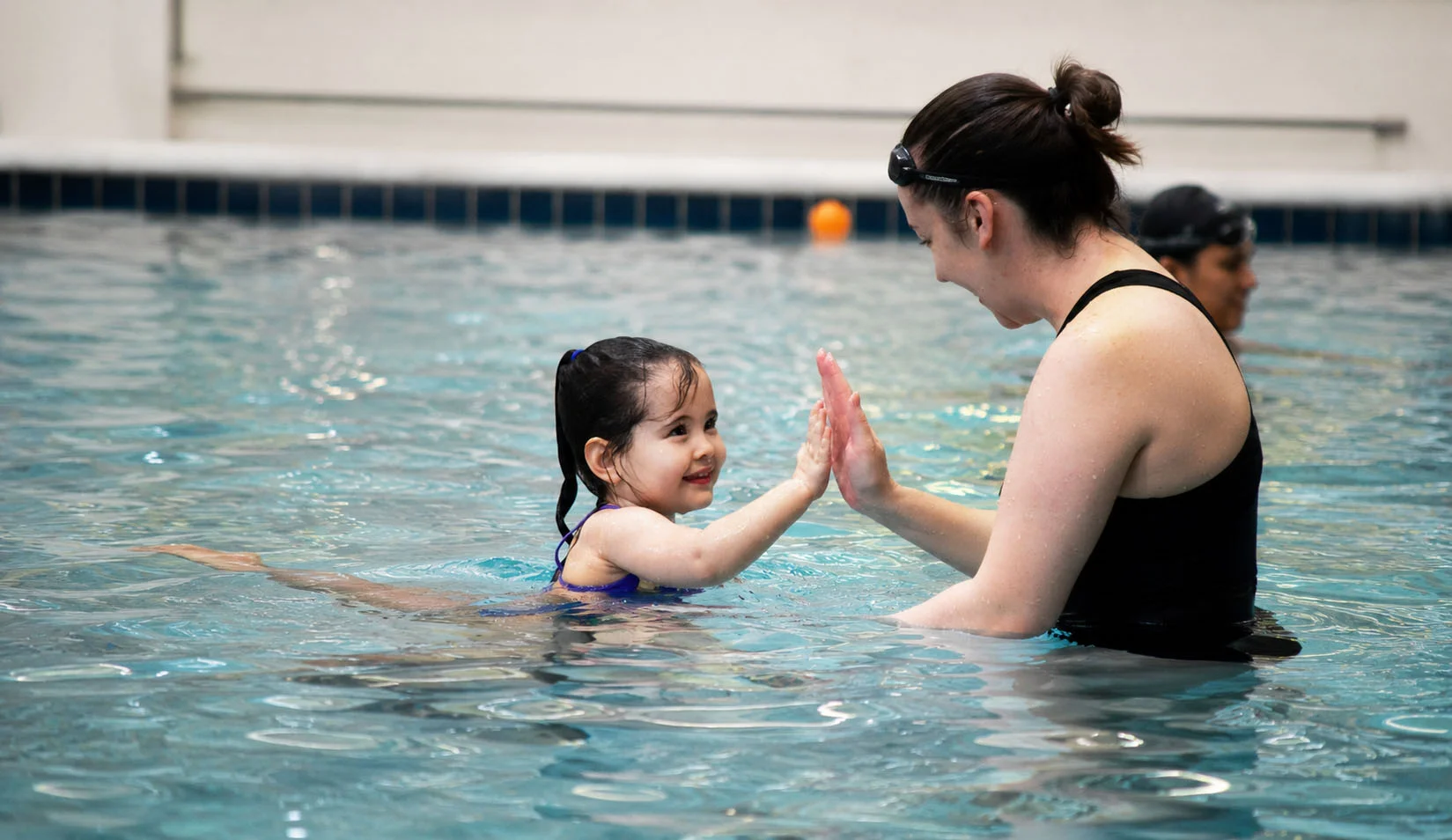
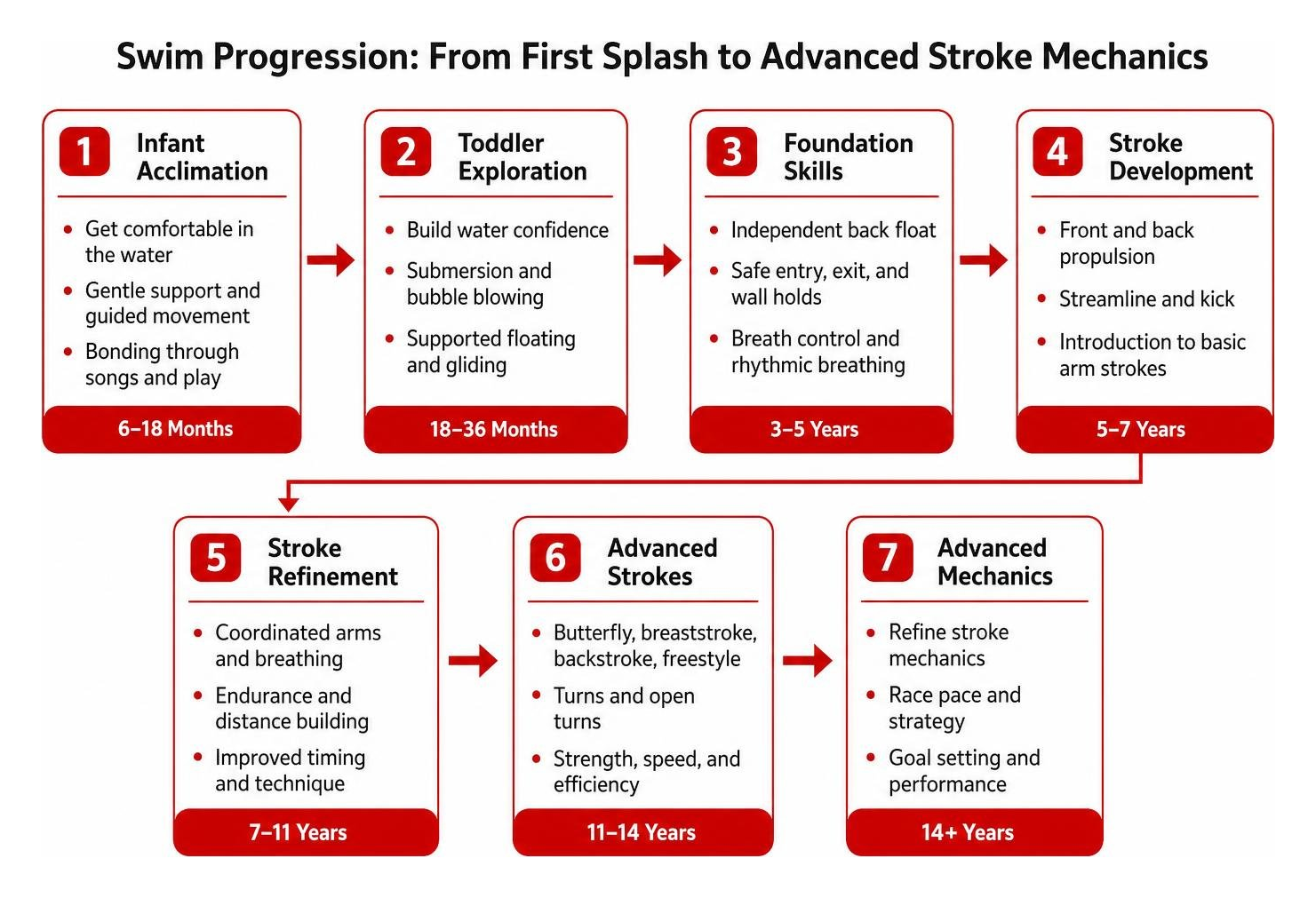
A successful swim journey relies on an age-appropriate curriculum that meets learners where they are. From curious infants taking their first splash to older children refining stroke mechanics, following a clear developmental pathway guarantees lasting progress. Understanding the full journey from toddlers to adults: finding the perfect swim classes ensures every family member is placed in the right learning environment.
Parent-Child Swim Lessons for Families with Infants and Toddlers
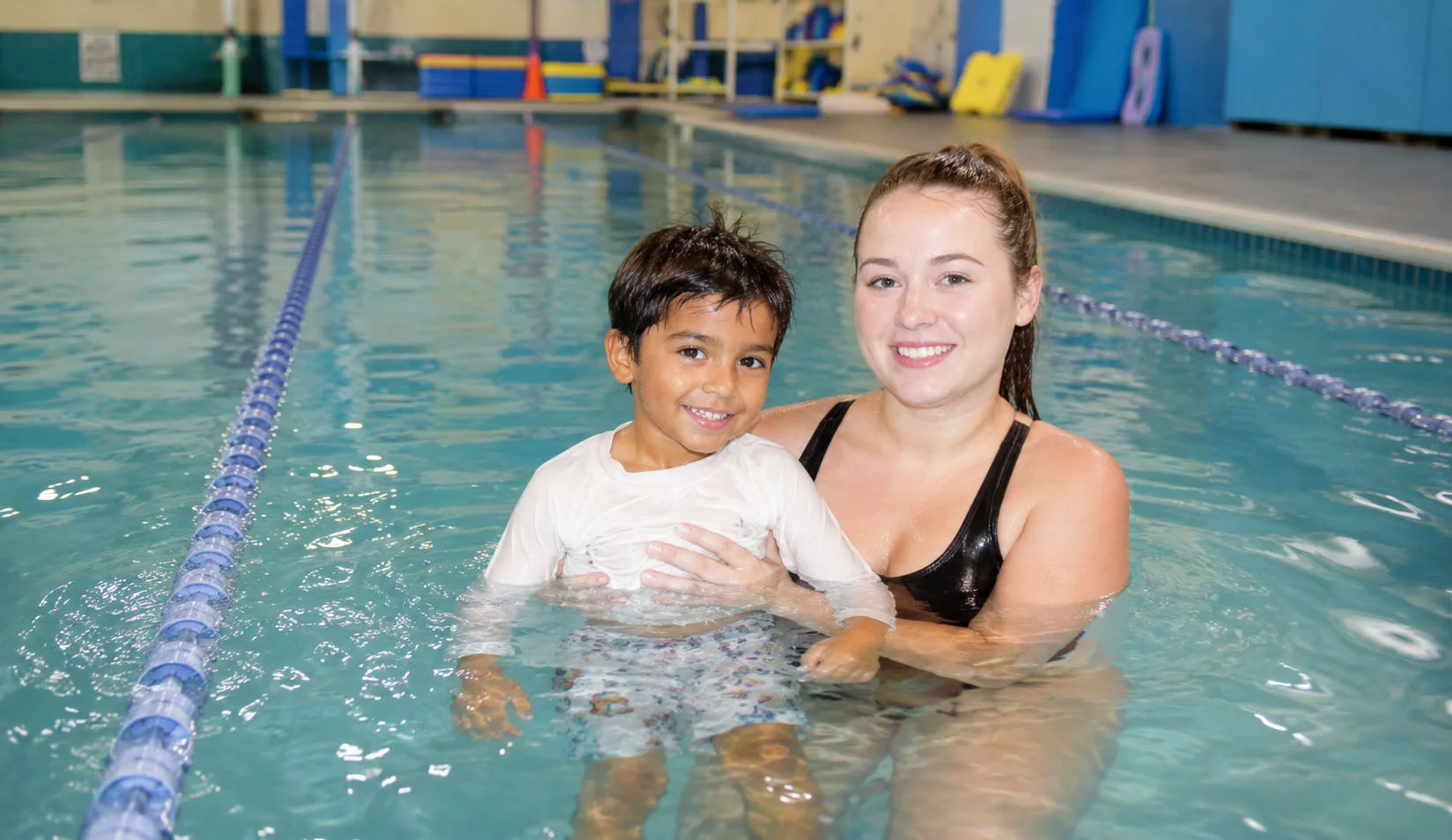
For our littlest swimmers ages 6 months to 36 months, parent-accompanied classes offer a gentle, playful introduction to the pool. Through our programs: water adaptation, parents get directly into the water to provide warmth and security while an experienced instructor leads the group through engaging games, songs, and exercises.
Key benchmarks introduced in these infant and toddler classes include:
- Gentle Water Acclimation: Pouring gentle cups of water over shoulders and heads to build comfort with face wetness.
- Breath Control: Learning to blow bubbles on the water surface and advancing toward comfortable 3-second face submersions.
- Supported Floating and Kicking: Practicing supported front and back floats while gently fluttering feet.
- Warm Water Comfort: Swimming in 92-degree heated indoor pools to ensure infants remain warm, relaxed, and happy throughout every minute of class.
Independent Preschool and Beginner Programs
As toddlers grow into confident preschoolers, they transition into independent small-group classes without parents in the water. In our programs: pre-school, instructors focus on building water independence, teaching kids to jump in, turn around, grab the wall, and recover their balance.
Once basic independence is mastered, children progress into our programs: beginners. Here, school-aged children develop structured freestyle, backstroke, and breathing timing. Learning how to choose the right youth swim lessons for your school-aged child helps parents select classes that balance safety benchmarks with technical stroke development. Parents quickly find that swimming lessons for kids is a game changer, transforming initial hesitation into athletic coordination, stamina, and self-esteem.
Choosing Between Group and Private Instruction for Your Family
Every child learns at their own pace. Deciding whether small group classes or private one-on-one lessons are best for your family depends on your child’s personality, learning style, and specific goals.
| Feature | Small Group Lessons | Private Instruction |
|---|---|---|
| Class Size | Small student-to-teacher ratios (typically 3:1 to 4:1) | 1:1 dedicated instructor focus |
| Social Environment | High; kids learn by observing peers and cheering each other on | Individualized; eliminates social distractions |
| Pacing | Follows structured curriculum milestones with group progression | 100% customized to the child’s specific learning speed |
| Best For | Social learners, siblings of similar skill, and general water safety | Fearful beginners, advanced technique refinement, or neurodivergent swimmers |
| Scheduling Flexibility | Set weekly class time slots | High adaptability to complex family schedules |
Small group lessons provide fantastic social modeling—children often feel motivated when they see a classmate blow bubbles or float on their back. On the other hand, private lessons offer targeted attention for children who need extra help overcoming water anxiety or swimmers looking to master specific competitive skills rapidly.
What to Expect: Schedules, Costs, Policies, and Preparation
Enrolling in swim lessons should be seamless and straightforward. Most quality swim schools offer classes year-round in structured weekly sessions. Standard classes typically run for 30 minutes, which is the ideal duration to maintain peak focus, energy, and physical stamina for young children.
Group lesson costs generally range from $20 to $40 per class depending on location, membership status, and registration packages. Many swim schools offer discounted rates for enrolled members or families registering multiple siblings.
Before your first lesson, it helps to familiarize yourself with facility policies:
- Health and Safety Standards: We maintain rigorous pool sanitation and advanced air filtration systems; you can learn more about our facility standards through about us: health and safety.
- General Policies & Billing: Reviewing about us: general information ensures you understand monthly tuition structures, priority enrollment windows, and facility amenities.
How to Prepare and What to Pack for Swim Lessons for Families
A smooth lesson begins with a well-packed swim bag and a relaxed arrival routine.
Here is your essential checklist for family swim day:
- Appropriate Swimwear: Comfortable, snug-fitting swimsuits designed for active movement.
- Reusable Swim Diapers: For children under age three or those not 100% potty trained, most indoor aquatic facilities require a double-diaper policy (a disposable swim diaper under an approved snug-fitting reusable swim diaper cover) to protect water cleanliness.
- Warm Towels: Pack plush, absorbent towels for an immediate cozy wrap when leaving the 92° water.
- Swim Goggles: Well-fitted goggles help children feel comfortable opening their eyes beneath the surface (avoid snorkel masks that cover the nose).
- Dry Clothes and Post-Swim Snack: Swimming works up an appetite; a small healthy snack after dressing makes the trip home smooth and enjoyable.
- Arrival Protocol: Aim to arrive 10 to 15 minutes before your scheduled start time. This gives your child time to use the restroom, change comfortably, and watch the pool for a few minutes to acclimate to the environment.
Frequently Asked Questions About Family Swim Classes
At what age can children start swim classes?
Children can begin structured parent-and-child swim lessons as early as 6 months of age. At this stage, lessons do not teach technical swimming strokes; instead, they focus on gentle water discovery, breath control, buoyancy comfort, and basic safety reflexes while held securely by a parent in warm, 92-degree water.
How do I find quality swim lessons in my area?
To find top-tier swim instruction, look for dedicated indoor facilities that offer heated water, small class ratios, and experienced instructors certified in CPR and water safety. If you live in Northern California, you can explore our locations and facility amenities across the East Bay through about us: locations, including our centers in Fremont, Newark, Dublin, Livermore, and Walnut Creek.
What is the typical refund and cancellation policy?
Most swim schools require advance notice for schedule changes or class cancellations. Under standard policies, submitting a written cancellation request at least 24 hours prior to a session allows for lesson credits or make-up scheduling options. To see how our lesson reservations, attendance credits, and make-up policies work, visit our programs: FAQ.
Conclusion
Swimming is more than just an extracurricular activity—it is an essential life skill that provides safety, health, and joy for your entire household. Starting early in a warm, welcoming indoor pool allows children to build natural confidence while parents learn valuable safety habits that protect their loved ones around any body of water.
At American Swim Academy, our warm 92° pools, small student-to-teacher ratios, and caring instructors make learning to swim a fun, rewarding experience for everyone. When you are ready to start your family’s aquatic adventure, explore our programs to get started today!