

Why Swim Lessons for All Ages Are Essential for Water Safety and Fitness
Learning to swim is one of the few life skills that offers equal parts recreational fun, physical fitness, and essential water safety. Regardless of whether someone steps onto the pool deck as a 6-month-old infant or a 60-year-old adult, gaining aquatic confidence transforms how they interact with water throughout their entire lifetime.
Swimming provides an outstanding, low-impact exercise that engages almost every muscle group in the body while fully supporting joints. Beyond physical health, mastering the water unlocks a profound sense of personal achievement and security. For young children, structured water instruction builds foundational gross motor skills, cognitive development, and physical independence. For adults, spending time in the water provides a therapeutic space for cardiovascular wellness, low-stress physical conditioning, and mental relief from everyday pressures. Learning fundamental water safety skills is one of the most effective ways to stay safe around water at any age, and practicing safe pool habits is essential for families of all backgrounds. According to the Centers for Disease Control and Prevention (CDC), formal swim instruction serves as a key layer of protection for people of all ages. Explore Water Safety: The Importance of Swimming Lessons to Kids to learn how early instruction lays a foundation for lifelong safety, and see why Beginner Swimming Lessons for Adults: Why Sign Up? can be a transformative step toward personal growth and health.
Life-Saving Water Safety Skills Taught at Every Stage
Comprehensive water safety goes far beyond basic stroke mechanics. High-quality swim programs teach layered survival habits that allow swimmers of all experience levels to remain calm, balanced, and in full control under unexpected conditions. Key safety milestones taught across progressive skill levels include:
- Rhythmic Breath Control: Learning how to blow bubbles continuously and exchange air comfortably prevents panic when splashing occurs or when faces submerge.
- Independent Back Floating: Resting on one’s back allows a tired swimmer to breathe easily, keep their airway clear, and conserve physical energy efficiently.
- Treading Water: Combining steady arm sculling and effective leg kicks to keep the head safely above water in deeper sections of the pool.
- Self-Rescue and Safe Entry: Practicing controlled pool entries, wall recovery, turn-and-grab safety maneuvers, and rolling seamlessly from a front position to a back float.
Exploring Swim Lesson Options Across Different Age Groups

Every swimmer begins their aquatic journey at a different age and comfort level. Grouping classes by developmental stage ensures that lesson pacing, teaching methods, and safety goals align perfectly with physical capabilities and emotional readiness. Check out our comprehensive guide on From Toddlers to Adults: Finding the Perfect Swim Classes for an in-depth look at selecting the right environment for your family.
Parent-Child and Infant Swim Lessons for All Ages
Designed for infants and toddlers aged 6 to 36 months, parent-child sessions focus on sensory exploration, bond-building, and gentle water adaptation. With a parent actively participating in the water alongside their child, babies learn to feel completely safe and secure while experiencing new physical sensations and gentle water resistance.
Rather than teaching independent stroke movement right away, these early classes introduce guided water entries, interactive splashing games, back-supported floats, and gradual submersions when appropriate. Getting infants comfortable with water on their faces early eliminates water anxiety before it ever forms. Learn more about our gentle, supportive approach on Our Programs – Water Adaptation.
Preschool and Youth Swim Lessons for All Ages
As children reach the 3 to 5 age bracket, they transition to independent learning in small, supportive group settings. Preschool aquatics focus on building foundational independence: popping up to take breaths, kicking with straight legs, gliding off the wall, and floating unassisted on both front and back.
For school-aged children (ages 6 to 12), instruction moves into technical stroke mechanics, combining synchronized arm actions with powerful kicks, perfecting side breathing (rotary breathing), and expanding swimming endurance across longer distances. Explore Our Programs – Pre-School and read our helpful insights on How to Choose the Right Youth Swim Lessons for Your School-Aged Child.
Adult and Adaptive Swimming Programs
It is never too late to learn how to swim or polish your aquatic technique. Adult swim lessons cater both to complete beginners who wish to conquer long-held water apprehension and to intermediate swimmers aiming to improve stroke efficiency for lap fitness. Read our advice on How to Choose the Perfect Adult Swim Program Without Sinking to see how tailored coaching helps grown-up learners thrive, or review Our Programs – Adult.
Adaptive swim programs cater to individuals with physical, cognitive, or sensory differences. Featuring warm water pools, calm sensory pacing, and small class ratios or individual assistance, adaptive aquatics ensure that everyone has equal, safe access to the life-changing benefits of swimming.
Progressive Skill Levels and Water Survival Curriculum
To build strong, resilient swimmers, structured lessons progress systematically through clear skill tiers. Swimmers advance to new challenges only after mastering essential prerequisites, ensuring safety, balance, and confidence at every step of their journey.
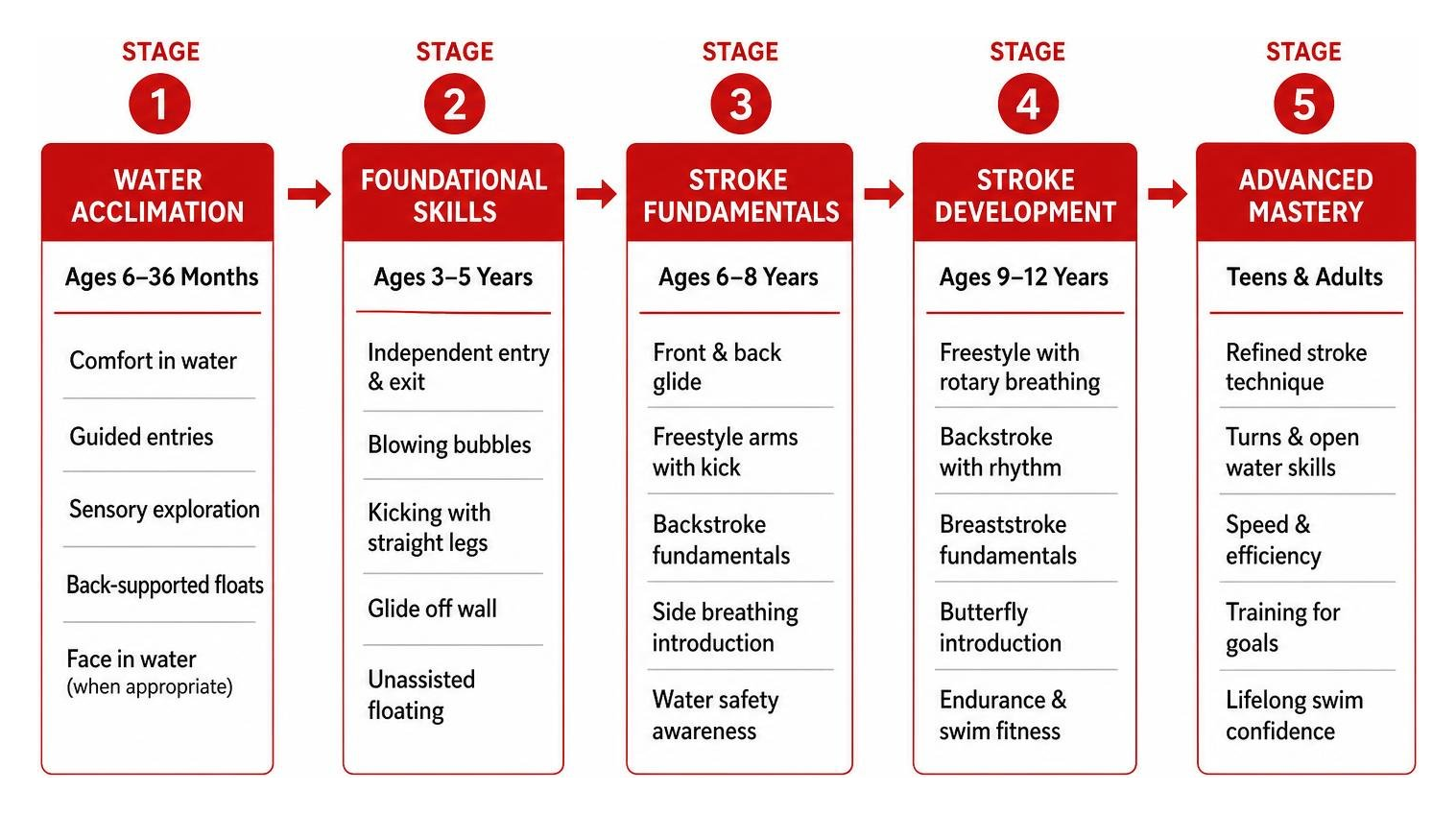
Stage 1 to 3: Water Acclimation and Fundamental Survival
The first half of the swim journey focuses entirely on water comfort, positive safety habits, and basic body positioning. Beginners learn how the water supports their body weight and how gentle movements allow them to navigate the pool comfortably.
Swimmers practice blowing continuous bubbles for extended periods, placing their faces fully in the water without panic, floating independently on their fronts and backs, and kicking across short distances using kickboards or glides. Establishing these core survival benchmarks gives students the stability required for formal stroke learning. To explore beginner benchmarks, visit Our Programs – Beginners.
Stage 4 to 6: Stroke Technique and Endurance
Once basic survival skills and balance become second nature, instruction transitions to technical stroke mastery across primary disciplines: front crawl (freestyle), back crawl (backstroke), breaststroke, butterfly, sidestroke, and elementary backstroke.
Swimmers refine rotary breathing rhythms, practice side-kick alignment, perform efficient open turns at the wall, and build stamina across multiple pool lengths. Step-by-step coaching ensures proper joint alignment and fluid mechanics to foster graceful, efficient movement in the water. Review our advanced tracks on Our Programs – Intermediate/Advanced and Our Programs – Stroke Training Elite Swimmers.
How to Prepare for Classes, Registration, and Costs
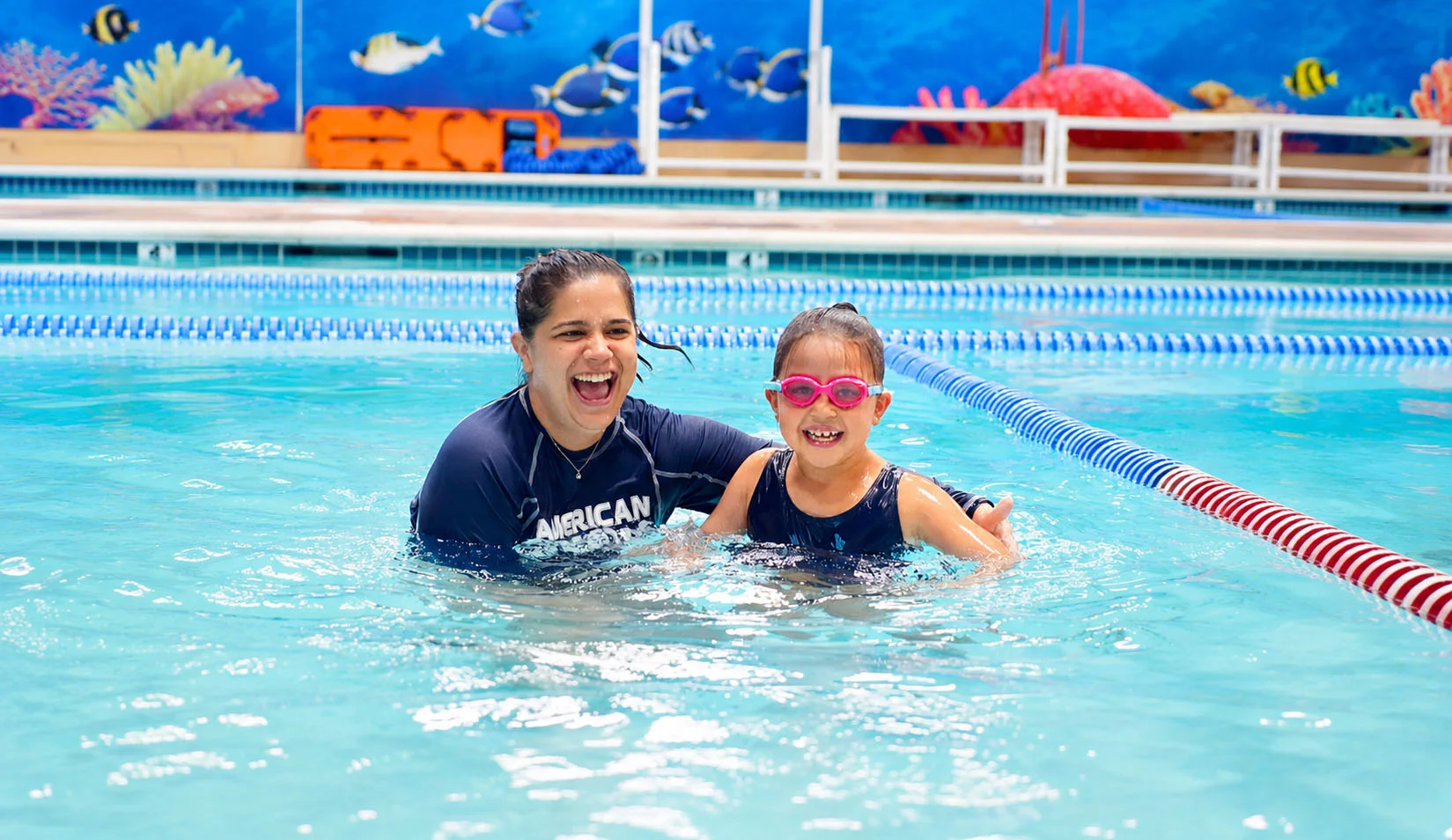
Getting ready for your first swim lesson is smooth and stress-free when you know what to expect. Check out A Practical Guide to Finding Beginner Swim Lessons for step-by-step guidance on enrolling and selecting the ideal schedule for your family.
Choosing the Right Pool Environment and Cost Considerations
When comparing facilities, pool environment plays a massive role in student progress and overall comfort. Cold water can cause shivering, fatigue, and muscle tension, making it significantly harder for younger children and adult beginners to focus on learning.
Year-round indoor facilities with water temperatures consistently heated to around 92°F allow swimmers to relax immediately, conserve body energy, and focus entirely on skill acquisition. Specialized swim academies charge flat monthly rates, providing warm-water comfort, small class ratios, continuous skill tracking, and consistent weekly scheduling so students progress steadily throughout the year.
What to Pack and How to Prepare Your Swimmer
Arriving prepared makes the first day enjoyable and encouraging for swimmers of all ages. Review these helpful Tips for Learning to Swim alongside our recommended packing checklist:
- Proper Swimwear: Choose comfortable, well-fitting swimsuits designed for active motion rather than heavy decorative wear.
- Swim Diapers: Infants and non-potty-trained toddlers require reusable, snug-fitting swim diapers beneath their swimwear for proper pool hygiene.
- Anti-Fog Goggles: Quality, clear goggles protect eyes from irritation and boost underwater clarity, helping beginners feel confident under the surface.
- Towel and Warm Clothes: A soft towel and a cozy change of warm dry clothes ensure a smooth, comfortable transition after class.
Frequently Asked Questions About Swim Lessons
What age should my child start swim lessons?
Children can safely begin parent-child swim lessons as early as 6 months of age. Starting early helps infants normalize the aquatic environment, helping them build comfort and emotional trust in the water while eliminating anxiety before it ever develops.
Can adults with a fear of water learn to swim?
Absolultely! Many adults who enroll in beginner lessons have experienced past negative water experiences or general aquatic anxiety. Warm indoor pools, patient instructors, small class sizes, and shallow-water practice allow adult learners to gain confidence at their own comfortable, self-directed speed.
How long does it take to learn how to swim?
Learning duration depends on individual comfort, practice consistency, and initial physical confidence. Most beginners build solid survival floating and basic movement skills within a few months of consistent weekly lessons, while complete technical stroke mastery across all swimming styles develops over continuous, year-round practice.
Conclusion
Finding high-quality swim lessons for all ages is an investment in lifelong health, safety, physical wellness, and outdoor recreation. Whether you are introducing your baby to their very first splash, helping your elementary child conquer the front crawl, or stepping onto the pool deck yourself as an adult learner, the right environment makes all the difference.
At American Swim Academy, we have spent decades helping Bay Area families fall in love with the water. Our specialized year-round indoor swim facilities feature tropical 92° heated water, gentle indoor environments, small class ratios, and caring instructors dedicated to every swimmer’s individual success. With convenient Bay Area locations across Fremont, Newark (CA), Livermore, Dublin, and Walnut Creek, learning to swim is safe, comfortable, and fun all year long.
Ready to dip your toes in? Explore Our Programs today to find the perfect level for your family!