

Find the Right Children’s Swim Class Near You
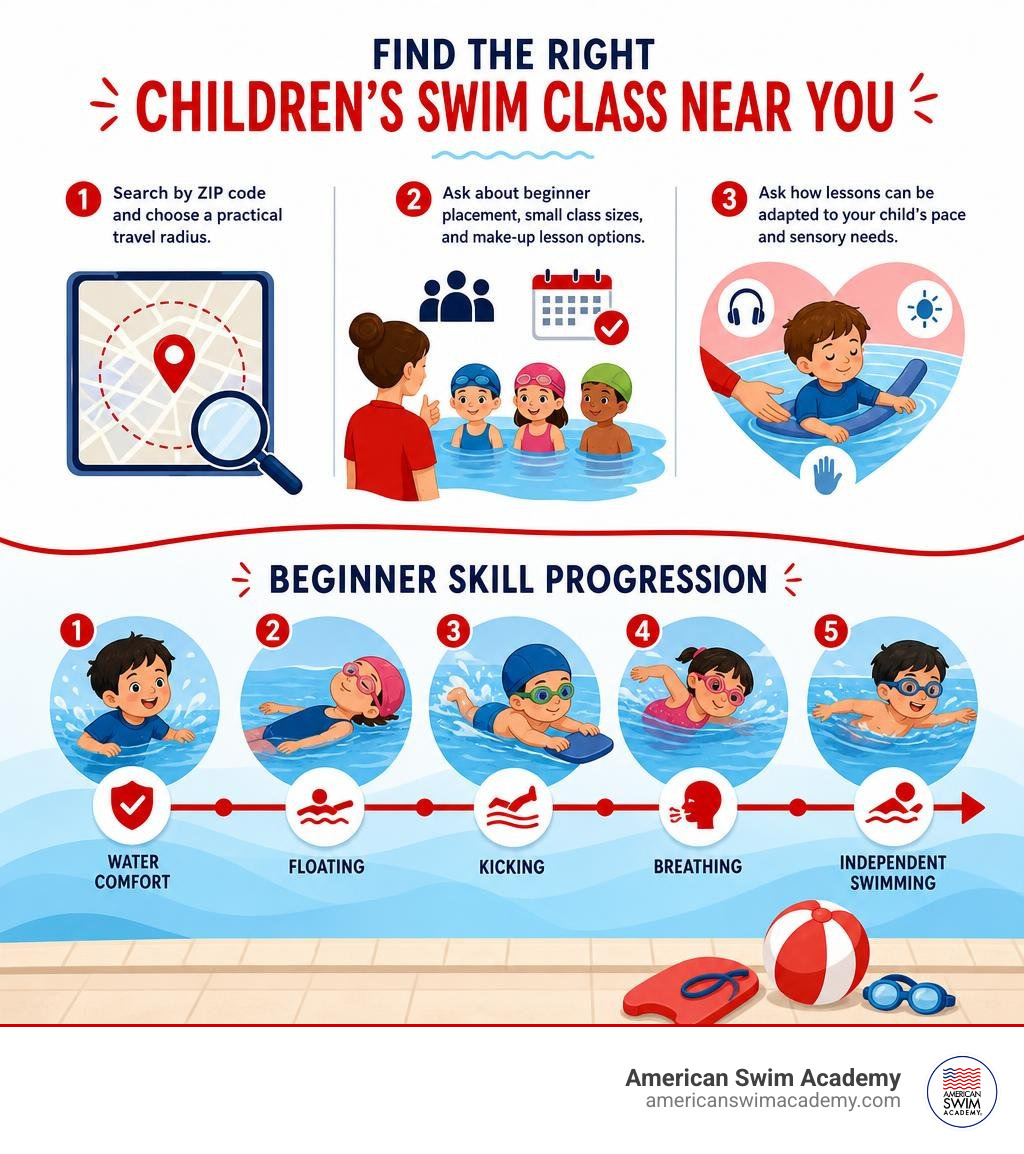
To find children’s swimming classes near you, start with a swim school’s location finder, then compare nearby options based on travel time, class schedule, water temperature, and your child’s starting skill level.
- Search by your ZIP code and choose a practical travel radius.
- Ask about beginner placement, small class sizes, and make-up lesson options.
- If your child has autism or other support needs, ask how lessons can be adapted to their pace and sensory needs.
The best beginner class is not always the closest one. Look for a consistent program where your child can build comfort first, then practice floating, kicking, breathing, and independent swimming skills over time.
At American Swim Academy, we help Bay Area families find a swim lesson path that fits busy schedules and each child’s learning needs.
Childrens swimming near me terms at a glance:
Finding the Best Childrens Swimming Near Me
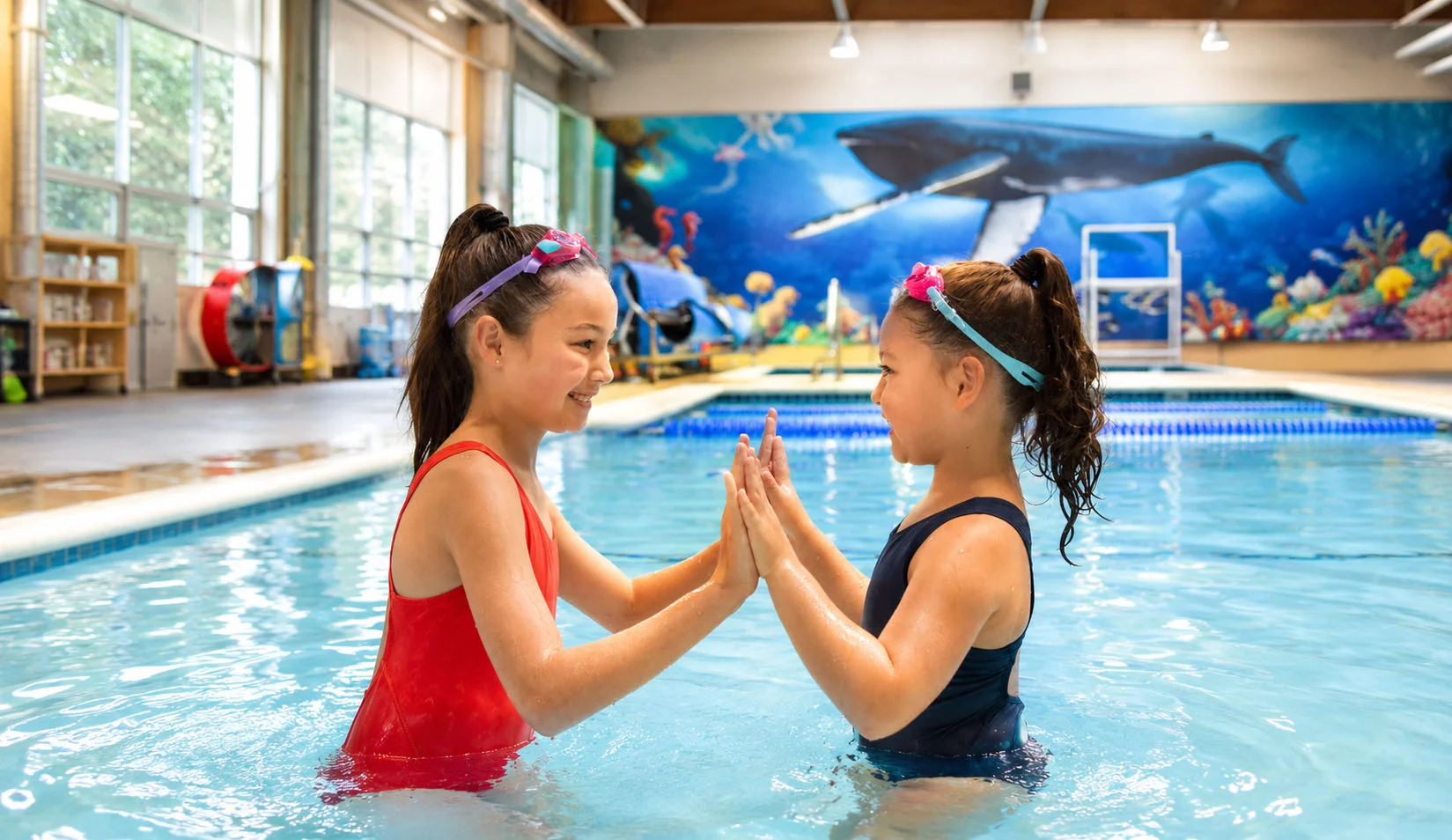
When searching for quality instruction, convenience is often top of mind for busy parents. However, finding the right program involves more than just picking the closest body of water. A dedicated swim center offers a reliable environment where your child can learn year-round without seasonal disruptions.
For families across Northern California, knowing where to find the best children swim school in the Bay Area means looking for purpose-built aquatic facilities. Our centers in Fremont, Newark, Livermore, Dublin, and Walnut Creek provide local neighborhoods with easy access to warm-water instruction designed specifically for young learners.
How to Locate Childrens Swimming Near Me for Toddlers and Beginners
To begin your search, look for facilities within a reasonable driving radius to ensure regular weekly attendance is manageable. A shorter commute helps keep young children alert and excited for their time in the water rather than exhausted before they even arrive.
Visiting a facility before enrolling gives you a clear sense of the atmosphere. Look for clean changing areas, warm water, and engaging instructors who understand early childhood development. There are at least 3 reasons to get your child in beginner swim lessons: building early confidence, developing fundamental motor skills, and fostering a lifelong love for water recreation. Evaluating these elements in advance ensures your family chooses an enriching environment where beginner swimmers can thrive week after week.
Public Pools vs. Private Year-Round Facilities
While seasonal municipal pools are great for summer recreation, they often present challenges for ongoing skill development. Outdoor community pools are subject to unpredictable weather, cooler water temperatures, and seasonal closures that interrupt learning.
In contrast, dedicated indoor aquatic centers maintain consistent air and water conditions throughout every season. Warm, climate-controlled environments eliminate shivering, allowing young beginners to focus entirely on building comfort, mastering breath control, and having fun. This year-round continuity ensures children do not lose momentum or regress during the colder months.
Comprehensive Swim Programs by Age and Skill Level
Children learn best when aquatic instruction matches their physical growth and emotional maturity. A progressive curriculum ensures that swimmers advance smoothly from fundamental water acclimation to proficient stroke technique.
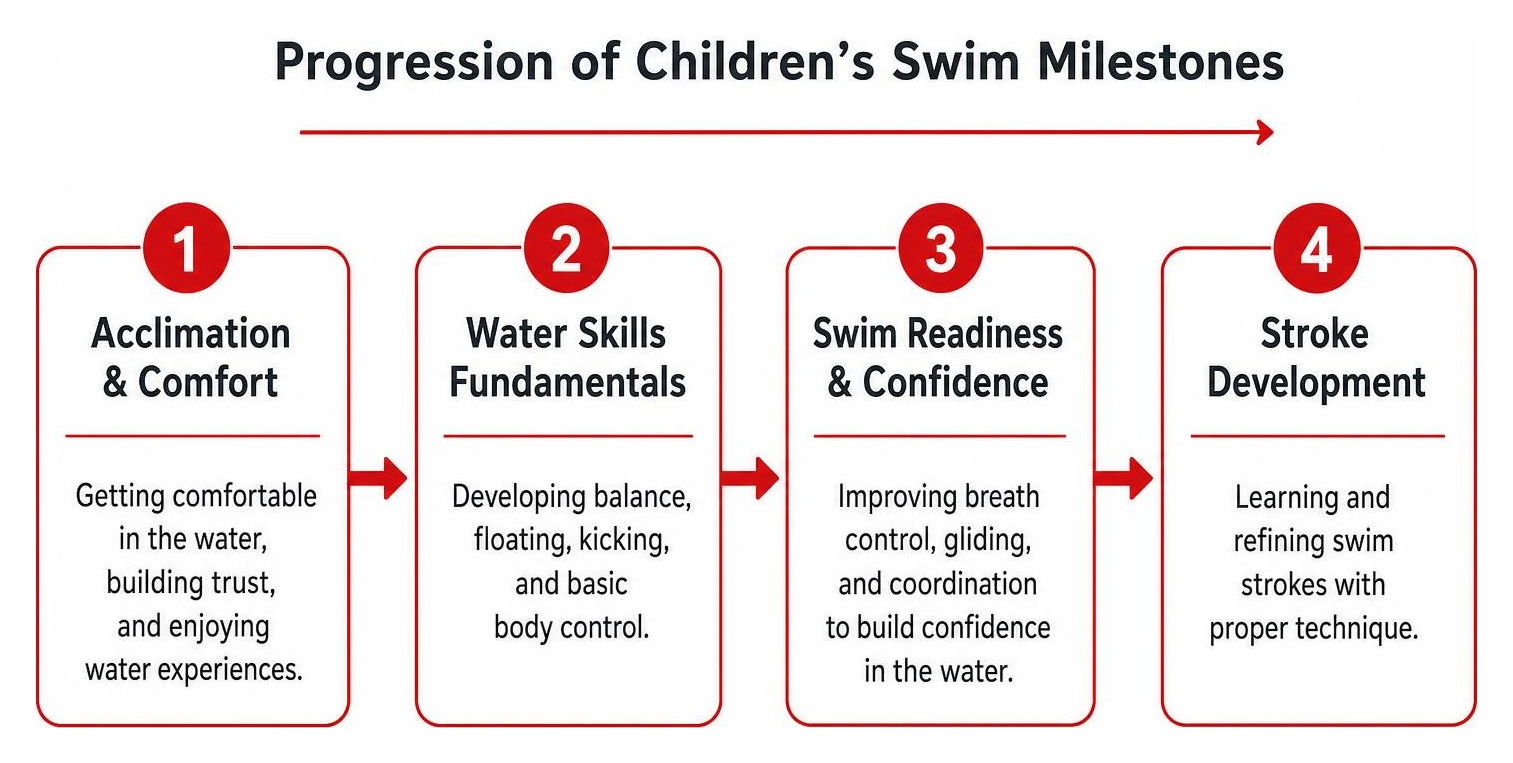
Understanding how to choose the right youth swim lessons for your school-aged child helps set realistic milestones and keeps your child motivated as they advance through each tier of instruction. According to developmental guidance from the American Academy of Pediatrics, formal swim lessons provide essential layers of water competency and physical coordination starting from early childhood.
Infant and Toddler Water Discovery
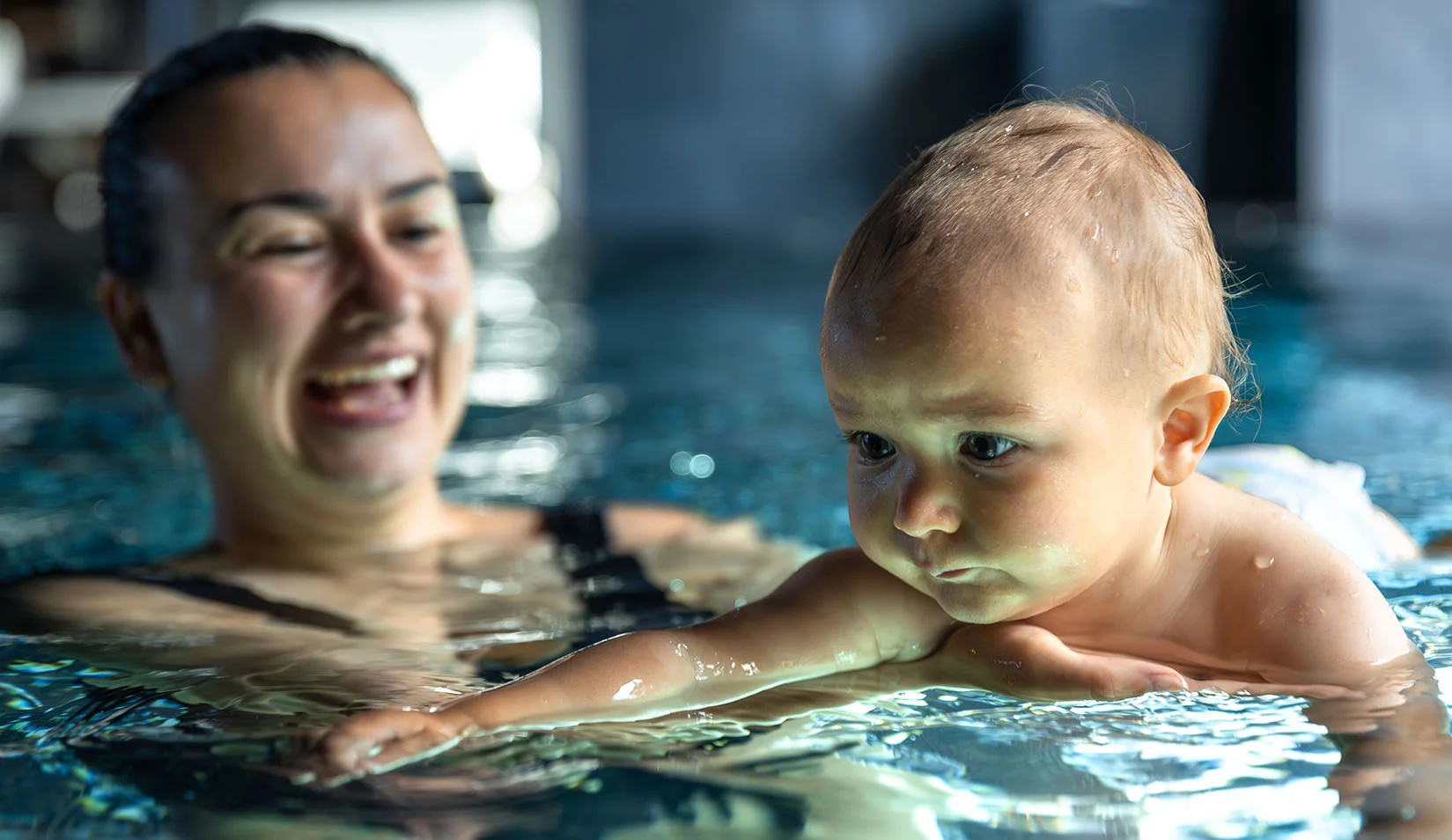
Early aquatic experiences center on comfort and trust. Infant and toddler programs incorporate parents directly into the pool, creating a supportive environment for gentle submersions, sensory play, and basic balance exercises.
Through guided songs and games, little ones learn essential water acclimation skills, such as blowing bubbles, kicking their feet, and resting comfortably on their backs with parental support. These shared moments also strengthen bonding while building lasting comfort in the aquatic environment.
Beginner and School-Age Stroke Development
As children gain independence, instruction shifts toward independent propulsion and technique. Swimmers develop flutter kicks, coordinated arm movement, and rhythmic side breathing.
Building foundational skills early reinforces water safety: the importance of swimming lessons to kids, equipping school-age learners with the endurance and technical competence needed to enjoy aquatic activities safely. As technique improves, students build stamina and transition smoothly into freestyle, backstroke, and other foundational strokes.
Adaptive Aquatic Lessons for Children with Special Needs
Water can be an incredible therapeutic and developmental environment for children with diverse physical or cognitive profiles. Adaptive swim lessons tailor teaching techniques, pacing, and sensory input to meet the individual requirements of each participant.
Swimmers with Autism Spectrum Disorder (ASD), sensory processing differences, or mobility challenges benefit from structured routines, visual schedules, and patient instruction. Tailored aquatic programs provide supportive accommodations, ensuring that every child has the opportunity to develop water competence in a safe, encouraging space.
Essential Safety Protocols and Instructor Qualifications
A safe aquatic environment relies on vigilant supervision, certified staff, and meticulously maintained water standards. Understanding how swimming lessons keep your child safe gives parents peace of mind every time their child enters the pool area.
Certified Instructors and Safety Credentials
Professional swim instructors undergo extensive training to handle both instructional methods and pool safety. Certified teachers hold credentials in CPR, First Aid, and water rescue techniques, alongside thorough background screenings and regular continuing education.
Ongoing training ensures that teachers use positive reinforcement strategies while maintaining constant vigilance over their students throughout every lesson. Instructors learn to read subtle cues of fatigue or hesitation, adjusting their teaching pace so every student feels secure and supported.
Water Sanitation, pH Balance, and Pool Temperatures
Water quality plays a vital role in a comfortable learning experience. Aquatic facilities monitor chlorine levels and pH balance daily to meet strict California health regulations.
| Pool Feature | Standard Community Pool | Dedicated Indoor Swim School |
|---|---|---|
| Water Temperature | 78°F – 82°F (cooler, geared for lap swimming) | 92°F (warm, ideal for muscle relaxation and focus) |
| Environment | Often outdoor / weather-dependent | Fully enclosed, climate-controlled indoor pool |
| Class Focus | Large mixed-use sessions | Small, skill-targeted group lessons |
| Year-Round Access | Often seasonal (closed in winter) | Open year-round for consistent learning |
Maintaining water at a warm 92°F keeps children comfortable, relaxed, and ready to learn without physical tension or distraction. Warm water relaxes developing muscles, making it substantially easier for beginners to practice balance and movement without shivering.
Registration, Class Formats, and Pricing Considerations
Choosing the best format depends on your child’s learning style, attention span, and family scheduling preferences. Matching the right class structure to your child’s personality ensures faster progress and a more positive experience.
Private, Semi-Private, and Small Group Instruction
Small group formats encourage positive social interactions and peer motivation, while private or semi-private lessons offer focused, one-on-one attention for children needing specialized pacing.
| Class Format | Student-to-Teacher Ratio | Best For | Primary Benefits |
|---|---|---|---|
| Private Lessons | 1:1 | Hesitant beginners or specific skill goals | Highly individualized attention and customized pacing |
| Semi-Private | 2:1 | Siblings or peers at similar skill levels | Personalized instruction with a peer buddy |
| Small Group | 3:1 to 4:1 | Most beginner and intermediate children | Social learning, observation, and team encouragement |
For most young learners, reviewing the ultimate guide to small group swim lessons for kids highlights why peer modeling often accelerates water confidence. Observing other children successfully perform a skill gives hesitant learners the courage to try it themselves.
Evaluating Costs and Schedules for Childrens Swimming Near Me
Tuition rates vary depending on lesson format, class duration, and frequency. When comparing options, check for family-friendly policies such as flexible scheduling, online account management, and make-up lesson availability for missed classes.
Consistent weekly practice delivers the best long-term skill retention, making a predictable schedule essential for steady progress. Year-round enrollment also prevents the learning plateaus that often occur when lessons are paused during off-seasons.
Frequently Asked Questions About Children’s Swimming Lessons
What is the ideal age to start children’s swim lessons?
Children can begin gentle water discovery classes as early as six months old in parent-and-child settings. Early exposure builds comfort, prevents water anxiety, and supports healthy sensory and motor milestone development.
What should my child bring to their first swim class?
Pack a well-fitted swimsuit, clean towels, and a warm change of clothes for after the lesson. For children who are not fully potty-trained, reusable swim diapers are required. Swim goggles can also help older beginners see clearly and comfortably underwater.
How long does it take for a beginner child to learn to swim independently?
Every child progresses at their own pace based on their age, physical readiness, and comfort in the water. Consistent weekly attendance and positive reinforcement allow most beginners to achieve independent floating, kicking, and breath control within a few months of regular instruction.
Conclusion
Building strong aquatic skills gives children confidence, physical coordination, and a foundation for lifelong recreation. By selecting a dedicated, warm-water facility with experienced instructors and a structured curriculum, you ensure your child’s first swimming experiences are positive, engaging, and rewarding.
Discover how our warm 92° pools and caring instructors make learning to swim an enjoyable journey for the entire family by exploring Our Programs today.