
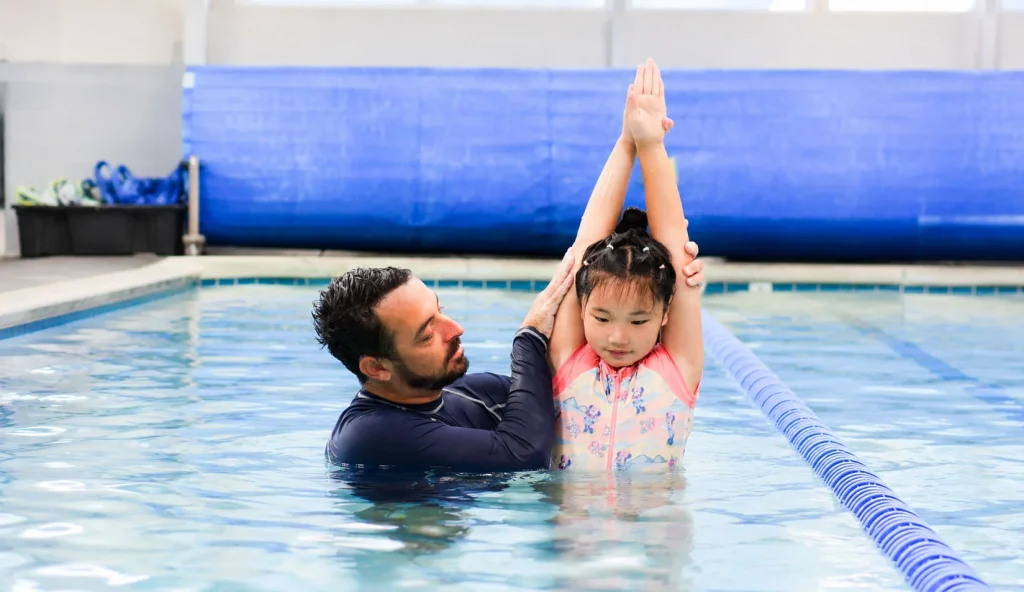
Build Better Technique With Intermediate Swim Lessons
Intermediate swim lessons help swimmers turn basic water skills into smoother, stronger strokes. At this stage, swimmers usually refine front crawl and backstroke while learning skills such as side breathing, breaststroke and butterfly kicks, turns, deeper-water movement, and longer continuous swims.
For a busy parent, the key is simple: choose an intermediate class when your child can float, glide, and swim a basic crawl without constant support. Then look for instruction that builds technique in small steps:
- Improve breathing rhythm and body position.
- Add coordinated kicks and arm patterns for new strokes.
- Practice stamina, safe deep-water skills, and controlled turns.
- Progress at a pace that supports each swimmer’s confidence and needs.
Intermediate lessons sit between early water-confidence classes and advanced stroke training. They are designed to help swimmers move beyond simply getting across the pool and begin swimming with control, efficiency, and purpose.
Our family has seen that steady practice, patient coaching, and a welcoming routine can make technique progress feel achievable for every swimmer.

Comparing Beginner, Intermediate, and Advanced Programs
Understanding where a swimmer fits in the overall learning journey ensures they receive the right balance of instruction, challenge, and encouragement. Swimming instruction generally progresses across three primary stages, each targeting specific developmental milestones.
Beginner classes emphasize water comfort, basic breath control (blowing bubbles and rhythmic breathing), unsupported front and back floats, and rudimentary propulsive movements. Swimmers moving through A Practical Guide to Finding Beginner Swim Lessons focus on developing comfort in the pool and learning foundational safety skills.
Intermediate classes bridge the gap between basic water locomotion and formal stroke mechanics. In intermediate lessons, the focus shifts toward stroke refinement, introducing multi-stroke kicks, rotary breathing, streamlined body positioning, and progressive endurance. Because swimmers need personalized feedback to refine complex biomechanics, many families find success through The Ultimate Guide to Small Group Swim Lessons for Kids, where small instructor-to-student ratios allow for immediate stroke corrections.
Advanced programs build on established mechanics to focus on competitive techniques, speed conditioning, rapid flip turns, and high-yardage endurance sets across all four competitive strokes.
| Stage | Primary Focus | Key Skills Taught | Typical Distance per Set |
|---|---|---|---|
| Beginner | Water comfort, safety, basic buoyancy | Bubble blowing, unassisted floating, kicking, basic paddling | 5–15 feet |
| Intermediate | Technique refinement, multi-stroke mechanics | Rotary side breathing, back crawl, breaststroke kick, dolphin kick, open turns | 15–50 yards continuous |
| Advanced | Conditioning, race readiness, power | Individual medley transitions, flip turns, pace clock training, high endurance | 100+ yards continuous sets |
Prerequisites for Intermediate Swim Lessons
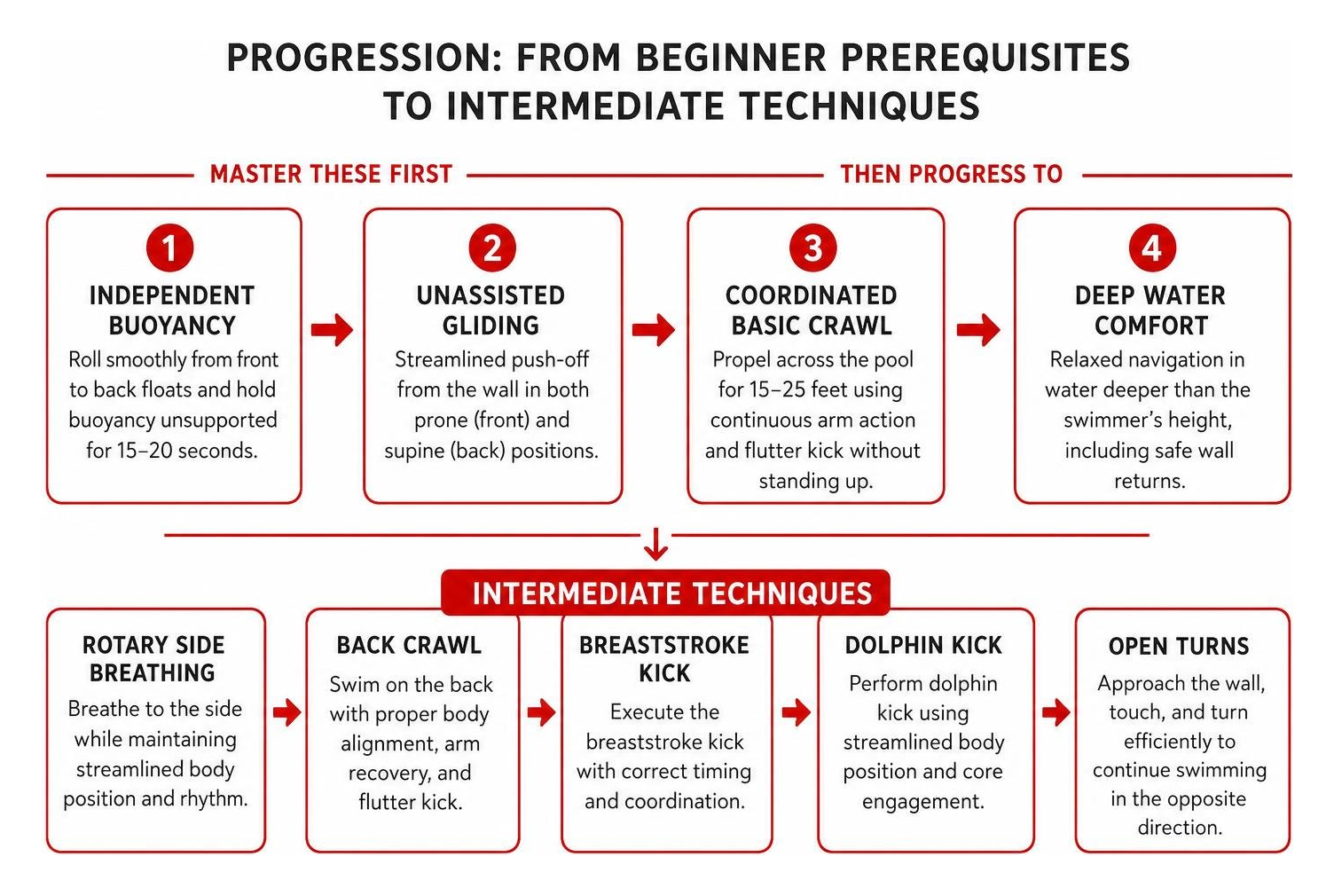
Before advancing to an intermediate level, swimmers must demonstrate consistent mastery of foundational skills. Enrolling prematurely can lead to fatigue and improper technique habits. Swimmers should meet these prerequisites:
- Independent Buoyancy: Ability to roll smoothly from front to back floats and hold buoyancy unsupported for at least 15 to 20 seconds.
- Unassisted Gliding: Demonstrating a streamlined push-off from the wall in both prone (front) and supine (back) positions.
- Coordinated Basic Crawl: Propelling across the pool for at least 15–25 feet using continuous arm action and flutter kick without standing up.
- Deep Water Comfort: Relaxed navigation in water deeper than the swimmer’s height, including safe wall returns.
When deciding How to Choose the Right Youth Swim Lessons for Your School-Aged Child, evaluating these prerequisites ensures your swimmer enters the appropriate tier with confidence.
Core Skills Taught in Intermediate Swim Lessons
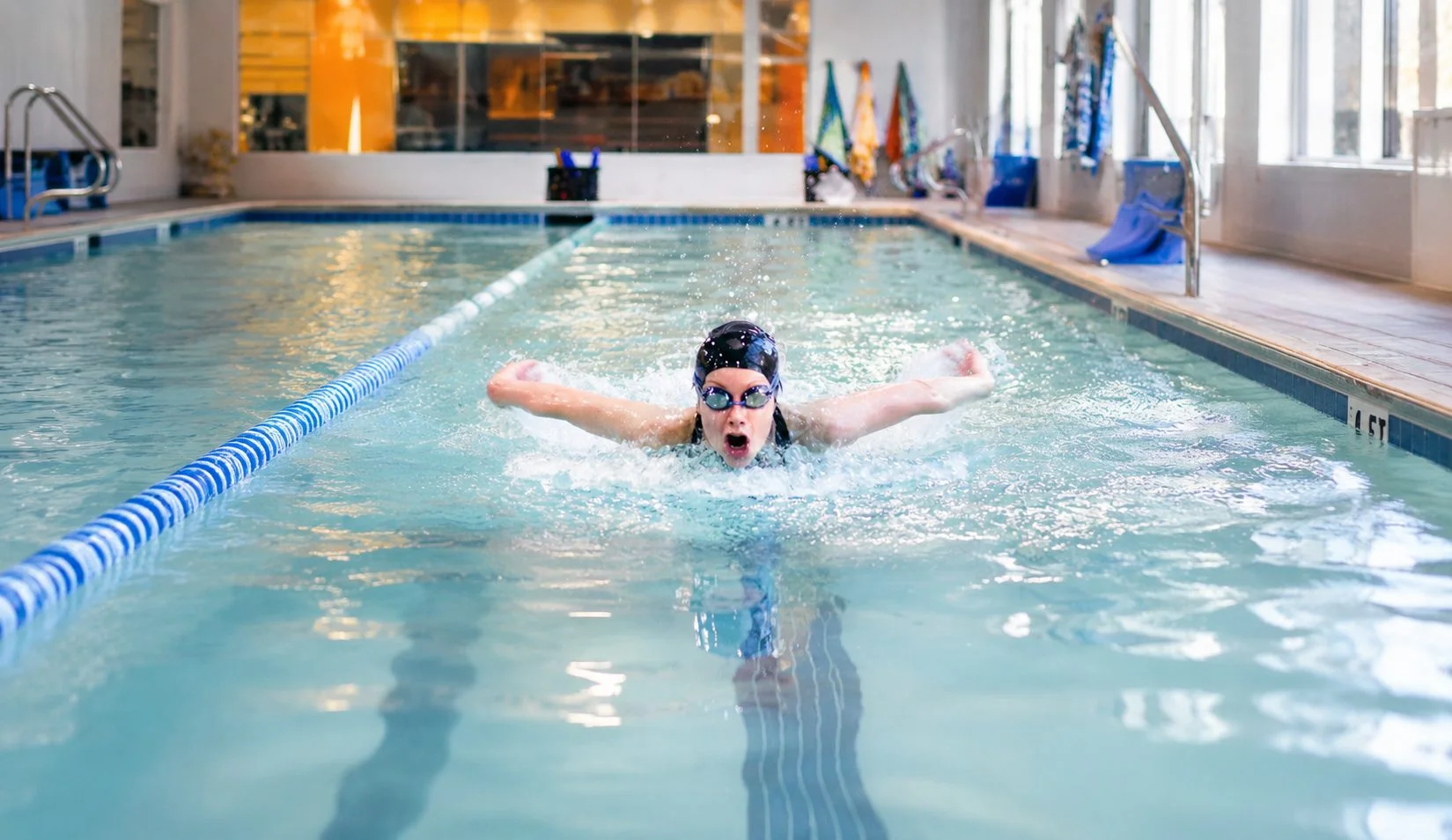
Intermediate instruction transitions swimmers from intuitive thrashing to hydrodynamic propulsion. Rather than simply using energy to stay afloat, students learn to work with the water to maximize distance per stroke.
Key technical skills developed during this stage include:
- Rotary Side Breathing: Moving away from lifting the head straight forward—which causes the hips and legs to drop—swimmers learn to turn their head smoothly to the side within the bow wave created by their head movement, keeping one goggle lens in the water.
- Back Crawl Mastery: Refining backstroke mechanics with continuous flutter kicking, stable core rotation, and a steady pinky-finger-first hand entry to prevent shoulder strain.
- Breaststroke Kick (Whip Kick): Developing the complex external rotation of the feet, bending at the knees rather than the hips, and snapping the heels together to generate powerful forward propulsion.
- Butterfly Dolphin Kick: Coordinating undulating core movements originating from the chest and hips rather than bending strictly at the knees.
- Elementary Backstroke and Sidestroke: Mastering restful survival strokes that combine rhythmic gliding with low-energy arm and leg recoveries.
- Surface Swimming and Submersion: Building confidence swimming underwater, surface retrieving objects from deeper pool areas, and resurfacing smoothly with controlled exhalation.
Swimmers in our local Bay Area communities looking to hone these specific mechanics can explore opportunities to Make a Splash with Top Swim Stroke Lessons in Livermore and neighboring facilities.
Intermediate Stroke Mechanics and Endurance
Moving past basic stroke introduction requires developing rhythmic coordination and sustained stamina. Intermediate curricula emphasize:
- Bilateral Breathing Patterns: Alternating breathing sides during front crawl (breathing every 3 strokes) to promote balanced shoulder rotation and symmetric muscle engagement.
- Kick-to-Stroke Timing: Pairing two-beat or six-beat kicks to arm cycles in freestyle and matching the distinct “pull, breathe, kick, glide” rhythm of breaststroke.
- Wall Navigation and Open Turns: Approaching the wall with speed, executing a compact two-hand touch (for breaststroke/butterfly) or single-hand pivot (for freestyle), tucking the knees, and pushing off in a tight streamline under the water surface.
- Continuous Lap Swimming: Gradually building swimming endurance from single pool lengths to multiple consecutive laps without stopping, maintaining form even as physical fatigue sets in.
These technical mechanics are equally vital for older learners; insights from From Doggy Paddle to Pro: Your Guide to Adult Swimming Coaching highlight how refined stroke timing improves efficiency at any age.
Essential Deep Water Safety Techniques
Deep-water safety forms a core pillar of the intermediate curriculum. As swimmers venture further from pool walls and steps, practical safety skills become instinctual:
- Deep-Water Treading: Mastering scissor, whip, or eggbeater kicks paired with gentle sculling arm motions to maintain head clearance effortlessly for 1 to 2 minutes.
- Survival Floating: Utilizing passive buoyancy positions (back floats or face-down rest floats with periodic breathing) to conserve physical energy over extended durations.
- Breath Control and Subsurface Recovery: Safely managing breath holding, equalizing ears during surface descents, and reorienting to the surface smoothly if pushed or disoriented.
- Spatial Awareness: Navigating crowded lanes, reacting to unexpected splashes, and safely reaching entry/exit ladders without panic.
Program Formats, Schedules, and Locations
Intermediate swimming classes are offered through various venues, including municipal recreation centers, high school aquatic facilities, and dedicated private swim academies. Choosing the right learning environment directly impacts how quickly a swimmer acquires technique.
Dedicated indoor aquatic facilities provide substantial advantages over seasonal outdoor pools:
- Consistent Water Conditions: Maintaining warm water temperatures (such as 92°F) prevents muscle shivering and tension, allowing swimmers to concentrate fully on fine-motor stroke refinements.
- Year-Round Continuity: Technique acquisition relies heavily on muscle memory. Year-round indoor programming eliminates seasonal skill regression.
- Specialized Small Groups: Focused small class sizes ensure that instructors provide regular stroke corrections during every lap.
For families with busy seasonal schedules or those preparing for specific milestones, fast-track formats detailed in Stop Doggy Paddling: Find the Best Swim Intensive Lessons Near You provide concentrated skill development. Additionally, exploring options in From Toddlers to Adults: Finding the Perfect Swim Classes helps match program types to unique learner needs.
Scheduling and Cost of Intermediate Swim Lessons

Intermediate classes are typically structured to accommodate school and work commitments, with 30- to 45-minute sessions scheduled on weekday afternoons, evenings, or weekend mornings.
Session pricing varies based on provider type, region, and facility quality:
- Community/Municipal Programs: Often structured in seasonal multi-week blocks (e.g., 6 to 8 sessions), with rates frequently offering resident discounts compared to non-resident fees.
- Dedicated Private Swim Schools: Often operate on monthly tuition models with consistent, year-round weekly time slots, specialized warm-water pools, and small group ratios that maximize time spent swimming per class.
Maintaining a consistent schedule of 1 to 2 classes per week provides the repetition necessary to reinforce complex motor patterns without overwhelming the swimmer.
Frequently Asked Questions About Intermediate Swimming
What is the typical age range for intermediate swimmers?
Intermediate swimmers range widely in age. Youth intermediate classes commonly serve school-aged children between ages 6 and 14 who have completed introductory water safety levels. However, teenagers and adults frequently enroll in intermediate instruction to refine technique for fitness, triathlon training, or recreational enjoyment. If you are an older learner looking to transition from basic paddling to lap swimming, reviewing How to Choose the Perfect Adult Swim Program Without Sinking will help guide your enrollment.
How long does it take to complete the intermediate level?
Progression speed depends on class frequency, student age, physical strength, and baseline comfort. On average, a swimmer attending consistent weekly lessons achieves intermediate competency milestones within 6 to 12 months. Because skills like the breaststroke whip kick and side breathing require fine motor control, regular attendance and supportive instruction are essential for steady development.
What gear is recommended for intermediate level classes?
Equipping intermediate swimmers with appropriate gear supports technical focus:
- Comfortable Swim Goggles: A well-fitting, anti-fog pair allows clear subsurface vision, essential for rotary breathing and surface retrieval drills.
- Fitted Swim Cap: Keeps hair away from the face and mouth during side breathing.
- Training Kickboard: Isolates leg mechanics to build endurance for whip kicks and dolphin kicks.
- Pull Buoys: Elevates the hips to allow dedicated focus on upper-body pull mechanics and arm entry angles.
Conclusion
Advancing through intermediate swimming transforms basic swimming ability into efficient, effortless, and versatile technique. By mastering rotary breathing, varied stroke mechanics, and deep-water safety strategies, swimmers build lasting water confidence that opens up a lifetime of aquatic recreation and fitness.
At American Swim Academy, we deliver expert instruction tailored to each swimmer’s personal journey. With welcoming, highly trained instructors, small class sizes, and warm 92° indoor pools across Fremont, Newark, Livermore, Dublin, and Walnut Creek, CA, we create the ideal learning environment for stroke improvement.
Explore our intermediate and advanced swim programs today to find the perfect class and take your swimming technique to the next level.