

How to Choose the Right Swim School Nearby
To find reputable swim schools nearby, start by comparing instructor credentials, class size, pool comfort, and lesson times. For young children, look for age-based instruction, trained teachers, and a clear way to track progress. If your child has autism or other support needs, ask how the school adapts instruction and communicates with families.
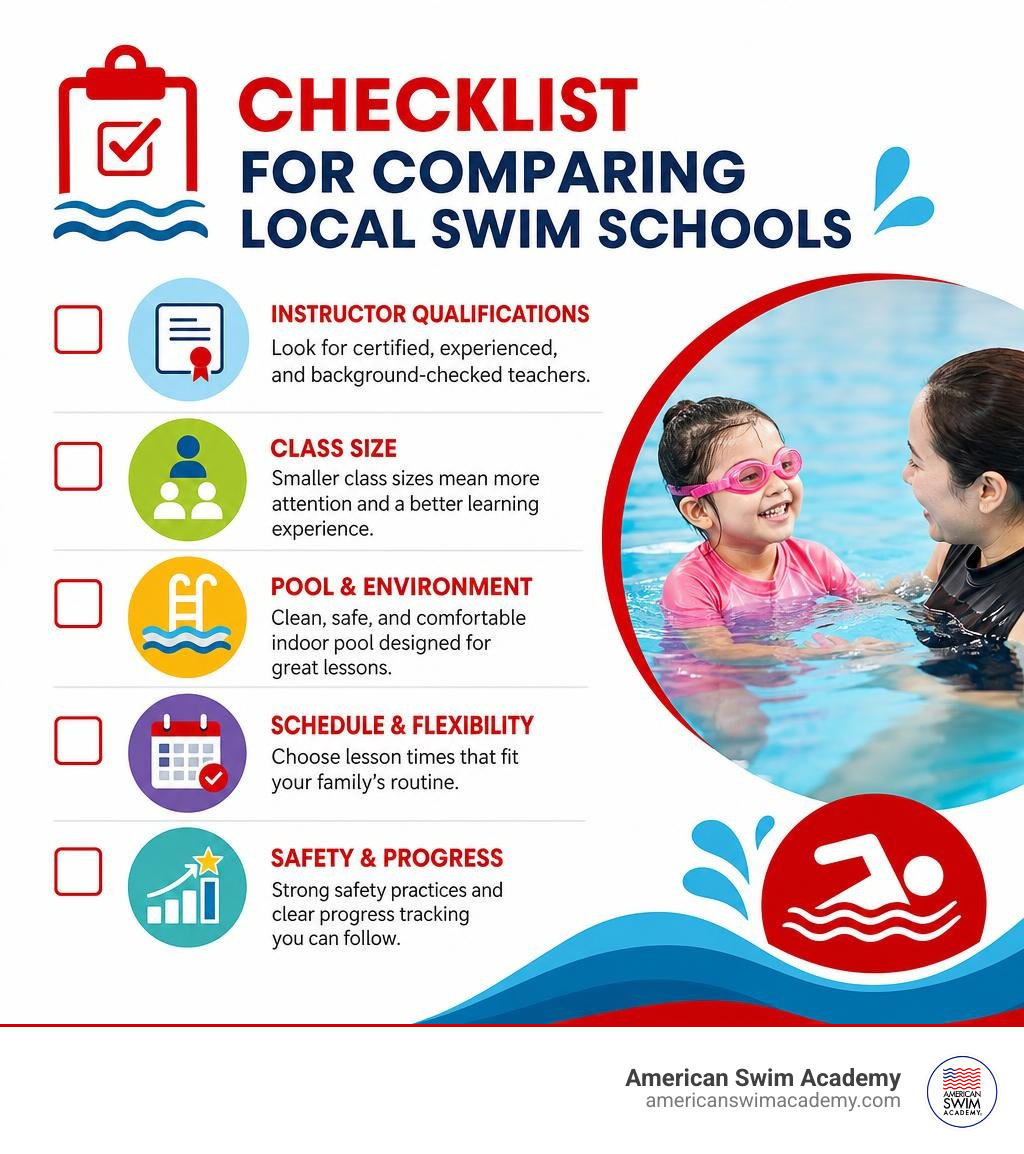
A strong local program should offer:
- Recognized instructor training, such as American Red Cross Water Safety Instructor certification
- Classes for your child’s age and current skill level, from 6 months through adulthood
- Small groups and a comfortable indoor pool environment
- Flexible scheduling that works with busy family routines
- Clear safety practices and milestone-based progress updates
This guide reviews the key details to compare before choosing a swim program for your family. At American Swim Academy, we help Bay Area families make confident, informed choices about swim lessons.
Swim schools nearby terms explained:
Key Criteria for Evaluating Swim Schools Nearby
When you begin searching for the right program, looking beyond basic schedule availability is essential. High-quality aquatic centers operate with a safety-first mindset, well-structured curricula, and welcoming environments designed to foster water confidence. To make an informed decision, families benefit from comparing facility standards, teacher-to-student ratios, water conditions, and lesson frameworks. Reviewing The 7 Best Swimming Lessons Close to Me Compared gives parents a helpful baseline for what standard-setting aquatic centers provide.
Water Safety Instructor Certification and Credentials
The foundation of any exceptional swim program is its teaching staff. When evaluating swim schools, always inquire about the specific certifications each coach holds. Industry gold standards include the American Red Cross Water Safety Instructor® (WSI™) credential, along with comprehensive CPR, First Aid, and AED training.
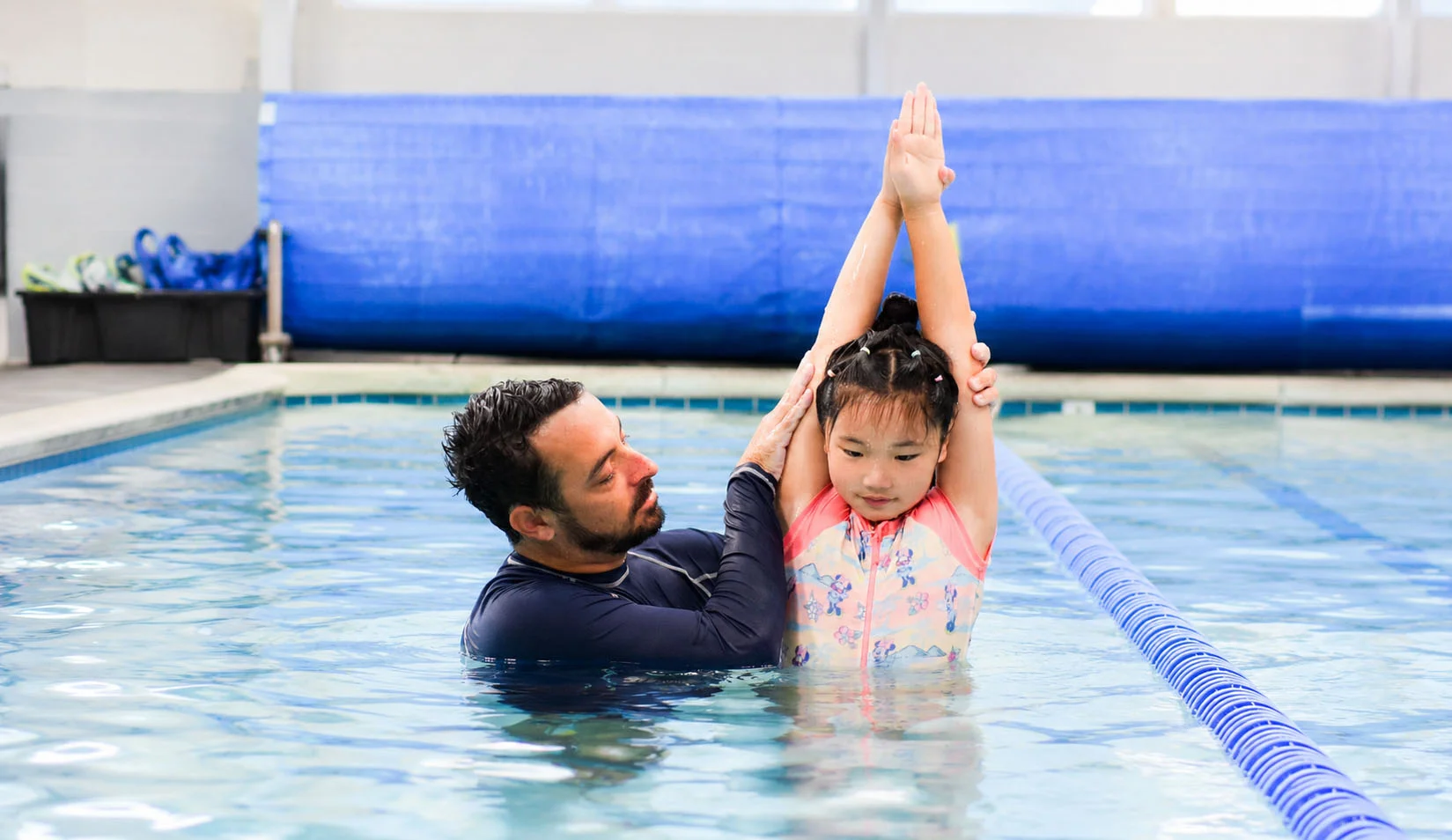
Instructors with formal WSI certification are trained in biomechanics, motor skill acquisition, child development, and proactive safety management. They know how to transform nervous splashing into calm, controlled movement. Beyond technical credentials, class size directly influences safety and learning speed. Low student-to-teacher ratios ensure that every child receives attentive supervision, individualized feedback, and plenty of turns practicing in the water rather than waiting on the steps.
Age-Appropriate Curriculum for All Levels
Swimming is a lifelong journey that evolves alongside physical and cognitive development. A top-tier swim school provides a clear, progressive curriculum tailored to distinct age groups and comfort levels. From infants becoming acclimated to gentle submersion alongside their parents to older kids refining complex competitive strokes, structured levels ensure steady, measurable growth.
Exploring options From Toddlers to Adults Finding the Perfect Swim Classes highlights how curriculum benchmarks build upon each other:
- Infant & Toddler Acclimation (6 to 36 months): Focuses on comfort, basic breath control, balance, and bonding through gentle water play.
- Preschool & Beginner (Ages 3 to 5): Introduces independent floating, flutter kicking, reaching, and safe pool entries and exits.
- School-Age Stroke Development (Ages 6+): Builds freestyle, backstroke, breaststroke, butterfly mechanics, endurance, and deep-water confidence.
- Adult Instruction: Provides supportive, personalized pacing for teens and adults seeking basic water comfort or advanced stroke refinement.
Heated Pools and Facility Standards
Pool environment plays a massive role in how quickly a student learns. When children shiver, their muscles tense, concentration drops, and anxiety rises. That is why dedicated swim facilities prioritize warm water settings.
A custom-built, indoor aquatic center maintained at a warm 92° pool temperature creates an inviting, therapeutic environment where swimmers can relax and focus on skill building year-round. Beyond water warmth, look for modern air filtration, state-of-the-art water purification systems, non-slip pool decks, private changing rooms, and comfortable observation viewing areas. Taking time to review Suburban Swim Schools Your Guide to Finding the Perfect Local Pool helps identify how purpose-built indoor facilities outshine drafty, seasonal pools.
How to Find and Vet Accredited Aquatic Programs
Navigating local aquatic options requires knowing where to look and what questions to ask. Dedicated facilities maintain strict safety standards, transparent progress tracking, and supportive staff dedicated to student growth.
Finding Accredited Swim Schools Nearby in Your Community
Starting your search involves exploring trusted provider directories, interactive maps, and local community feedback. For actionable strategies on filtering local options, review X Effective Tips for Finding Swim Classes Near Me to streamline your enrollment process.
Families living in the East Bay and Tri-Valley areas can readily check our dedicated regional resources. Discovering Where to Find the Best Swim Classes in Fremont Newark and Livermore makes it easy to find premier instruction right in your neighborhood.
| Facility Feature | Standard Community Pool | Dedicated Indoor Swim School |
|---|---|---|
| Water Temperature | 78°F – 82°F (often chilly) | 90°F – 92°F (warm & comfortable) |
| Class Size Ratio | Often 6:1 to 10:1 | Small groups (typically 3:1 to 4:1) |
| Instructor Credentials | General seasonal staff | Certified WSI™ & Career Aquatic Educators |
| Operating Season | Seasonal or weather-dependent | Year-round climate-controlled indoor pool |
| Progress Tracking | End-of-season report card | Ongoing milestone updates & mobile tracking |
What to Do When Evaluating Swim Schools Nearby Without Local Listings
If an online search yields limited results or outdated directories in your immediate neighborhood, don’t worry. You can contact local aquatic centers directly to ask if their staff holds current American Red Cross Water Safety Instructor credentials. You can also reach out to Red Cross Training Services directly at 1-800-RED-CROSS (1-800-733-2767), available Monday through Friday from 7:30am to 10:00pm ET and Saturday from 7:30am to 8:00pm ET, for guidance on verified regional training centers.
When selecting the ideal setting for your young child, reading Where to Find the Best Children Swim School in the Bay Area can help you identify established facilities in Fremont, Newark, Livermore, Dublin, and Walnut Creek, CA that meet the highest standards of safety and instruction.
Tracking Swim Milestone Progress and Water Safety Education
True water confidence extends beyond passing a single level—it involves consistent milestone progression and practical safety awareness across multiple aquatic environments. Modern aquatic schools provide digital tools, visual badges, and skill checklists that allow parents to celebrate every achievement.
Families can text SWIM to 90999 to download the official American Red Cross mobile app, which offers interactive water safety resources and progress tracking tools. Combining school milestone cards with digital tracking keeps children excited about their journey.
Comprehensive Milestone Tracking Across Levels
| Level Stage | Core Safety Skills | Primary Stroke Mechanics | Milestone Goal |
|---|---|---|---|
| Stage 1: Water Acclimation | Assisted back float, bubble blowing, wall holds | Gentle flutter kicking, arm paddling | Relaxed submersion & independent back float |
| Stage 2: Water Movement | Unassisted back floating, rolling front-to-back | Independent reach-and-pull, rhythmic breathing | 15-foot swim with roll-over recovery |
| Stage 3: Water Stamina | Deep-water treading, jump in and turn around | Freestyle with side breathing, backstroke kick | 25-yard continuous swim across the pool |
| Stage 4: Stroke Refinement | Safe entries, open turns, endurance swimming | Breaststroke kick, butterfly rhythm, streamlined glide | Multi-stroke proficiency & complete water independence |
Beyond pool lessons, parents should reinforce foundational water safety habits at home and during family outings:
- Home Pool and Spa Safety: Install self-closing, four-sided isolation fencing around residential pools and keep safety equipment accessible.
- Open Water Awareness: Discuss currents, drop-offs, and visibility when visiting lakes, rivers, or ocean beaches.
- Life Jacket Guidelines: Ensure U.S. Coast Guard-approved life jackets are worn by non-swimmers during boating and open-water recreation.
Frequently Asked Questions About Swim Schools
What age groups can enroll in local swim school programs?
High-quality aquatic centers offer programs spanning all ages, typically beginning with parent-and-child classes for infants as young as 6 months old. From there, structured lessons progress through toddler, preschool, youth, teen, and adult skill levels, ensuring that every swimmer learns at an age-appropriate pace.
What certifications should swim instructors hold?
Reputable swim instructors should hold certified credentials such as the American Red Cross Water Safety Instructor (WSI) certification, alongside up-to-date certifications in CPR/AED for the Professional Rescuer and First Aid. This training ensures coaches understand instructional biomechanics, child psychology, and proactive aquatic supervision.
How can aquatic centers register as official lesson providers?
Aquatic facilities can partner with national aquatic organizations by contacting Red Cross Training Services directly. Facilities submit documentation verifying that their instructional staff holds active Water Safety Instructor certifications and that their pools adhere to required health and safety standards. Once approved, the center is added to recognized public provider directories.
Conclusion
Building strong swimming skills opens the door to a lifetime of fun, fitness, and aquatic confidence. By choosing a program with certified instructors, small class sizes, structured milestone tracking, and a warm, supportive learning environment, you set your swimmer up for enduring success. At American Swim Academy, our warm 92° indoor pools and caring instructors across Fremont, Newark, Livermore, Dublin, and Walnut Creek, California are ready to welcome your family. When you are ready to get started, find the right swim program for your family and begin an exciting aquatic journey today.