

Understanding Gentle Infant Swim Lessons
When you picture your baby’s first experience in the pool, you probably imagine sweet giggles, soft splashes, and tiny toes kicking in the water. That comforting image is precisely what gentle infant swim lessons are designed to create.
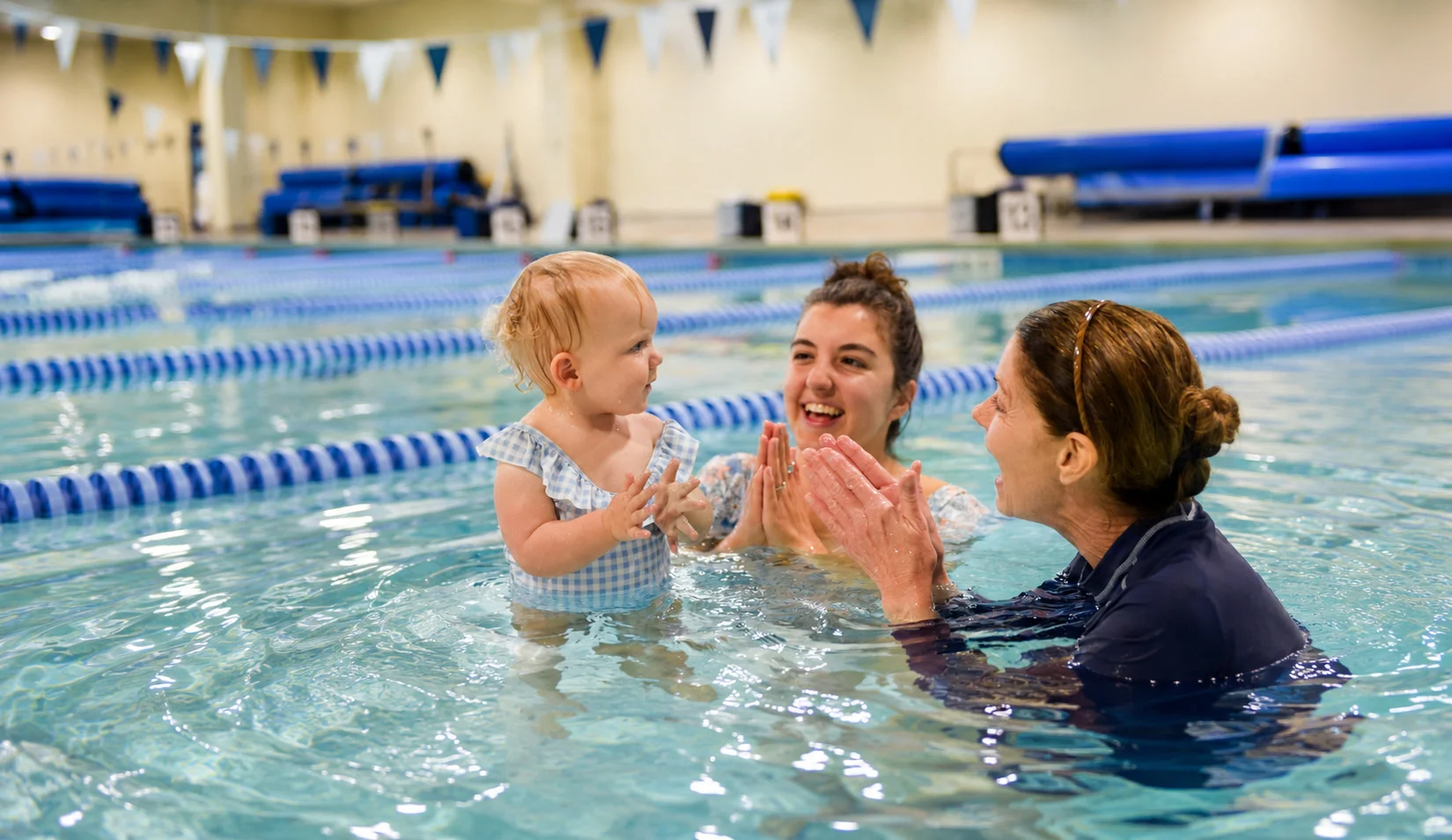
Unlike high-pressure or intense instruction, gentle water adaptation centers entirely on child-led pacing, sensory comfort, and deep parent-child connection. In these classes, parents are right in the pool holding their little ones, offering constant touch, warm smiles, and verbal encouragement. This child-led approach allows babies to explore buoyancy and movement without feeling overwhelmed or distressed. To get a complete overview of what early aquatic experiences look like, check out our guide on Water Babies 101 Everything You Need To Know About Infant Swim Lessons.
To understand how gentle water adaptation compares to traditional high-intensity survival methods, take a look at the key differences below:
| Feature | Gentle Infant Swim Lessons | Traditional Survival Swim Methods |
|---|---|---|
| Primary Goal | Joyful water adaptation, confidence, and parent bonding | Rapid self-rescue skills through repetition |
| Pacing | Child-led, flexible, and gradual | Instructor-led, fixed, and high-intensity |
| Emotional Focus | Emotional security and zero-stress comfort | Skill mastery under stress |
| Caregiver Role | Active in-water partner providing touch supervision | Observation from the pool deck |
| Teaching Tools | Nursery rhymes, water toys, and gentle splashes | Repeated unassisted floating drills |
Why Parents Prefer Gentle Infant Swim Lessons Over Traditional Methods
For generations, many swimming programs relied on rigid techniques that pushed young children into the water before they were emotionally ready. Today, modern research and responsive parenting practices show that tear-free learning creates far better long-term results.
When babies feel safe and secure in their caregiver’s arms, their brains release feel-good hormones that make learning easy and fun. Gentle splash play, rhythmic bounces, and floating games teach infants to associate the pool with safety and happiness rather than fear. Parents love this approach because it builds natural confidence while strengthening the bond between caregiver and baby. Discover more about why early pool time is so rewarding in our article on how Baby Swim Lessons Are Fun For Baby And Parents.
Key Developmental and Safety Benefits for Babies
Early aquatic play offers rich benefits that extend far beyond the water. According to research published by the National Institutes of Health, formal, structured water orientation can lower aquatic safety risks by up to 88% among children aged 1 to 4 years. By introducing safe habits early, babies naturally learn water awareness in a stress-free setting.
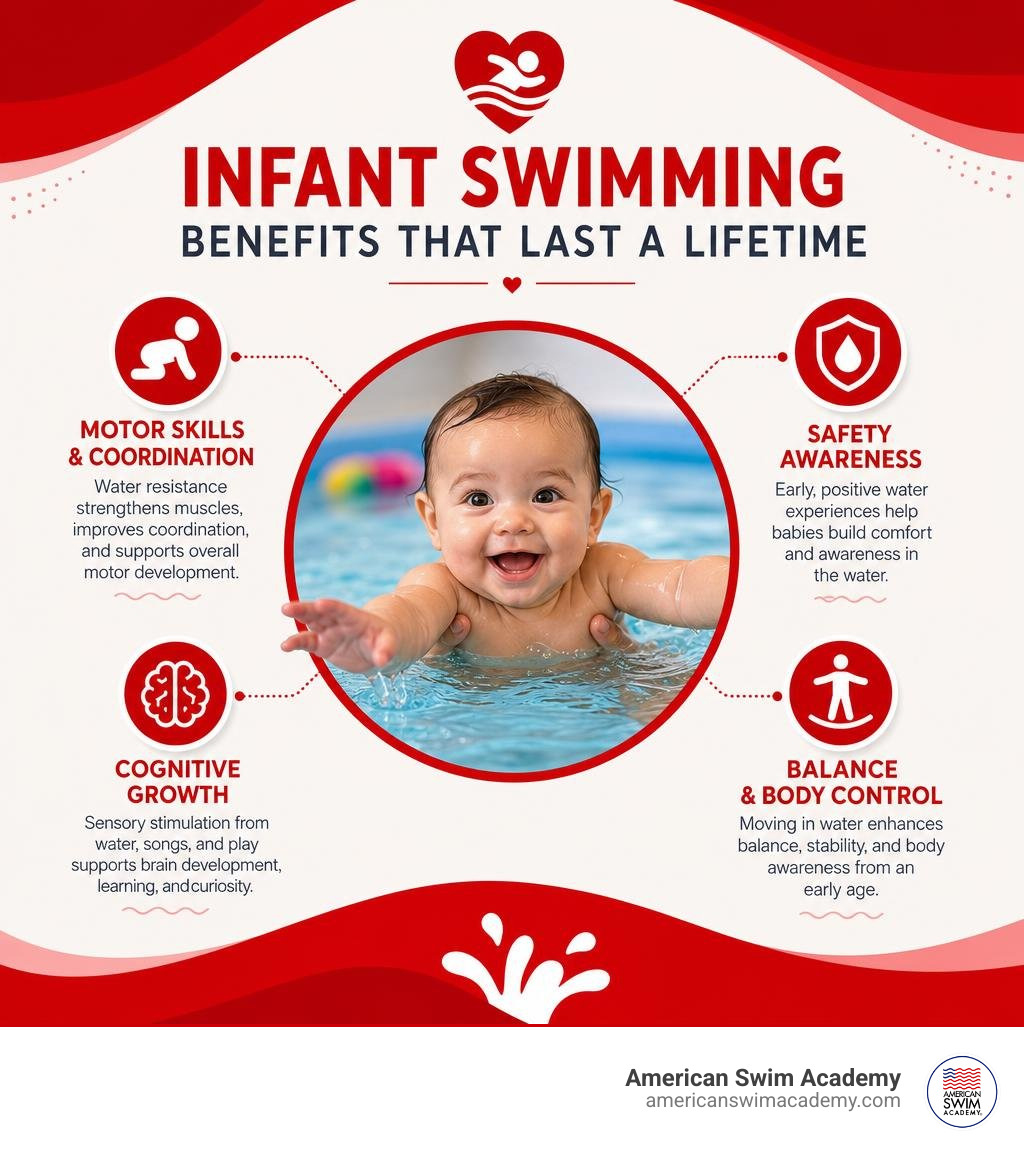
In addition to safety awareness, early water adaptation supports rapid physical and cognitive development:
- Motor Skills & Balance: Moving against gentle water resistance strengthens core muscles, improves coordination, and encourages bilateral motor skills (using both sides of the body together).
- Cognitive Growth: Sensory stimulation from warm water, songs, and gentle splashing triggers neural connections that support language acquisition and spatial awareness.
- Improved Sleep and Mood: A calm session in warm water relaxes nervous systems and helps regulate sleep cycles.
For a deeper look into these developmental advantages, read our article on 4 Benefits Of Teaching Your Kid How To Swim At An Early Age.
When and How to Start Swim Classes for Babies
Parents frequently ask us when their infant should take their very first dip. The American Academy of Pediatrics (AAP) recommends formal swimming lessons starting around age 1, citing improved water comfort and significant reductions in aquatic safety risks. However, gentle familiarization classes can begin even earlier for infants who are ready for light water play.
When beginning at any age, close “touch supervision” is essential. This means a parent or trusted caregiver is within arm’s reach at all times, holding the baby securely. To learn more about selecting the right timeline for your family, read our guide on When And How To Start Swimming Lessons For Infants.
Preparing Your Baby at Home Before the First Lesson
You do not need to wait for your first official class to start building water confidence! The bathtime routine at home is the ideal testing ground for gentle water adaptation.
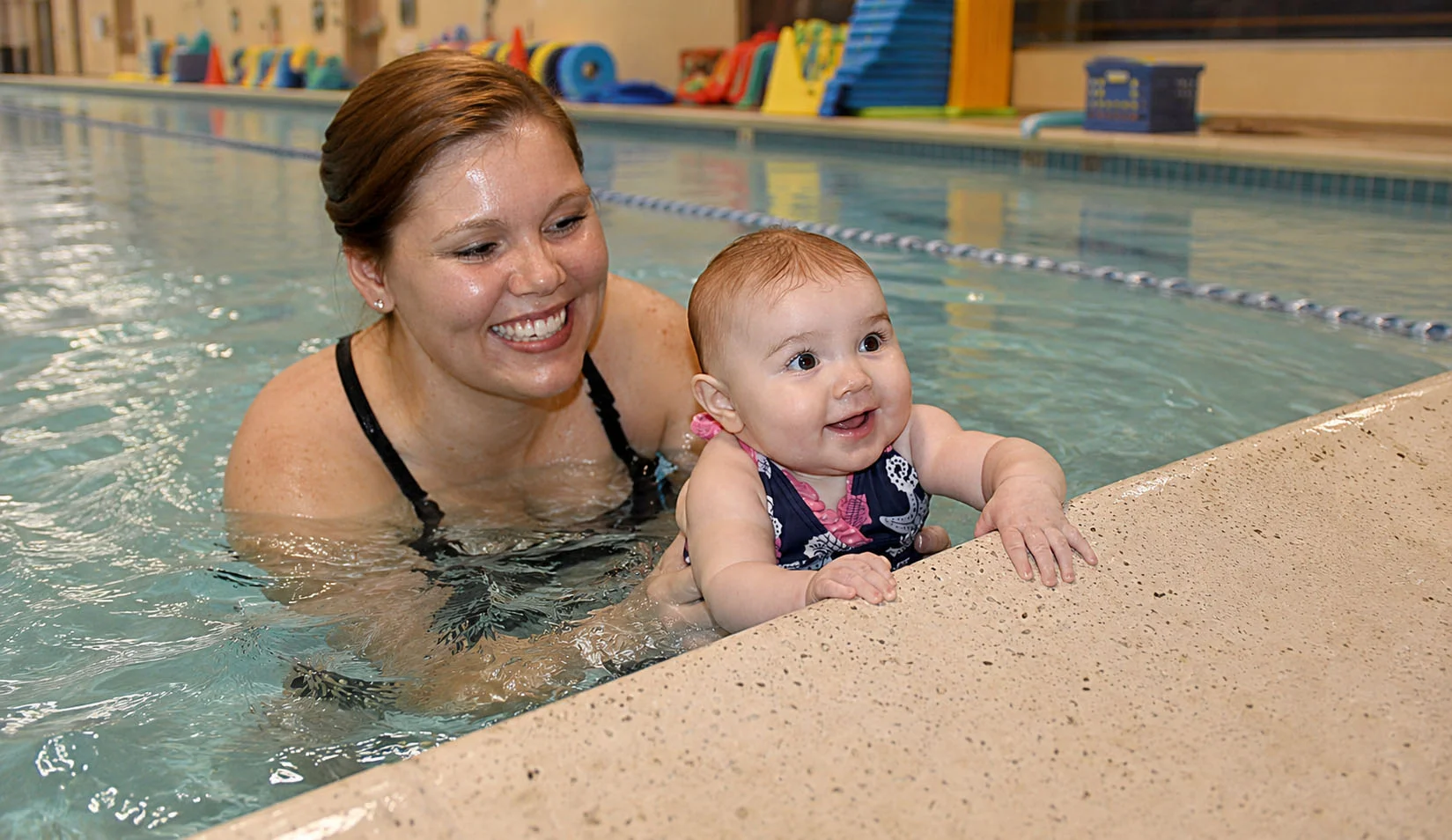
Here is a step-by-step routine you can practice at home:
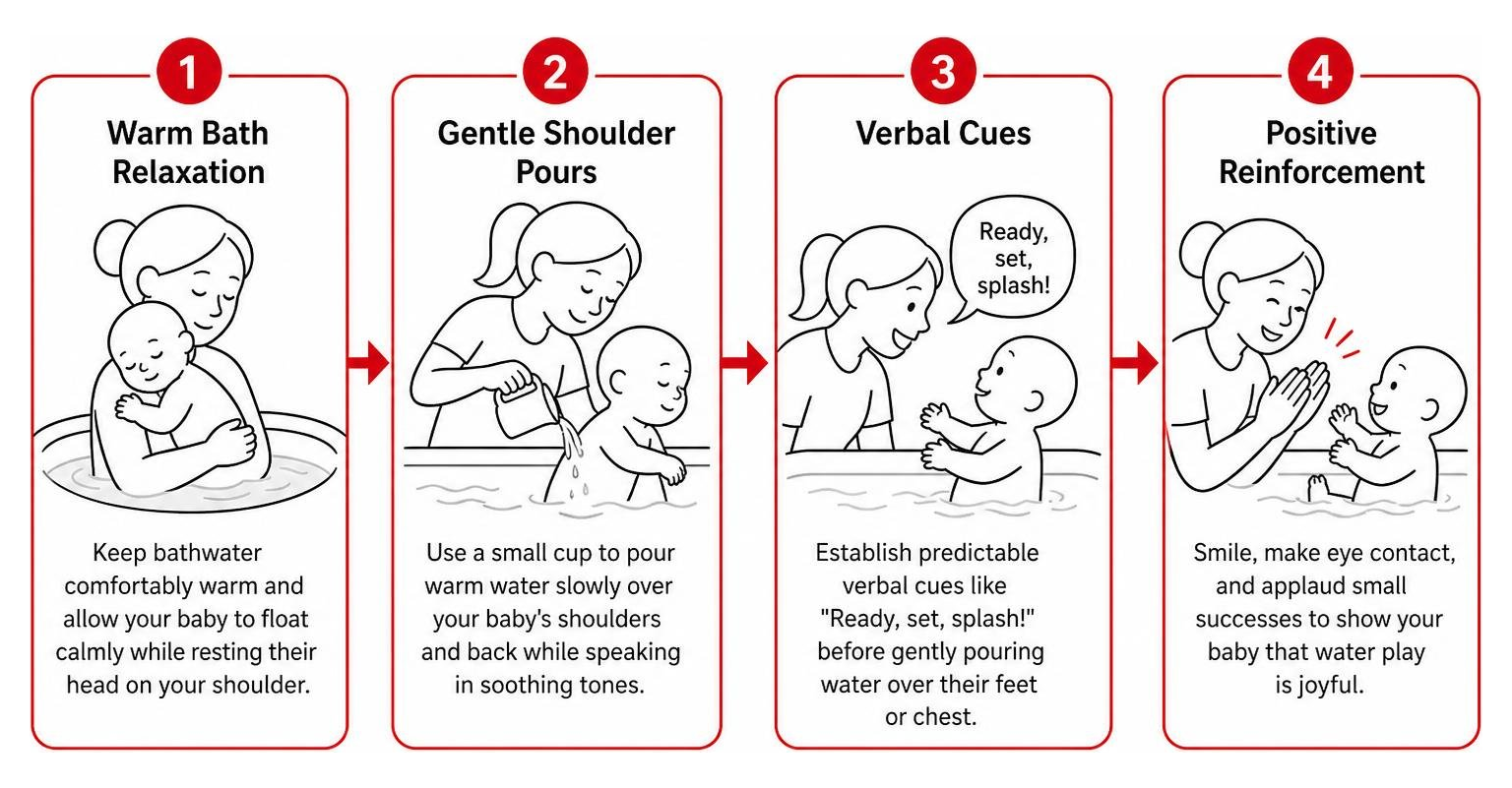
- Step 1: Warm Bath Relaxation: Keep bathwater comfortably warm and allow your baby to float calmly while resting their head on your shoulder.
- Step 2: Gentle Shoulder Pours: Use a small cup to pour warm water slowly over your baby’s shoulders and back while speaking in soothing tones.
- Step 3: Verbal Cues: Establish predictable verbal cues like “Ready, set, splash!” before gently pouring water over their feet or chest.
- Step 4: Positive Reinforcement: Smile, make eye contact, and applaud small successes to show your baby that water play is joyful.
What to Expect During Your Infant’s First Swim Class
Your first class should always feel welcoming and unhurried. When you step onto the warm indoor pool deck, our instructors will guide you through a soft, step-by-step introduction.
Caregivers hold their babies face-to-face, gently easing into the water. Classes rely on fun song cues, floating support games, and playful routines. You can read more about local, warm-water experiences in our guide on Splish Splash A Guide To Baby Water Adaptation In Walnut Creek.
Core Techniques and Safety Precautions for Water Adaptation
Creating a positive aquatic environment requires warm water, skilled instruction, and thoughtful safety measures. At American Swim Academy, our indoor pools are maintained at a cozy 92 degrees Fahrenheit year-round. This tropical temperature ensures tiny muscles stay relaxed and babies remain comfortable throughout the lesson.
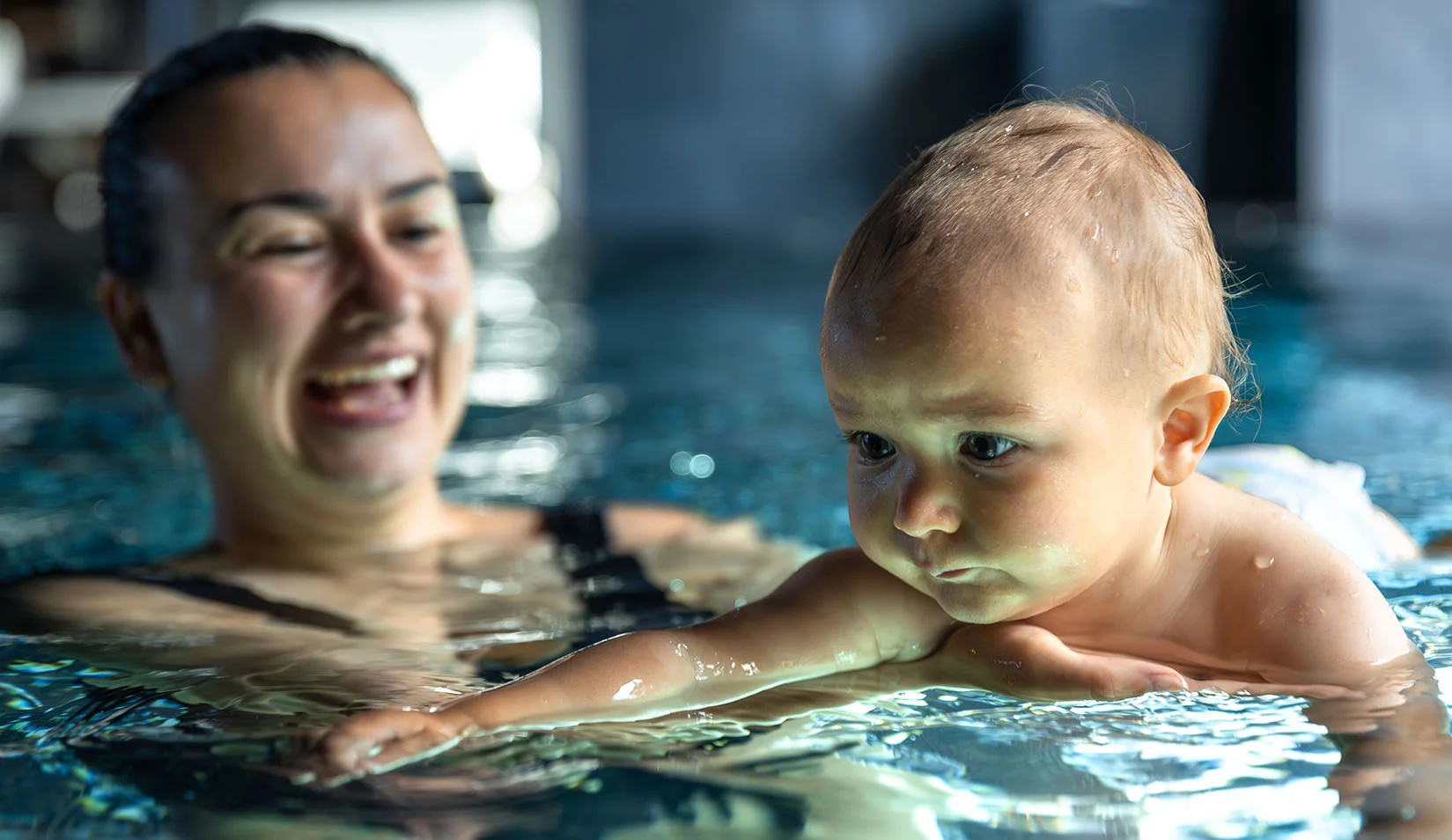
Creating a Tear-Free Environment with Gentle Infant Swim Lessons
Did you know that infant swim methods centered on gentle parent-child bonding reduce baby fear responses by up to 60% compared to high-stress instruction? By eliminating forced submersions and prioritizing smiles, babies build long-lasting water trust.
We use play-based activities and song-guided movements to help infants learn natural breath control. For example, blowing bubbles on top of the water teaches breath control in a playful, low-pressure way.
Building Water Confidence and Safety Precautions
True aquatic safety begins with familiarity, clear boundaries, and small class sizes that ensure individualized attention. During gentle infant swim lessons, parents learn essential safety habits:
- Maintaining continuous touch supervision whenever near water.
- Entering and exiting the pool safely with an infant.
- Understanding your baby’s subtle body language to stop before overtiredness sets in.
To explore play-based learning formats for growing infants, check out The Ultimate Guide To Toddler Water Play Classes.
How to Choose the Right Swim School for Your Family
Selecting the right swim facility for your baby is one of the most important decisions you will make for their early learning journey. Look for schools that prioritize warm water, small class ratios, and caring instructors trained specifically in gentle infant development.
For a detailed walkthrough on choosing the perfect program, read our article on How To Choose The Best Swimming Classes For Infants.
Questions to Ask Swim Programs Before Enrolling
Before signing up, ask the school leadership these key questions:
- What is your pool temperature? (Infants need pools heated to around 90–92°F to prevent chilling).
- What is your teaching philosophy regarding submersions? (Ensure they do not use forced submersions).
- What qualifications do your instructors hold? (Look for certified instructors specializing in infant water adaptation).
- Are parents required in the water? (For infants, parent-child classes offer the safest and most supportive environment).
Explore more about parent-and-me class formats in Water Babies Your Guide To Finding Mom And Tot Swim Classes.
Evaluating Indoor Pool Facilities in Northern California
Families in the San Francisco Bay Area need comfortable, climate-controlled indoor facilities that offer year-round protection from changing weather. American Swim Academy operates state-of-the-art indoor facilities across Northern California, including locations in Fremont, Newark, Livermore, Dublin, and Walnut Creek.
If you are located in Contra Costa County, read our dedicated guide on Babys First Dip A Guide To Infant Swim Lessons In Walnut Creek Ca.
Frequently Asked Questions About Infant Swimming
At what age can an infant safely start swim classes?
Most structured parent-and-baby programs accept infants starting around 6 months of age, provided the pool is adequately heated (90-92°F). The American Academy of Pediatrics strongly encourages swim lessons beginning around age 1 to support safety and motor skill development.
Are gentle methods safer than forced submersion techniques?
Yes. Gentle, tear-free methods foster genuine comfort, emotional security, and long-term confidence. Forced submersion can trigger fear and anxiety, making future skill acquisition harder. Gentle techniques build real water comfort while keeping the experience completely positive.
How long does it take for a baby to feel comfortable in the water?
Every baby develops at their own individual pace! Some infants light up during their very first lesson, while others take three or four classes to feel at ease with pool sights and sounds. Consistent attendance, warm pool water, and calm parent reassurance are the secrets to fast, joyful adaptation.
Conclusion
Introducing your infant to the water through gentle, supportive methods builds a foundation of aquatic safety, bodily confidence, and happy memories that last a lifetime. By focusing on play, song, and close caregiver bonding in cozy 92-degree water, your baby learns that the pool is a safe, delightful place to explore.
At American Swim Academy, we are dedicated to providing warm, family-centered instruction across our Bay Area locations in Fremont, Newark, Livermore, Dublin, and Walnut Creek. Ready to give your little one a smooth, tear-free start in the water? Explore Gentle Infant Water Adaptation Programs today and join us for a joyful splash!