
Find a Mommy and Me Swim Class Near You That Fits Your Family
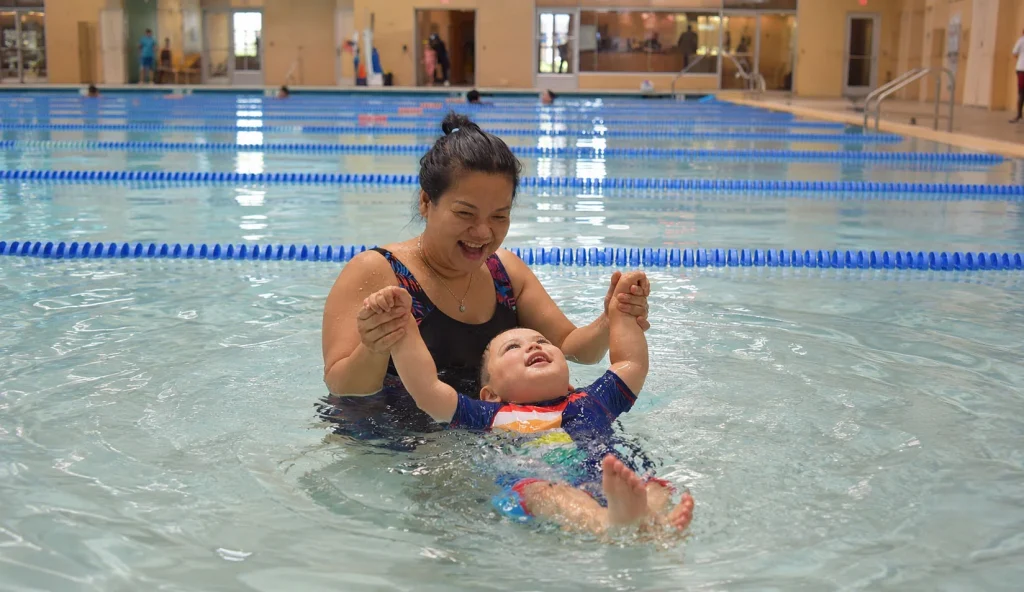
To find a mommy and me swim class near me, start with programs within a short, realistic drive and compare the details that matter most: warm indoor water, small class sizes, parent participation, flexible scheduling, and instructors trained in infant and toddler safety. For Bay Area families, year-round lessons can make it easier to build a steady routine around naps, work, and busy weekends.
These classes help babies and toddlers get comfortable in the water while you stay close by. Expect gentle songs, supported floating, kicking, splashing, and simple safety skills – all at your child’s pace. Many programs begin around 6 months, though each child should be ready for a calm, positive water experience.
A good first class should feel warm, structured, and encouraging for both parent and child. At American Swim Academy, our team helps families build water confidence one small skill at a time. Our indoor pools are maintained at a soothing 92°F, and our small class sizes allow instructors to guide each parent-child pair with steady, personalized attention. Whether you are introducing your baby to the water for the first time or helping a busy toddler practice new movements, the right class can turn weekly lessons into a comforting family ritual.

Basic mommy and me swim class near me terms:
Developmental and Safety Benefits of Parent-Child Swim Lessons
Enrolling your baby or toddler in structured aquatic classes offers substantial developmental advantages. Early water acclimation introduces essential aquatic competence skills in a safe, guided setting. Participating in formal lessons significantly reduces water-related risks for young children, offering up to an 88% reduction in risk for children aged 1 to 4 according to guidance from the American Academy of Pediatrics.

Beyond water safety, aquatic environments stimulate a baby’s physical and neurological growth:
- Motor Skill Development: Infants who participate in warm-water acclimation classes can achieve up to a 40% improvement in motor skill milestones compared to non-participants. Water resistance strengthens core muscles, limbs, and coordination without putting stress on delicate joints.
- Sensory Stimulation: The tactile sensation of warm water engages multiple sensory pathways simultaneously, encouraging cognitive growth and spatial awareness.
- Emotional Bonding: Guided parent-child activities foster secure attachment. Over 94% of parents report increased confidence in handling their child around water after just four sessions.
These benefits are most consistent when lessons happen in a warm, predictable environment. A heated indoor pool helps infants stay relaxed and focused, while a familiar routine of songs, gentle movements, and instructor support gives parents a clear framework for practicing skills at home. Over time, small successes such as a relaxed back float or a confident wall grip build the kind of trust that makes children more willing to try new movements in the water.
To explore the foundations of infant water safety and milestone progressions, check out our essential guide to infant swim lessons.
How to Find the Best Mommy and Me Swim Class Near Me
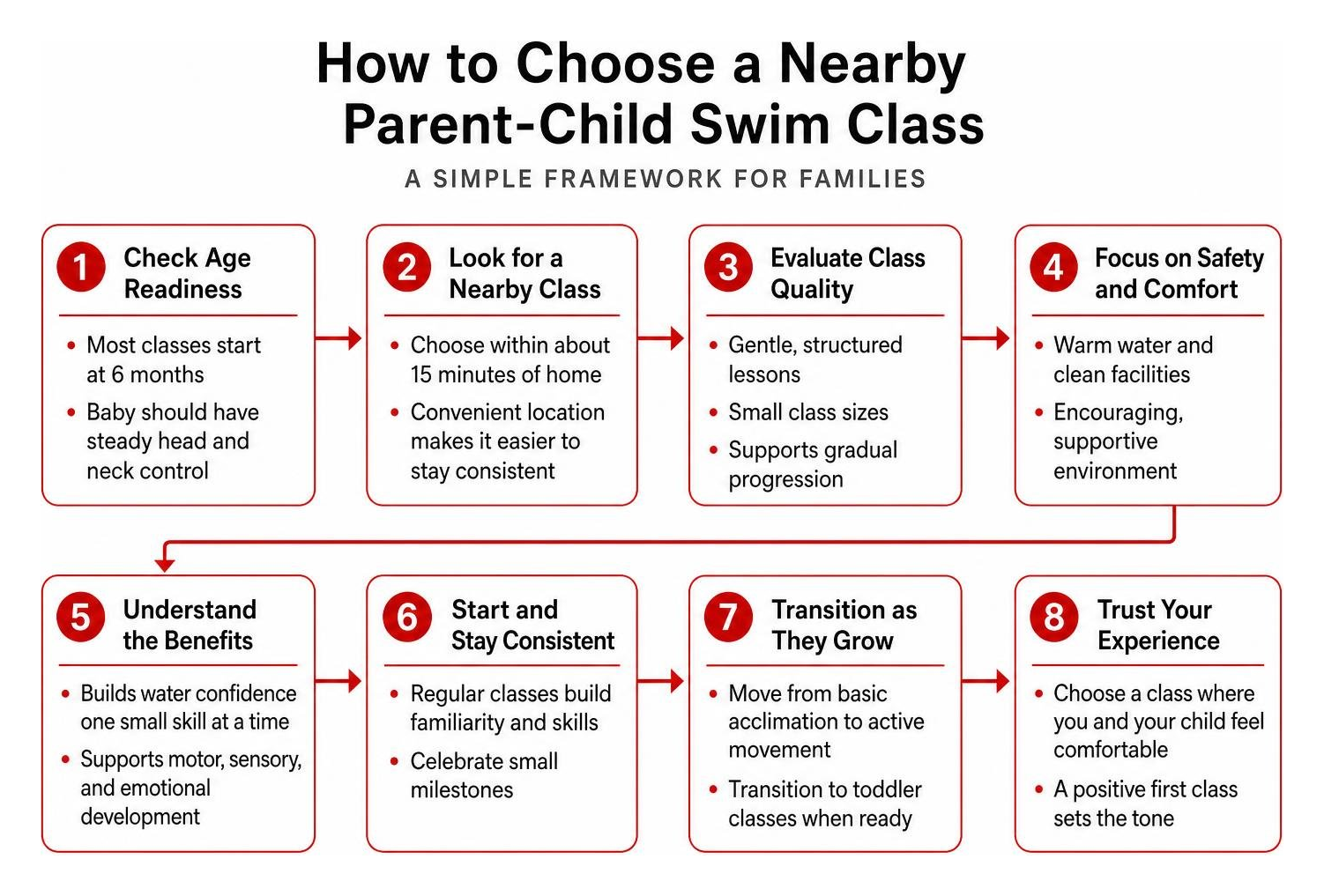
Choosing the right class means balancing practical logistics with educational quality. Over 70% of parents with children under 5 indicate they would readily enroll in parent-child lessons located within a 15-minute drive of their home. When searching locally, consider how a school structures its lessons, maintains class sizes, and supports gradual progression. For a comprehensive overview, review our guide to finding mom and tot swim classes.
Age Requirements and When to Start
Most infant aquatic programs welcome babies starting at 6 months old. At this age, babies have developed steady head and neck control, and their immune systems are better equipped for public pool environments.
As children grow, their aquatic needs transition from basic sensory acclimation to active movement and independence. You can read more about the optimal timing to start swimming lessons for infants to determine if your baby is ready. As your infant approaches the toddler stage, they can transition smoothly into engaging toddler water play classes designed for developing toddlers.
Evaluating Facilities for a Mommy and Me Swim Class Near Me
The pool environment plays a huge role in your baby’s comfort. Infants lose body heat much faster than adults, which makes pool temperature critical.
When evaluating potential facilities:
- Water Temperature: Look for specialized schools that maintain heated indoor pools at a soothing 92°F. A warm pool keeps infants comfortable and relaxed. Check out our tips on finding warm pool baby lessons near you.
- Air Quality and Sanitation: State-of-the-art filtration systems, regular chemical monitoring, and clean air circulation protect sensitive respiratory systems.
- Class Ratios: Intimate class settings (typically 4 to 6 pairs per instructor) ensure personalized attention and steady guidance. Learn more about how to choose infant swimming classes that meet these standards.
Regional Options in the East Bay Area
For families across the San Francisco Bay Area, finding a top-tier indoor swim facility close to home ensures consistency through every season. American Swim Academy provides indoor facilities with 92° heated water across the East Bay, making it easier to maintain a steady lesson routine no matter the weather or time of year.
- If you are in the southern East Bay, explore baby swimming classes in Fremont or visit our Newark campus.
- Tri-Valley families can join our baby swim classes in Livermore or our Dublin facility.
- Central Contra Costa County parents can register for infant swim lessons in Walnut Creek CA.
For a broader look at program options across our campuses, visit our parent directory for year-round infant swim lessons.
What to Expect in a Typical Infant and Toddler Swim Session
A typical parent-child swim lesson lasts 30 minutes—the ideal duration for maintaining an infant’s focus and energy without causing fatigue. Classes follow an engaging, structured rhythm that blends safety instruction with play. Instructors demonstrate each activity before inviting parents and children to try it together, which helps both grown-ups and little ones feel clear about what comes next.
Core Water Acclimation Activities
Each session focuses on fundamental water skills through interactive exercises:
- Bubble Blowing and Breath Control: Teaching little ones how to control their breathing by blowing bubbles on top of the water.
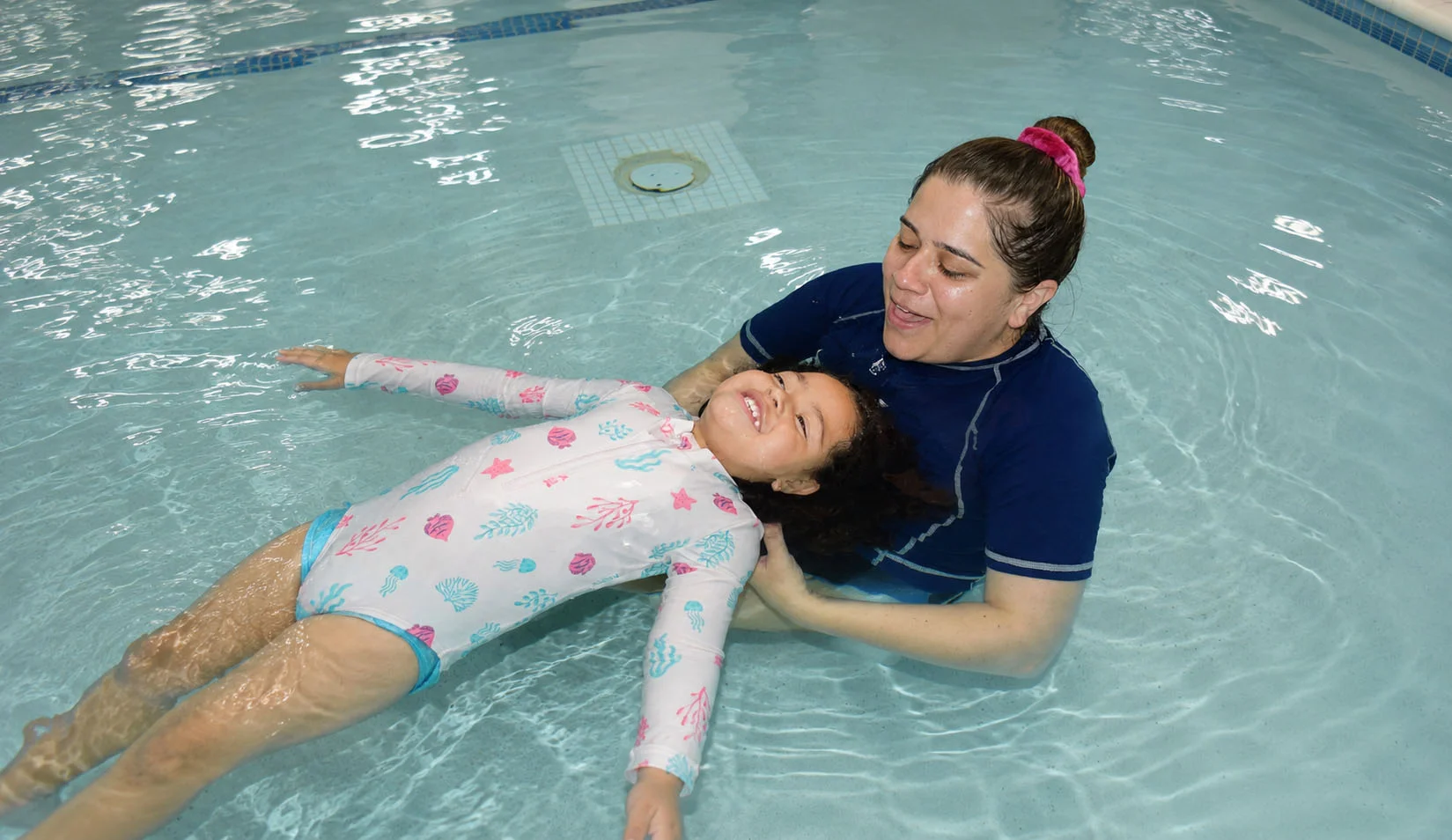
- Assisted Back Floating: Relaxing on their backs with gentle parent support, a crucial foundation for rest and air recovery.
- Wall Gripping and Safety Exits: Guiding little hands to hold onto the pool edge and practice pulling up safely.
- Kicking and Balance: Encouraging natural leg movement and balance with floating mats, toys, and songs.
Throughout the lesson, instructors use positive reinforcement and water games to keep the experience playful. Parents receive simple cues they can repeat at home, so bath time can become an extension of the same gentle practice. This consistency helps children feel more secure and builds a stronger connection between the pool and everyday routines.
What to Pack for a Mommy and Me Swim Class Near Me
Arriving prepared makes the pool experience stress-free. Most swim schools enforce strict hygiene protocols to maintain clean, balanced water.
| Packing Item | Purpose | Key Recommendation |
|---|---|---|
| Reusable Swim Diaper | Prevents pool contamination | Snug-fitting elastic around legs and waist |
| Double Diaper Setup | Required by many indoor facilities | Disposable swim diaper under a snug reusable cover |
| Warm Towels | Keeps baby warm post-lesson | Large, hooded plush towels |
| Post-Swim Snack/Milk | Replenishes energy | Bottle, nursing essentials, or toddler snack |
| Parent Swimwear | Ensures comfort during class | Comfortable, secure swim attire |
Frequently Asked Questions About Infant and Toddler Swim Lessons
How do I prepare my baby for their first swim lesson?
Start at home during bath time! Pour small cups of warm water gently across their shoulders and back. Sing the songs you plan to use in class, smile, and maintain reassuring eye contact to build positive associations with water. A calm, unhurried arrival at the pool also helps, so plan to arrive a few minutes early and let your child observe the water before the lesson begins.
What certifications should infant swim instructors hold?
Trustworthy infant swim instructors should maintain CPR and First Aid certifications, accompanied by specialized training in infant and toddler water safety. Our instructors undergo extensive hands-on training to deliver age-appropriate, gentle instruction. They also receive ongoing coaching in class management and parent communication, so every lesson feels organized and supportive.
What is the typical cost of parent-and-tot swim classes?
Most year-round swim academies charge a monthly tuition ranging from $90 to $160 per month for weekly classes. Many programs offer family discounts or flexible make-up lesson policies for missed classes. When comparing costs, consider what is included in tuition, such as heated indoor pools, small class sizes, and consistent instructor support.
Conclusion
Starting early with your child in the pool builds a strong foundation for lifelong water confidence, physical development, and joyful family memories. At American Swim Academy, our warm 92° heated indoor pools, small class sizes, and caring instructors provide the perfect environment for you and your little one to thrive together. With convenient locations across the East Bay, including Fremont, Newark, Livermore, Dublin, and Walnut Creek, families can find a consistent weekly routine that fits their schedule and keeps children comfortable all year long.
Explore our indoor infant and child swim programs today to find a class schedule that fits your routine at any of our Bay Area locations!